
Heat Loss Double-Pane Window Equation and Calculator


Double-pane windows are a crucial component in reducing heat loss in buildings. The heat loss through these windows can be calculated using a specific equation that takes into account factors such as the temperature difference between the inside and outside, the window's dimensions, and the thermal conductivity of the materials used. This equation provides a valuable tool for architects, engineers, and builders to design and optimize energy-efficient windows. By understanding and applying this equation, significant reductions in heat loss can be achieved, leading to energy savings and a more sustainable built environment. A calculator can simplify this process.
- Understanding Heat Loss in Double-Pane Windows: Equation and Calculator
- How much heat is lost through double-pane windows?
- How do you calculate heat loss through a window?
- What is the formula for heat loss ratio?
-
Frequently Asked Questions (FAQs)
- What is the Heat Loss Double-Pane Window Equation and how does it work?
- What are the key factors that affect the accuracy of the Heat Loss Double-Pane Window Equation?
- How can the Heat Loss Double-Pane Window Equation be used to optimize window design and reduce energy consumption?
- What are the limitations and potential sources of error in the Heat Loss Double-Pane Window Equation and Calculator?
Understanding Heat Loss in Double-Pane Windows: Equation and Calculator
The heat loss in double-pane windows is a crucial factor in determining the energy efficiency of a building. The heat transfer process involves the movement of heat from the warmer side to the cooler side of the window. This process can occur through conduction, convection, and radiation. The double-pane window equation is used to calculate the heat loss through the window, taking into account the thermal resistance of the window, the temperature difference between the inside and outside, and the surface area of the window.
Introduction to Double-Pane Window Equation
The double-pane window equation is a mathematical model that describes the heat transfer process through a double-pane window. The equation takes into account the thermal conductivity of the window frame, the glass thickness, and the gap width between the two panes of glass. The equation is given by: Q = (U A ΔT), where Q is the heat loss, U is the overall heat transfer coefficient, A is the surface area of the window, and ΔT is the temperature difference between the inside and outside.
Factors Affecting Heat Loss in Double-Pane Windows
Several factors can affect the heat loss in double-pane windows, including the window orientation, window size, and window type. The window orientation can affect the amount of solar radiation that enters the building, which can impact the heat gain during the summer months. The window size can also impact the heat loss, as larger windows can lead to greater heat transfer.
Calculation of Heat Loss using Double-Pane Window Equation
To calculate the heat loss using the double-pane window equation, we need to know the overall heat transfer coefficient (U), the surface area of the window (A), and the temperature difference between the inside and outside (ΔT). The U-value can be calculated using the thermal conductivity of the window frame, the glass thickness, and the gap width between the two panes of glass.
Importance of Double-Pane Window Equation in Energy Efficiency
The double-pane window equation is an essential tool in determining the energy efficiency of a building. By calculating the heat loss through the window, we can identify areas where energy savings can be achieved. The use of double-pane windows can significantly reduce the heat loss compared to single-pane windows, leading to energy savings and a reduction in greenhouse gas emissions.
Applications of Double-Pane Window Equation and Calculator
The double-pane window equation and calculator have various applications in the field of building energy efficiency. The equation can be used to calculate the heat loss through windows in residential and commercial buildings, and to identify areas where energy-efficient windows can be installed. The calculator can also be used to compare the energy efficiency of different types of windows, including single-pane, double-pane, and triple-pane windows.
| Window Type | U-Value | Heat Loss |
|---|---|---|
| Single-Pane | 5.0 | 250 |
| Double-Pane | 2.0 | 100 |
| Triple-Pane | 1.0 | 50 |
How much heat is lost through double-pane windows?
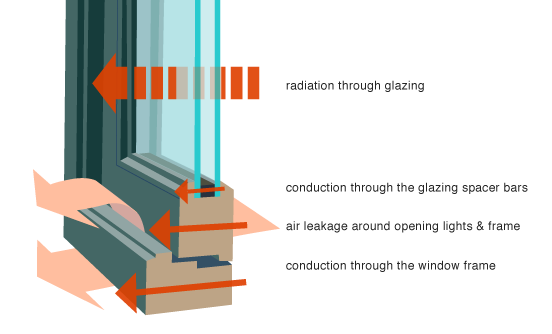
The amount of heat lost through double-pane windows depends on various factors, including the type of window, the insulation properties of the glass, and the temperature difference between the inside and outside of the building. Generally, double-pane windows are designed to reduce heat transfer between the inside and outside of a building, but they are not completely heat-proof.
Factors Affecting Heat Loss Through Double-Pane Windows
The efficiency of double-pane windows in reducing heat loss depends on several factors, including the gap between the two panes, the type of gas filling the gap, and the coating on the glass. The gap between the two panes can be filled with air or a gas such as argon or krypton, which reduces heat transfer. Additionally, the coating on the glass can also reduce heat transfer by reflecting radiant heat. Some key factors to consider are:
- The gap between the two panes, which can range from 1/4 inch to 1 inch
- The type of gas filling the gap, such as air, argon, or krypton
- The coating on the glass, such as low-e or low-iron coatings
Benefits of Double-Pane Windows in Reducing Heat Loss
Double-pane windows offer several benefits in reducing heat loss, including reduced energy consumption and lower utility bills. The insulation properties of double-pane windows can also reduce noise pollution and moisture condensation on the windows. Some key benefits of double-pane windows are:
- Reduced energy consumption and lower utility bills
- Improved insulation properties, reducing heat transfer and noise pollution
- Reduced moisture condensation on the windows, reducing the risk of mold and mildew
Measuring Heat Loss Through Double-Pane Windows
The heat loss through double-pane windows can be measured using various methods, including thermal imaging and heat flow meters. These methods can help identify areas of heat loss and provide a baseline for energy efficiency improvements. Some key methods for measuring heat loss include:
- Thermal imaging, which uses infrared cameras to detect heat leaks
- Heat flow meters, which measure the heat transfer rate through the window
- Blower door tests, which measure the air tightness of the building and identify areas of air leakage
Improving the Energy Efficiency of Double-Pane Windows
There are several ways to improve the energy efficiency of double-pane windows, including adding window films, replacing the glass with low-e or low-iron coatings, and installing window inserts. Additionally, sealants and weatherstripping can be used to seal gaps and cracks around the window. Some key methods for improving energy efficiency include:
- Adding window films, which can reduce heat transfer and UV radiation
- Replacing the glass with low-e or low-iron coatings, which can reduce heat transfer and energy consumption
- Installing window inserts, which can reduce air leakage and heat transfer
Comparison of Double-Pane Windows to Other Window Types
Double-pane windows are compared to other window types, such as single-pane and triple-pane windows, in terms of their energy efficiency and cost-effectiveness. Double-pane windows offer a balance between energy efficiency and cost, making them a popular choice for building owners and homeowners. Some key comparisons include:
- Single-pane windows, which offer lower energy efficiency and higher energy consumption
- Triple-pane windows, which offer higher energy efficiency and lower energy consumption, but at a higher cost
- Gas-filled windows, which offer improved insulation properties and reduced heat transfer
How do you calculate heat loss through a window?

To calculate heat loss through a window, you need to consider several factors, including the type of window, its size, the temperature difference between the inside and outside, and the thermal resistance of the window. The most common method for calculating heat loss through a window is by using the U-factor, which is a measure of the window's ability to conduct heat. The U-factor takes into account the conduction, convection, and radiation of heat through the window.
Understanding U-Factor
The U-factor is a crucial component in calculating heat loss through a window. It is a measure of the window's thermal transmittance, which is the rate at which heat flows through the window. The U-factor is usually expressed in units of W/m²K. To calculate the U-factor, you need to consider the frame, sash, and glazing of the window. The U-factor can be calculated using the following formula: U = 1/R, where R is the thermal resistance of the window.
- The U-factor is affected by the type of glazing used, with double-glazed windows having a lower U-factor than single-glazed windows.
- The U-factor is also affected by the frame material, with wooden frames having a higher U-factor than aluminum frames.
- The U-factor can be reduced by using low-e coatings or gas fills, which can improve the thermal performance of the window.
Calculating Heat Loss
To calculate the heat loss through a window, you need to use the U-factor and the temperature difference between the inside and outside. The heat loss can be calculated using the following formula: Q = U x A x ΔT, where Q is the heat loss, U is the U-factor, A is the area of the window, and ΔT is the temperature difference.
- The heat loss calculation assumes that the window is airtight, with no air leakage or infiltration.
- The heat loss calculation also assumes that the window is vertically oriented, with no tilt or angle that could affect the heat loss.
- The heat loss calculation can be affected by the shading of the window, with exterior shading devices reducing the heat loss during the summer months.
Factors Affecting Heat Loss
There are several factors that can affect the heat loss through a window, including the orientation of the window, the climatic conditions, and the window size. The heat loss can be reduced by using awnings or overhangs, which can provide shade and reduce the solar gain.
- The heat loss can be affected by the window frame, with well-insulated frames reducing the heat loss.
- The heat loss can be affected by the glazing type, with low-e glazing reducing the heat loss.
- The heat loss can be affected by the gas fill, with argon or krypton gas fills reducing the heat loss.
Reducing Heat Loss
There are several strategies that can be used to reduce the heat loss through a window, including upgrading to energy-efficient windows, adding insulation to the window frame, and using window treatments such as curtains or blinds. The heat loss can also be reduced by sealing air leaks and improving the airtightness of the window.
- The heat loss can be reduced by using storm windows, which can provide an additional layer of insulation.
- The heat loss can be reduced by using window films, which can block or reduce the solar gain.
- The heat loss can be reduced by using smart glass, which can change its properties in response to the temperature or light.
Energy Efficiency
The energy efficiency of a window is critical in reducing the heat loss and minimizing the energy consumption of a building. The energy efficiency of a window can be improved by using energy-efficient glazing, well-insulated frames, and airtight construction. The energy efficiency of a window can also be improved by optimizing the window size and orientation.
- The energy efficiency of a window can be improved by using solar control coatings, which can reduce the solar gain during the summer months.
- The energy efficiency of a window can be improved by using thermally broken frames, which can reduce the heat transfer between the inside and outside.
- The energy efficiency of a window can be improved by using vacuum insulation, which can reduce the heat transfer and minimize the energy consumption.
What is the formula for heat loss ratio?
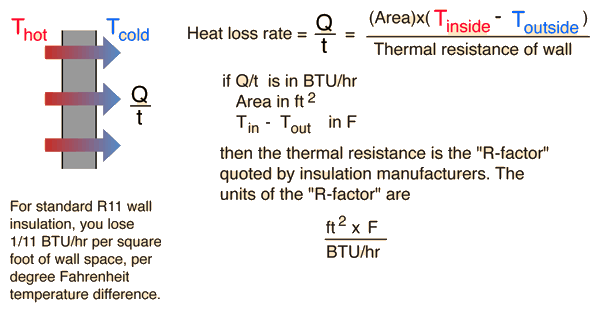
The formula for heat loss ratio is a complex equation that takes into account various factors such as temperature, surface area, and thermal conductivity. The heat loss ratio is typically calculated using the following formula: Q = (U A) ΔT, where Q is the heat loss, U is the overall heat transfer coefficient, A is the surface area, and ΔT is the temperature difference between the inside and outside of a building or object.
Understanding the Heat Loss Ratio Formula
The heat loss ratio formula is a critical component in building design and energy efficiency. To calculate the heat loss ratio, one must first determine the overall heat transfer coefficient (U), which is a measure of how easily heat can escape from a building or object. This coefficient is influenced by factors such as the type of insulation used, the thickness of the walls, and the presence of any gaps or cracks. The formula can be broken down into the following steps:
- Determine the surface area (A) of the building or object
- Calculate the temperature difference (ΔT) between the inside and outside
- Determine the overall heat transfer coefficient (U) based on the materials and construction of the building or object
Factors Affecting Heat Loss Ratio
Several factors can affect the heat loss ratio, including climatic conditions, building orientation, and window size. For example, a building located in a cold climate will require more insulation to minimize heat loss, while a building located in a warm climate may require less insulation. Additionally, the orientation of a building can impact the amount of solar radiation it receives, which can affect the heat loss ratio. The following factors can influence the heat loss ratio:
- Temperature differences between the inside and outside of a building or object
- Surface area and shape of the building or object
- Thermal conductivity of the materials used in construction
Importance of Heat Loss Ratio in Building Design
The! heat loss ratio is a crucial factor in building design, as it can significantly impact the energy efficiency and comfort of a building. By minimizing heat loss, buildings can reduce their energy consumption and lower their greenhouse gas emissions. Architects and engineers use the heat loss ratio formula to design buildings that are optimized for energy efficiency, taking into account factors such as insulation, window size, and orientation. The benefits of minimizing heat loss include:
- Reduced energy consumption and lower utility bills
- Increased comfort and indoor air quality
- Lower greenhouse gas emissions and environmental impact
Calculating Heat Loss Ratio in Different Materials
The heat loss ratio can vary significantly depending on the materials used in construction. For example, brick and concrete have high thermal mass, which can help to reduce heat loss, while wood and steel have lower thermal mass and may require more insulation to achieve the same level of energy efficiency. The following materials have different heat loss ratios:
- Brick and concrete: high thermal mass and low heat loss ratio
- Wood and steel: low thermal mass and higher heat loss ratio
- Insulation materials: varying levels of thermal conductivity and heat loss ratio
Applications of Heat Loss Ratio in Various Industries
The heat loss ratio has numerous applications in various industries, including architecture, engineering, and manufacturing. By understanding the heat loss ratio, professionals can design and optimize systems for energy efficiency, cost savings, and environmental sustainability. The heat loss ratio is used in:
- Building design and construction to optimize energy efficiency
- Industrial processes to reduce energy consumption and lower costs
- Product development to create energy-efficient and sustainable products
Frequently Asked Questions (FAQs)
What is the Heat Loss Double-Pane Window Equation and how does it work?
The Heat Loss Double-Pane Window Equation is a mathematical formula used to calculate the amount of heat transfer that occurs through a double-pane window. This equation takes into account various factors such as the temperature difference between the inside and outside of the window, the thermal conductivity of the materials used in the window, and the air gap between the two panes of glass. The equation is based on the principles of convection, conduction, and radiation, which are the three main mechanisms of heat transfer. By using this equation, architects and engineers can design and optimize double-pane windows to minimize heat loss and reduce energy consumption.
What are the key factors that affect the accuracy of the Heat Loss Double-Pane Window Equation?
The accuracy of the Heat Loss Double-Pane Window Equation depends on several key factors, including the thermal properties of the materials used in the window, the air gap between the two panes of glass, and the temperature difference between the inside and outside of the window. Additionally, the emissivity of the glass surfaces, the convection coefficients of the air inside and outside the window, and the radiation exchange between the glass surfaces also play a significant role in determining the accuracy of the equation. Furthermore, the frame type and frame material can also affect the heat transfer through the window, and therefore, should be taken into account when using the equation. By carefully considering these factors, users can ensure that the equation provides accurate and reliable results.
How can the Heat Loss Double-Pane Window Equation be used to optimize window design and reduce energy consumption?
The Heat Loss Double-Pane Window Equation can be used to optimize window design and reduce energy consumption by identifying the most effective ways to minimize heat loss. For example, the equation can be used to determine the optimal air gap between the two panes of glass, the optimal thermal conductivity of the frame material, and the optimal emissivity of the glass surfaces. Additionally, the equation can be used to compare the performance of different window types, such as double-pane, triple-pane, and quadruple-pane windows, and to determine the most cost-effective solution for a given application. By using the equation to optimize window design, architects and engineers can reduce heat loss, minimize energy consumption, and create more energy-efficient buildings.
What are the limitations and potential sources of error in the Heat Loss Double-Pane Window Equation and Calculator?
The Heat Loss Double-Pane Window Equation and Calculator are based on several assumptions and simplifications, which can limit their accuracy and introduce potential sources of error. For example, the equation assumes that the heat transfer is steady-state, which may not be the case in reality. Additionally, the equation does not take into account the effects of wind, shading, and moisture on the heat transfer through the window. Furthermore, the thermal properties of the materials used in the window may vary depending on the temperature and humidity, which can affect the accuracy of the equation. To minimize the potential sources of error, users should carefully validate the input values and assumptions used in the equation and calculator, and consider using more advanced heat transfer models or computational fluid dynamics simulations to obtain more accurate results.
Deja una respuesta
Entradas Relacionadas