
Building Sensible Heat Thermal Load with Air Exchange Calculator


Calculating thermal load is crucial for designing efficient heating and cooling systems. One key factor in this calculation is sensible heat, which is the energy required to heat or cool the air in a building. The Air Exchange Calculator is a valuable tool in determining sensible heat thermal load, taking into account factors such as air exchange rates, temperature differences, and humidity levels. By using this calculator, builders and architects can create more accurate thermal load calculations, leading to more efficient and cost-effective heating and cooling systems. This article will explore how to build sensible heat thermal load.
- Building Sensible Heat Thermal Load with Air Exchange Calculator
- How do you calculate sensible heat load?
- How do you calculate total heat load due to air changes?
- How to calculate sensible heat transfer for air?
- What is the 1.08 in the CFM formula?
-
Frequently Asked Questions (FAQs)
- What is the purpose of the Building Sensible Heat Thermal Load with Air Exchange Calculator?
- How does the calculator account for air exchange in thermal load calculations?
- What are the key inputs required for the calculator to estimate thermal load?
- How can the calculator be used to optimize building design and energy efficiency?
Building Sensible Heat Thermal Load with Air Exchange Calculator
The process of calculating the sensible heat thermal load in a building involves considering various factors, including the building's insulation, window size and type, and the amount of air exchange. A sensible heat thermal load calculator is a tool used to estimate the amount of heat that needs to be added or removed from a building to maintain a comfortable temperature. This calculator takes into account the building's thermal mass, insulation, and air leakage to determine the sensible heat load.
Understanding Sensible Heat and Its Impact on Buildings
Sensible heat refers to the heat that is transferred between a building and its surroundings through conduction, convection, and radiation. The sensible heat load is an important factor in determining the heating and cooling requirements of a building. A building with a high sensible heat load will require more energy to heat and cool, which can increase energy costs and greenhouse gas emissions. The sensible heat load can be reduced by improving the building's insulation, reducing air leakage, and using energy-efficient windows.
Components of a Sensible Heat Thermal Load Calculator
A sensible heat thermal load calculator typically includes the following components:
- Building envelope: This includes the walls, roof, and floors of the building.
- Windows: The type, size, and orientation of the windows can affect the sensible heat load.
- Insulation: The amount and type of insulation used in the building can significantly impact the sensible heat load.
- Air exchange: The rate of air exchange between the building and its surroundings can also affect the sensible heat load.
- Occupancy: The number of people occupying the building and their activities can generate internal heat gains.
Calculating Sensible Heat Thermal Load
To calculate the sensible heat thermal load, the following steps are typically followed:
- Determine the building's thermal characteristics, including its insulation, window size and type, and air leakage.
- Calculate the heat transfer through the building envelope, windows, and doors.
- Calculate the internal heat gains from occupants, lighting, and equipment.
- Calculate the sensible heat load using a formula that takes into account the heat transfer and internal heat gains.
| Component | Description |
|---|---|
| Building Envelope | The walls, roof, and floors of the building |
| Windows | The type, size, and orientation of the windows |
| Insulation | The amount and type of insulation used in the building |
| Air Exchange | The rate of air exchange between the building and its surroundings |
| Occupancy | The number of people occupying the building and their activities |
Benefits of Using a Sensible Heat Thermal Load Calculator
Using a sensible heat thermal load calculator can help building owners and designers to:
- Optimize energy efficiency by reducing the sensible heat load.
- Save energy costs by determining the most efficient heating and cooling systems.
- Reduce greenhouse gas emissions by minimizing the energy required for heating and cooling.
Limitations and Complexity of Sensible Heat Thermal Load Calculators
Sensible heat thermal load calculators can be complex and require significant input data, including the building's thermal characteristics, occupancy, and internal heat gains. The accuracy of the calculator depends on the accuracy of the input data, and simplifying assumptions can be made to reduce the complexity of the calculations. Additionally, the calculator may not account for all the factors that affect the sensible heat load, such as weather patterns and microclimate.
How do you calculate sensible heat load?
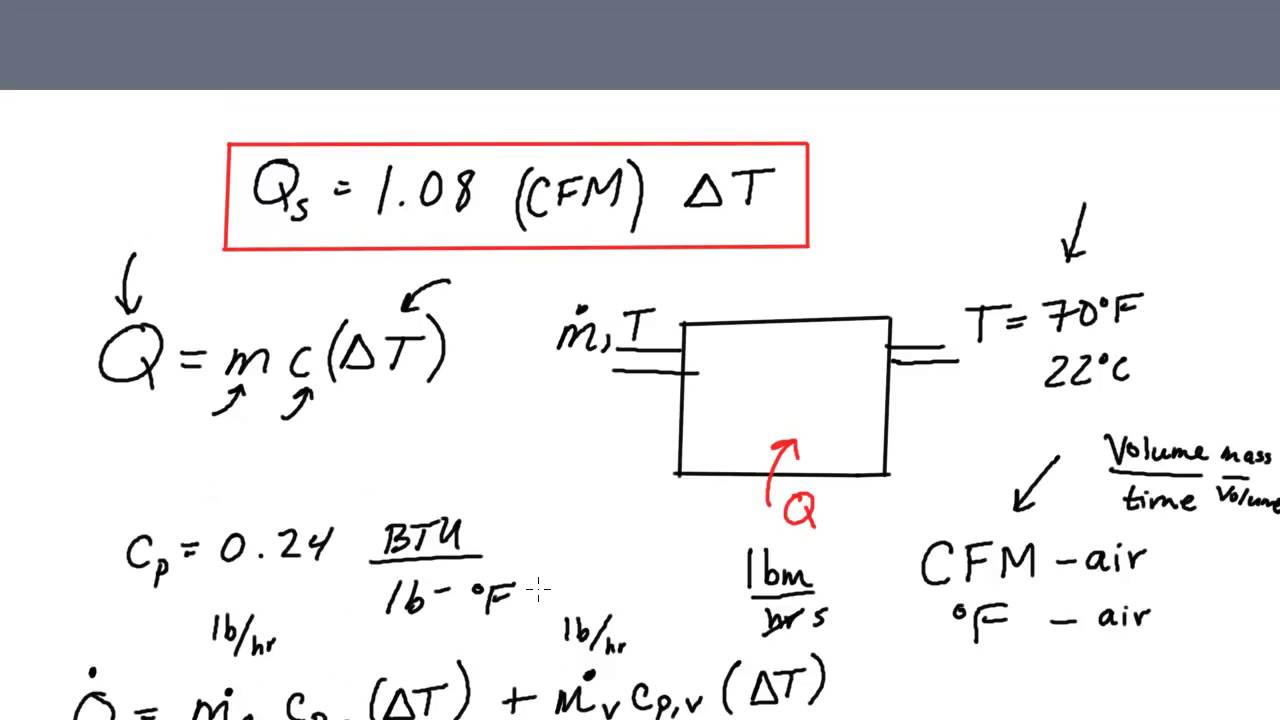
To calculate sensible heat load, you need to consider the amount of heat that is transferred through convection, radiation, and conduction. This type of heat transfer occurs when there is a temperature difference between two objects or environments. The sensible heat load calculation involves determining the amount of heat that needs to be added or removed from a space to maintain a comfortable temperature. This is typically done using a building's thermal characteristics, such as its insulation, window size, and occupancy.
Understanding the Components of Sensible Heat Load
The calculation of sensible heat load involves understanding the various components that contribute to it. These include the building's envelope, infiltration, ventilation, and internal gains. The building's envelope refers to the external walls, roof, and floors of the building, which can transfer heat through conduction and radiation. Infiltration refers to the unintended movement of air into the building, while ventilation refers to the intentional movement of air. Internal gains refer to the heat generated by occupants, lighting, and equipment.
- The building's envelope is a critical component of sensible heat load, as it can transfer heat through conduction and radiation.
- Infiltration and ventilation can also contribute to sensible heat load, as they can bring in cold or warm air from outside.
- Internal gains from occupants, lighting, and equipment can also generate heat that needs to be removed from the building.
Using the Heat Balance Equation
The heat balance equation is a fundamental tool for calculating sensible heat load. This equation takes into account the various components of sensible heat load, including convection, radiation, and conduction. The equation is as follows: Q = U A ΔT, where Q is the heat transfer, U is the overall heat transfer coefficient, A is the surface area, and ΔT is the temperature difference. By using this equation, you can calculate the sensible heat load of a building and determine the amount of heating or cooling needed to maintain a comfortable temperature.
- The heat balance equation is a simplified way to calculate sensible heat load, but it can be complex to apply in practice.
- The overall heat transfer coefficient (U) is a critical component of the equation, as it takes into account the thermal resistance of the building's envelope.
- The surface area (A) of the building's envelope is also an important factor, as it affects the amount of heat transfer that occurs.
Accounting for Internal Gains
Internal gains are an important component of sensible heat load, as they can generate a significant amount of heat. These gains come from occupants, lighting, and equipment, and can vary depending on the type of building and its occupancy. To calculate internal gains, you need to consider the number of occupants, the type and amount of lighting, and the type and amount of equipment. You can use schedules and load profiles to estimate the amount of internal gains at different times of the day and year.
- Occupants can generate a significant amount of heat, especially in buildings with high occupancy densities.
- Lighting can also generate heat, especially if it is inefficient or overused.
- Equipment such as computers, printers, and copiers can also generate heat and contribute to internal gains.
Using Software Tools to Calculate Sensible Heat Load
There are many software tools available to calculate sensible heat load, including building information modeling (BIM) tools and energy simulation tools. These tools can help you create a detailed building model and simulate the energy performance of the building over time. They can also help you analyze the sensible heat load of the building and identify opportunities for energy savings. Some popular software tools for calculating sensible heat load include EnergyPlus, eQUEST, and IESVE.
- Building information modeling! (BIM) tools can help you create a detailed building model and simulate the energy performance of the building.
- Energy simulation tools can help you analyze the sensible heat load of the building and identify opportunities for energy savings.
- Software tools can also help you optimize the building's design and operating strategies to minimize energy consumption and reduce greenhouse gas emissions.
Considering the Impact of Climate and Weather
Climate and weather can have a significant impact on sensible heat load, as they affect the temperature and humidity of the outdoor air. In hot and humid climates, the sensible heat load can be higher due to the need for cooling. In cold climates, the sensible heat load can be lower due to the need for heating. You need to consider the local climate and weather patterns when calculating sensible heat load, as this can affect the energy performance of the building.
- The local climate can affect the temperature and humidity of the outdoor air, which can impact the sensible heat load of the building.
- Weather patterns such as sunshine, wind, and precipitation can also affect the sensible heat load of the building.
- Climate change can also impact the sensible heat load of the building, as it can lead to more extreme weather events and changes in temperature and humidity.
How do you calculate total heat load due to air changes?
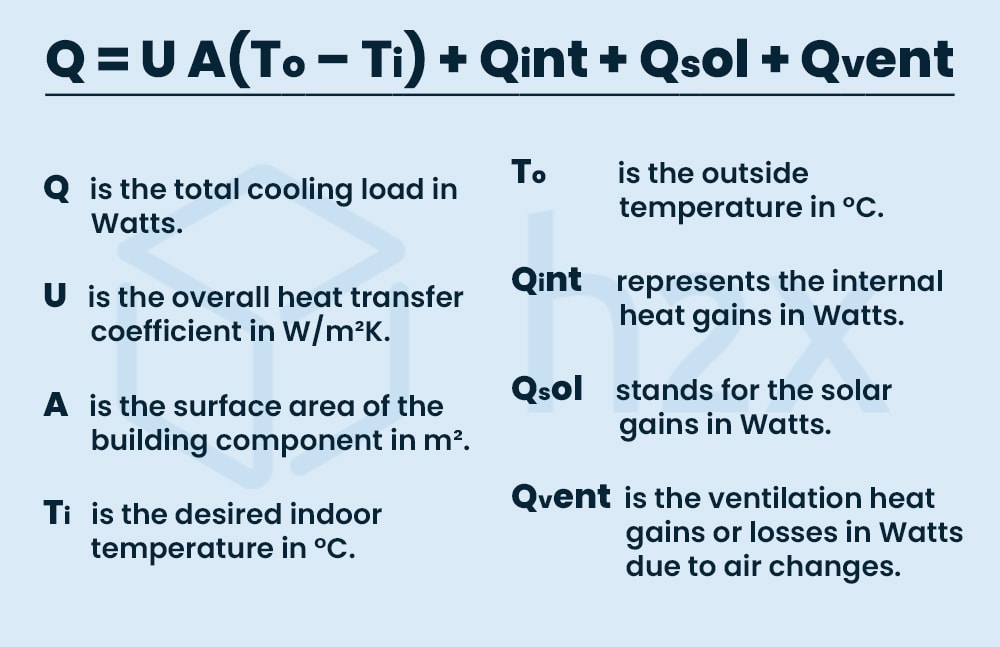
To calculate the total heat load due to air changes, you can use the following formula:
Q = ρ V ΔT (1 + (0.0012 (Gr - 35)))
where Q is the heat load, ρ is the density of air, V is the volume flow rate, ΔT is the temperature difference, Gr is the relative humidity, and (1 + (0.0012 (Gr - 35))) is the humidity correction factor.
Understanding the Components of the Formula
The formula to calculate the total heat load due to air changes involves several key components, including the density of air, volume flow rate, temperature difference, and humidity correction factor. To accurately calculate the heat load, it is essential to understand each of these components and how they interact with each other.
- The density of air is typically around 1.2 kg/m³ at standard conditions, but it can vary depending on factors such as temperature and humidity.
- The volume flow rate is the rate at which air is exchanged, typically measured in cubic meters per second (m³/s).
- The temperature difference is the difference between the indoor temperature and the outdoor temperature, which can affect the heat load.
Factors Affecting the Calculation
Several factors can affect the calculation of the total heat load due to air changes, including the outside air temperature, humidity levels, and air exchange rates.
- Outside air temperature can have a significant impact on the heat load, as it affects the temperature difference between the inside and outside.
- Humidity levels can also impact the heat load, as high humidity can increase the latent heat load.
- Air exchange rates can affect the volume flow rate, which in turn affects the heat load.
Importance of Accurate Calculations
Accurate calculations of the total heat load due to air changes are essential to ensure that heating, ventilation, and air conditioning (HVAC) systems are properly sized and configured.
- Undersized HVAC systems can lead to inadequate heating or cooling, resulting in discomfort and potential health issues.
- Oversized HVAC systems can result in energy waste and increased operating costs.
- Properly sized HVAC systems can provide optimal indoor air quality and thermal comfort, while minimizing energy consumption.
Tools and Resources for Calculations
There are various tools and resources available to help with the calculation of the total heat load due to air changes, including online calculators, software programs, and industry guidelines.
- ASHRAE (American Society of Heating, Refrigerating, and Air-Conditioning Engineers) provides guidelines and standards for calculating heat loads.
- EnergyPlus is a software program that can be used to model and simulate building energy performance, including heat loads.
- eQUEST is another software program that can be used to calculate heat loads and simulate building energy performance.
Best Practices for Minimizing Heat Load
There are several best practices that can be implemented to minimize the total heat load due to air changes, including building envelope optimization, window selection, and air sealing.
- Building envelope optimization involves designing and constructing the building envelope to minimize heat transfer and air leakage.
- Window selection involves choosing windows with low U-factors and solar heat gain coefficients to minimize heat gain.
- Air sealing involves sealing gaps and cracks in the building envelope to prevent air leakage and minimize heat load.
How to calculate sensible heat transfer for air?
To calculate sensible heat transfer for air, you need to understand the concept of heat transfer and the properties of air. Sensible heat transfer refers to the transfer of heat between two systems or objects without a change in the state of the substance, such as the temperature change of air. The calculation of sensible heat transfer for air involves the use of thermodynamic properties like specific heat capacity, density, and thermal conductivity.
Understanding Thermodynamic Properties
The calculation of sensible heat transfer for air requires an understanding of thermodynamic properties. These properties include specific heat capacity, which is the amount of heat energy required to raise the temperature of a unit mass of air by one degree, and density, which is the mass of air per unit volume. The thermal conductivity of air is also an important property, as it determines the rate at which heat is transferred through the air. The following list highlights the key thermodynamic properties:
- Specific heat capacity: 1.005 kJ/kg·K at 20°C and 1 atm
- Density: 1.2 kg/m³ at 20°C and 1 atm
- Thermal conductivity: 0.025 W/m·K at 20°C and 1 atm
Calculation of Sensible Heat Transfer
The calculation of sensible heat transfer for air involves the use of the heat transfer equation, which is Q = m·Cp·ΔT, where Q is the amount of heat transferred, m is the mass of air, Cp is the specific heat capacity, and ΔT is the change in temperature. This equation can be used to calculate the sensible heat transfer for air in various applications, such as heating and cooling systems. The following list outlines the steps involved in the calculation:
- Determine the mass flow rate of air
- Calculate the temperature difference between the initial and final states
- Use the heat transfer equation to calculate the sensible heat transfer
Factors Affecting Sensible Heat Transfer
Several factors can affect the sensible heat transfer for air, including temperature, humidity, and air velocity. The temperature difference between the air and the surrounding surface is the driving force for sensible heat transfer. The humidity of the air can also affect the sensible heat transfer, as it can change the specific heat capacity and thermal conductivity of the air. The following list highlights the key factors:
- Temperature difference: The driving force for sensible heat transfer
- Humidity: Affects the specific heat capacity and thermal conductivity of air
- Air velocity: Increases the convective heat transfer coefficient
Applications of Sensible Heat Transfer
Sensible heat transfer for air has various applications in heating, ventilation, and air conditioning (HVAC) systems, thermal energy storage systems, and wind turbines. In HVAC systems, sensible heat transfer is used to calculate the heating and cooling loads of buildings. In thermal energy storage systems, sensible heat transfer is used to calculate the energy storage capacity. The following list outlines the key applications:
- HVAC systems: Used to calculate heating and cooling loads
- Thermal energy storage systems: Used to calculate energy storage capacity
- Wind turbines: Used to calculate the aerodynamic performance
Importance of Accurate Calculation
Accurate calculation of sensible heat transfer for air is crucial in various applications, as it can affect the energy efficiency, cost, and performance of systems. Inaccurate calculations can lead to over-sized or under-sized systems, resulting in energy wastage and increased costs. The following list highlights the importance of accurate calculation:
- Energy efficiency: Accurate calculation can optimize energy efficiency
- Cost: Inaccurate calculation can lead to increased costs
- Performance: Accurate calculation can ensure optimal system performance
What is the 1.08 in the CFM formula?
The 1.08 in the CFM formula is a correction factor used to account for the density of air at standard conditions. This factor is necessary to ensure that the calculated cubic feet per minute (CFM) is accurate and takes into account the temperature, humidity, and barometric pressure of the air.
Understanding the CFM Formula
The CFM formula is used to calculate the volume flow rate of a gas or air in a duct or pipe. The formula is: CFM = (istantaneous velocity x duct area) / 1.08. The 1.08 factor is used to convert the standard cubic feet per minute to actual cubic feet per minute.
- The velocity of the air is measured in feet per minute.
- The duct area is measured in square feet.
- The correction factor of 1.08 is used to account for the density of air at standard conditions.
Importance of Correction Factor
The correction factor of 1.08 is crucial in ensuring that the calculated CFM is accurate and reliable. Without this factor, the calculated CFM would be inaccurate, leading to inefficient and unsafe system operation. The correction factor takes into account the variations in air density due to temperature, humidity, and barometric pressure.
- The temperature of the air affects its density.
- The humidity of the air affects its density.
- The barometric pressure of the air affects its density.
Standard Conditions
The standard conditions for air are defined as 70°F (21°C), 50% relative humidity, and 29.92 inHg (1013.25 mbar) barometric pressure. These conditions are used as a reference point for calculating the CFM. The correction factor of 1.08 is based on these standard conditions.
- The temperature is measured in degrees Fahrenheit.
- The relative humidity is measured as a percentage.
- The barometric pressure is measured in inches of mercury.
Calculating CFM
To calculate the CFM, the instantaneous velocity and duct area must be measured or calculated. The correction factor of 1.08 is then applied to the calculated standard cubic feet per minute to obtain the actual cubic feet per minute.
- The velocity is measured using an anemometer.
- The duct area is measured using a tape measure.
- The CFM is calculated using the formula.
Applications of CFM Formula
The CFM formula is widely used in various industries, including HVAC, aerospace, and chemical processing. The accurate calculation of CFM is critical in ensuring the safe and efficient operation of systems.
- The HVAC industry uses CFM to calculate airflow rates.
- The aerospace industry uses CFM to calculate airflow rates in aircraft.
- The chemical processing industry uses CFM to calculate gas flow rates.
Frequently Asked Questions (FAQs)
What is the purpose of the Building Sensible Heat Thermal Load with Air Exchange Calculator?
The Building Sensible Heat Thermal Load with Air Exchange Calculator is a tool designed to help architects, engineers, and builders determine the sensible heat gains and losses in a building due to air exchange. This calculator takes into account various factors such as the building's orientation, insulation, window size and type, infiltration rates, and ventilation systems to calculate the thermal load. The primary purpose of this calculator is to provide an accurate estimate of the heating and cooling requirements of a building, which is essential for designing an efficient and comfortable indoor environment. By using this calculator, users can identify areas where energy can be saved and make informed decisions about building design and mechanical systems. The calculator also helps users to determine the cost-effectiveness of different energy-saving strategies and to compare the performance of different building designs.
How does the calculator account for air exchange in thermal load calculations?
The Building Sensible Heat Thermal Load with Air Exchange Calculator accounts for air exchange by considering the infiltration rates and ventilation systems in the building. Infiltration refers to the unwanted air leakage through cracks and gaps in the building envelope, while ventilation refers to the intentional air exchange through mechanical systems or natural ventilation strategies. The calculator uses ASHRAE standards and industry-accepted methods to estimate the air exchange rates and calculate the corresponding thermal load. The calculator also considers the temperature and humidity differences between the indoor and outdoor environments, as well as the air density and specific heat of the air. By accounting for air exchange, the calculator provides a more accurate estimate of the thermal load and helps users to design efficient and effective heating, ventilation, and air conditioning (HVAC) systems.
What are the key inputs required for the calculator to estimate thermal load?
The Building Sensible Heat Thermal Load with Air Exchange Calculator requires several key inputs to estimate the thermal load. These inputs include the building's location, orientation, and geometry, as well as the insulation and window characteristics. The calculator also requires information about the infiltration rates, ventilation systems, and mechanical equipment. Additionally, users must input the indoor and outdoor temperature and humidity levels, as well as the air exchange rates and occupancy schedules. The calculator also considers the internal heat gains from people, lighting, and equipment, as well as the solar radiation and shading effects. By providing these inputs, users can obtain an accurate estimate of the thermal load and make informed decisions about building design and mechanical systems. The calculator also allows users to sensitivity test different design scenarios and energy-saving strategies.
How can the calculator be used to optimize building design and energy efficiency?
The Building Sensible Heat Thermal Load with Air Exchange Calculator can be used to optimize building design and energy efficiency by identifying areas where energy can be saved and providing an accurate estimate of the thermal load. Users can use the calculator to compare the performance of different building designs and mechanical systems, and to evaluate the cost-effectiveness of different energy-saving strategies. The calculator can also be used to sensitivity test different design scenarios and to identify the most critical factors affecting the thermal load. By using the calculator, users can optimize the building envelope, window size and type, and mechanical systems to minimize energy consumption and reduce greenhouse gas emissions. The calculator can also be used to evaluate the performance of renewable energy systems, such as solar and geothermal systems, and to identify opportunities for energy savings and cost reductions. By optimizing building design and energy efficiency, users can create comfortable, healthy, and sustainable indoor environments while minimizing energy consumption and environmental impact.
Deja una respuesta
Entradas Relacionadas