
Pressure Vessel Pipe Stress Longitudinal Stress (Circumferential Joint) Calculator

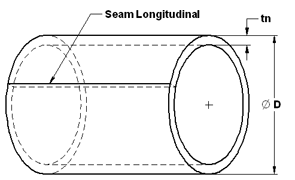
The Pressure Vessel Pipe Stress Longitudinal Stress Calculator is a vital tool for engineers and designers working with cylindrical vessels and pipes. It calculates the longitudinal stress in a vessel or pipe due to internal pressure, taking into account the circumferential joint. This stress is crucial in determining the structural integrity and safety of the vessel or pipe. The calculator provides a quick and accurate method for calculating longitudinal stress, allowing users to ensure their designs meet the required standards and regulations, and to make informed decisions about materials and construction methods. Accurate calculations are essential.
- Understanding Longitudinal Stress in Pressure Vessels and Pipes with the Circumferential Joint Calculator
- What is the formula for circumferential stress and longitudinal stress?
- What is the formula for longitudinal stress of a pressure vessel?
- What is the formula for longitudinal stress pipe?
- What is the formula for the hoop law?
-
Frequently Asked Questions (FAQs)
- What is the Pressure Vessel Pipe Stress Longitudinal Stress Calculator and how does it work?
- How does the Pressure Vessel Pipe Stress Longitudinal Stress Calculator account for circumferential joints?
- What are the key factors that affect the longitudinal stress calculation in the Pressure Vessel Pipe Stress Longitudinal Stress Calculator?
- How can the Pressure Vessel Pipe Stress Longitudinal Stress Calculator be used to optimize pressure vessel design?
Understanding Longitudinal Stress in Pressure Vessels and Pipes with the Circumferential Joint Calculator
The Pressure Vessel Pipe Stress Longitudinal Stress (Circumferential Joint) Calculator is a critical tool used in the engineering and design of pressure vessels and pipes to calculate the longitudinal stress that occurs due to internal pressure. This calculator is especially important in the context of circumferential joints, where the stress distribution can be complex due to the nature of the joint. The calculator takes into account various parameters such as the internal pressure, the diameter of the vessel or pipe, the wall thickness, and the material properties to determine the longitudinal stress.
What is Longitudinal Stress in Pressure Vessels?
Longitudinal stress refers to the tensile stress that acts along the longitudinal axis of a pressure vessel or pipe. This type of stress is caused by the internal pressure that tries to stretch the vessel or pipe along its length. The calculation of longitudinal stress is crucial because excessive stress can lead to failure of the vessel or pipe, resulting in safety hazards and downtime. The Pressure Vessel Pipe Stress Longitudinal Stress (Circumferential Joint) Calculator is designed to calculate this stress accurately, considering the effects of the circumferential joint on stress distribution.
How Does the Circumferential Joint Affect Stress Distribution?
The circumferential joint in a pressure vessel or pipe can significantly affect the distribution of longitudinal stress. The joint can introduce stress concentrations and alter the stress pattern along the vessel or pipe. The calculator accounts for these effects by using advanced mathematical models that simulate the behavior of the joint under internal pressure. This ensures that the calculated longitudinal stress is accurate and reliable, reflecting the real-world conditions of the vessel or pipe.
Key Parameters Considered by the Calculator
The Pressure Vessel Pipe Stress Longitudinal Stress (Circumferential Joint) Calculator considers several key parameters to calculate the longitudinal stress. These include:
| Parameter | Description |
|---|---|
| Internal Pressure | The pressure inside the vessel or pipe, which causes stress. |
| Diameter | The diameter of the vessel or pipe, affecting stress distribution. |
| Wall Thickness | The thickness of the vessel or pipe wall, influencing stress levels. |
| Material Properties | The mechanical properties of the material, such as elastic modulus and poisson's ratio. |
These parameters are crucial for accurately determining the longitudinal stress in pressure vessels and pipes with circumferential joints.
Applications of the Calculator in Engineering
The Pressure Vessel Pipe Stress Longitudinal Stress (Circumferential Joint) Calculator has numerous applications in engineering design and safety assessment of pressure vessels and pipes. It is used to:
- Design new vessels and pipes to withstand internal pressure without failure.
- Assess the safety of existing vessels and pipes under various operating conditions.
- Optimize the design of vessels and pipes for minimum weight and maximum safety.
The calculator is a valuable tool for engineers to ensure the reliability and integrity of pressure vessels and pipes in industrial applications.
Benefits of Using the Calculator
Using the Pressure Vessel Pipe Stress Longitudinal Stress (Circumferential Joint) Calculator offers several benefits, including:
- Improved accuracy in calculating longitudinal stress.
- Enhanced safety through the identification of potential failure modes.
- Reduced costs by optimizing the design of vessels and pipes.
- Increased Efficiency in the design and analysis process.
By leveraging these benefits, engineers can ensure that pressure vessels and pipes are designed and operated safely and efficiently, minimizing the risk of accidents and downtime. The calculator is an essential tool in the engineering toolbox for anyone working with pressure vessels and pipes.
What is the formula for circumferential stress and longitudinal stress?

The formula for circumferential stress and longitudinal stress is used to calculate the stress on a cylinder or a pipe due to internal pressure. The circumferential stress, also known as hoop stress, is given by the formula: σc = (p r) / t, where σc is the circumferential stress, p is the internal pressure, r is the radius of the cylinder, and t is the thickness of the cylinder. The longitudinal stress, also known as axial stress, is given by the formula: σl = (p r) / (2 t), where σl is the longitudinal stress.
Understanding Circumferential Stress
Circumferential stress is a type of stress that occurs in a cylinder or a pipe due to internal pressure. It is caused by the pressure exerted by the fluid inside the cylinder on the walls of the cylinder. The formula for circumferential stress is used to calculate the stress on the cylinder. The key factors that affect circumferential stress are:
- The internal pressure of the fluid
- The radius of the cylinder
- The thickness of the cylinder
These factors are important in determining the circumferential stress on a cylinder.
Understanding Longitudinal Stress
Longitudinal stress is another type of stress that occurs in a cylinder or a pipe due to internal pressure. It is caused by the pressure exerted by the fluid inside the cylinder on the ends of the cylinder. The formula for longitudinal stress is used to calculate the stress on the cylinder. The key factors that affect longitudinal stress are:
- The internal pressure of the fluid
- The radius of the cylinder
- The thickness of the cylinder
These factors are important in determining the longitudinal stress on a cylinder.
Factors Affecting Circumferential and Longitudinal Stress
There are several factors that affect circumferential stress and longitudinal stress. These factors include the internal pressure of the fluid, the radius of the cylinder, and the thickness of the cylinder. Other factors such as the material properties of the cylinder and the temperature also play a role in determining the stress on the cylinder. The key factors are:
- Internal pressure
- Radius of the cylinder
- Thickness of the cylinder
These factors are important in determining the stress on a cylinder.
Applications of Circumferential and Longitudinal Stress
The formulas for circumferential stress and longitudinal stress have several applications in engineering. These formulas are used to design and analyze pressure vessels, pipes, and cylinders. The key applications are:
- Design of pressure vessels
- Analysis of pipes and cylinders
- Calculation of stress on a cylinder
These applications are important in ensuring the safety and reliability of engineering systems.
Importance of Circumferential and Longitudinal Stress
The formulas for circumferential stress and longitudinal stress are important in engineering because they help to ensure the safety and reliability of engineering systems. The stress on a cylinder or a pipe can cause failure if it is not properly designed. The key importance of these formulas is:
- Ensuring the safety of engineering systems
- Preventing failure of pressure vessels and pipes
- Calculating the stress on a cylinder or a pipe
These are important in ensuring the reliability and efficiency of engineering systems. The circumferential stress and longitudinal stress formulas are critical in the design and analysis of pressure vessels and pipes.
What is the formula for longitudinal stress of a pressure vessel?

The formula for longitudinal stress of a pressure vessel is given by the Hoop Stress formula, which is σl = (pr)/2t, where σl is the longitudinal stress, p is the internal pressure, r is the radius of the vessel, and t is the thickness of the vessel wall. This formula is used to calculate the stress in the longitudinal direction of a cylindrical pressure vessel.
Importance of Longitudinal Stress in Pressure Vessels
Longitudinal stress is a critical parameter in the design and analysis of pressure vessels. The stress in the longitudinal direction can cause the vessel to fail or burst if it is not properly designed. The following are some key points to consider:
- The longitudinal stress is typically lower than the hoop stress, which is the stress in the circumferential direction.
- The longitudinal stress can be affected by the end conditions of the vessel, such as the type of closure used.
- The material properties, such as the yield strength and ultimate tensile strength, can also impact the longitudinal stress.
Factors Affecting Longitudinal Stress in Pressure Vessels
There are several factors that can affect the longitudinal stress in a pressure vessel. These include the internal pressure, radius, and thickness of the vessel, as well as the material properties. The following are some key factors to consider:
- The internal pressure is a major factor in determining the longitudinal stress, as it is the driving force behind the stress.
- The radius of the vessel can also impact the longitudinal stress, with larger radii resulting in higher stresses.
- The thickness of the vessel wall can also affect the longitudinal stress, with thicker walls resulting in lower stresses.
Calculation of Longitudinal Stress in Pressure Vessels
The calculation of longitudinal stress in a pressure vessel involves using the Hoop Stress formula, σl = (pr)/2t. This formula requires knowledge of the internal pressure, radius, and thickness of the vessel. The following are some key steps to follow:
- Determine the internal pressure of the vessel, which is typically given in pounds per square inch (psi) or pascals (Pa).
- Determine the radius of the vessel, which is typically given in inches or millimeters.
- Determine the thickness of the vessel wall, which is typically given in inches or millimeters.
Design Considerations for Longitudinal Stress in Pressure Vessels
When designing a pressure vessel, it is essential to consider the longitudinal stress to ensure that the vessel can withstand the internal pressure. The following are some key design considerations:
- The material selection is critical, as it must be able to withstand the stresses and strains imposed by the internal pressure.
- The vessel geometry must be carefully designed to minimize the stresses and strains.
- The supports and restraints must be designed to prevent buckling or collapse of the vessel.
Analysis of Longitudinal Stress in Pressure Vessels
The analysis of longitudinal stress in a pressure vessel involves using finite element analysis (FEA) or other numerical methods to determine the stress and strain distributions within the vessel. The following are some key steps to follow:
- Mesh the vessel geometry to create a finite element model.
- Apply the internal pressure and other loads to the model.
- Run the analysis to determine the stress and strain distributions within the vessel.
What is the formula for longitudinal stress pipe?

The formula for longitudinal stress in a pipe is given by the Barlow's formula, which is: σl = (p d) / (4 t), where σl is the longitudinal stress, p is the internal pressure, d is the diameter of the pipe, and t is the thickness of the pipe wall.
Introduction to Longitudinal Stress
Longitudinal stress is a type of stress that occurs in a pipe due to the internal pressure. It is a critical factor in determining the strength and safety of the pipe. The longitudinal stress formula is used to calculate the stress in the pipe, which helps in designing and constructing the pipe.
- The longitudinal stress formula is important for pipeline engineers to ensure the safety and reliability of the pipe.
- The internal pressure is a key factor in determining the longitudinal stress in the pipe.
- The diameter and thickness of the pipe also play a crucial role in calculating the longitudinal stress.
Factors Affecting Longitudinal Stress
Several factors affect the longitudinal stress in a pipe, including the internal pressure, diameter, thickness, and material properties. The internal pressure is the most significant factor, as it directly affects the stress in the pipe.
- The internal pressure is affected by the flow rate and density of the fluid in the pipe.
- The diameter and thickness of the pipe are also critical factors in determining the longitudinal stress.
- The material properties, such as the yield strength and tensile strength, also play a role in determining the longitudinal stress.
Calculation of Longitudinal Stress
The longitudinal stress can be calculated using the Barlow's formula: σl = (p d) / (4 t). This formula requires the internal pressure, diameter, and thickness of the pipe.
- The internal pressure must be measured or calculated accurately to determine the longitudinal stress.
- The diameter and thickness of the pipe must also be measured accurately to ensure the correct calculation of longitudinal stress.
- The material properties, such as the yield strength and tensile strength, must also be considered when calculating the longitudinal stress.
Importance of Longitudinal Stress
The longitudinal stress is a critical factor in determining the safety and reliability of a pipe. High longitudinal stress can lead to pipe failure, which can have serious consequences.
- Pipe failure can result in environmental damage, economic losses, and human injury.
- Longitudinal stress must be carefully managed to ensure the safety and reliability of the pipe.
- Regular maintenance and inspection are necessary to monitor the longitudinal stress and prevent pipe failure.
Design Considerations for Longitudinal Stress
When designing a pipe, it is essential to consider the longitudinal stress to ensure the safety and reliability of the pipe. The design must take into account the internal pressure, diameter, thickness, and material properties.
- The design must ensure that the longitudinal stress is within the acceptable limits to prevent pipe failure.
- The material selection must be based on the material properties, such as the yield strength and tensile strength.
- The pipe wall thickness must be carefully designed to withstand the longitudinal stress and prevent pipe failure.
What is the formula for the hoop law?

The formula for the hoop stress law, also known as Hoop's law or Hoop's formula, is a mathematical relationship that describes the stress and strain behavior of a cylinder under internal pressure. The formula is given by: σθ = (p r) / t, where σθ is the hoop stress, p is the internal pressure, r is the radius of the cylinder, and t is the thickness of the cylinder wall.
Understanding the Variables
The variables involved in the hoop law formula are critical to understanding the behavior of the cylinder under internal pressure. The internal pressure (p) is the pressure exerted on the inside of the cylinder, while the radius (r) is the distance from the center of the cylinder to its outer edge. The thickness (t) of the cylinder wall is also an important factor, as it determines the stress and strain behavior of the material. Some key points to consider when evaluating the variables are:
- The internal pressure must be measured in units of pressure, such as pounds per square inch (PSI) or Pascals (Pa).
- The radius and thickness must be measured in units of length, such as inches or meters.
- The hoop stress is typically measured in units of stress, such as pounds per square inch (PSI) or Pascals (Pa).
Applications of the Hoop Law
The hoop law has numerous applications in engineering and materials science, particularly in the design and analysis of pressure vessels, pipes, and cylindrical containers. The formula can be used to calculate the stress and strain behavior of these structures under internal pressure, allowing engineers to design safer and more efficient systems. Some examples of applications include:
- Pressure vessel design: The hoop law is used to calculate the stress and strain behavior of pressure vessels under internal pressure.
- Pipe design: The formula is used to calculate the stress and strain behavior of pipes under internal pressure.
- Cylindrical container design: The hoop law is used to calculate the stress and strain behavior of cylindrical containers under internal pressure.
Assumptions and Limitations
The hoop law is based on several assumptions and limitations, including the assumption that the material is isotropic and homogeneous, and that the stress and strain behavior is linear elastic. The formula also assumes that the internal pressure is uniform and that the cylinder is thin-walled. Some key points to consider when evaluating the assumptions and limitations are:
- The material must be isotropic and homogeneous to ensure that the stress and strain behavior is uniform.
- The stress and strain behavior must be linear elastic to ensure that the formula is applicable.
- The internal pressure must be uniform to ensure that the stress and strain behavior is consistent.
Derivation of the Hoop Law
The hoop law can be derived using equilibrium and stress analysis, by considering the forces and moments acting on a small element of the cylinder. The formula can be derived by summing the forces and moments and equating them to the stress and strain behavior of the material. Some key points to consider when deriving the hoop law are:
- The forces and moments must be balanced to ensure that the equilibrium is maintained.
- The stress and strain behavior must be consistent with the material properties.
- The derivation must be rigorous and mathematically sound to ensure that the formula is accurate.
Comparison with Other Formulas
The hoop law can be compared to other formulas and equations used in engineering and materials science, such as the Lame's equation and the Barlow's formula. These formulas are used to calculate the stress and strain behavior of structures under internal pressure, and can be used in conjunction with the hoop law to provide a more comprehensive understanding of the behavior. Some key points to consider when comparing the formulas are:
- The Lame's equation is used to calculate the stress and strain behavior of thick-walled cylinders under internal pressure.
- The Barlow's formula is used to calculate the stress and strain behavior of thin-walled cylinders under internal pressure.
- The hoop law is used to calculate the stress and strain behavior of thin-walled cylinders under internal pressure.
Frequently Asked Questions (FAQs)
What is the Pressure Vessel Pipe Stress Longitudinal Stress Calculator and how does it work?
The Pressure Vessel Pipe Stress Longitudinal Stress Calculator is a tool used to calculate the longitudinal stress in a pressure vessel due to internal pressure, external loads, and other factors. This calculator is designed to help engineers and designers determine the stress and strain on a pressure vessel and ensure that it can withstand the operating conditions. The calculator takes into account various factors such as the internal pressure, external loads, vessel diameter, wall thickness, and material properties to calculate the longitudinal stress. The calculator uses complex algorithms and formulas to calculate the stress and strain on the pressure vessel, providing accurate results that can be used to design and optimize pressure vessels.
How does the Pressure Vessel Pipe Stress Longitudinal Stress Calculator account for circumferential joints?
The Pressure Vessel Pipe Stress Longitudinal Stress Calculator accounts for circumferential joints by using specialized formulas and algorithms that take into account the joint geometry and material properties. The calculator considers the joint type, joint size, and joint orientation to determine the stress and strain on the joint. The calculator also considers the welding process and weld quality to determine the joint strength and stiffness. By accounting for circumferential joints, the calculator provides a more accurate calculation of the longitudinal stress and strain on the pressure vessel, allowing engineers and designers to design and optimize pressure vessels with circumferential joints.
What are the key factors that affect the longitudinal stress calculation in the Pressure Vessel Pipe Stress Longitudinal Stress Calculator?
The key factors that affect the longitudinal stress calculation in the Pressure Vessel Pipe Stress Longitudinal Stress Calculator include the internal pressure, external loads, vessel diameter, wall thickness, material properties, and joint geometry. The calculator also considers the operating conditions, such as temperature and corrosion, to determine the stress and strain on the pressure vessel. Additionally, the calculator takes into account the fabrication process and installation conditions to determine the residual stress and strain on the pressure vessel. By considering these factors, the calculator provides a comprehensive calculation of the longitudinal stress and strain on the pressure vessel, allowing engineers and designers to design and optimize pressure vessels for various applications.
How can the Pressure Vessel Pipe Stress Longitudinal Stress Calculator be used to optimize pressure vessel design?
The Pressure Vessel Pipe Stress Longitudinal Stress Calculator can be used to optimize pressure vessel design by allowing engineers and designers to iterate and refine their designs quickly and easily. The calculator provides instant feedback on the stress and strain on the pressure vessel, allowing designers to adjust and optimize their designs to meet the operating conditions and functional requirements. The calculator also allows designers to compare and evaluate different design options, materials, and fabrication processes to determine the most cost-effective and efficient solution. By using the calculator, engineers and designers can reduce the risk of failure and improve the safety and reliability of pressure vessels, while also reducing the development time and cost.
Deja una respuesta
Entradas Relacionadas