
Ohms Law Equation and Calculator

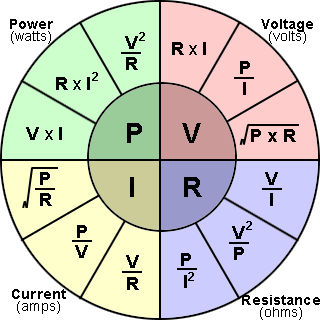
Ohm's Law is a fundamental principle in electronics that describes the relationship between voltage, current, and resistance in a conductor. The Ohm's Law equation, V=IR, is a simple yet powerful tool for calculating these values. With the ability to rearrange the equation to solve for any variable, it is an essential formula for electricians, engineers, and students alike. This article provides an in-depth look at the Ohm's Law equation and includes a calculator to help simplify the calculation process, making it easier to apply the principles of Ohm's Law in real-world applications. The equation is universally applicable.
Understanding Ohm's Law Equation and Calculator
Ohm's Law is a fundamental principle in electrical engineering that describes the relationship between voltage, current, and resistance in an electric circuit. The equation is often expressed as V = IR, where V is the voltage, I is the current, and R is the resistance. This equation can be rearranged to solve for any of the variables, making it a versatile tool for calculating various electrical quantities.
What is Ohm's Law Equation?
Ohm's Law equation is a mathematical formula that describes the relationship between voltage, current, and resistance in an electric circuit. The equation is typically expressed as V = IR, where V is the voltage in volts (V), I is the current in amperes (A), and R is the resistance in ohms (Ω). This equation can be used to calculate the voltage across a circuit, the current flowing through a circuit, or the resistance of a circuit.
How to Use Ohm's Law Calculator
An Ohm's Law calculator is a tool that allows you to calculate voltage, current, or resistance using the Ohm's Law equation. To use the calculator, simply enter the known values and select the variable you want to calculate. For example, if you know the voltage and resistance, you can calculate the current using the equation I = V/R. The calculator will then provide the calculated value.
Applications of Ohm's Law
Ohm's Law has numerous applications in electrical engineering, including circuit design, troubleshooting, and analysis. It can be used to calculate the power consumption of a circuit, the efficiency of a system, or the safety of a design. Additionally, Ohm's Law is essential for understanding more complex electrical concepts, such as impedance and reactance.
Limitations of Ohm's Law
While Ohm's Law is a powerful tool, it has limitations. It only applies to linear circuits, where the relationship between voltage and current is directly proportional. In non-linear circuits, such as those with diodes or transistors, Ohm's Law does not apply. Additionally, Ohm's Law assumes that the circuit is in a steady-state condition, meaning that the voltage and current are not changing over time.
Real-World Examples of Ohm's Law
Ohm's Law has numerous real-world applications, including electronic devices, power systems, and medical equipment. For example, Ohm's Law can be used to calculate the power consumption of a smartphone, the efficiency of a solar panel, or the safety of a medical device. The following table illustrates some common examples of Ohm's Law in real-world applications:
| Application | Voltage | Current | Resistance |
|---|---|---|---|
| Smartphone | 5V | 1A | 5Ω |
| Solar Panel | 12V | 2A | 6Ω |
| Medical Device | 9V | 0.5A | 18Ω |
How do you calculate the Ohm's law?
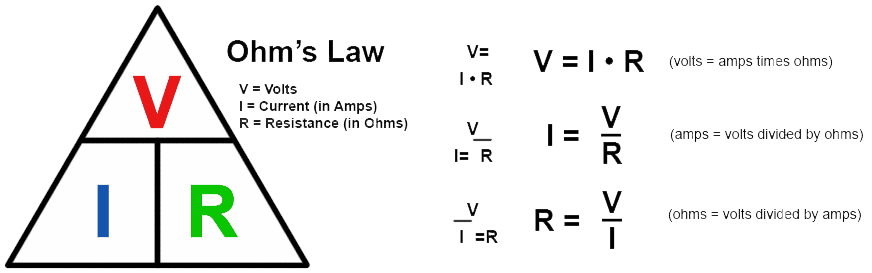
To calculate Ohm's law, you need to understand the relationship between voltage, current, and resistance. Ohm's law states that the current flowing through a conductor is directly proportional to the voltage applied and inversely proportional to the resistance of the conductor. The formula for Ohm's law is I = V/R, where I is the current in amps, V is the voltage in volts, and R is the resistance in ohms.
Understanding the Components of Ohm's Law
To apply Ohm's law, it's essential to understand the components involved. The voltage is the potential difference between two points in a circuit, the current is the flow of electrons, and the resistance is the opposition to the flow of electrons. Here are the key points to consider:
- The voltage source is the driving force behind the current flow.
- The current is the result of the voltage applied and the resistance in the circuit.
- The resistance of the conductor affects the amount of current that flows.
Calculating Voltage Using Ohm's Law
If you know the current and resistance of a circuit, you can calculate the voltage using the formula V = IR. This is useful when you need to determine the voltage required to produce a certain current through a known resistance. Consider the following:
- Current and resistance values are known or can be measured.
- Voltage can be calculated using the formula V = IR.
- Voltage is essential for designing and analyzing electronic circuits.
Calculating Current Using Ohm's Law
If you know the voltage and resistance of a circuit, you can calculate the current using the formula I = V/R. This is useful when you need to determine the current that will flow through a circuit with a known voltage and resistance. Here are the key points:
- Voltage and resistance values are known or can be measured.
- Current can be calculated using the formula I = V/R.
- Current is crucial for designing and analyzing electronic circuits.
Calculating Resistance Using Ohm's Law
If you know the voltage and current of a circuit, you can calculate the resistance using the formula R = V/I. This is useful when you need to determine the resistance of a conductor or circuit component. Consider the following:
- Voltage and current values are known or can be measured.
- Resistance can be calculated using the formula R = V/I.
- Resistance is essential for understanding the behavior of electronic circuits.
Applying Ohm's Law in Real-World Scenarios
Ohm's law has numerous practical applications in fields such as electrical engineering, electronics, and physics. It's used to design and analyze electronic circuits, including power supplies, amplifiers, and filters. Here are some examples:
- Power supplies rely on Ohm's law to regulate voltage and current.
- Amplifiers use Ohm's law to control gain and output voltage.
- Filters apply Ohm's law to select specific frequency ranges.
What is Ohm's law as a formula?
Ohm's law as a formula is expressed as V = IR, where V represents the voltage, I represents the current, and R represents the resistance. This formula is a fundamental concept in electric circuits and is used to calculate the relationship between these three quantities.
Understanding the Components of Ohm's Law
The components of Ohm's law are voltage, current, and resistance. Voltage is the electromotive force that drives the current through a circuit, current is the flow of electrons through the circuit, and resistance is the opposition to the flow of current.
- The voltage is measured in volts (V) and is the potential difference between two points in a circuit.
- The current is measured in amperes (A) and is the rate of flow of electrons through a circuit.
- The resistance is measured in ohms (Ω) and is the opposition to the flow of current through a circuit.
Applying Ohm's Law to Electric Circuits
Ohm's law can be applied to electric circuits to calculate the value of voltage, current, or resistance. By rearranging the formula, we can solve for any of these quantities. For example, if we know the voltage and resistance, we can calculate the current.
- Voltage can be calculated using the formula V = IR.
- Current can be calculated using the formula I = V/R.
- Resistance can be calculated using the formula R = V/I.
Limitations of Ohm's Law
Ohm's law has some limitations and is not applicable to all types of electric circuits. For example, it does not apply to non-linear circuits, such as those containing diodes or transistors. Additionally, it assumes that the resistance is constant, which may not always be the case.
- Non-linear circuits do not follow Ohm's law and require more complex analysis.
- Temperature can affect the resistance of a circuit, making it non-constant.
- High-frequency circuits can also deviate from Ohm's law due to inductive and capacitive effects.
Real-World Applications of Ohm's Law
Ohm's law has many real-world applications in fields such as electrical engineering, electronics, and physics. It is used to design and analyze electric circuits, including power systems, communication systems, and control systems.
- Electric power distribution systems rely on Ohm's law to calculate voltage and current levels.
- Electronic devices, such as amplifiers and filters, use Ohm's law to design and optimize their circuits.
- Medical devices, such as defibrillators and pacemakers, rely on Ohm's law to deliver life-saving therapies.
Derivations and Proofs of Ohm's Law
Ohm's law can be derived from the drift velocity of electrons in a conductor. The proof of Ohm's law involves experimental verification and theoretical justification.
- The drift velocity of electrons is proportional to the electric field and resistance of the conductor.
- Experimental measurements of voltage, current, and resistance have consistently verified Ohm's law.
- Theoretical justifications, such as quantum mechanics and statistical mechanics, provide a fundamental understanding of Ohm's law.
What are the 3 Ohm's law formulas?
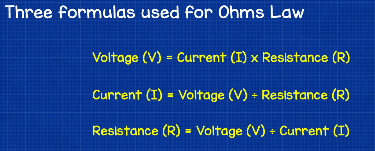
The 3 Ohm's law formulas are used to calculate the voltage, current, and resistance in an electric circuit. The formulas are:
- V = IR (Voltage = Current x Resistance)
- I = V/R (Current = Voltage / Resistance)
- R = V/I (Resistance = Voltage / Current)
Understanding Ohm's Law
Ohm's law is a fundamental principle in electronics that describes the relationship between voltage, current, and resistance. To apply Ohm's law, it is essential to understand the definitions of these three quantities. The law states that the current flowing through a conductor is directly proportional to the voltage applied across it, and inversely proportional to the resistance of the conductor. This can be expressed using the following formulas:
- Voltage is the potential difference between two points in a circuit, measured in volts (V).
- Current is the flow of electrons through a conductor, measured in amperes (A).
- Resistance is the opposition to the flow of electrons, measured in ohms (Ω).
Calculating Voltage
To calculate the voltage in a circuit, we can use the formula V = IR. This formula states that the voltage (V) is equal to the product of the current (I) and the resistance (R). For example, if the current is 2 amps and the resistance is 3 ohms, the voltage would be 6 volts. The steps to calculate voltage are:
- Identify the current flowing through the circuit.
- Identify the resistance of the circuit.
- Multiply the current and resistance to get the voltage.
Calculating Current
To calculate the current in a circuit, we can use the formula I = V/R. This formula states that the current (I) is equal to the voltage (V) divided by the resistance (R). For example, if the voltage is 12 volts and the resistance is 4 ohms, the current would be 3 amps. The steps to calculate current are:
- Identify the voltage applied across the circuit.
- Identify the resistance of the circuit.
- Divide the voltage by the resistance to get the current.
Calculating Resistance
To calculate the resistance in a circuit, we can use the formula R = V/I. This formula states that the resistance (R) is equal to the voltage (V) divided by the current (I). For example, if the voltage is 10 volts and the current is 2 amps, the resistance would be 5 ohms. The steps to calculate resistance are:
- Identify the voltage applied across the circuit.
- Identify the current flowing through the circuit.
- Divide the voltage by the current to get the resistance.
Applying Ohm's Law in Real-World Scenarios
Ohm's law has numerous practical applications in the design and analysis of electronic circuits. For instance, it can be used to determine the voltage required to produce a certain current through a given resistance, or to calculate the resistance needed to limit the current to a safe value. The key steps to apply Ohm's law in real-world scenarios are:
- Identify the known quantities in the circuit, such as voltage, current, or resistance.
- Select the appropriate formula based on the unknown quantity being calculated.
- Plug in the known values and solve for the unknown quantity.
How do you calculate I from P and V?
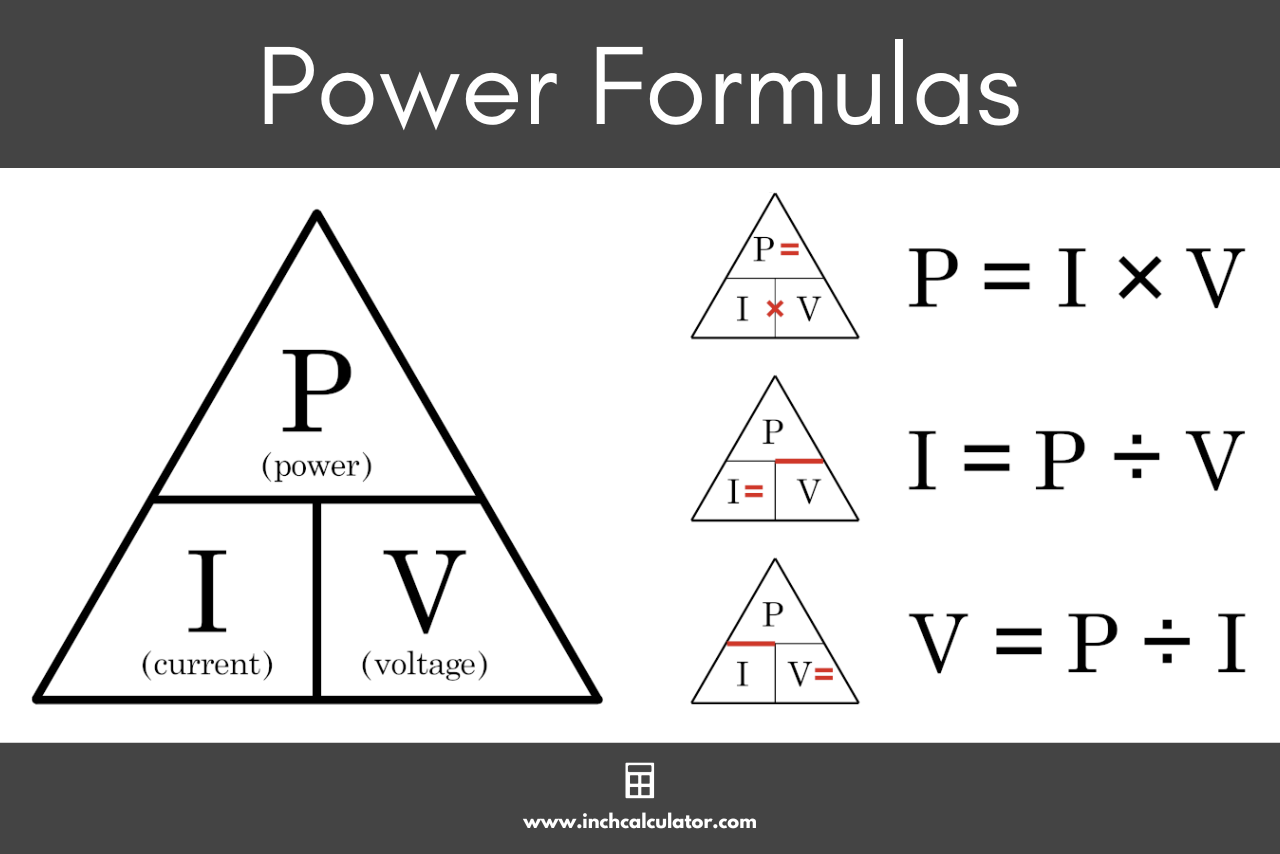
To calculate current (I) from power (P) and voltage (V), you can use the formula: I = P / V. This formula is based on the definition of power as the product of current and voltage. By rearranging the formula, you can solve for current.
Understanding the Formula
The formula I = P / V is a fundamental concept in electronics and physics. It states that current is equal to power divided by voltage. This formula can be used to calculate current in a variety of situations, including electrical circuits and power systems. Here are some key points to consider:
- The formula assumes that the power and voltage values are given in the same units, such as watts and volts.
- The formula can be used to calculate direct current (DC) or alternating current (AC), depending on the context.
- The formula is also used in power engineering to design and optimize power systems.
- Electrical engineers use this formula to calculate current in a variety of applications, including power transmission and distribution.
Applications of the Formula
The formula I = P / V has numerous applications in engineering and physics. It is used to calculate current in electrical circuits, power systems, and electronic devices. Here are some examples:
- Power transmission lines use this formula to calculate current and determine the required conductor size.
- Electronic devices such as motors and generators rely on this formula to calculate current and optimize performance.
- Renewable energy systems such as solar panels and wind turbines use this formula to calculate current and determine the required inverter size.
- Power factor correction systems use this formula to calculate current and optimize power factor.
- Fault current calculation is an essential application of this formula to determine the required circuit breaker size.
Limitations of the Formula
While the formula I = P / V is widely used, it has some limitations. For example:
- The formula assumes that the power and voltage values are constant, which may not be the case in real-world applications.
- The formula does not take into account reactive power, which can affect the calculation of current.
- Non-linear loads such as rectifiers and switching power supplies can distort the current waveform, making it difficult to calculate current using this formula.
- Harmonics and distortion can also affect the accuracy of the formula.
- Measurement errors can occur if the power and voltage values are not measured accurately.
Derivation of the Formula
The formula I = P / V can be derived from the definition of power as the product of current and voltage. Here are the steps:
- Power (P) is defined as the product of current (I) and voltage (V): P = I x V.
- Rearrange the formula to solve for current: I = P / V.
- This formula can be used to calculate current in a variety of situations, including electrical circuits and power systems.
- The formula is a fundamental concept in electronics and physics.
- Electrical engineers use this formula to calculate current in a variety of applications, including power transmission and distribution.
Importance of the Formula
The formula I = P / V is a fundamental concept in electronics and physics. It is used to calculate current in a variety of situations, including electrical circuits and power systems. Here are some key points:
- The formula is essential for designing and optimizing power systems.
- Electrical engineers use this formula to calculate current in a variety of applications, including power transmission and distribution.
- Infrastructure such as circuit breakers and fuses rely on this formula to provide overcurrent protection.
- The formula is also used in power engineering to design and optimize power systems.
- Renewable energy systems such as solar panels and wind turbines use this formula to calculate current and determine the required inverter size.
Frequently Asked Questions (FAQs)
What is Ohm's Law Equation and Calculator?
Ohm's Law Equation is a fundamental principle in electrical engineering that describes the relationship between voltage, current, and resistance in an electric circuit. The equation is expressed as V = IR, where V is the voltage in volts, I is the current in amperes, and R is the resistance in ohms. The Ohm's Law Calculator is a tool used to calculate any of these three parameters when the other two are known. This calculator is widely used by electricians, engineers, and students to solve problems related to electric circuits. The Ohm's Law Equation is a powerful tool for analyzing and designing electric circuits, and the calculator makes it easy to apply this equation to real-world problems.
How does the Ohm's Law Calculator work?
The Ohm's Law Calculator works by solving the Ohm's Law Equation for the unknown variable. The user inputs the values of any two parameters, and the calculator uses the equation to calculate the third parameter. For example, if the user inputs the voltage and resistance, the calculator will use the equation V = IR to calculate the current. The calculator can also be used to calculate the voltage or resistance if the current and one other parameter are known. The calculator uses a simple and intuitive interface to make it easy to input values and get accurate results. The Ohm's Law Calculator is a valuable tool for anyone working with electric circuits, from students learning about electricity to engineers designing complex electronic systems.
What are the applications of Ohm's Law Equation and Calculator?
The Ohm's Law Equation and Calculator have a wide range of applications in electrical engineering and other fields. One of the most common applications is in the design and analysis of electric circuits, where the equation is used to calculate the voltage, current, and resistance of circuit components. The calculator is also used in electronics to design and test electronic devices such as amplifiers, filters, and oscillators. In addition, the Ohm's Law Equation is used in power systems to calculate the power and energy transferred in electric circuits. The calculator is also a valuable tool for students learning about electricity and electronics, as it helps to illustrate the fundamental principles of electrical engineering and makes it easy to solve problems and complete assignments.
What are the limitations of Ohm's Law Equation and Calculator?
While the Ohm's Law Equation and Calculator are powerful tools for analyzing and designing electric circuits, they do have some limitations. One of the main limitations is that the equation only applies to linear circuits, where the relationship between voltage and current is directly proportional. In non-linear circuits, such as those containing diodes or transistors, the equation does not apply, and more complex equations and calculators are needed. Another limitation is that the calculator assumes ideal conditions, such as no resistance in the wires and no parasitic components. In real-world applications, these non-idealities can affect the accuracy of the calculations, and more sophisticated models and simulations may be needed to get accurate results. Despite these limitations, the Ohm's Law Equation and Calculator remain essential tools for anyone working with electric circuits and electronic systems.
Deja una respuesta
Entradas Relacionadas