
Bolt Circle With Even Number of Holes Within Circle Measurement and Conversion Calculator

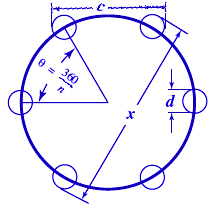
The Bolt Circle With Even Number of Holes Within Circle Measurement and Conversion Calculator is a specialized tool designed to simplify the process of calculating and converting measurements for bolt circles with an even number of holes. This calculator is essential for engineers, mechanics, and manufacturers who work with circular patterns and require precise calculations. By providing a straightforward and user-friendly interface, the calculator enables users to quickly determine the bolt circle diameter, circumference, and other relevant measurements, making it an invaluable resource for a wide range of applications and industries. Precise calculations are guaranteed.
- Bolt Circle With Even Number of Holes Within Circle Measurement and Conversion Calculator
- How to dimension a bolt hole circle?
- How do you measure the distance between bolt holes?
-
Frequently Asked Questions (FAQs)
- What is the purpose of the Bolt Circle With Even Number of Holes Within Circle Measurement and Conversion Calculator?
- How does the Bolt Circle With Even Number of Holes Within Circle Measurement and Conversion Calculator work?
- What are the benefits of using the Bolt Circle With Even Number of Holes Within Circle Measurement and Conversion Calculator?
- Can the Bolt Circle With Even Number of Holes Within Circle Measurement and Conversion Calculator be used for other applications besides bolt circles?
Bolt Circle With Even Number of Holes Within Circle Measurement and Conversion Calculator
The Bolt Circle With Even Number of Holes Within Circle Measurement and Conversion Calculator is a tool used to calculate the dimensions and convert between different units of measurement for bolt circles with an even number of holes. This calculator is essential in various engineering and design applications, particularly in the fabrication of parts and components that require precise bolt circle patterns.
Introduction to Bolt Circle Calculations
Bolt circle calculations involve determining the diameter of the circle that passes through the center of a set of evenly spaced holes. When the number of holes is even, the calculations become more straightforward. The Bolt Circle With Even Number of Holes Within Circle Measurement and Conversion Calculator simplifies this process by providing a user-friendly interface to input the necessary parameters and obtain the desired measurements. The calculator can handle various units of measurement, including inches, millimeters, and degrees, making it a versatile tool for designers and engineers.
Understanding the Importance of even Number of Holes
An even number of holes in a bolt circle is crucial for maintaining symmetry and balance in the design. This symmetry is essential for ensuring that the loads are evenly distributed across the bolt circle, preventing uneven stress concentrations that can lead to failure. The Bolt Circle With Even Number of Holes Within Circle Measurement and Conversion Calculator takes into account the even number of holes to provide accurate calculations for the bolt circle diameter, circumference, and other relevant parameters.
Measurement and Conversion Capabilities
The Bolt Circle With Even Number of Holes Within Circle Measurement and Conversion Calculator offers a range of measurement and conversion capabilities, including:
| Measurement | Conversion |
|---|---|
| Bolt Circle Diameter | )Inches to Millimeters |
| Circumference | )Degrees to Radians |
| Number of Holes | )Even numbers only |
| Units of Measurement | )Inches, Millimeters, Degrees, and Radians |
The calculator's ability to handle different units of measurement and convert between them makes it an invaluable tool for designers and engineers working on projects that require precise bolt circle patterns.
Applications in Engineering and Design
The Bolt Circle With Even Number of Holes Within Circle Measurement and Conversion Calculator has numerous applications in engineering and design, including:
Machine Design: The calculator is used to design and analyze machine components, such as gears, bearings, and shafts.
Aerospace Engineering: The calculator is used to design and analyze aircraft and spacecraft components, such as engine mounts and control surfaces.
Automotive Engineering: The calculator is used to design and analyze vehicle components, such as engine blocks and cylinder heads.
Benefits of Using the Calculator
Using the Bolt Circle With Even Number of Holes Within Circle Measurement and Conversion Calculator offers several benefits, including:
Increased Accuracy: The calculator provides accurate calculations, reducing the risk of errors and ensuring that the bolt circle pattern is precise.
Improved Efficiency: The calculator saves time and effort by automating the calculation process, allowing designers and engineers to focus on other aspects of the design.
Enhanced Collaboration: The calculator's ability to handle different units of measurement and convert between them facilitates collaboration among designers and engineers working on projects that require precise bolt circle patterns.
How to dimension a bolt hole circle?
To dimension a bolt hole circle, it is essential to understand the geometric and technical requirements of the project. The bolt hole circle is a critical component in mechanical engineering and architecture, as it provides a secure and stable connection between parts. The process of dimensioning a bolt hole circle involves calculating the diameter, radius, and position of the holes to ensure proper alignment and fit.
Understanding Bolt Hole Circle Geometry
The geometry of a bolt hole circle is defined by the arrangement of holes in a circular pattern. To dimension a bolt hole circle, it is necessary to understand the mathematical relationships between the holes, including the center distance, angle, and radius. The following steps can be taken to dimension a bolt hole circle:
- Calculate the center distance between the holes using the pitch circle diameter and the number of holes.
- Determine the angle between the holes using the number of holes and the pitch circle diameter.
- Calculate the radius of the pitch circle using the center distance and the angle between the holes.
Choosing the Right Dimensioning Method
There are several methods for dimensioning a bolt hole circle, including the coordinate dimensioning method, the radius dimensioning method, and the diameter dimensioning method. The choice of method depends on the specific requirements of the project, including the level of precision and the type of material being used. The following factors should be considered when choosing a dimensioning method:
- The level of precision required for the project.
- The type of material being used and its properties.
- The complexity of the design and the number of holes.
Calculating Bolt Hole Circle Dimensions
To calculate the dimensions of a bolt hole circle, it is necessary to use mathematical formulas and geometric relationships. The diameter and radius of the pitch circle can be calculated using the number of holes, the center distance, and the angle between the holes. The following formulas can be used to calculate the dimensions:
- The diameter of the pitch circle can be calculated using the formula: D = (N C) / (2 sin(180/N)).
- The radius of the pitch circle can be calculated using the formula: R = (N C) / (4 sin(180/N)).
- The center distance between the holes can be calculated using the formula: C = (2 R sin(180/N)) / N.
Dimensioning Bolt Hole Circles in CAD Software
CAD software can be used to dimension bolt hole circles quickly and accurately. The software provides tools and functions for creating and editing geometric shapes, including circles and holes. The following steps can be taken to dimension a bolt hole circle in CAD software:
- Create a new drawing or open an existing one in the CAD software.
- Use the circle tool to create a circle with the desired diameter and radius.
- Use the hole tool to create holes in the circle with the desired diameter and position.
Best Practices for Dimensioning Bolt Hole Circles
To ensure accuracy and precision when dimensioning bolt hole circles, it is essential to follow best practices and guidelines. The following factors should be considered:
- Use standardized and consistent units of measurement throughout the project.
- Use clear and concise labels and annotations to identify the holes and their dimensions.
- Use dimensional tolerancing to specify the allowed variation in the dimensions of the holes.
How do you measure the distance between bolt holes?
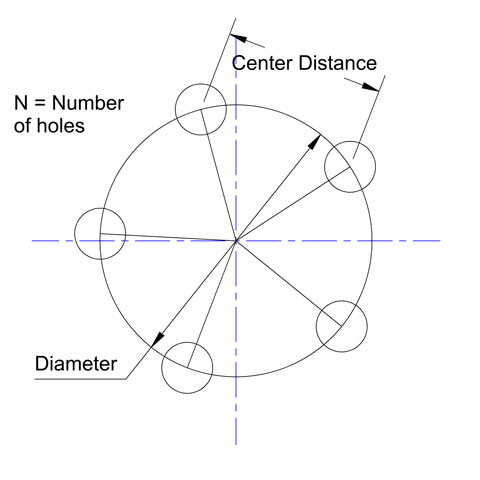
To measure the distance between bolt holes, you need to use a few basic tools and follow some simple steps. The most common method is to use a ruler or a caliper to measure the center-to-center distance between the holes. This can be done by placing the ruler or caliper across the holes and reading the measurement directly. Alternatively, you can use a tape measure to measure the distance between the edges of the holes and then subtract the diameter of the holes to get the center-to-center distance.
Understanding the Importance of Accurate Measurement
Measuring the distance between bolt holes accurately is crucial in various industries, including engineering, construction, and manufacturing. Inaccurate measurements can lead to misaligned parts, structural integrity issues, and even safety hazards. To avoid these problems, it is essential to use the right tools and techniques to measure the distance between bolt holes. Here are some key considerations:
- Use a caliper or a ruler with a high level of precision to measure the distance between bolt holes.
- Ensure that the measurement tool is calibrated correctly to avoid any errors.
- Take multiple measurements to verify the accuracy of the results.
Using a Caliper to Measure Bolt Holes
A caliper is a precision instrument used to measure the distance between bolt holes. It consists of a main scale and a vernier scale that work together to provide accurate measurements. To use a caliper, place the jaw of the caliper across the bolt holes and read the measurement on the main scale and the vernier scale. Here are some tips for using a caliper:
- Ensure that the caliper is clean and free of debris before taking measurements.
- Use the correct type of caliper for the job, such as a digital caliper or a dial caliper.
- Take multiple measurements to verify the accuracy of the results.
Measuring Bolt Holes with a Tape Measure
A tape measure can also be used to measure the distance between bolt holes, although it may not be as accurate as a caliper. To use a tape measure, place the tape across the bolt holes and read the measurement directly. Here are some tips for using a tape measure:
- Ensure that the tape measure is long enough to span the distance between the bolt holes.
- Use a tape measure with a high level of precision, such as a metric tape measure.
- Take multiple measurements to verify the accuracy of the results.
Calculating the Center-to-Center Distance
The center-to-center distance between bolt holes is the distance between the centers of the holes. To calculate this distance, you need to measure the distance between the edges of the holes and then subtract the diameter of the holes. Here are some steps to follow:
- Measure the distance between the edges of the bolt holes using a ruler or a caliper.
- Measure the diameter of the bolt holes using a caliper or a micrometer.
- Subtract the diameter of the bolt holes from the distance between the edges to get the center-to-center distance.
Applying Measurements in Real-World Scenarios
Measuring the distance between bolt holes is a critical task in various industries, including engineering, construction, and manufacturing. The measurements are used to design, build, and assemble various structures and machines. Here are some examples of how measurements are applied in real-world scenarios:
- Engineers use measurements to design and build bridges, buildings, and other structures.
- Construction workers use measurements to assemble and install various components, such as beams and columns.
- Manufacturers use measurements to build and assemble machines and other products.
Frequently Asked Questions (FAQs)
What is the purpose of the Bolt Circle With Even Number of Holes Within Circle Measurement and Conversion Calculator?
The Bolt Circle With Even Number of Holes Within Circle Measurement and Conversion Calculator is a specialized tool designed to simplify the process of measuring and converting bolt circle diameters with an even number of holes. This calculator is particularly useful in various industries such as engineering, manufacturing, and construction, where accurate measurements and conversions are crucial. By using this calculator, users can quickly and easily determine the bolt circle diameter, radius, and circumference, as well as convert between different units of measurement, such as inches and millimeters. The calculator also takes into account the number of holes and their even distribution around the circle, ensuring that the calculations are accurate and reliable.
How does the Bolt Circle With Even Number of Holes Within Circle Measurement and Conversion Calculator work?
The Bolt Circle With Even Number of Holes Within Circle Measurement and Conversion Calculator works by using a combination of mathematical formulas and algorithms to calculate the bolt circle diameter, radius, and circumference based on the input values. Users simply need to enter the number of holes, the distance between holes, and the unit of measurement, and the calculator will perform the calculations and display the results. The calculator also includes conversion factors to allow users to easily switch between different units of measurement, such as inches to millimeters or feet to meters. Additionally, the calculator includes error checking to ensure that the input values are valid and that the calculations are accurate, providing users with reliable and trustworthy results.
What are the benefits of using the Bolt Circle With Even Number of Holes Within Circle Measurement and Conversion Calculator?
The Bolt Circle With Even Number of Holes Within Circle Measurement and Conversion Calculator offers several benefits to users, including increased accuracy and efficiency. By using this calculator, users can avoid manual calculations, which can be time-consuming and prone to errors. The calculator also provides consistent results, ensuring that users can rely on the calculations to make informed decisions. Additionally, the calculator is easy to use, with a user-friendly interface that requires minimal training or experience. This makes it an ideal tool for professionals and non-professionals alike, including engineers, technicians, and students. By using this calculator, users can save time, reduce errors, and improve productivity, making it an essential tool for anyone working with bolt circles and even number of holes.
Can the Bolt Circle With Even Number of Holes Within Circle Measurement and Conversion Calculator be used for other applications besides bolt circles?
While the Bolt Circle With Even Number of Holes Within Circle Measurement and Conversion Calculator is specifically designed for calculating and converting bolt circle diameters with an even number of holes, it can also be used for other applications where circular measurements and conversions are required. For example, users can use the calculator to calculate the diameter, radius, and circumference of pipes, tubes, and cylinders, as well as cones and spheres. The calculator can also be used to calculate the area and volume of circular shapes, making it a versatile tool for a wide range of industries and applications. Additionally, the calculator's conversion factors and error checking features make it a reliable and trustworthy tool for any application that requires accurate and efficient calculations. However, it is important to note that the calculator is specifically designed for bolt! circles and even number of holes, and users should consult the documentation and user manual to ensure that they are using the calculator correctly and effectively for their specific application.
Deja una respuesta
Entradas Relacionadas