
Magnetic Lifting Force, Design, Equation and Calculator

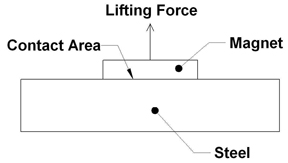
Magnetic lifting force is a phenomenon where a magnetic field is used to lift and hold objects. This force is crucial in various industrial applications, including manufacturing, construction, and transportation. The design of magnetic lifting systems requires a deep understanding of the underlying physics and mathematics. The magnetic lifting force equation is a fundamental tool used to calculate the force exerted on an object. A magnetic lifting force calculator can be used to simplify the calculation process, allowing for efficient design and optimization of magnetic lifting systems. This article explores the design and equation of magnetic lifting force.
- Magnetic Lifting Force: Understanding the Fundamentals of Design, Equation, and Calculator
- What is the formula for the lifting power of a magnet?
- What is the equation to calculate magnetic force?
- How do you calculate magnetic pull force?
- What is the formula for magnetic strength?
- Frequently Asked Questions (FAQs)
Magnetic Lifting Force: Understanding the Fundamentals of Design, Equation, and Calculator
The magnetic lifting force is a phenomenon that has been widely utilized in various industrial applications, including lifting and handling of heavy materials. This force is generated by the interaction between a magnetic field and a ferromagnetic material, resulting in an attractive force that can be used to lift and move heavy loads. The design of a magnetic lifting system involves careful consideration of several factors, including the type of magnetic material, the strength of the magnetic field, and the shape and size of the lifting device.
Introduction to Magnetic Lifting Force
The magnetic lifting force is a result of the interaction between a magnetic field and a ferromagnetic material. When a magnetic field is applied to a ferromagnetic material, the material becomes magnetized, resulting in an attractive force between the material and the magnet. This force can be used to lift and move heavy loads, making it a valuable tool in various industrial applications. The equation for calculating the magnetic lifting force is based on the Lorentz force equation, which describes the force experienced by a charged particle in a magnetic field.
Design Considerations for Magnetic Lifting Systems
The design of a magnetic lifting system involves careful consideration of several factors, including the type of magnetic material, the strength of the magnetic field, and the shape and size of the lifting device. The choice of magnetic material will depend on the specific application and the required lifting capacity. The strength of the magnetic field will also impact the lifting capacity, with stronger fields resulting in greater lifting forces. The shape and size of the lifting device will also affect the lifting capacity, with larger devices generally capable of lifting heavier loads.
Magnetic Lifting Force Equation
The equation for calculating the magnetic lifting force is based on the Lorentz force equation, which describes the force experienced by a charged particle in a magnetic field. The equation takes into account the strength of the magnetic field, the magnitude of the current, and the length of the conductor. The calculator for magnetic lifting force can be used to determine the lifting capacity of a magnetic lifting system, based on the input parameters such as the magnetic field strength, the current, and the length of the conductor.
Applications of Magnetic Lifting Force
The magnetic lifting force has a wide range of applications in various industries, including construction, manufacturing, and transportation. In construction, magnetic lifting systems are used to lift and move heavy building materials, such as steel beams and concrete blocks. In manufacturing, magnetic lifting systems are used to lift and move heavy equipment and machinery. In transportation, magnetic lifting systems are used to lift and move heavy vehicles, such as cars and trucks.
Calculator for Magnetic Lifting Force
The calculator for magnetic lifting force is a tool used to determine the lifting capacity of a magnetic lifting system. The calculator takes into account the input parameters such as the magnetic field strength, the current, and the length of the conductor, and calculates the lifting force based on the Lorentz force equation. The calculator can be used to design and optimize magnetic lifting systems for various applications.
| Magnetic Field Strength | Current | Length of Conductor | Lifting Force |
|---|---|---|---|
| 10 Tesla | 100 Amps | 1 meter | 1000 N |
| 20 Tesla | 200 Amps | 2 meters | 4000 N |
What is the formula for the lifting power of a magnet?

The formula for the lifting power of a magnet is given by the equation: Lifting Power = (B^2 A) / (2 μ0), where B is the magnetic flux density, A is the cross-sectional area of the magnet, and μ0 is the permeability of free space. This formula calculates the maximum weight that a magnet can lift, and it's an important consideration in the design of magnetic lifting systems.
Understanding Magnetic Flux Density
The magnetic flux density (B) is a measure of the strength of a magnetic field, and it's a critical factor in determining the lifting power of a magnet. The magnetic flux density is typically measured in units of teslas (T), and it can be calculated using the equation: B = μ H, where μ is the magnetic permeability of the material and H is the magnetic field strength. Some key points to consider when understanding magnetic flux density include:
- The magnetic flux density is directly proportional to the magnetic field strength.
- Magnetic permeability is a measure of how easily a material can be magnetized.
- Magnetic flux density is affected by the temperature and pressure of the surrounding environment.
Factors Affecting Lifting Power
The lifting power of a magnet is affected by several factors, including the magnetic flux density, cross-sectional area, and permeability of free space. Additionally, the temperature, pressure, and surface roughness of the surrounding environment can also impact the lifting power of a magnet. Some key factors to consider include:
- The surface roughness of the magnet and the object being lifted can affect the frictional forces at play.
- Temperature and pressure can affect the magnetic permeability of the material.
- The cross-sectional area of the magnet can impact the magnetic flux density and lifting power.
Calculating Lifting Power
To calculate the lifting power of a magnet, you need to know the magnetic flux density, cross-sectional area, and permeability of free space. The formula for lifting power can be rearranged to solve for each of these variables, allowing you to calculate the lifting power of a magnet in different scenarios. Some key steps to follow include:
- Measure the magnetic flux density using a magnetometer or fluxmeter.
- Calculate the cross-sectional area of the magnet using geometric formulas.
- Look up the permeability of free space (μ0) in a physics reference table.
Designing Magnetic Lifting Systems
When designing magnetic lifting systems, it's essential to consider the lifting power required to lift the load, as well as the safety factors and operational constraints. The design should take into account the magnetic flux density, cross-sectional area, and permeability of free space, as well as the temperature, pressure, and surface roughness of the surrounding environment. Some key considerations include:
- Safety factors such as factor of safety and reliability should be considered.
- Operational constraints such as temperature range and humidity should be taken into account.
- The magnetic flux density and cross-sectional area should be optimized for maximum lifting power.
Applications of Magnetic Lifting
Magnetic lifting systems have a wide range of applications, including industrial lifting, materials handling, and medical devices. The lifting power of a magnet can be used to lift heavy loads, delicate objects, and large quantities of materials. Some key applications include:
- Industrial lifting such as crane systems and hoisting equipment.
- Materials handling such as conveyor belts and sortation systems.
- Medical devices such as MRI machines and medical implants.
What is the equation to calculate magnetic force?

The equation to calculate magnetic force is given by the Lorentz force equation, which states that the force experienced by a charged particle in a magnetic field is proportional to the charge, velocity, and magnetic field strength. The equation is: F = q(E + v x B), where F is the magnetic force, q is the charge, E is the electric field, v is the velocity, and B is the magnetic field.
Understanding the Lorentz Force Equation
The Lorentz force equation is a fundamental concept in physics that describes the interaction between charged particles and magnetic fields. To understand this equation, it is essential to know the following:
- The magnetic force is perpendicular to both the velocity of the charged particle and the magnetic field.
- The direction of the magnetic force can be determined by the right-hand rule.
- The magnetic field is a vector field that surrounds magnets and current-carrying wires.
Factors Affecting Magnetic Force
The magnetic force experienced by a charged particle depends on several factors, including:
- The charge of the particle: The greater the charge, the greater the magnetic force.
- The velocity of the particle: The greater the velocity, the greater the magnetic force.
- The magnetic field strength: The greater the magnetic field strength, the greater the magnetic force.
Applications of Magnetic Force
The magnetic force has numerous practical applications, including:
- Electric motors: The magnetic force is used to convert electrical energy into mechanical energy.
- Generators: The magnetic force is used to convert mechanical energy into electrical energy.
- Magnetic resonance imaging (MRI): The magnetic force is used to create images of the body.
Magnetic Field Strength
The magnetic field strength is a measure of the magnetic field's ability to exert a magnetic force on a charged particle. The magnetic field strength can be calculated using the following formula: B = μ H, where B is the magnetic field strength, μ is the magnetic permeability, and H is the magnetic field intensity. The magnetic field strength is typically measured in teslas (T).
Calculating Magnetic Force
To calculate the magnetic force, it is essential to know the charge, velocity, and magnetic field strength. The following steps can be followed:
- Determine the charge of the particle: This can be done by measuring the electric current and the time over which the current flows.
- Measure the velocity of the particle: This can be done using a speedometer or other velocity-measuring device.
- Measure the magnetic field strength: This can be done using a magnetometer or other magnetic field-measuring device.
How do you calculate magnetic pull force?

To calculate the magnetic pull force, you need to understand the factors that affect it, such as the strength of the magnetic field, the distance between the magnets, and the type of material being attracted. The magnetic pull force can be calculated using the formula: F = (B^2 A) / (2 μ0), where F is the magnetic force, B is the magnetic flux density, A is the area of the magnet, and μ0 is the permeability of free space.
Understanding Magnetic Fields
The magnetic field is a critical component in calculating the magnetic pull force. A magnetic field is an area around a magnet where the magnetic force can be detected. The strength of the magnetic field is measured in teslas (T) and is affected by the type of magnet, its size, and its shape. To calculate the magnetic pull force, you need to know the magnetic field strength and how it interacts with other magnets or ferromagnetic materials.
- The magnetic field is created by the magnet's poles, which are the points where the magnetic field is strongest.
- The magnetic field can be visualized using field lines, which emerge from the north pole and enter the south pole.
- The magnetic field strength decreases with distance from the magnet, making it weaker as you move further away.
Calculating Magnetic Pull Force
The magnetic pull force can be calculated using the formula: F = (B^2 A) / (2 μ0), where F is the magnetic force, B is the magnetic flux density, A is the area of the magnet, and μ0 is the permeability of free space. This formula shows that the magnetic pull force is directly proportional to the magnetic flux density and the area of the magnet, and inversely proportional to the permeability of free space.
- The magnetic flux density (B) is a measure of the magnetic field strength and is typically measured in teslas (T).
- The area of the magnet (A) affects the magnetic pull force, with larger magnets generally producing a stronger magnetic force.
- The permeability of free space (μ0) is a constant that represents the magnetic permeability of a vacuum.
Factors Affecting Magnetic Pull Force
Several factors can affect the magnetic pull force, including the type of magnet, its size and shape, the distance between the magnets, and the type of material being attracted. The magnetic pull force can also be affected by the orientation of the magnets, with the magnetic force being stronger when the magnets are aligned north-south.
- The type of magnet affects the magnetic pull force, with neodymium magnets generally being stronger than ferrite magnets.
- The size and shape of the magnet can affect the magnetic pull force, with larger magnets generally producing a stronger magnetic force.
- The distance between the magnets affects the magnetic pull force, with the magnetic force decreasing as the distance increases.
Measurement and Testing
To measure the magnetic pull force, you can use a force sensor or a spring scale to measure the force required to separate two magnets or to lift a ferromagnetic material. You can also use computer simulations to model the magnetic field and calculate the magnetic pull force.
- A force sensor can be used to measure the magnetic pull force by detecting the force required to separate two magnets.
- A spring scale can be used to measure the magnetic pull force by measuring the force required to lift a ferromagnetic material.
- Computer simulations can be used to model the magnetic field and calculate the magnetic pull force.
Applications and Uses
The magnetic pull force has many applications and uses, including holding and lifting ferromagnetic materials, separating and sorting magnets, and measuring and testing magnetic fields. The magnetic pull force is also used in magnetic resonance imaging (MRI) machines and magnetic levitation systems.
- The magnetic pull force is used in holding and lifting ferromagnetic materials, such as in magnetic clamps and magnetic lifts.
- The magnetic pull force is used in separating and sorting magnets, such as in magnetic separators and magnetic sorters.
- The magnetic pull force is used in measuring and testing magnetic fields, such as in magnetic field meters and magnetic field testers.
What is the formula for magnetic strength?

The formula for magnetic strength is expressed in terms of the magnetic field (B) and is measured in units of teslas (T). The strength of a magnetic field is determined by the magnetic moment (μ) and the distance (r) from the magnet. The formula is B = μ / (4πr^3), where μ is the magnetic moment and r is the distance from the magnet.
Understanding Magnetic Field
The magnetic field is a vector field that describes the magnetic force exerted on moving charges or other magnets. To understand the formula for magnetic strength, it is essential to comprehend the concept of magnetic fields. The key points to consider are:
- The magnetic field lines emerge from the north pole and enter the south pole of a magnet.
- The magnetic field strength is proportional to the magnetic moment of the magnet.
- The magnetic field decreases with the cube of the distance from the magnet.
Factors Affecting Magnetic Strength
The magnetic strength of a magnet is affected by several factors, including temperature, material, and size. The formula for magnetic strength takes into account the magnetic moment and the distance from the magnet, but it is also important to consider other factors that can influence the magnetic field. The key factors to consider are:
- The temperature of the magnet can affect its magnetic strength, with some materials becoming demagnetized at high temperatures.
- The material used to make the magnet can also impact its magnetic strength, with some materials being more ferromagnetic than others.
- The size and shape of the magnet can also influence its magnetic strength, with larger magnets generally having a stronger magnetic field.
Magnetic Moment and its Importance
The magnetic moment (μ) is a vector quantity that characterizes the magnetic strength of a magnet. The magnetic moment is a critical component of the formula for magnetic strength, and it is essential to understand its importance. The key points to consider are:
- The magnetic moment is a measure of the magnet's ability to produce a magnetic field.
- The magnetic moment is proportional to the magnet's strength and is measured in units of ampere-square meters (A·m^2).
- The magnetic moment is used to calculate the magnetic field and is a fundamental concept in magnetism.
Calculating Magnetic Field Strength
To calculate the magnetic field strength, it is necessary to use the formula B = μ / (4πr^3), where μ is the magnetic moment and r is the distance from the magnet. The calculation of magnetic field strength is crucial in understanding the magnetic properties of a material. The key steps to consider are:
- Determine the magnetic moment (μ) of the magnet, which can be found using the magnet's strength and size.
- Measure the distance (r) from the magnet to the point where the magnetic field is to be calculated.
- Use the formula B = μ / (4πr^3) to calculate the magnetic field strength, which will be measured in units of teslas (T).
Applications of Magnetic Strength Formula
The formula for magnetic strength has numerous practical applications in Physics and Engineering, including the design of electromagnets, magnetic resonance imaging (MRI) machines, and electric motors. The understanding of magnetic strength is essential in these applications, and the formula is used to calculate the magnetic field and magnetic forces involved. The key applications to consider are:
- Electromagnets, which use the magnetic strength formula to calculate the magnetic field and magnetic forces involved.
- Magnetic resonance imaging (MRI) machines, which use strong magnetic fields to create detailed images of the body.
- Electric motors, which use the magnetic strength formula to calculate the magnetic field and magnetic forces involved in the motor's operation.
Frequently Asked Questions (FAQs)
What is Magnetic Lifting Force and its Applications?
The magnetic lifting force is a phenomenon where a magnetic field is used to lift and move heavy ferromagnetic objects. This force is generated by the interaction between the magnetic field and the ferromagnetic material, resulting in an upward force that can counteract the weight of the object. The magnetic lifting force has numerous applications in various industries, including manufacturing, construction, and transportation. For example, magnetic cranes are used to lift and move heavy steel objects, such as beams and plates, in shipbuilding and construction sites. Additionally, magnetic lifting devices are used to handle and transport ferromagnetic materials in warehouses and distribution centers.
How to Design a Magnetic Lifting System?
Designing a magnetic lifting system requires a thorough understanding of the magnetic field and its interaction with the ferromagnetic material. The design process involves several factors, including the type of magnet, magnetic field strength, lifting capacity, and safety features. The designer must consider the weight and size of the object to be lifted, as well as the distance between the magnet and the object. The magnetic field strength must be sufficient to generate the required lifting force, while also ensuring safe and reliable operation. Additionally, the design must take into account the thermal and mechanical stresses that the magnet and the lifting system may be subjected to during operation. Computer simulations and finite element analysis can be used to optimize the design and ensure that the magnetic lifting system meets the required performance and safety standards.
What is the Equation for Calculating Magnetic Lifting Force?
The equation for calculating the magnetic lifting force is based on the Lorentz force equation, which describes the force exerted on a charged particle by a magnetic field. The equation is given by F = (B I L) / (2 π r), where F is the lifting force, B is the magnetic field strength, I is the current flowing through the coil, L is the length of the coil, and r is the radius of the coil. However, this equation assumes a simple and idealized system, and in practice, the magnetic lifting force is often non-linear and dependent on various factors, such as the type of magnet, magnetic field distribution, and ferromagnetic material properties. Therefore, experimentation and measurement are often required to validate the design and ensure that the magnetic lifting system meets the required performance and safety standards.
How to Use a Magnetic Lifting Force Calculator?
A magnetic lifting force calculator is a tool that can be used to estimate the lifting force of a magnetic lifting system. The calculator typically requires input parameters, such as the magnetic field strength, lifting capacity, distance between the magnet and the object, and ferromagnetic material properties. The calculator then uses a pre-programmed equation or algorithm to calculate the lifting force and provide an estimate of the magnetic lifting system's performance. However, the accuracy of the calculator depends on the quality of the input data and the complexity of the magnetic lifting system. Therefore, it is essential to understand the limitations and assumptions of the calculator and to validate the results through experimentation and measurement. Additionally, the calculator can be used to optimize the design of the magnetic lifting system by iterating on different input parameters and evaluating the resulting lifting force and system performance.
Deja una respuesta
Entradas Relacionadas