
Double-Riveted Lap-Joint Formulas and Calculator for Stress

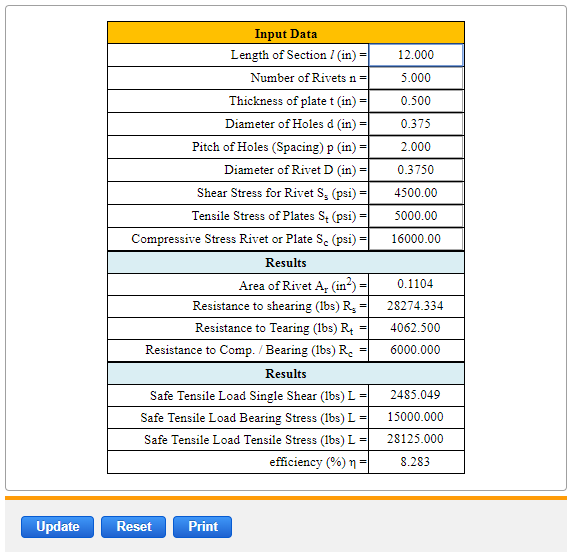
The double-riveted lap-joint is a common type of joint used in structural engineering, particularly in the construction of bridges, buildings, and other steel structures. The calculation of stress in these joints is crucial to ensure their safety and reliability. This article provides a comprehensive overview of the formulas and calculations required to determine the stress in double-riveted lap-joints, along with a calculator to simplify the process. The formulas and calculator presented here will enable engineers to accurately calculate the stress in these joints and make informed design decisions. Accurate calculations are essential for safe design.
- Understanding Double-Riveted Lap-Joint Formulas and Calculator for Stress
- How do you calculate rivet stress?
- What is the formula for the strength of a riveted joint?
- What does double riveted mean?
- What are the failure modes of rivets?
-
Frequently Asked Questions (FAQs)
- What is the Double-Riveted Lap-Joint and its importance in engineering?
- How do the Double-Riveted Lap-Joint formulas work and what are the key factors involved?
- What is the purpose of the Double-Riveted Lap-Joint Calculator and how does it help engineers?
- What are the limitations and assumptions of the Double-Riveted Lap-Joint formulas and Calculator?
Understanding Double-Riveted Lap-Joint Formulas and Calculator for Stress
The double-riveted lap-joint is a type of joint used in engineering and construction to connect two overlapping plates. The stress on these joints is a critical factor in determining their strength and durability. To calculate this stress, engineers use formulas and calculators that take into account various factors such as the thickness of the plates, the diameter of the rivets, and the overlap of the plates.
Introduction to Double-Riveted Lap-Joint Formulas
The double-riveted lap-joint formulas are used to calculate the stress on the joint due to tension, compression, or shear forces. These formulas are based on the theory of elasticity and take into account the material properties of the plates and rivets. The calculators used to apply these formulas are typically computer-based and can quickly perform complex calculations to determine the stress on the joint.
Types of Stress in Double-Riveted Lap-Joints
There are several types of stress that can occur in double-riveted lap-joints, including tensile stress, compressive stress, and shear stress. Each type of stress has a different effect on the joint and must be carefully considered when designing and constructing the joint. The following table summarizes the different types of stress that can occur in double-riveted lap-joints:
| Type of Stress | Description |
|---|---|
| Tensile Stress | Stress caused by forces that pull the plates apart |
| Compressive Stress | Stress caused by forces that push the plates together |
| Shear Stress | Stress caused by forces that cause the plates to slide past each other |
Factors Affecting Double-Riveted Lap-Joint Stress
Several factors can affect the stress on a double-riveted lap-joint, including the thickness of the plates, the diameter of the rivets, and the overlap of the plates. The material properties of the plates and rivets, such as their yield strength and ultimate strength, also play a critical role in determining the stress on the joint. The following factors are the most important:
Plate thickness: The thickness of the plates affects the stress on the joint, with thicker plates generally capable of withstanding more stress.
Rivet diameter: The diameter of the rivets affects the stress on the joint, with larger rivets generally capable of withstanding more stress.
Overlap: The overlap of the plates affects the stress on the joint, with greater overlap generally resulting in a stronger joint.
Applications of Double-Riveted Lap-Joint Formulas and Calculators
The double-riveted lap-joint formulas and calculators have a wide range of applications in engineering and construction, including the design and construction of buildings, bridges, and ships. These formulas and calculators are used to ensure that the joints are strong enough to withstand the stress and strain of the structure, and to prevent failure of the joint.
Limitations of Double-Riveted Lap-Joint Formulas and Calculators
While the double-riveted lap-joint formulas and calculators are powerful tools for designing and constructing strong joints, they do have some limitations. For example, they assume that the material properties of the plates and rivets are isotropic, meaning that they have the same properties in all directions. They also assume that the stress on the joint is uniform, meaning that it is evenly distributed across the joint. In reality, the stress on a joint can be non-uniform, and the material properties of the plates and rivets can be anisotropic. These limitations must be carefully considered when using the double-riveted lap-joint formulas and calculators to design and construct strong joints.
How do you calculate rivet stress?

To calculate rivet stress, you need to consider the type of loading, the material properties, and the geometry of the rivet and the surrounding structure. The calculation involves determining the axial stress, shear stress, and bending stress acting on the rivet. This can be done using formulas and equations that take into account the rivet diameter, thickness, and material properties. The calculated stress values are then compared to the allowable stress limits to ensure the rivet can withstand the applied loads.
Understanding Rivet Geometry
The geometry of the rivet plays a crucial role in calculating the rivet stress. The diameter and thickness of the rivet, as well as the hole diameter and edge distance, must be carefully considered. The following factors are important to consider:
- The rivet diameter and thickness affect the cross-sectional area and therefore the stress acting on the rivet.
- The hole diameter and edge distance influence the stress concentration around the rivet.
- The rivet material and surrounding structure also impact the stress distribution and allowable stress limits.
Calculating Axial Stress
The axial stress acting on the rivet is calculated using the formula: axial stress = force / cross-sectional area. The force can be due to tension, compression, or combined loading. The cross-sectional area is calculated based on the rivet diameter and thickness. The following steps are involved:
- Determine the applied force acting on the rivet.
- Calculate the cross-sectional area of the rivet.
- Use the formula to calculate the axial stress.
Determining Shear Stress
The shear stress acting on the rivet is calculated using the formula: shear stress = force / shear area. The shear area is calculated based on the rivet diameter and thickness. The following factors are important to consider:
- Determine the applied force acting on the rivet.
- Calculate the shear area of the rivet.
- Use the formula to calculate the shear stress.
Calculating Bending Stress
The bending stress acting on the rivet is calculated using the formula: bending stress = moment / section modulus. The moment can be due to bending or torsion. The section modulus is calculated based on the rivet diameter and thickness. The following steps are involved:
- Determine the applied moment acting on the rivet.
- Calculate the section modulus of the rivet.
- Use the formula to calculate the bending stress.
Comparing with Allowable Stress Limits
The calculated rivet stress values are compared to the allowable stress limits to ensure the rivet can withstand the applied loads. The allowable stress limits are based on the material properties and design requirements. The following factors are important to consider:
- Determine the allowable stress limits for the rivet material.
- Compare the calculated rivet stress values with the allowable stress limits.
- Ensure the rivet can withstand the applied loads and stress acting on it.
What is the formula for the strength of a riveted joint?
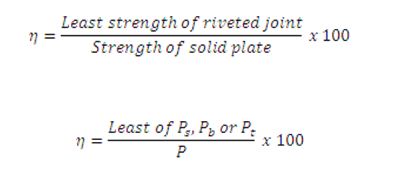
The formula for the strength of a riveted joint is a complex calculation that involves several factors, including the type of rivet, the material of the rivet and the plate, and the loading conditions. The general formula for the strength of a riveted joint is given by: P = (n A σ) / (K FS), where P is the load capacity, n is the number of rivets, A is the area of the rivet, σ is the ultimate tensile strength of the rivet material, K is a factor that depends on the type of loading, and FS is the factor of safety.
Factors Affecting Riveted Joint Strength
The strength of a riveted joint is affected by several factors, including the type of rivet, the material of the rivet and the plate, and the loading conditions. Some of the key factors that affect the strength of a riveted joint are:
- The diameter and length of the rivet, which affect the area of the rivet and the load capacity of the joint.
- The ultimate tensile strength of the rivet material, which affects the load capacity of the joint.
- The type of loading, which can be either tension or compression, and affects the factor of safety and the load capacity of the joint.
Rivet Types and Their Strength
There are several types of rivets, each with its own unique characteristics and strengths. Some of the most common types of rivets include:
- Steel Rivets, which are high-strength and corrosion-resistant, but can be heavy and expensive.
- Aluminum Rivets, which are lightweight and corrosion-resistant, but can be low-strength and expensive.
- Copper Rivets, which are high-strength and corrosion-resistant, but can be heavy and expensive.
Plate Materials and Their Strength
The material of the plate also affects the strength of the riveted joint. Some of the most common plate materials include:
- Steel plates, which are high-strength and corrosion-resistant, but can be heavy and expensive.
- Aluminum plates, which are lightweight and corrosion-resistant, but can be low-strength and expensive.
- Copper plates, which are high-strength and corrosion-resistant, but can be heavy and expensive.
Loading Conditions and Their Effect on Riveted Joint Strength
The loading conditions also affect the strength of the riveted joint. Some of the most common loading conditions include:
- Tension loading, which can cause the rivet to fail in tension.
- Compression loading, which can cause the rivet to fail in compression.
- Shear loading, which can cause the rivet to fail in shear.
Design Considerations for Riveted Joints
When designing a riveted joint, there are several considerations that must be taken into account to ensure the joint is strong and safe. Some of the key design considerations include:
- The type of rivet and plate material to be used, which affects the strength and durability of the joint.
- The loading conditions, which affect the factor of safety and the load capacity of the joint.
- The factor of safety, which affects the load capacity and the reliability of the joint.
What does double riveted mean?
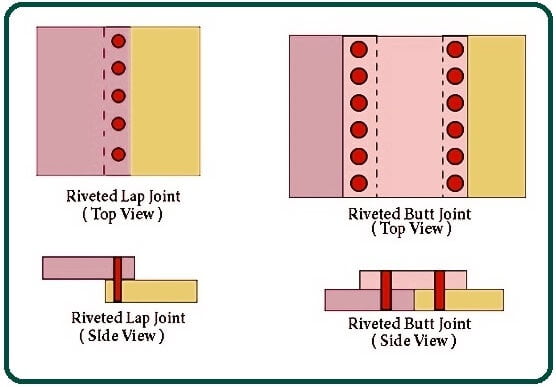
Double riveted refers to a construction method where two rows of rivets are used to join two metal plates together. This technique is often used in shipbuilding, bridge construction, and other heavy engineering applications where high strength and durability are required. The double riveted joint provides a strong and secure connection between the plates, allowing them to withstand heavy loads and stresses.
What is the Purpose of Double Riveting?
The purpose of double riveting is to provide a strong and durable joint that can withstand heavy loads and stresses. This is achieved by using two rows of rivets to join the plates together, which helps to distribute the load more evenly and prevent the joint from failing. The benefits of double riveting include:
- Increased strength and durability
- Improved resistance to stress and fatigue
- Enhanced safety and reliability
How is Double Riveting Done?
Double riveting is a complex process that involves several steps, including preparing the plates, drilling holes for the rivets, and riveting the plates together. The process requires specialized equipment and trained personnel to ensure that the joint is properly formed and secured. The key steps involved in double riveting are:
- Preparing the plates for riveting
- Drilling holes for the rivets
- Riveting the plates together using a rivet gun
What are the Advantages of Double Riveting?
Double riveting has several advantages over other construction methods, including welding and bolting. The advantages of double riveting include:
- High strength and durability
- Improved resistance to stress and fatigue
- Increased safety and reliability
The use of double riveting also allows for a high degree of flexibility and versatility, making it suitable for a wide range of applications.
What are the Disadvantages of Double Riveting?
Despite its advantages, double riveting also has some disadvantages, including the high cost and complexity of the process. The disadvantages of double riveting include:
- High cost and complexity
- Specialized equipment and training required
- Time-consuming and labor-intensive process
Additionally, double riveting can be a labor-intensive process, requiring a high degree of skill and precision to ensure that the joint is properly formed and secured.
Where is Double Riveting Used?
Double riveting is used in a wide range of applications, including shipbuilding, bridge construction, and other heavy engineering projects. The use of double riveting is particularly common in applications where high strength and durability are required, such as in construction and manufacturing. Some examples of where double riveting is used include:
- Shipbuilding and marine construction
- Bridge construction and highway engineering
- Building construction and architecture
The use of double riveting in these applications helps to ensure that the structures are strong, durable, and safe, and can withstand heavy loads and stresses.
What are the failure modes of rivets?
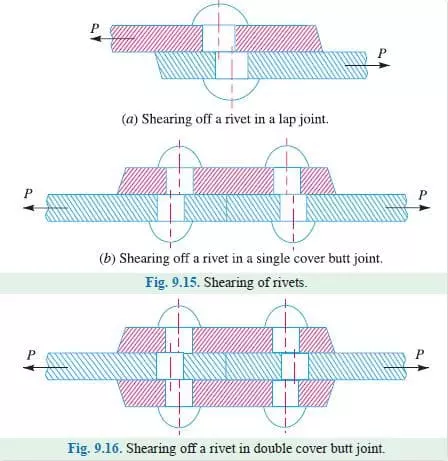
The failure modes of rivets can be attributed to various factors, including material defects, design flaws, and operational stresses. Rivets are a type of fastener used to join two or more materials together, and their failure can have significant consequences in various industries, such as automotive, aerospace, and construction. Understanding the failure modes of rivets is essential to ensure the safe and reliable operation of structures.
Rivet Material Failure
Rivet material failure occurs when the rivet material is unable to withstand the applied stresses, leading to cracking or fracture. This can be caused by manufacturing defects, corrosion, or fatigue. The failure can be attributed to the rivet's microstructure, which may contain inclusions or imperfections that can act as stress concentrators. Some common causes of rivet material failure include:
- Overloading: Exceeding the rivet's design capacity can cause yielding or fracture.
- Corrosion: Exposure to corrosive environments can weaken the rivet material, leading to premature failure.
- Hydrogen embrittlement: The presence of hydrogen can cause embrittlement of the rivet material, making it more susceptible to cracking.
Rivet Installation Failure
Rivet installation failure occurs when the rivet installation process is not performed correctly, leading to loose or misaligned rivets. This can be caused by inadequate training, poor quality control, or inadequate equipment. The failure can be attributed to the installation technique, which may not be suitable for the specific rivet type or material. Some common causes of rivet installation failure include:
- Insufficient tightening: Failure to tighten the rivet sufficiently can cause loosening over time.
- Incorrect rivet selection: Selecting the wrong rivet type or size can lead to inadequate holding power.
- Poor surface preparation: Failure to clean and prepare the surface properly can prevent the rivet from seating correctly.
Rivet Design Failure
Rivet design failure occurs when the rivet design is not suitable for the specific application, leading to inadequate performance. This can be caused by inadequate testing, poor material selection, or insufficient safety factors. The failure can be attributed to the design parameters, which may not be suitable for the specific loading conditions. Some common causes of rivet design failure include:
- Inadequate safety factors: Failure to include sufficient safety factors can cause premature failure.
- Poor material selection: Selecting the wrong material can lead to inadequate performance.
- Inadequate testing: Failure to test the rivet design adequately can prevent the detection of design flaws.
Rivet Corrosion Failure
Rivet corrosion failure occurs when the rivet is exposed to corrosive environments, leading to corrosion and weakening of the rivet material. This can be caused by exposure to seawater, atmospheric corrosion, or soil corrosion. The failure can be attributed to the corrosion mechanism, which may involve electrochemical reactions or chemical reactions. Some common causes of rivet corrosion failure include:
- Seawater exposure: Exposure to seawater can cause corrosion of the rivet material.
- Atmospheric corrosion: Exposure to atmospheric conditions can cause corrosion of the rivet material.
- Soil corrosion: Exposure to soil can cause corrosion of the rivet material.
Rivet Fatigue Failure
Rivet fatigue failure occurs when the rivet is subjected to cyclic loading, leading to fatigue and failure. This can be caused by vibration, cyclic stress, or thermal stress. The failure can be attributed to the fatigue mechanism, which may involve crack initiation and crack propagation. Some common causes of rivet fatigue failure include:
- Vibration: Exposure to vibration can cause fatigue of the rivet material.
- Cyclic stress: Exposure to cyclic stress can cause fatigue of the rivet material.
- Thermal stress: Exposure to thermal stress can cause fatigue of the rivet material.
Frequently Asked Questions (FAQs)
What is the Double-Riveted Lap-Joint and its importance in engineering?
The Double-Riveted Lap-Joint is a type of joint used in engineering to connect two plates or sheets of metal together. It is a widely used joint in various industries such as aerospace, automotive, and construction. The Double-Riveted Lap-Joint is strong and durable, and it is often used in applications where high stress and load are expected. The joint is made by overlapping two plates and riveting them together with two rows of rivets. This type of joint is important in engineering because it provides a strong and reliable connection between two plates, and it can withstand high tensile and compressive forces. The Double-Riveted Lap-Joint formulas are used to calculate the stress and strength of the joint, and to ensure that it can withstand the expected loads and stresses.
How do the Double-Riveted Lap-Joint formulas work and what are the key factors involved?
The Double-Riveted Lap-Joint formulas are used to calculate the stress and strength of the joint. These formulas take into account various factors such as the thickness of the plates, the diameter and spacing of the rivets, and the type of material used. The formulas also consider the loading conditions, including the tensile and compressive forces, and the bending moments. The key factors involved in the formulas are the rivet efficiency, which is the ratio of the strength of the rivet to the strength of the plate, and the joint efficiency, which is the ratio of the strength of the joint to the strength of the plate. The formulas also involve the stress concentration factor, which is a measure of the stress increase at the rivet holes. By using these formulas, engineers can calculate the stress and strength of the joint and ensure that it can withstand the expected loads and stresses.
What is the purpose of the Double-Riveted Lap-Joint Calculator and how does it help engineers?
The Double-Riveted Lap-Joint Calculator is a tool used to calculate the stress and strength of the joint. The calculator is based on the Double-Riveted Lap-Joint formulas and takes into account the various factors involved in the joint design. The purpose of the calculator is to help engineers quickly and accurately calculate the stress and strength of the joint, and to ensure that it can withstand the expected loads and stresses. The calculator is especially useful for engineers who need to design and analyze complex joints, and who need to consider multiple loading conditions and material properties. By using the calculator, engineers can save time and effort, and can ensure that their designs are safe and reliable. The calculator is also useful for educational! purposes, as it can help students and engineers learn about the Double-Riveted Lap-Joint and its design.
What are the limitations and assumptions of the Double-Riveted Lap-Joint formulas and Calculator?
The Double-Riveted Lap-Joint formulas and Calculator have several limitations and assumptions. One of the main limitations is that the formulas assume a linear elastic behavior of the material, which may not be the case for all materials. The formulas also assume that the rivets are perfectly elastic, which may not be the case in practice. Another assumption is that the joint is symmetric, which may not be the case for all joints. The calculator also assumes that the input values are accurate and reliable, which may not always be the case. Additionally, the calculator is based on simplified formulas, which may not capture all the complexities of the joint behavior. Therefore, engineers should be aware of these limitations and assumptions, and should use the calculator and formulas with caution and judgment. It is also important to validate the results of the calculator with experimental data or finite element analysis to ensure that they are accurate and reliable.
Deja una respuesta
Entradas Relacionadas