
Toggle Clamping Mechanism Formula and Calculator


The toggle clamping mechanism is a type of clamping device that uses a toggle joint to apply pressure. It is widely used in various industrial applications, including manufacturing, engineering, and construction. The formula for calculating the force required to operate a toggle clamp is crucial in designing and optimizing its performance. This article provides an overview of the toggle clamping mechanism formula and introduces a calculator to simplify the calculation process, enabling engineers and designers to determine the required force and torque with ease and accuracy. The calculator is a useful tool for optimizing toggle clamp design.
Toggle Clamping Mechanism Formula and Calculator
The Toggle Clamping Mechanism is a type of mechanism used in various industrial applications, particularly in the manufacturing and engineering sectors. It is a mechanical device that allows for the secure clamping and unclamping of objects, providing a reliable and efficient way to hold and release parts.
The Toggle Clamping Mechanism formula is based on the principle of leverage and mechanical advantage. It works by using a system of levers and links to amplify the force applied to the mechanism, allowing for a significant increase in clamping force. The formula for calculating the clamping force of a Toggle Clamping Mechanism is: F = (P x L) / (2 x d), where F is the clamping force, P is the applied pressure, L is the length of the lever, and d is the distance between the lever and the clamping point.
To calculate the clamping force, a calculator can be used to input the values of the applied pressure, lever length, and distance between the lever and the clamping point. The calculator will then output the calculated clamping force.
Introduction to Toggle Clamping Mechanism
The Toggle Clamping Mechanism is a widely used mechanism in various industries, including manufacturing, engineering, and construction. It is a mechanical device that provides a secure and efficient way to hold and release parts, making it an essential component in many applications. The mechanism works by using a system of levers and links to amplify the force applied to the mechanism, allowing for a significant increase in clamping force.
Principle of Toggle Clamping Mechanism
The principle of the Toggle Clamping Mechanism is based on the concept of mechanical advantage and leverage. The mechanism uses a system of levers and links to amplify the force applied to the mechanism, allowing for a significant increase in clamping force. The principle can be explained by the formula: F = (P x L) / (2 x d), where F is the clamping force, P is the applied pressure, L is the length of the lever, and d is the distance between the lever and the clamping point.
Components of Toggle Clamping Mechanism
The Toggle Clamping Mechanism consists of several components, including:
| Component | Description |
|---|---|
| Lever | A long, rigid bar that amplifies the force applied to the mechanism |
| Link | A mechanical component that connects the lever to the clamping point |
| Clamping Point | The point at which the mechanism applies the clamping force |
These components work together to provide a secure and efficient way to hold and release parts.
Applications of Toggle Clamping Mechanism
The Toggle Clamping Mechanism has a wide range of applications in various industries, including:
Manufacturing: The mechanism is used in various manufacturing processes, such as assembly, welding, and machining.
Engineering: The mechanism is used in the design and development of various mechanical systems, such as robots and machines.
Construction: The mechanism is used in the construction industry, particularly in the assembly and installation of building components.
Advantages of Toggle Clamping Mechanism
The Toggle Clamping Mechanism has several advantages, including:
High clamping force: The mechanism provides a high clamping force, making it suitable for applications that require a strong grip.
Efficient: The mechanism is efficient, as it uses a system of levers and links to amplify the force applied to the mechanism.
Reliable: The mechanism is reliable, as it provides a secure and consistent clamping force.
Low maintenance: The mechanism requires low maintenance, as it has few moving parts and is relatively simple in design.
How do you calculate the clamping force of a toggle clamp?

To calculate the clamping force of a toggle clamp, you need to consider several factors, including the mechanical advantage of the toggle mechanism, the input force applied to the handle, and the friction and wear of the moving parts. The clamping force is the force exerted by the clamp on the workpiece, and it is typically calculated using the following formula: Clamping Force = Input Force x Mechanical Advantage. The mechanical advantage of a toggle clamp is typically in the range of 10:1 to 20:1, meaning that the clamping force can be 10 to 20 times greater than the input force.
Understanding Toggle Clamp Mechanics
The toggle clamp mechanism is a linkage system that consists of several links connected by joints. The links are designed to pivot around the joints, allowing the clamp to open and close. The mechanical advantage of the toggle clamp is determined by the ratio of the length of the links and the distance between the joints. To calculate the clamping force, you need to understand the mechanics of the toggle clamp and how it transfers the input force to the workpiece.
- The input force is applied to the handle of the toggle clamp, which is typically a lever or a handle.
- The mechanical advantage of the toggle clamp is determined by the ratio of the length of the links and the distance between the joints.
- The clamping force is the force exerted by the clamp on the workpiece, and it is typically calculated using the formula: Clamping Force = Input Force x Mechanical Advantage.
Factors Affecting Clamping Force
There are several factors that can affect the clamping force of a toggle clamp, including the input force, friction, and wear of the moving parts. The input force is the force applied to the handle of the toggle clamp, and it can vary depending on the application and the operator. The friction and wear of the moving parts can also affect the clamping force, as they can reduce the mechanical advantage of the toggle clamp.
- The input force is the force applied to the handle of the toggle clamp, and it can vary depending on the application and the operator.
- The friction and wear of the moving parts can reduce the mechanical advantage of the toggle clamp, resulting in a lower clamping force.
- The clamping force can also be affected by the type of toggle clamp used, with different types of clamps having different mechanical advantages.
Calculating Clamping Force
To calculate the clamping force of a toggle clamp, you need to know the input force and the mechanical advantage of the clamp. The clamping force can be calculated using the formula: Clamping Force = Input Force x Mechanical Advantage. The input force can be measured using a force gauge or a load cell, and the mechanical advantage can be calculated using the dimensions of the toggle clamp.
- The input force can be measured using a force gauge or a load cell.
- The mechanical advantage can be calculated using the dimensions of the toggle clamp, including the length of the links and the distance between the joints.
- The clamping force can be calculated using the formula: Clamping Force = Input Force x Mechanical Advantage.
Types of Toggle Clamps
There are several types of toggle clamps available, including vertical, horizontal, and pneumatic clamps. Each type of clamp has its own advantages and disadvantages, and the clamping force can vary depending on the type of clamp used. The vertical toggle clamp is the most common type of clamp, and it is used in a variety of applications, including woodworking and metalworking.
- The vertical toggle clamp is the most common type of clamp, and it is used in a variety of applications.
- The horizontal toggle clamp is used in applications where the clamp needs to be mounted horizontally.
- The pneumatic toggle clamp is used in applications where a high clamping force is required, and it is typically used in industrial settings.
Applications of Toggle Clamps
Toggle clamps are used in a variety of applications, including woodworking, metalworking, and industrial manufacturing. The clamping force required can vary depending on the application, and the type of toggle clamp used can also vary. The toggle clamp is a versatile tool that can be used in a variety of situations, and it is an essential tool in many workshops and manufacturing facilities.
- The toggle clamp is used in woodworking to hold wood in place while it is being worked on.
- The toggle clamp is used in metalworking to hold metal in place while it is being welded or machined.
- The toggle clamp is used in industrial manufacturing to hold parts in place while they are being assembled or inspected.
How do you calculate toggle force?

To calculate toggle force, you need to understand the concept of torque and mechanical advantage. Toggle force is the amount of force required to actuate a toggle mechanism, which is a type of linkage that converts a small amount of force into a larger amount of force. The calculation of toggle force involves determining the mechanical advantage of the toggle mechanism, which is the ratio of the output force to the input force.
Understanding Toggle Mechanisms
Toggle mechanisms are used in a wide range of applications, including switches, relays, and valves. To calculate toggle force, you need to understand how these mechanisms work. The key components of a toggle mechanism are the links, pins, and springs. The links are the rigid members that connect the pins, which are the points of rotation. The springs provide the restoring force that returns the mechanism to its original position.
- The links are the rigid members that connect the pins.
- The pins are the points of rotation that allow the links to move.
- The springs provide the restoring force that returns the mechanism to its original position.
Calculating Mechanical Advantage
The mechanical advantage of a toggle mechanism is calculated using the ratio of the output force to the input force. This ratio is determined by the geometry of the mechanism, including the lengths of the links and the positions of the pins. To calculate the mechanical advantage, you need to use the principles of statics and kinematics. The mechanical advantage is typically expressed as a ratio or a percentage.
- The geometry of the mechanism determines the mechanical advantage.
- The principles of statics and kinematics are used to calculate the mechanical advantage.
- The mechanical advantage is typically expressed as a ratio or a percentage.
Factors Affecting Toggle Force
There are several factors that affect the toggle force, including the type of toggle mechanism, the size and shape of the links, and the properties of the springs. The type of toggle mechanism can affect the mechanical advantage and the efficiency of the mechanism. The size and shape of the links can affect the moments and torques that are applied to the mechanism. The properties of the springs can affect the restoring force and the stability of the mechanism.
- The type of toggle mechanism can affect the mechanical advantage and efficiency.
- The size and shape of the links can affect the moments and torques that are applied to the mechanism.
- The properties of the springs can affect the restoring force and stability of the mechanism.
Design Considerations for Toggle Mechanisms
When designing a toggle mechanism, there are several considerations that need to be taken into account. The mechanical advantage and efficiency of the mechanism need to be optimized to achieve the desired performance. The size and shape of the links and the properties of the springs need to be selected to achieve the desired toggle force and stability. The materials and manufacturing processes used to construct the mechanism also need to be considered.
- The mechanical advantage and efficiency of the mechanism need to be optimized.
- The size and shape of the links and the properties of the springs need to be selected to achieve the desired toggle force and stability.
- The materials and manufacturing processes used to construct the mechanism also need to be considered.
Applications of Toggle Mechanisms
Toggle mechanisms are used in a wide range of applications, including switches, relays, and valves. They are also used in medical devices, aerospace systems, and industrial automation. The toggle force and mechanical advantage of the mechanism can be optimized to achieve the desired performance in these applications. The design considerations and calculations outlined above can be used to design and optimize toggle mechanisms for these applications.
- Toggle mechanisms are used in switches, relays, and valves.
- They are also used in medical devices, aerospace systems, and industrial automation.
- The toggle force and mechanical advantage of the mechanism can be optimized to achieve the desired performance.
What is the formula for clamping force?
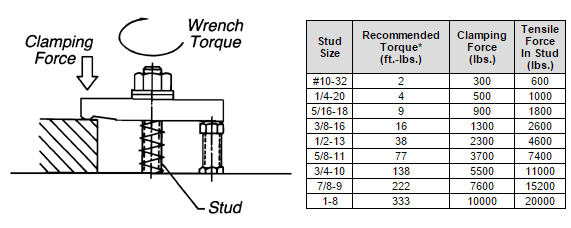
The formula for clamping force is F = (π/4) d^2 P, where F is the clamping force, d is the diameter of the bolt or screw, and P is the pressure or tightening torque applied. This formula is used to calculate the force required to hold two or more parts together.
Understanding the Variables
The variables in the formula for clamping force are crucial to understanding how to calculate the required force. The diameter of the bolt or screw is a key factor, as it affects the surface area that is in contact with the parts being clamped. The pressure or tightening torque applied also plays a significant role, as it determines the amount of force that is required to hold the parts together. Some key points to consider when understanding the variables are:
- The diameter of the bolt or screw should be measured accurately to ensure that the correct force is calculated.
- The pressure or tightening torque applied should be within the recommended range for the specific bolt or screw being used.
- The material of the parts being clamped can also affect the required clamping force, as different materials have different friction coefficients.
Importance of Clamping Force
The clamping force is a critical factor in many industrial applications, as it ensures that parts are held together securely and safely. Insufficient clamping force can lead to loosening or separation of the parts, which can result in equipment failure or accidents. On the other hand, excessive clamping force can cause damage to the parts or the equipment. Some key points to consider when understanding the importance of clamping force are:
- The clamping force should be sufficient to hold the parts together, but not so high that it causes damage or deformation.
- The clamping force can affect the performance and efficiency of the equipment or system.
- The clamping force can also affect the safety of the equipment or system, as insufficient clamping force can lead to accidents or injuries.
Calculating Clamping Force
Calculating the clamping force requires careful consideration of the variables involved, including the diameter of the bolt or screw, the pressure or tightening torque applied, and the material of the parts being clamped. The formula for clamping force can be used to calculate the required force, but it is also important to consider other factors, such as friction and wear. Some key points to consider when calculating clamping force are:
- The formula for clamping force should be used in conjunction with other calculations, such as torque and stress calculations.
- The variables involved in the calculation should be measured accurately to ensure that the correct force is calculated.
- The material properties of the parts being clamped should be taken into account, including friction coefficients and yield strengths.
Factors Affecting Clamping Force
There are several factors that can affect the clamping force, including the diameter of the bolt or screw, the pressure or tightening torque applied, and the material of the parts being clamped. Other factors, such as temperature and humidity, can also affect the clamping force, as they can cause expansion or contraction of the parts. Some key points to consider when understanding the factors that affect clamping force are:
- The temperature and humidity can affect the material properties of the parts being clamped, including friction coefficients and yield strengths.
- The surface roughness of the parts being clamped can also affect the clamping force, as it can increase or decrease the friction between the parts.
- The geometry of the parts being clamped can also affect the clamping force, as it can affect the distribution of the force.
Applications of Clamping Force
The clamping force has many applications in industrial and engineering fields, including machining, assembly, and maintenance. It is used to hold parts together securely and safely, and to ensure that equipment and systems function properly and efficiently. Some key points to consider when understanding the applications of clamping force are:
- The clamping force is used in machining to hold workpieces in place during cutting or grinding operations.
- The clamping force is used in assembly to hold parts together during welding or bolting operations.
- The clamping force is used in maintenance to hold parts together during repair or replacement operations.
How are toggle clamps measured?
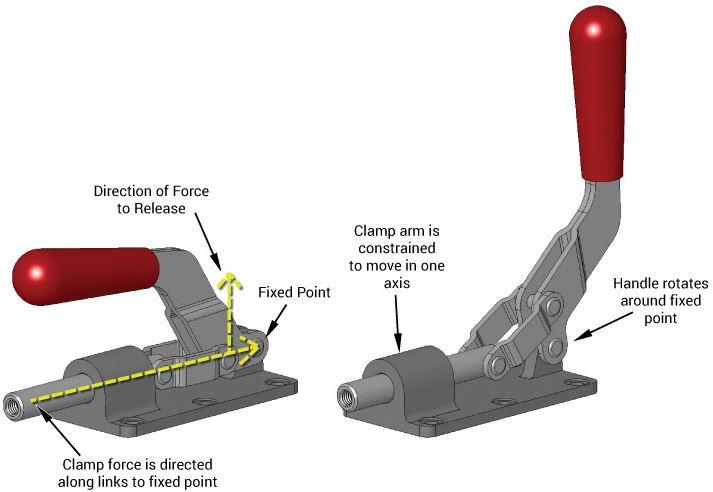
Toggle clamps are measured based on several key factors, including the type of clamp, the material used, and the application for which it will be used. The measurement of toggle clamps typically involves determining the holding force, clamping force, and stroke of the clamp. To measure these factors, manufacturers and users often use standardized testing methods to ensure accuracy and consistency. The size and design of the clamp also play a crucial role in determining its measurement, as different types of toggle clamps have varying dimensions and features.
Understanding Clamp Specifications
Understanding the specifications of a toggle clamp is crucial for measuring its performance. The holding force of a toggle clamp refers to the amount of force required to hold a workpiece in place, while the clamping force refers to the amount of force required to close the clamp. The stroke of a toggle clamp refers to the distance the clamp travels when it is closed. To measure these factors, users can refer to the manufacturer's specifications or use testing equipment to determine the clamp's performance.
- The holding force of a toggle clamp is typically measured in pounds or kilograms.
- The clamping force is measured in pounds or kilograms and is usually higher than the holding force.
- The stroke of a toggle clamp is measured in inches or millimeters and can vary depending on the type of clamp.
Measuring Clamp Performance
Measuring the performance of a toggle clamp involves evaluating its holding force, clamping force, and stroke. To measure these factors, users can use testing equipment such as force gauges or displacement sensors. The results of these tests can be used to determine the clamp's performance and reliability.
- Force gauges can be used to measure the holding force and clamping force of a toggle clamp.
- Displacement sensors can be used to measure the stroke of a toggle clamp.
- Cycle testing can be used to evaluate the reliability and durability of a toggle clamp.
Types of Toggle Clamps
There are several types of toggle clamps available, each with its own unique characteristics and measurement considerations. The most common types of toggle clamps include horizontal, vertical, and pneumatic clamps. Each type of clamp has its own specific measurement requirements, and users must consider these factors when selecting a clamp for their application.
- Horizontal toggle clamps are used for holding and clamping workpieces in a horizontal position.
- Vertical toggle clamps are used for holding and clamping workpieces in a vertical position.
- Pneumatic toggle clamps are used for high-force applications and are often actuated using compressed air.
Material Selection
The material used to manufacture a toggle clamp can have a significant impact on its measurement and performance. Common materials used to make toggle clamps include steel, aluminum, and stainless steel. Each material has its own unique properties, such as strength, corrosion resistance, and weight, which must be considered when measuring and selecting a clamp.
- Steel toggle clamps are strong and durable but may be heavy and prone to corrosion.
- Aluminum toggle clamps are lightweight and corrosion-resistant but may be less strong than steel clamps.
- Stainless steel toggle clamps are strong, corrosion-resistant, and hygienic, making them ideal for food processing and medical applications.
Application Considerations
The application for which a toggle clamp will be used is a critical factor in determining its measurement and performance. Different applications have unique requirements, such as holding force, clamping force, and stroke, which must be considered when measuring and selecting a clamp.
- Woodworking applications often require high-holding force and long stroke toggle clamps.
- Metalworking applications often require high-clamping force and short stroke toggle clamps.
- Medical and food processing applications often require hygienic and corrosion-resistant toggle clamps with precise control over holding force and clamping force.
Frequently Asked Questions (FAQs)
What is the Toggle Clamping Mechanism Formula and Calculator?
The Toggle Clamping Mechanism Formula and Calculator is a mathematical tool used to calculate the clamping force and toggle angle of a toggle clamping mechanism. This mechanism is commonly used in various industrial applications, such as injection molding machines, presses, and assembly machines. The formula and calculator take into account the input parameters such as the link lengths, link angles, and actuator force to calculate the clamping force and toggle angle. The calculator is a user-friendly tool that allows users to input the necessary parameters and calculate the results quickly and accurately.
How does the Toggle Clamping Mechanism Formula and Calculator work?
The Toggle Clamping Mechanism Formula and Calculator works by using a set of mathematical equations that describe the kinematics and statics of the toggle clamping mechanism. The formula takes into account the geometric parameters of the mechanism, such as the link lengths and link angles, as well as the actuator force and clamping force. The calculator uses these equations to calculate the toggle angle and clamping force for a given set of input parameters. The calculator also allows users to iterate and optimize the design of the mechanism by adjusting the input parameters and calculating the resulting clamping force and toggle angle.
What are the advantages of using the Toggle Clamping Mechanism Formula and Calculator?
The Toggle Clamping Mechanism Formula and Calculator has several advantages over traditional design methods. One of the main advantages is that it allows users to quickly and accurately calculate the clamping force and toggle angle of a toggle clamping mechanism. This saves time and reduces errors that can occur during the design process. Additionally, the calculator allows users to optimize the design of the mechanism by adjusting the input parameters and calculating the resulting clamping force and toggle angle. This can lead to improved performance and increased efficiency of the mechanism. The calculator is also a cost-effective tool that can be used by designers and engineers to design and optimize toggle clamping mechanisms.
What are the applications of the Toggle Clamping Mechanism Formula and Calculator?
The Toggle Clamping Mechanism Formula and Calculator has a wide range of applications in various industries. One of the main applications is in the design of injection molding machines, where the calculator can be used to calculate the clamping force and toggle angle of the mechanism. The calculator can also be used in the design of presses and assembly machines, where the clamping force and toggle angle are critical parameters. Additionally, the calculator can be used in the design of robotic arms and grippers, where the toggle clamping mechanism is used to grasp and manipulate objects. The calculator is a versatile tool that can be used in any application where a toggle clamping mechanism is used to clamp or grasp objects.
Deja una respuesta
Entradas Relacionadas