
Wind Load Support Pole Calculator Spreadsheet


The Wind Load Support Pole Calculator Spreadsheet is a valuable tool for engineers and structural designers. It helps calculate the wind load on support poles, ensuring they can withstand extreme weather conditions. With this spreadsheet, users can input variables such as pole height, diameter, and wind speed to determine the required strength and stability. The calculator provides accurate and reliable results, making it an essential resource for designing and installing support poles in various industries, including telecommunications, transportation, and construction. It simplifies the calculation process, saving time and reducing errors.
- Wind Load Support Pole Calculator Spreadsheet: A Comprehensive Tool for Engineers
- How to calculate wind load on pole?
- How to calculate wind load on a flag pole?
- How to calculate wind load calculation?
- How do you calculate the wind load of a column?
-
Frequently Asked Questions (FAQs)
- What is the purpose of the Wind Load Support Pole Calculator Spreadsheet?
- How does the Wind Load Support Pole Calculator Spreadsheet work?
- What are the benefits of using the Wind Load Support Pole Calculator Spreadsheet?
- Can the Wind Load Support Pole Calculator Spreadsheet be customized to meet specific needs?
Wind Load Support Pole Calculator Spreadsheet: A Comprehensive Tool for Engineers
The Wind Load Support Pole Calculator Spreadsheet is a vital tool for engineers and structural analysts to calculate the wind load on support poles, ensuring the stability and safety of structures such as high-voltage transmission lines, communication towers, and wind turbines. This spreadsheet allows users to input various parameters, including the pole's dimensions, material properties, and environmental conditions, to calculate the wind load and stress on the pole.
Introduction to Wind Load Calculations
Wind load calculations are crucial in determining the structural integrity of support poles. The Wind Load Support Pole Calculator Spreadsheet uses industry-accepted formulas and numerical methods to calculate the wind load on the pole, taking into account factors such as wind speed, air density, and pole geometry. The spreadsheet also considers the dynamic effects of wind on the pole, including vortex shedding and turbulence.
Key Parameters for Wind Load Calculations
To accurately calculate the wind load on a support pole, several key parameters must be considered. These include:
| Parameter | Description |
|---|---|
| Pole Height | The height of the pole above the ground |
| Pole Diameter | The diameter of the pole |
| Wind Speed | The speed of the wind at the pole's location |
| Air Density | The density of the air at the pole's location |
These parameters are essential in determining the wind load and stress on the pole.
Material Properties and Their Impact on Wind Load Calculations
The material properties of the support pole, such as its tensile strength, yield strength, and modulus of elasticity, play a significant role in determining its structural integrity under wind loads. The Wind Load Support Pole Calculator Spreadsheet allows users to input these material properties to calculate the stress and strain on the pole.
Environmental Conditions and Their Effect on Wind Load Calculations
Environmental conditions, such as temperature, humidity, and ice loading, can significantly impact the wind load on a support pole. The Wind Load Support Pole Calculator Spreadsheet considers these conditions to provide a more accurate calculation of the wind load and stress on the pole.
Applications and Limitations of the Wind Load Support Pole Calculator Spreadsheet
The Wind Load Support Pole Calculator Spreadsheet has various applications in civil engineering, structural engineering, and mechanical engineering. However, it is essential to note that this spreadsheet has limitations, such as assuming a static wind load and neglecting non-linear effects. Therefore, users must carefully evaluate the results and consider additional factors to ensure the structural integrity of the support pole. The spreadsheet can be used for:
| Application | Description |
|---|---|
| High-Voltage Transmission Lines | Calculating wind loads on transmission line poles |
| Communication Towers | Calculating wind loads on communication tower poles |
| Wind Turbines | Calculating wind loads on wind turbine poles |
How to calculate wind load on pole?
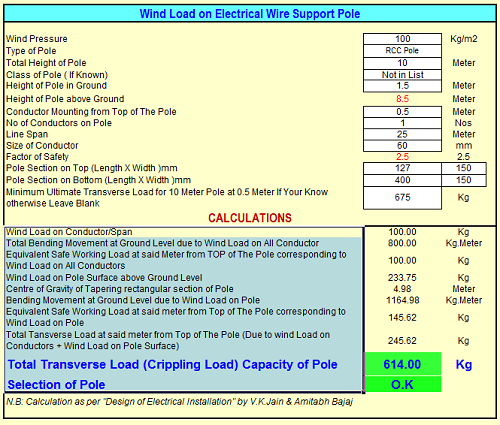
To calculate wind load on a pole, you need to consider several factors, including the height and diameter of the pole, the wind speed, and the air density. The calculation involves using the drag coefficient and the exposure category of the pole to determine the wind pressure. The wind load is then calculated by multiplying the wind pressure by the projected area of the pole.
Understanding Wind Load Calculations
Wind load calculations are crucial for determining the structural integrity of a pole. The calculations involve using mathematical models to estimate the wind load, which is then used to design the pole and its foundations. The following steps are involved in calculating wind load:
- Determine the exposure category of the pole, which depends on the surrounding terrain and obstacles.
- Calculate the wind speed at the height of the pole using the wind speed profile.
- Use the drag coefficient to calculate the wind pressure on the pole.
Factors Affecting Wind Load Calculations
Several factors can affect wind load calculations, including the shape and size of the pole, the wind direction, and the air density. The surface roughness of the pole and the surrounding terrain can also impact the wind load. The following factors are important to consider:
- The height and diameter of the pole, which affect the exposure category and wind pressure.
- The wind speed and direction, which affect the wind load and structural integrity of the pole.
- The air density, which affects the wind pressure and load on the pole.
Methods for Calculating Wind Load
There are several methods for calculating wind load, including the ASCE 7-16 method and the Eurocode method. The ASCE 7-16 method uses a simplified approach to calculate wind load, while the Eurocode method uses a more detailed approach. The following methods are commonly used:
- The ASCE 7-16 method, which uses a simplified formula to calculate wind load.
- The Eurocode method, which uses a more detailed formula to calculate wind load.
- The finite element method, which uses numerical modeling to calculate wind load.
Importance of Accurate Wind Load Calculations
Accurate wind load calculations are critical for ensuring the structural integrity and safety of a pole. Inaccurate calculations can lead to structural failure and economic losses. The following are important to consider:
- The consequences of inaccurate calculations, which can include structural failure and economic losses.
- The importance of using accurate data, including wind speed and air density.
- The need for regular maintenance to ensure the structural integrity of the pole.
Software for Calculating Wind Load
There are several software programs available for calculating wind load, including STAAD.Pro and SAP2000. These programs use numerical modeling and mathematical algorithms to calculate wind load and determine the structural integrity of a pole. The following software programs are commonly used:
- STAAD.Pro, which uses finite element analysis to calculate wind load.
- SAP2000, which uses finite element analysis to calculate wind load.
- Autodesk Robot, which uses finite element analysis to calculate wind load.
How to calculate wind load on a flag pole?

To calculate the wind load on a flag pole, you need to consider several factors, including the height and diameter of the pole, the flag size and material, and the wind speed. The wind load is the force exerted by the wind on the flag pole, and it's typically calculated using the ASCE 7-16 standard. This standard provides a methodology for calculating the wind load on structures, including flag poles. The calculation involves determining the design wind speed, exposure category, and importance factor, which are used to calculate the wind load.
Understanding the Factors that Affect Wind Load
The wind load on a flag pole is affected by several factors, including the height and diameter of the pole, the flag size and material, and the wind speed. The height of the pole is a critical factor, as it affects the exposure of the pole to the wind. The diameter of the pole also plays a role, as it affects the surface area of the pole exposed to the wind. The flag size and material also impact the wind load, as larger flags or materials with a higher expansion coefficient will experience greater wind loads. Some key factors to consider are:
- Height of the pole
- Diameter of the pole
- Flag size and material
Determining the Design Wind Speed
The design wind speed is a critical factor in calculating the wind load on a flag pole. The design wind speed is the wind speed that is expected to occur at the location of the flag pole, and it's typically determined using wind speed maps or weather data. The design wind speed is used to calculate the wind load, and it's often expressed in units of miles per hour or kilometers per hour. Some key steps involved in determining the design wind speed are:
- Obtaining wind speed maps or weather data for the location
- Determining the exposure category of the flag pole
- Using the ASCE 7-16 standard to calculate the design wind speed
Calculating the Wind Load using the ASCE 7-16 Standard
The ASCE 7-16 standard provides a methodology for calculating the wind load on structures, including flag poles. The calculation involves determining the design wind speed, exposure category, and importance factor, which are used to calculate the wind load. The wind load is calculated using the following formula: F = 0.00256 Vs^2 C_d A, where F is the wind load, Vs is the design wind speed, C_d is the drag coefficient, and A is the surface area of the flag pole. Some key steps involved in calculating the wind load are:
- Determining the design wind speed and exposure category
- Calculating the wind load using the ASCE 7-16 standard
- Applying the importance factor to the calculated wind load
Considering the Importance Factor and Exposure Category
The importance factor and exposure category are critical factors in calculating the wind load on a flag pole. The importance factor is a factor that is applied to the calculated wind load to account for the importance of the structure. The exposure category is a factor that is used to account for the exposure of the flag pole to the wind. The exposure category is typically determined based on the location and surroundings of the flag pole. Some key factors to consider are:
- Importance factor based on the use and location of the flag pole
- Exposure category based on the location and surroundings of the flag pole
- Wind direction and wind speed in relation to the flag pole
Applying the Calculated Wind Load to the Flag Pole Design
The calculated wind load is used to design the flag pole and ensure that it can withstand the expected wind loads. The wind load is applied to the flag pole using load cases, which are used to simulate the expected wind loads on the flag pole. The load cases are used to determine the required load capacity of the flag pole, and to ensure that the flag pole is designed to withstand the expected wind loads. Some key steps involved in applying the calculated wind load are:
- Load cases to simulate the expected wind loads on the flag pole
- Load capacity of the flag pole based on the calculated wind load
- Design and testing of the flag pole to ensure that it can withstand the expected wind loads
How to calculate wind load calculation?

To calculate wind load, you need to consider the velocity of the wind, the density of the air, and the shape and size of the structure. The calculation involves determining the pressure exerted by the wind on the structure, which can be calculated using the Bernoulli's principle. The wind load is typically calculated using the ASCE 7-16 standard, which provides a methodology for calculating wind loads on buildings and other structures.
Understanding Wind Load Calculation
The calculation of wind load is crucial in designing and constructing buildings and other structures that can withstand high winds. To calculate wind load, you need to consider the topography of the area, the height and shape of the structure, and the type of cladding used. The calculation involves determining the wind speed and direction, as well as the air density. The wind load can be calculated using the following formula:
- The wind speed is measured in miles per hour (mph) or kilometers per hour (km/h).
- The air density is measured in kilograms per cubic meter (kg/m³) or pounds per cubic foot (lb/ft³).
- The shape and size of the structure are used to determine the exposure category.
Importance of Wind Load Calculation
The calculation of wind load is critical in ensuring the safety and durability of structures. Wind loads can cause damage to buildings and other structures, especially during high winds or hurricanes. The calculation of wind load helps to determine the design loads and stresses on the structure, which is essential in designing and constructing safe and durable structures. The wind load calculation involves considering the following factors:
- The type of structure, such as a building or a bridge.
- The location of the structure, including the latitude and longitude.
- The height and shape of the structure, which affects the wind load.
Methods of Wind Load Calculation
There are several methods of calculating wind load, including the ASCE 7-16 standard and the Eurocode 1 standard. The ASCE 7-16 standard provides a methodology for calculating wind loads on buildings and other structures, while the Eurocode 1 standard provides a methodology for calculating wind loads on buildings and other structures in Europe. The calculation of wind load involves using complex equations and formulas, as well as considering the topography of the area and the type of cladding used. The methods of calculating wind load include:
- The ASCE 7-16 standard, which provides a methodology for calculating wind loads on buildings and other structures.
- The Eurocode 1 standard, which provides a methodology for calculating wind loads on buildings and other structures in Europe.
- The finite element method, which is used to analyze the behavior of structures under wind loads.
Factors Affecting Wind Load Calculation
There are several factors that affect the calculation of wind load, including the topography of the area, the height and shape of the structure, and the type of cladding used. The wind load calculation also involves considering the air density and the wind speed, as well as the direction of the wind. The factors that affect the calculation of wind load include:
- The topography of the area, which affects the wind speed and direction.
- The height and shape of the structure, which affects the exposure category.
- The type of cladding used, which affects the wind load.
Applications of Wind Load Calculation
The calculation of wind load has several applications, including designing and constructing safe and durable structures, such as buildings and bridges. The wind load calculation is also used in risk assessment and damage prevention, as well as in insurance and litigation. The applications of wind load calculation include:
- Designing and constructing safe and durable structures, such as buildings and bridges.
- Risk assessment and damage prevention, which involves identifying hazards and mitigating risks.
- Insurance and litigation, which involves assessing damages and liability.
How do you calculate the wind load of a column?
To calculate the wind load of a column, you need to consider several factors, including the height and width of the column, the wind speed, and the exposure category of the area where the column is located. The wind load is calculated using the ASCE 7-16 standard, which provides a methodology for calculating wind loads on structures. The calculation involves determining the wind pressure on the column and then applying a series of factors to account for the effects of turbulence and aerodynamics.
Understanding Wind Load Calculations
To calculate the wind load of a column, you need to understand the basic principles of wind load calculations. The wind load is calculated as the product of the wind pressure and the area of the column. The wind pressure is calculated using the ASCE 7-16 standard, which takes into account the wind speed, exposure category, and height of the column. The calculation involves the following steps:
- Determine the wind speed and exposure category of the area where the column is located
- Calculate the wind pressure using the ASCE 7-16 standard
- Determine the area of the column that is subject to wind loads
Importance of Exposure Category
The exposure category is a critical factor in calculating the wind load of a column. The exposure category depends on the surrounding terrain and obstructions that can affect the wind flow around the column. The ASCE 7-16 standard provides four exposure categories: B, C, D, and E, each with its own set of wind speed and turbulence characteristics. The exposure category is used to determine the wind pressure and gust effect factor.
- Determine the exposure category based on the surrounding terrain and obstructions
- Use the ASCE 7-16 standard to determine the wind pressure and gust effect factor for the selected exposure category
- Apply the gust effect factor to the wind pressure to account for the effects of turbulence
Role of Aerodynamics in Wind Load Calculations
Aerodynamics plays a significant role in wind load calculations, as it affects the wind flow around the column and the resulting wind pressure. The shape and size of the column, as well as the surrounding terrain, can all impact the aerodynamics of the wind flow. The ASCE 7-16 standard provides aerodynamic coefficients that can be used to account for the effects of aerodynamics on the wind load.
- Determine the aerodynamic coefficient for the column based on its shape and size
- Use the aerodynamic coefficient to calculate the wind pressure and gust effect factor
- Apply the gust effect factor to the wind pressure to account for the effects of turbulence
Calculating Wind Load on Tall Columns
Calculating the wind load on tall columns requires special consideration, as the wind speed and turbulence can vary significantly with height. The ASCE 7-16 standard provides a methodology for calculating the wind load on tall columns, taking into account the height and exposure category of the column. The calculation involves determining the wind pressure at the top and bottom of the column and then applying a series of factors to account for the effects of turbulence and aerodynamics.
- Determine the wind pressure at the top and bottom of the column using the ASCE 7-16 standard
- Calculate the average wind pressure along the height of the column
- Apply the gust effect factor to the average wind pressure to account for the effects of turbulence
Software for Wind Load Calculations
The use of software can greatly simplify the process of calculating the wind load of a column. There are several software packages available that can perform wind load calculations, including STAAD, SAP, and ETABS. These programs can calculate the wind load using the ASCE 7-16 standard and can also account for the effects of turbulence and aerodynamics.
- Select a software package that is capable of performing wind load calculations
- Input the column dimensions, wind speed, and exposure category into the software
- Run the analysis to calculate the wind load and gust effect factor
Frequently Asked Questions (FAQs)
What is the purpose of the Wind Load Support Pole Calculator Spreadsheet?
The Wind Load Support Pole Calculator Spreadsheet is a tool designed to help engineers and construction professionals calculate the wind load on support poles, which is a critical factor in determining the structural integrity of these poles. The spreadsheet takes into account various parameters such as the height and diameter of the pole, the wind speed, and the air density to calculate the wind load. This information is essential for ensuring that the support pole can withstand extreme weather conditions and maintain its stability. The calculator spreadsheet is a user-friendly and efficient way to perform these calculations, saving time and reducing the risk of human error. By using this spreadsheet, engineers and construction professionals can ensure that their support poles are designed and installed to withstand the forces of nature and provide a safe and reliable structure.
How does the Wind Load Support Pole Calculator Spreadsheet work?
The Wind Load Support Pole Calculator Spreadsheet works by using a formula to calculate the wind load on the support pole based on the input parameters provided by the user. The formula takes into account the wind speed, air density, and pole dimensions to calculate the wind load. The spreadsheet is designed to be easy to use, with a simple and intuitive interface that allows users to input the required parameters and obtain the calculated wind load. The spreadsheet also includes -built-in checks and validations to ensure that the input parameters are valid and reasonable, reducing the risk of errors. The calculated wind load can then be used to determine the required strength and stability of the support pole, ensuring that it can withstand the forces imposed by the wind. The spreadsheet is a powerful tool that can be used to optimize the design of support poles and ensure that they are safe and reliable.
What are the benefits of using the Wind Load Support Pole Calculator Spreadsheet?
The Wind Load Support Pole Calculator Spreadsheet provides several benefits to engineers and construction professionals. One of the main advantages is that it saves time and reduces the risk of human error. The spreadsheet is a quick and efficient way to perform wind load calculations, allowing users to obtain accurate results in a short amount of time. Another benefit is that the spreadsheet is easy to use, even for users who are not familiar with complex calculations. The spreadsheet also provides a detailed and transparent calculation process, allowing users to understand the assumptions and methods used to calculate the wind load. Additionally, the spreadsheet can be used to optimize the design of support poles, reducing the risk of failure and ensuring that they are safe and reliable. Overall, the Wind Load Support Pole Calculator Spreadsheet is a valuable tool that can help engineers and construction professionals to improve the design and installation of support poles.
Can the Wind Load Support Pole Calculator Spreadsheet be customized to meet specific needs?
Yes, the Wind Load Support Pole Calculator Spreadsheet can be customized to meet specific needs. The spreadsheet is designed to be flexible and adaptable, allowing users to modify the input parameters and calculation methods to suit their specific requirements. For example, users can modify the wind speed and air density values to reflect the local conditions, or adjust the pole dimensions to match the specific design. The spreadsheet can also be extended to include additional calculations or checks, such as seismic or snow load calculations. Additionally, the spreadsheet can be integrated with other tools and software, such as computer-aided design (CAD) programs, to provide a seamless and efficient design process. The ability to customize the Wind Load Support Pole Calculator Spreadsheet makes it a powerful and versatile tool that can be used in a wide range of applications.
Deja una respuesta
Entradas Relacionadas