
Vertical Tank Draining Time Formulas and Calculator

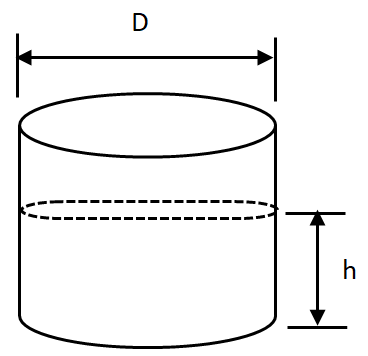
The draining time of a vertical tank is a crucial factor in various industrial applications, including water treatment, chemical processing, and oil storage. Calculating the time it takes for a tank to drain is essential for ensuring efficient operation, safety, and compliance with regulations. Several formulas are available to estimate the draining time, taking into account factors such as tank dimensions, fluid properties, and outlet characteristics. This article provides an overview of the most commonly used formulas and offers a calculator to simplify the calculation process for engineers and operators. Accurate calculations are vital for optimal tank performance.
- Vertical Tank Draining Time Formulas and Calculator
- How do you calculate time to empty a tank?
- What is the formula for draining a tank?
- What is the formula for drain flow rate?
- How do you calculate gallons in a vertical tank?
-
Frequently Asked Questions (FAQs)
- What are the key factors that affect the draining time of a vertical tank?
- How do I calculate the draining time of a vertical tank using formulas?
- What are the benefits of using a vertical tank draining time calculator?
- How can I apply the results of a vertical tank draining time calculation in real-world applications?
Vertical Tank Draining Time Formulas and Calculator
The vertical tank draining time is a critical parameter in various industrial and engineering applications, such as water treatment, chemical processing, and oil storage. The time it takes to drain a tank can be calculated using various formulas and calculators. The most commonly used formula is the Torricelli's equation, which states that the draining time is inversely proportional to the square root of the height of the liquid in the tank.
Introduction to Vertical Tank Draining Time Formulas
The vertical tank draining time formulas are based on the principles of fluid dynamics and hydrodynamics. The Torricelli's equation is a fundamental formula that describes the draining time of a tank. The equation states that the draining time is proportional to the volume of the liquid in the tank and inversely proportional to the square root of the height of the liquid. The formula is given by: t = V / (A sqrt(2 g h)), where t is the draining time, V is the volume of the liquid, A is the cross-sectional area of the tank, g is the acceleration due to gravity, and h is the height of the liquid.
Factors Affecting Vertical Tank Draining Time
Several factors can affect the vertical tank draining time, including the tank size and shape, liquid properties, drainage system, and atmospheric conditions. The tank size and shape can affect the draining time by changing the cross-sectional area and height of the liquid. The liquid properties, such as viscosity and density, can also affect the draining time by changing the flow rate. The drainage system, including the drain size and location, can also impact the draining time.
Vertical Tank Draining Time Calculator
A vertical tank draining time calculator is a tool used to calculate the draining time of a tank based on various input parameters. The calculator typically requires input values for the tank size and shape, liquid properties, and drainage system. The calculator then uses the Torricelli's equation and other formulas to calculate the draining time. Some calculators also provide additional features, such as graphs and charts, to help visualize the draining time.
Applications of Vertical Tank Draining Time Formulas and Calculator
The vertical tank draining time formulas and calculator have various applications in industries such as water treatment, chemical processing, and oil storage. The formulas and calculator can be used to design and optimize drainage systems, predict draining times, and ensure safe and efficient operation of tanks. The calculator can also be used to train personnel and educate students on the principles of fluid dynamics and hydrodynamics.
Limitations and Assumptions of Vertical Tank Draining Time Formulas and Calculator
The vertical tank draining time formulas and calculator have several limitations and assumptions. The Torricelli's equation assumes a frictionless and irrotational flow, which may not be valid in all cases. The calculator also assumes a constant drain size and location, which may not be realistic. Additionally, the calculator may not account for other factors, such as turbulence and viscosity, that can affect the draining time. The following table summarizes the key parameters and assumptions of the vertical tank draining time formulas and calculator:
| Parameter | Value | Assumption |
|---|---|---|
| Tank Size | Variable | Constant cross-sectional area |
| Liquid Properties | Variable | Constant viscosity and density |
| Drainage System | Variable | Constant drain size and location |
| Atmospheric Conditions | Variable | Constant atmospheric pressure |
| Flow Rate | Variable | Constant flow rate |
How do you calculate time to empty a tank?

To calculate the time to empty a tank, you need to consider the volume of the tank, the flow rate of the liquid being drained, and the pressure at which it is being drained. The formula to calculate the time to empty a tank is: Time = Volume / Flow Rate. This formula assumes that the flow rate is constant and that the tank is being drained at a constant pressure.
Understanding Tank Volume
The volume of the tank is a critical factor in calculating the time to empty it. To calculate the volume, you need to know the dimensions of the tank, including its length, width, and height. The volume can be calculated using the formula: Volume = Length x Width x Height. The volume of the tank will help determine how long it will take to empty it. Here are the steps to calculate the volume:
- Measure the length, width, and height of the tank in units such as feet or meters.
- Use the formula Volume = Length x Width x Height to calculate the volume in cubic units.
- Convert the volume to the desired units, such as gallons or liters, if necessary.
Determining Flow Rate
The flow rate of the liquid being drained from the tank is another important factor in calculating the time to empty it. The flow rate can be measured in units such as gallons per minute (gpm) or liters per second (L/s). To determine the flow rate, you can use a flow meter or calculate it based on the diameter of the drain pipe and the velocity of the fluid. Here are the steps to determine the flow rate:
- Measure the diameter of the drain pipe in units such as inches or millimeters.
- Calculate the cross-sectional area of the pipe using the formula: Area = π x (Diameter/2)^2.
- Measure the velocity of the fluid in units such as feet per second (ft/s) or meters per second (m/s).
Calculating Time to Empty
To calculate the time to empty the tank, you can use the formula: Time = Volume / Flow Rate. This formula assumes! that the flow rate is constant and that the tank is being drained at a constant pressure. Here are the steps to calculate the time to empty:
- Calculate the volume of the tank in units such as gallons or liters.
- Measure the flow rate in units such as gallons per minute (gpm) or liters per second (L/s).
- Use the formula Time = Volume / Flow Rate to calculate the time to empty in units such as minutes or seconds.
Considering Pressure Drop
The pressure at which the tank is being drained can affect the flow rate and therefore the time to empty. As the liquid level in the tank decreases, the pressure at the bottom of the tank also decreases, which can reduce the flow rate. To account for this, you can use a pressure drop calculation to adjust the flow rate. Here are the steps to consider pressure drop:
- Measure the initial pressure at the bottom of the tank in units such as pounds per square inch (psi) or pascals (Pa).
- Calculate the pressure drop as the liquid level decreases using the formula: Pressure Drop = (Initial Pressure - Final Pressure) / Time.
- Adjust the flow rate based on the pressure drop using the formula: Flow Rate = Flow Rate x (1 - (Pressure Drop / Initial Pressure)).
Accounting for Other Factors
There are other factors that can affect the time to empty a tank, such as viscosity, temperature, and pipe friction. The viscosity of the fluid can affect the flow rate, while the temperature can affect the density and viscosity of the fluid. Pipe friction can also reduce the flow rate. Here are the steps to account for these factors:
- Measure the viscosity of the fluid in units such as centipoise (cP) or poise (P).
- Calculate the density of the fluid in units such as pounds per cubic foot (lb/ft^3) or kilograms per cubic meter (kg/m^3).
- Use a pipe friction calculation to adjust the flow rate based on the pipe diameter and length.
What is the formula for draining a tank?
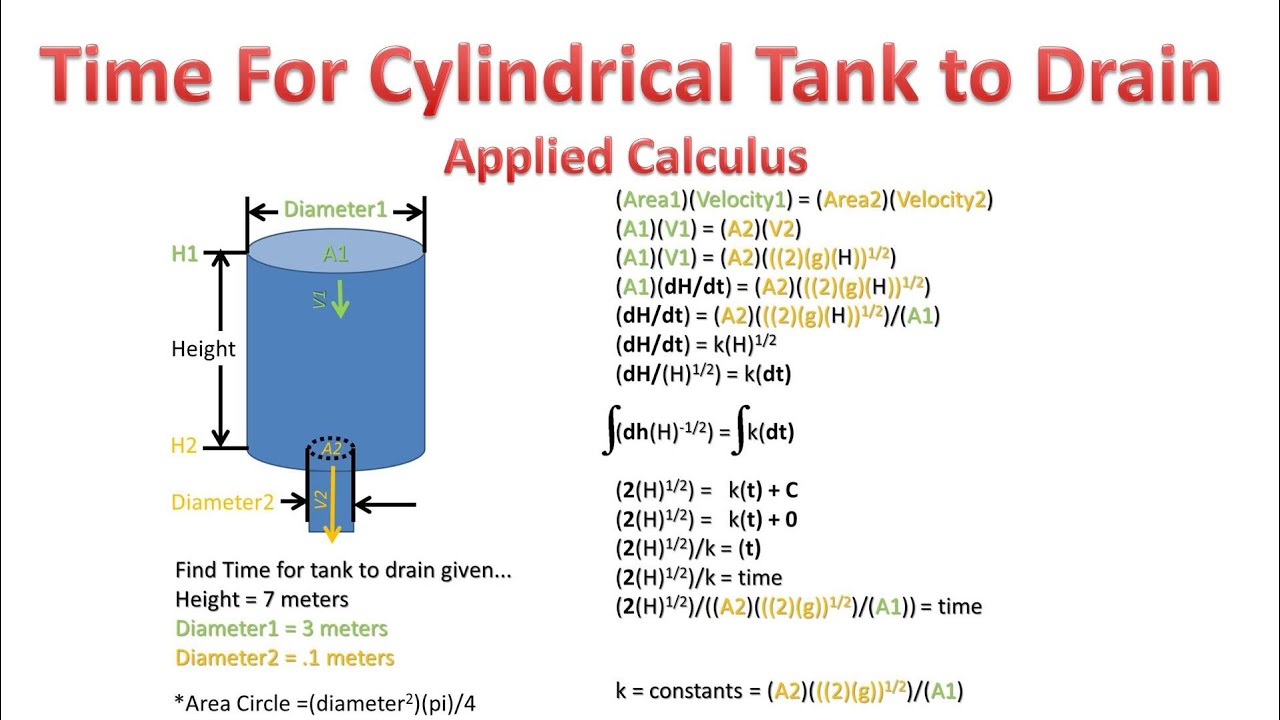
The formula for draining a tank is based on the principle of torricelli's theorem, which states that the velocity of a fluid exiting a small hole in a tank is proportional to the square root of the height of the fluid above the hole. The formula is given by: Q = A sqrt(2 g h), where Q is the flow rate, A is the area of the hole, g is the acceleration due to gravity, and h is the height of the fluid above the hole.
Understanding the Variables
To apply the formula for draining a tank, it is essential to understand the variables involved. The flow rate (Q) is the volume of fluid that exits the tank per unit time, and it is typically measured in units of volume per unit time, such as liters per second. The area of the hole (A) is the cross-sectional area of the hole through which the fluid exits, and it is typically measured in units of area, such as square meters. The acceleration due to gravity (g) is a constant that is approximately equal to 9.8 meters per second squared on Earth. The height of the fluid (h) is the distance from the surface of the fluid to the hole, and it is typically measured in units of length, such as meters.
- The flow rate is affected by the area of the hole and the height of the fluid.
- The area of the hole is a critical factor in determining the flow rate.
- The acceleration due to gravity is a constant that affects the flow rate.
Applying the Formula
To apply the formula for draining a tank, we need to know the values of the variables involved. We can then plug these values into the formula to calculate the flow rate. For example, if we know the area of the hole and the height of the fluid, we can use the formula to calculate the flow rate. It is essential to note that the formula assumes that the tank is frictionless and that the fluid is incompressible.
- The formula is applicable to tanks with a small hole at the bottom.
- The formula assumes that the fluid is incompressible and the tank is frictionless.
- The flow rate is proportional to the square root of the height of the fluid.
Limitations of the Formula
The formula for draining a tank has several limitations. It assumes that the tank is frictionless and that the fluid is incompressible. In reality, friction and compressibility can affect the flow rate. Additionally, the formula assumes that the hole is small compared to the size of the tank. If the hole is large, the formula may not be accurate.
- The formula assumes that the tank is frictionless.
- The formula assumes that the fluid is incompressible.
- The flow rate can be affected by friction and compressibility.
Real-World Applications
The formula for draining a tank has several real-world applications. It can be used to design irrigation systems, plumbing systems, and industrial processes that involve the flow of fluids. The formula can also be used to analyze and optimize the performance of these systems.
- The formula can be used to design irrigation systems.
- The formula can be used to design plumbing systems.
- The formula can be used to analyze and optimize industrial processes.
Common Mistakes
When applying the formula for draining a tank, there are several common mistakes to avoid. One common mistake is to neglect the effects of friction and compressibility on the flow rate. Another common mistake is to use the wrong units for the variables involved. It is essential to use the correct units to ensure that the calculation is accurate.
- Friction and compressibility can affect the flow rate.
- Using the wrong units can lead to inaccurate calculations.
- Double-checking the units and calculations is essential to ensure accuracy.
What is the formula for drain flow rate?
The formula for drain flow rate is given by the equation Q = A V, where Q is the volumetric flow rate, A is the cross-sectional area of the drain, and V is the velocity of the fluid. This equation is based on the principle of conservation of mass, which states that the mass flow rate of a fluid remains constant throughout a pipe or channel. The drain flow rate is an important parameter in designing and optimizing drainage systems, as it determines the ability of the system to handle fluid flow and prevent flooding or overflow.
Factors Affecting Drain Flow Rate
The drain flow rate is affected by several factors, including the diameter and slope of the drain, the viscosity and density of the fluid, and the roughness of the drain surface. These factors can be summarized as follows:
- The diameter of the drain affects the cross-sectional area and therefore the drain flow rate.
- The slope of the drain affects the velocity of the fluid and therefore the drain flow rate.
- The viscosity and density of the fluid affect the resistance to flow and therefore the drain flow rate.
Types of Drain Flow
There are several types of drain flow, including laminar flow, turbulent flow, and transitional flow. Laminar flow occurs at low velocities and is characterized by smooth, continuous flow. Turbulent flow occurs at high velocities and is characterized by chaotic, irregular flow. Transitional flow occurs at intermediate velocities and is characterized by a mixture of laminar and turbulent flow. The type of drain flow affects the drain flow rate and can be summarized as follows:
- Laminar flow is characterized by low resistance to flow and high drain flow rate.
- Turbulent flow is characterized by high resistance to flow and low drain flow rate.
- Transitional flow is characterized by intermediate resistance to flow and intermediate drain flow rate.
Design Considerations for Drainage Systems
When designing drainage systems, it is essential to consider the drain flow rate and other factors such as the topography of the land, the soil properties, and the climate. The drain flow rate should be sufficient to handle the fluid flow and prevent flooding or overflow. The design considerations can be summarized as follows:
- The drainage system should be designed to handle the peak flow rate.
- The drainage system should be designed to handle the average flow rate.
- The drainage system should be designed to handle the stormwater runoff.
Calculating Drain Flow Rate
The drain flow rate can be calculated using the equation Q = A V, where Q is the volumetric flow rate, A is the cross-sectional area of the drain, and V is the velocity of the fluid. The velocity can be calculated using the Manning equation, which is given by V = (1/n) R^2/3 S^1/2, where n is the Manning roughness coefficient, R is the hydraulic radius, and S is the slope of the drain. The calculation can be summarized as follows:
- Calculate the cross-sectional area of the drain.
- Calculate the velocity of the fluid using the Manning equation.
- Calculate the drain flow rate using the equation Q = A V.
Applications of Drain Flow Rate
The drain flow rate has several applications in civil engineering, including the design of drainage systems, sewer systems, and stormwater management systems. The drain flow rate is used to determine the size and capacity of the drainage system, and to prevent flooding and overflow. The applications can be summarized as follows:
- Drainage system design: The drain flow rate is used to determine the size and capacity of the drainage system.
- Sewer system design: The drain flow rate is used to determine the size and capacity of the sewer system.
- Stormwater management: The drain flow rate is used to prevent flooding and overflow.
How do you calculate gallons in a vertical tank?
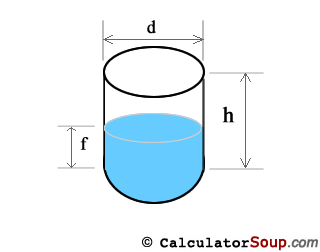
To calculate gallons in a vertical tank, you need to know the height and radius of the tank, as well as the liquid level. The formula to calculate the volume of a vertical tank is V = πr^2h, where V is the volume, π is a constant approximately equal to 3.14, r is the radius of the tank, and h is the height of the liquid. To convert the volume from cubic feet to gallons, you can use the conversion factor: 1 cubic foot is equal to approximately 7.48 gallons.
Understanding Vertical Tank Dimensions
To accurately calculate gallons in a vertical tank, it's essential to understand the tank's dimensions, including the height, radius, and liquid level. The dimensions can be obtained from the tank's manufacturer or by measuring the tank directly.
- Measure the height of the tank from the bottom to the top.
- Measure the radius of the tank, which is half the diameter.
- Measure the liquid level, which is the height of the liquid inside the tank.
Calculating Volume Using the Formula
The formula V = πr^2h is used to calculate the volume of the liquid in the tank.
- Plug in the values of r and h into the formula.
- Calculate the square of the radius (r^2).
- Multiply the result by π (approximately 3.14) and the height (h).
Converting Volume to Gallons
To convert the calculated volume from cubic feet to gallons, you can use the conversion factor: 1 cubic foot is equal to approximately 7.48 gallons.
- Multiply the calculated volume by the conversion factor.
- Round the result to the nearest whole number or decimal place.
- Record the result as the total gallons in the tank.
Factors Affecting Volume Calculations
Several factors can affect the accuracy of volume calculations, including temperature, pressure, and tank shape.
- Temperature changes can cause the liquid to expand or contract, affecting the volume.
- Pressure changes can also affect the volume of the liquid.
- Tank shape irregularities can lead to inaccurate volume calculations.
Best Practices for Accurate Calculations
To ensure accurate calculations, it's essential to follow best practices, including using precise measurements, accurate conversion factors, and reliable calculation tools.
- Use a calibrated measuring tape to ensure accurate measurements.
- Use a reliable calculator or software to perform calculations.
- Verify the results by checking for unit consistency and reasonableness.
Frequently Asked Questions (FAQs)
What are the key factors that affect the draining time of a vertical tank?
The draining time of a vertical tank is influenced by several key factors, including the height of the tank, the diameter of the tank, the orifice size at the bottom, and the viscosity of the liquid being drained. The height of the tank affects the hydrostatic pressure at the bottom, which in turn influences the flow rate. A taller tank will generally have a longer draining time due to the increased hydrostatic pressure. The diameter of the tank also plays a crucial role, as a larger tank will have a greater volume of liquid to drain, resulting in a longer draining time. The orifice size at the bottom of the tank is also critical, as a smaller orifice will restrict the flow rate, leading to a longer draining time. Additionally, the viscosity of the liquid being drained is important, as thicker, more viscous liquids will drain more slowly than thinner, less viscous ones.
How do I calculate the draining time of a vertical tank using formulas?
Calculating the draining time of a vertical tank can be done using various formulas, including the Torricelli's equation, which is a fundamental equation in fluid mechanics. This equation states that the flow rate through an orifice is proportional to the square root of the hydrostatic pressure at the orifice. By rearranging this equation, we can solve for the draining time. Another formula that can be used is the orifice equation, which takes into account the orifice size and the viscosity of the liquid. To calculate the draining time using these formulas, you will need to know the height and diameter of the tank, the orifice size, and the viscosity of the liquid. You can then plug these values into the formulas to obtain an estimate of the draining time. It's worth noting that these formulas assume a simplified model of the tank and the draining process, and may not account for all the complexities of real-world systems.
What are the benefits of using a vertical tank draining time calculator?
Using a vertical tank draining time calculator can provide several benefits, including increased accuracy and efficiency. These calculators can take into account various parameters, such as the height and diameter of the tank, the orifice size, and the viscosity of the liquid, to provide a more accurate estimate of the draining time. This can be particularly useful in industrial applications, where precise calculations are critical to ensure safe and efficient operations. Additionally, these calculators can save time and reduce errors, as they can perform complex calculations quickly and accurately. Some calculators may also provide additional features, such as graphs and charts, to help visualize the draining process and identify key trends and patterns. Overall, using a vertical tank draining time calculator can help streamline the calculation process and provide valuable insights into the draining behavior of vertical tanks.
How can I apply the results of a vertical tank draining time calculation in real-world applications?
The results of a vertical tank draining time calculation can be applied in various real-world applications, including industrial processes, water treatment, and petroleum storage. For example, in industrial processes, knowing the draining time of a tank can help optimize the production schedule and ensure that the tank is emptied and refilled efficiently. In water treatment, calculating the draining time of a tank can help design and operate the treatment system more effectively, by ensuring that the tank is emptied and refilled at the right time. In petroleum storage, knowing the draining time of a tank can help prevent overfilling and reduce the risk of spills and leaks. Overall, the results of a vertical tank draining time calculation can provide valuable insights into the behavior of the tank and help improve safety, efficiency, and productivity in a wide range of applications. By applying these results, engineers and operators can make more informed decisions and optimize the performance of their systems.
Deja una respuesta
Entradas Relacionadas