
Thin Flat Plates Uniform Thickness Natural Frequency Equations and Calculator

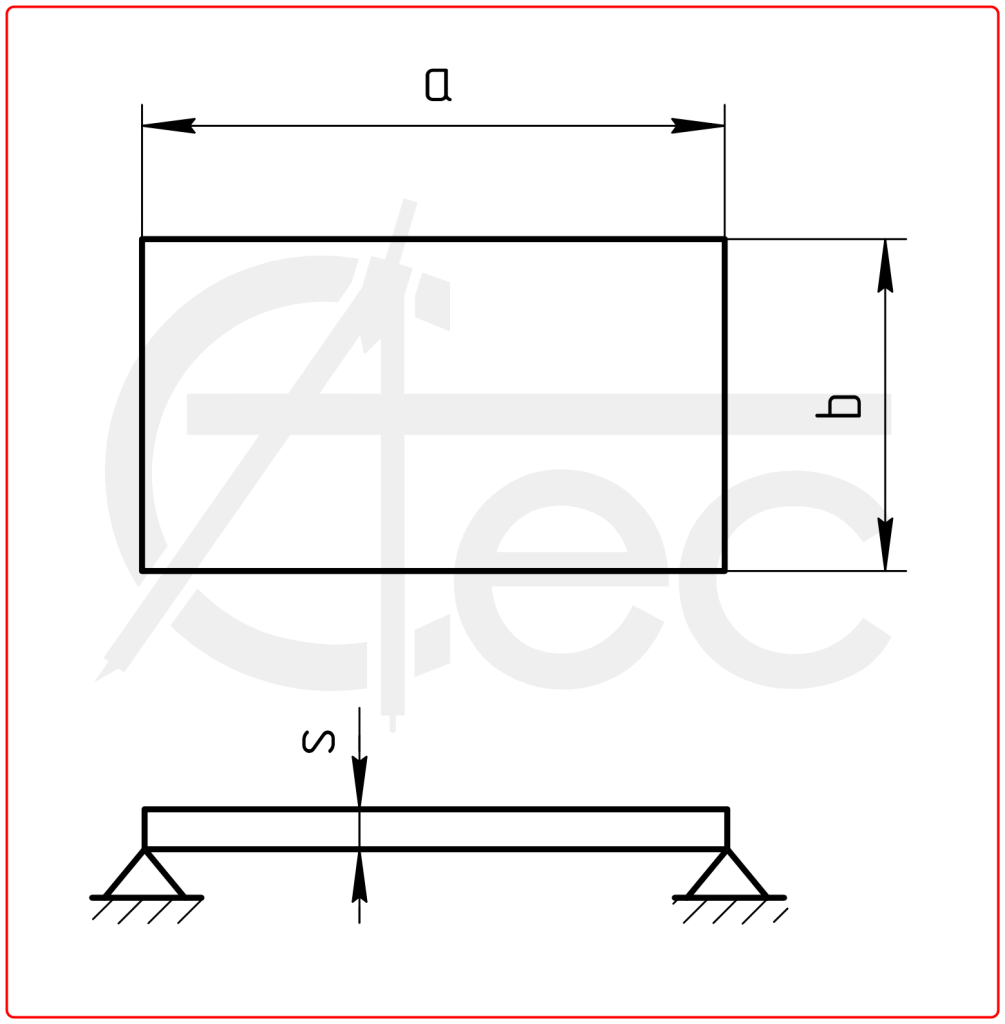
The natural frequency of thin flat plates with uniform thickness is a crucial parameter in various engineering applications, including vibration analysis and design. Plates with uniform thickness exhibit distinct vibrational characteristics, which can be predicted using mathematical equations. These equations take into account the plate's material properties, dimensions, and boundary conditions to calculate its natural frequencies. This article provides a comprehensive overview of the equations and a calculator tool to determine the natural frequencies of thin flat plates with uniform thickness, enabling engineers to accurately predict and analyze their vibrational behavior. The calculator is based on established mathematical models.
- Natural Frequency of Thin Flat Plates with Uniform Thickness
- How do you calculate the thickness of a flat plate?
- How does thickness affect natural frequency?
- What is the formula for natural frequency?
- What is the natural frequency of aluminum plate?
-
Frequently Asked Questions (FAQs)
- What are the key factors that influence the natural frequency of thin flat plates with uniform thickness?
- How do the equations for calculating the natural frequency of thin flat plates with uniform thickness account for different boundary conditions?
- What are the advantages of using a calculator to determine the natural frequency of thin flat plates with uniform thickness, rather than manually calculating the equations?
- How can the natural frequency equations and calculator for thin flat plates with uniform thickness be applied in real-world engineering applications, such as vibration analysis and design optimization?
Natural Frequency of Thin Flat Plates with Uniform Thickness
The natural frequency of a thin flat plate with uniform thickness is a critical parameter in various engineering applications, including mechanical, aerospace, and civil engineering. It is essential to calculate the natural frequency of these plates to ensure that they can withstand various types of loading and vibrations. The calculation of natural frequency involves the use of equations and calculators that take into account the plate's thickness, density, Young's modulus, and Poisson's ratio.
Introduction to Natural Frequency Equations
The natural frequency of a thin flat plate can be calculated using various equations, including the Rayleigh-Ritz method and the finite element method. These equations involve the use of partial differential equations that describe the plate's motion and deformation. The natural frequency is then calculated by solving these equations, which yields a set of eigenvalues and eigenvectors that represent the plate's mode shapes and natural frequencies.
Uniform Thickness Plate Theory
The uniform thickness plate theory assumes that the plate has a constant thickness throughout its length and width. This theory is used to calculate the natural frequency of plates with simple and clamped boundary conditions. The equations used in this theory involve the use of second-order partial differential equations that describe the plate's bending and twisting motions.
Natural Frequency Calculator
A natural frequency calculator is a software tool that uses equations and algorithms to calculate the natural frequency of thin flat plates. These calculators can be used to calculate the natural frequency of plates with various boundary conditions, including simple, clamped, and free edges. The calculator takes into account the plate's thickness, density, Young's modulus, and Poisson's ratio to calculate the natural frequency.
Mode Shapes and Eigenvalues
The mode shapes and eigenvalues of a thin flat plate are critical parameters in calculating its natural frequency. The mode shapes represent the plate's deformation and motion, while the eigenvalues represent the natural frequencies. The equations used to calculate the natural frequency involve the use of eigenvalue and eigenvector analysis to determine the plate's mode shapes and natural frequencies.
Applications of Natural Frequency Calculations
The calculation of natural frequency is essential in various engineering applications, including mechanical, aerospace, and civil engineering. The natural frequency is used to design and analyze structures, machines, and mechanisms that are subjected to various types of loading and vibrations. The following table summarizes the applications of natural frequency calculations:
| Application | Description |
|---|---|
| Mechanical Engineering | Design and analysis of machines and mechanisms |
| Aerospace Engineering | Design and analysis of aircraft and spacecraft structures |
| Civil Engineering | Design and analysis of buildings and bridges |
How do you calculate the thickness of a flat plate?

To calculate the thickness of a flat plate, you need to consider several factors, including the material properties, load conditions, and design requirements. The calculation typically involves determining the minimum thickness required to withstand stresses and strains without failure. This can be done using various formulas and equations, such as the plate theory or finite element method. The choice of method depends on the complexity of the problem and the desired level of accuracy.
Plate Theory and Formulas
The plate theory provides a set of formulas to calculate the thickness of a flat plate under various load conditions. The formulas take into account the material properties, such as elastic modulus and Poisson's ratio, as well as the plate geometry and boundary conditions. Some common formulas used in plate theory include:
- The bending formula, which calculates the thickness required to resist bending moments and stresses.
- The deflection formula, which calculates the thickness required to limit deflection under load.
- The stress formula, which calculates the thickness required to withstand stresses and strains without failure.
Material Properties and Selection
The material properties play a crucial role in determining the thickness of a flat plate. Materials with high elastic modulus and yield strength can be used to make thinner plates, while materials with low elastic modulus and yield strength require thicker plates to achieve the same level of performance. Some common materials used for flat plates include steel, aluminum, and composite materials. The selection of material depends on the application, load conditions, and design requirements. Key factors to consider include:
- Elastic modulus, which affects the stiffness and deflection of the plate.
- Yield strength, which affects the stress and strain resistance of the plate.
- Density, which affects the weight and buoyancy of the plate.
Load Conditions and Design Requirements
The load conditions and design requirements have a significant impact on the calculation of the thickness of a flat plate. The load conditions include external loads, such as pressure, temperature, and vibration, as well as internal loads, such as stresses and strains. The design requirements include performance criteria, such as strength, stiffness, and durability, as well as manufacturing and assembly constraints. Some key factors to consider include:
- External loads, which affect the stress and strain distribution in the plate.
- Internal loads, which affect the stress and strain distribution in the plate.
- Performance criteria, which affect the thickness and material selection.
Finite Element Method and Analysis
The finite element method is a numerical technique used to analyze the behavior of a flat plate under various load conditions. The method involves dividing the plate into a mesh of finite elements and solving the governing equations using numerical methods. The finite element method can be used to calculate the thickness of a flat plate by analyzing the stress and strain distribution, deflection, and vibration response. Some benefits of using the finite element method include:
- High accuracy, which allows for precise calculation of the thickness and material properties.
- Flexibility, which allows for analysis of complex geometries and load conditions.
- Efficiency, which allows for rapid analysis and optimization of design parameters.
Manufacturing and Assembly Considerations
The manufacturing and assembly processes can have a significant impact on the calculation of the thickness of a flat plate. The manufacturing process affects the material properties, such as elastic modulus and yield strength, as well as the geometry and surface finish of the plate. The assembly process affects the boundary conditions and load distribution in the plate. Some key factors to consider include:
- Material properties, which affect the thickness and performance of the plate.
- Geometry and surface finish, which affect the stress and strain distribution in the plate.
- Boundary conditions, which affect the load and stress distribution in the plate.
How does thickness affect natural frequency?

The thickness of a material or object can significantly affect its natural frequency. The natural frequency is the frequency at which an object tends to vibrate or oscillate when subjected to an external force. In general, the thickness of an object is inversely proportional to its natural frequency. This means that as the thickness increases, the natural frequency decreases. This is because the thickness of an object affects its mass and stiffness, which are two of the key factors that determine its natural frequency.
Effect of Thickness on Mass
The thickness of an object affects its mass, which in turn affects its natural frequency. A thicker object has a greater mass, which means it has more inertia and is more resistant to changes in its motion. This results in a lower natural frequency, as the object is less prone to vibrating or oscillating. Some key points to consider include:
- The mass of an object is directly proportional to its thickness.
- A greater mass results in a lower natural frequency.
- The thickness of an object can be adjusted to achieve a desired natural frequency.
Effect of Thickness on Stiffness
The thickness of an object also affects its stiffness, which is another key factor that determines its natural frequency. A thicker object is generally stiffer, meaning it is more resistant to deformation or bending. This increased stiffness results in a higher natural frequency, as the object is more prone to vibrating or oscillating. Some key points to consider include:
- The stiffness of an object is directly proportional to its thickness.
- A greater stiffness results in a higher natural frequency.
- The thickness of an object can be adjusted to achieve a desired natural frequency.
Relationship Between Thickness and Natural Frequency
The relationship between thickness and natural frequency is complex and depends on various factors, including the material properties and geometric parameters of the object. In general, the natural frequency of an object decreases as its thickness increases, due to the increased mass and inertia. However, the stiffness of the object also increases with thickness, which can result in a higher natural frequency. Some key points to consider include:
- The natural frequency is inversely proportional to the thickness of an object.
- The material properties and geometric parameters of an object affect its natural frequency.
- The thickness of an object can be adjusted to achieve a desired natural frequency.
Applications of Thickness-Dependent Natural Frequency
The relationship between thickness and natural frequency has various applications in fields such as mechanical engineering, civil engineering, and materials science. For example, in mechanical engineering, the thickness of a component can be adjusted to achieve a desired natural frequency, which can lead to improved performance and efficiency. Some key points to consider include:
- The thickness of a component can be adjusted to achieve a desired natural frequency.
- The natural frequency of an object can affect its performance and efficiency.
- The thickness-dependent natural frequency has various applications in mechanical engineering, civil engineering, and materials science.
Experimental and Numerical Methods for Analyzing Thickness-Dependent Natural Frequency
Various experimental and numerical methods can be used to analyze the relationship between thickness and natural frequency. Experimental methods include vibration testing and modal analysis, while numerical methods include finite element analysis and computational simulations. Some key points to consider include:
- Experimental methods can be used to measure the natural frequency of an object.
- Numerical methods can be used to simulate the natural frequency of an object.
- The thickness-dependent natural frequency can be analyzed using a combination of experimental and numerical methods.
What is the formula for natural frequency?
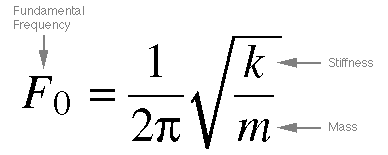
The formula for natural frequency is given by the equation: ωn = √(k/m), where ωn is the natural angular frequency, k is the spring constant, and m is the mass of the object. This formula is used to calculate the frequency at which an object will oscillate when it is displaced from its equilibrium position and then released.
Introduction to Natural Frequency
The concept of natural frequency is crucial in understanding the behavior of oscillating systems. The natural frequency of a system is the frequency at which it will resonate when it is excited by an external force. The formula for natural frequency takes into account the stiffness of the system, represented by the spring constant, and the mass of the object. Some key points to consider when calculating natural frequency are:
- The spring constant is a measure of the stiffness of the system, with higher values indicating a stiffer system.
- The mass of the object is a critical factor in determining the natural frequency, with heavier objects having lower natural frequencies.
- The natural frequency is independent of the damping of the system, but damping can affect the amplitude of the oscillations.
Calculation of Natural Frequency
To calculate the natural frequency, we need to know the spring constant and the mass of the object. The spring constant can be determined by measuring the force required to displace the object by a given amount, while the mass can be measured using a balance. Once we have these values, we can plug them into the formula to calculate the natural frequency. Some important considerations when calculating natural frequency are:
- The units of the spring constant and mass must be consistent, with the spring constant typically measured in N/m and the mass measured in kg.
- The natural frequency is typically measured in rad/s, but it can also be expressed in Hz by dividing by 2π.
- The natural frequency can be affected by the geometry of the system, with different configurations resulting in different natural frequencies.
Factors Affecting Natural Frequency
There are several factors that can affect the natural frequency of a system, including the stiffness of the system, the mass of the object, and the damping of the system. The stiffness of the system is represented by the spring constant, while the mass of the object is a critical factor in determining the natural frequency. Some key factors to consider when evaluating the impact of factors on natural frequency are:
- The stiffness of the system, with higher stiffness resulting in higher natural frequencies.
- The mass of the object, with heavier objects having lower natural frequencies.
- The damping of the system, with higher damping resulting in lower amplitudes of oscillation.
Applications of Natural Frequency
The concept of natural frequency has numerous applications in various fields, including engineering, physics, and materials science. The natural frequency is used to design oscillating systems, such as pendulums and springs, and to analyze the behavior of complex systems. Some important applications of natural frequency are:
- Vibration analysis, where the natural frequency is used to predict the response of a system to external forces.
- Structural design, where the natural frequency is used to ensure that buildings and bridges can withstand wind and earthquake loads.
- Materials testing, where the natural frequency is used to evaluate the mechanical properties of materials.
Measurement of Natural Frequency
The natural frequency can be measured using various experimental techniques, including impact testing and sine sweep testing. The impact testing method involves striking the object with a hammer and measuring the response using accelerometers. The sine sweep testing method involves applying a sinusoidal force to the object and measuring the response using displacement sensors. Some key considerations when measuring natural frequency are:
- The experimental setup, with careful attention to instrumentation and calibration.
- The data analysis, with careful attention to signal processing and curve fitting.
- The sources of error, with careful attention to instrumentation errors and experimental uncertainties.
What is the natural frequency of aluminum plate?

The natural frequency of an aluminum plate depends on several factors, including its thickness, length, width, and boundary conditions. The natural frequency is a fundamental property of the plate that determines its vibrational behavior. It is the frequency at which the plate vibrates when excited by an external force, and it is typically measured in Hertz (Hz).
Natural Frequency Calculation
The natural frequency of an aluminum plate can be calculated using the equation of motion, which takes into account the plate's mass, stiffness, and damping properties. The calculation involves solving a partial differential equation that describes the plate's vibrational modes. The resulting natural frequency is a function of the plate's geometric parameters and material properties, such as its density and Young's modulus.
- The equation of motion is a mathematical representation of the plate's vibrational behavior.
- The partial differential equation is a type of mathematical equation that describes the plate's vibrational modes.
- The geometric parameters and material properties of the plate affect its natural frequency.
Factors Affecting Natural Frequency
Several factors can affect the natural frequency of an aluminum plate, including its thickness, length, width, and boundary conditions. The natural frequency can also be influenced by the plate's material properties, such as its density and Young's modulus. Additionally, the damping properties of the plate can affect its natural frequency.
- The thickness of the plate affects its natural frequency, with thicker plates having lower natural frequencies.
- The boundary conditions of the plate, such as its clamped or simply supported edges, can also affect its natural frequency.
- The material properties of the plate, such as its density and Young's modulus, play a significant role in determining its natural frequency.
Measurement Techniques
The natural frequency of an aluminum plate can be measured using various experimental techniques, such as impact testing or swept sine testing. These techniques involve exciting the plate with an external force and measuring its vibrational response. The resulting data can be used to determine the plate's natural frequency and mode shapes.
- The impact testing method involves striking the plate with a hammer or other object to excite its vibrations.
- The swept sine testing method involves applying a sine wave force to the plate and measuring its response.
- The mode shapes of the plate can be visualized using modal analysis techniques.
Applications of Natural Frequency
The natural frequency of an aluminum plate has several practical applications, including vibration analysis and structural health monitoring. Knowing the natural frequency of a plate can help engineers design and optimize structures and vibration isolation systems.
- The vibration analysis of a plate can help identify its natural frequency and mode shapes.
- The structural health monitoring of a plate can involve measuring its natural frequency to detect damage or degradation.
- The design and optimization of structures and vibration isolation systems can be informed by the natural frequency of the plate.
Comparison with Other Materials
The natural frequency of an aluminum plate can be compared to that of other materials, such as steel or composite materials. The natural frequency of a plate is influenced by its material properties, such as its density and Young's modulus, which can vary significantly between different materials.
- The density of a material affects its natural frequency, with denser materials having lower natural frequencies.
- The Young's modulus of a material affects its natural frequency, with stiffer materials having higher natural frequencies.
- The comparison of natural frequencies between different materials can inform the selection of materials for specific applications.
Frequently Asked Questions (FAQs)
What are the key factors that influence the natural frequency of thin flat plates with uniform thickness?
The natural frequency of thin flat plates with uniform thickness is influenced by several key factors, including the material properties, plate dimensions, and boundary conditions. The material properties such as density, Young's modulus, and Poisson's ratio play a crucial role in determining the natural frequency of the plate. The plate dimensions, including the length, width, and thickness, also have a significant impact on the natural frequency. Additionally, the boundary conditions, such as the clamping or support conditions at the edges of the plate, can also affect the natural frequency. Understanding these factors is essential for accurately calculating the natural frequency of thin flat plates using equations and calculators.
How do the equations for calculating the natural frequency of thin flat plates with uniform thickness account for different boundary conditions?
The equations for calculating the natural frequency of thin flat plates with uniform thickness take into account different boundary conditions by incorporating boundary condition coefficients or mode shapes. These coefficients or mode shapes are used to represent the clamping, simply supported, or free boundary conditions at the edges of the plate. For example, the equations may include coefficients that represent the clamping conditions, such as the clamping coefficient, which is used to calculate the natural frequency of the plate. The mode shapes are also used to represent the deflection of the plate under different boundary conditions, allowing for accurate calculation of the natural frequency. By accounting for different boundary conditions, the equations provide a more accurate and reliable method for calculating the natural frequency of thin flat plates.
What are the advantages of using a calculator to determine the natural frequency of thin flat plates with uniform thickness, rather than manually calculating the equations?
Using a calculator to determine the natural frequency of thin flat plates with uniform thickness offers several advantages over manually calculating the equations. One of the main advantages is speed and efficiency, as calculators can quickly and accurately perform complex calculations, saving time and reducing the risk of human error. Additionally, calculators can handle a wide range of input parameters, allowing for flexibility and customization in the calculation process. Furthermore, calculators can also provide visualizations and plots of the mode shapes and frequency response, providing a more intuitive understanding of the plate's behavior. Overall, using a calculator can greatly simplify the process of calculating the natural frequency of thin flat plates, making it a more convenient and reliable method.
How can the natural frequency equations and calculator for thin flat plates with uniform thickness be applied in real-world engineering applications, such as vibration analysis and design optimization?
The natural frequency equations and calculator for thin flat plates with uniform thickness can be applied in various real-world engineering applications, including vibration analysis and design optimization. For example, in vibration analysis, the equations and calculator can be used to predict the resonant frequencies of a plate-like structure, allowing engineers to design and optimize the structure to minimize vibration and noise. In design optimization, the equations and calculator can be used to optimize the plate dimensions and material properties to achieve a specific natural frequency or mode shape, which is essential in applications such as acoustics and aerospace engineering. Additionally, the equations and calculator can also be used to analyze and optimize the dynamic behavior of complex systems, such as machinery and vehicles, by modeling the thin flat plates as part of a larger system. By applying the natural frequency equations and calculator, engineers can create more efficient, reliable, and optimized designs that meet specific performance and safety requirements.
Deja una respuesta
Entradas Relacionadas