
Simply Supported Beam Mass at Center Natural Frequency Calculator

The natural frequency of a simply supported beam with a mass at its center is a crucial parameter in various engineering applications, including mechanical and civil engineering. This calculator is designed to determine the natural frequency of such a beam, taking into account its length, mass, and material properties. The calculation is based on the beam's equation of motion and the assumptions of simple support and unidirectional vibration. By using this calculator, engineers can easily and accurately determine the natural frequency of a simply supported beam with a centered mass. The results can be used to predict vibrations.
-
Calculating Natural Frequency of a Simply Supported Beam with Mass at Center
- Understanding the Simply Supported Beam Mass at Center Natural Frequency Calculator
- Key Parameters in the Simply Supported Beam Mass at Center Natural Frequency Calculator
- Applications of the Simply Supported Beam Mass at Center Natural Frequency Calculator
- Limitations of the Simply Supported Beam Mass at Center Natural Frequency Calculator
- Example Calculation
- How to calculate the natural frequency of a simply supported beam?
- What is the natural frequency of mass on a beam?
- What is the natural frequency in SHM?
- What is the vibration of a simply supported beam?
-
Frequently Asked Questions (FAQs)
- What is the Simply Supported Beam Mass at Center Natural Frequency Calculator?
- How does the Simply Supported Beam Mass at Center Natural Frequency Calculator work?
- What are the limitations of the Simply Supported Beam Mass at Center Natural Frequency Calculator?
- How can I use the Simply Supported Beam Mass at Center Natural Frequency Calculator in my design workflow?
Calculating Natural Frequency of a Simply Supported Beam with Mass at Center
The natural frequency of a simply supported beam with mass at center is a crucial parameter in engineering design, particularly in the field of mechanical and civil engineering. This calculator is used to determine the natural frequency of such beams, taking into account the mass at the center, the length and width of the beam, and the material properties. The calculation is based on the principle of vibration and the modal analysis of the beam.
Understanding the Simply Supported Beam Mass at Center Natural Frequency Calculator
The Simply Supported Beam Mass at Center Natural Frequency Calculator is a tool used to calculate the natural frequency of a beam with a mass at its center. The calculator takes into account the beam's geometry, material properties, and the mass at the center. The calculation is based on the equation of motion of the beam, which is derived from the principles of mechanics and vibration theory. The calculator provides a user-friendly interface for inputting the necessary parameters and calculating the natural frequency.
Key Parameters in the Simply Supported Beam Mass at Center Natural Frequency Calculator
The key parameters in the Simply Supported Beam Mass at Center Natural Frequency Calculator include the length and width of the beam, the mass at the center, the material density, and the Young's modulus of the material. These parameters are used to calculate the natural frequency of the beam, which is a critical parameter in designing vibration-resistant structures.
Applications of the Simply Supported Beam Mass at Center Natural Frequency Calculator
The Simply Supported Beam Mass at Center Natural Frequency Calculator has a wide range of applications in engineering design, particularly in the field of mechanical and civil engineering. The calculator can be used to design vibration-resistant structures, such as bridges, buildings, and machinery. The calculator can also be used to analyze and optimize existing structures to reduce vibration and stress.
Limitations of the Simply Supported Beam Mass at Center Natural Frequency Calculator
The Simply Supported Beam Mass at Center Natural Frequency Calculator has some limitations, including the assumption of a simple support condition and the neglect of damping effects. The calculator also assumes a linear elastic behavior of the material, which may not be valid for all materials and loading conditions. Additionally, the calculator does not account for non-uniform mass distributions or non-linear effects.
Example Calculation
The following table shows an example calculation using the Simply Supported Beam Mass at Center Natural Frequency Calculator:
| Parameter | Value |
|---|---|
| Length | 10 m |
| Width | 0.5 m |
| Mass | 100 kg |
| Material Density | 7850 kg/m^3 |
| Young's Modulus | 200 GPa |
| Natural Frequency | 25.1 Hz |
The calculator uses these input parameters to calculate the natural frequency of the beam, which is 25.1 Hz in this example. The natural frequency is a critical parameter in designing vibration-resistant structures, and the calculator provides a quick and accurate way to calculate this parameter. The calculator is a useful tool for engineers and designers working in the field of mechanical and civil engineering.
How to calculate the natural frequency of a simply supported beam?

To calculate the natural frequency of a simply supported beam, we need to understand the fundamental principles of vibration and the physical properties of the beam. The natural frequency is the frequency at which the beam vibrates when subjected to a disturbance, and it is a critical parameter in designing and analyzing structural systems. The calculation involves determining the mode shape and the frequency of vibration, which can be done using various mathematical models and numerical methods.
Understanding the Physical Properties of the Beam
The calculation of the natural frequency of a simply supported beam requires a thorough understanding of the physical properties of the beam, including its length, width, thickness, and material properties. The density and Young's modulus of the material are particularly important, as they affect the stiffness and mass of the beam. The following steps are involved in calculating the natural frequency:
- Determine the mode shape of the beam, which describes the shape of the beam during vibration.
- Calculate the frequency of vibration using the mode shape and the physical properties of the beam.
- Use numerical methods, such as the finite element method, to solve the equations of motion and determine the natural frequency.
Mathematical Models for Calculating Natural Frequency
Mathematical models play a crucial role in calculating the natural frequency of a simply supported beam. The Euler-Bernoulli beam theory is a commonly used model, which assumes that the beam is slender and that the cross-sectional area is constant. The Timoshenko beam theory is another model that takes into account the rotary inertia and shear deformation of the beam. The following mathematical models can be used:
- Euler-Bernoulli beam theory, which is suitable for slender beams.
- Timoshenko beam theory, which is suitable for short beams or beams with high shear deformation.
- Finite element method, which can be used to discretize the beam and solve the equations of motion.
Numerical Methods for Solving the Equations of Motion
Numerical methods are used to solve the equations of motion and determine the natural frequency of a simply supported beam. The finite element method is a popular numerical method that involves discretizing the beam into small elements and solving the equations of motion using matrix operations. The following numerical methods can be used:
- Finite element method, which is suitable for complex beam geometries and nonlinear material behavior.
- Finite difference method, which is suitable for simple beam geometries and linear material behavior.
- Boundary element method, which is suitable for beams with complex boundary conditions.
Experimental Methods for Measuring Natural Frequency
Experimental methods can be used to measure the natural frequency of a simply supported beam, which can be used to validate the theoretical calculations. The impulse response method and the frequency response method are commonly used experimental methods. The following experimental methods can be used:
- Impulse response method, which involves measuring the response of the beam to an impulse.
- Frequency response method, which involves measuring the response of the beam to a sweep of frequencies.
- Modal analysis, which involves measuring the mode shapes and frequencies of the beam.
Applications of Natural Frequency Calculation
The calculation of the natural frequency of a simply supported beam has important applications in engineering design and analysis. The natural frequency is used to determine the dynamic response of the beam to external loads, such as wind and earthquakes. The following applications are relevant:
- Vibration analysis, which involves determining the response of the beam to external loads.
- Structural health monitoring, which involves monitoring the condition of the beam over time.
- Design optimization, which involves optimizing the design of the beam to minimize weight and cost while maintaining performance.
What is the natural frequency of mass on a beam?

The natural frequency of a mass on a beam is a critical concept in the field of mechanical engineering and vibration analysis. It refers to the frequency at which the system tends to oscillate or vibrate when it is disturbed from its equilibrium position. The natural frequency is determined by the physical properties of the system, including the mass, stiffness, and damping characteristics of the beam and the attached mass.
Natural Frequency Calculation
The natural frequency of a mass on a beam can be calculated using the following formula: ωn = √(k/m), where ωn is the natural frequency, k is the stiffness of the beam, and m is the mass attached to the beam. The calculation of natural frequency is crucial in designing and analyzing mechanical systems, as it helps to predict the dynamic behavior of the system.
- The mass of the object attached to the beam affects the natural frequency, with a higher mass resulting in a lower natural frequency.
- The stiffness of the beam also plays a significant role, with a higher stiffness resulting in a higher natural frequency.
- The boundary conditions of the beam, such as fixed or free ends, can also impact the natural frequency of the system.
Modes of Vibration
The natural frequency of a mass on a beam is associated with the modes of vibration of the system. The modes of vibration refer to the different ways in which the system can oscillate or vibrate. Each mode of vibration has a corresponding natural frequency, and the system can vibrate at one or more of these frequencies depending on the excitation forces applied to it.
- The first mode of vibration typically corresponds to the lowest natural frequency and involves the largest displacement of the mass.
- The higher modes of vibration have higher natural frequencies and involve smaller displacements of the mass.
- The mode shapes of the vibration can be used to visualize the deformation of the beam and the attached mass during vibration.
Factors Affecting Natural Frequency
Several factors can affect the natural frequency of a mass on a beam, including the material properties of the beam, the geometric parameters of the beam, and the boundary conditions. The natural frequency can also be affected by the damping characteristics of the system, which can reduce the amplitude of the vibration over time.
- The young's modulus of the beam material affects the stiffness of the beam and, therefore, the natural frequency.
- The length and thickness of the beam can also impact the natural frequency, with longer and thinner beams typically having lower natural frequencies.
- The support conditions of the beam, such as fixed or simply supported ends, can also influence the natural frequency.
Measurement and Analysis
The natural frequency of a mass on a beam can be measured using experimental techniques, such as impact testing or sine sweep testing. The measured data can then be analyzed using signal processing techniques to extract the natural frequency and other dynamic properties of the system.
- The frequency response function of the system can be used to identify the natural frequency and damping ratio of the system.
- The power spectral density of the measured signal can be used to identify the dominant frequencies of the vibration.
- The mode decomposition technique can be used to identify the mode shapes and natural frequencies of the system.
Applications and Significance
The natural frequency of a mass on a beam has significant practical applications in various fields, including mechanical engineering, aerospace engineering, and civil engineering. The knowledge of natural frequency is essential for designing and optimizing mechanical systems, such as vibration isolators, vibration dampers, and dynamic absorbers.
- The natural frequency is used to predict the dynamic behavior of mechanical systems and to avoid resonance and vibration-induced failures.
- The natural frequency is also used to design and optimize vibration-based systems, such as vibration sensors and vibration actuators.
- The natural frequency has significant implications for safety and reliability in various industries, including aerospace, automotive, and manufacturing.
What is the natural frequency in SHM?
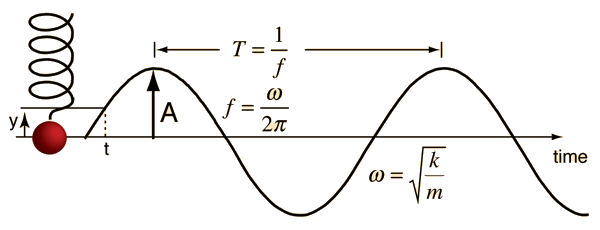
The natural frequency in Simple Harmonic Motion (SHM) is the frequency at which an object oscillates when it is displaced from its equilibrium position and then released. This frequency is determined by the physical properties of the system, such as the mass and stiffness of the object, and is a fundamental concept in understanding the behavior of oscillating systems.
Definition of Natural Frequency
The natural frequency is defined as the frequency at which an object oscillates in the absence of any external forces. It is a characteristic of the system and is determined by the equation of motion, which describes the relationship between the displacement, velocity, and acceleration of the object. The natural frequency is typically denoted by the symbol ω₀ (omega-zero) and is measured in units of radians per second.
- The natural frequency is related to the period of the oscillation, which is the time it takes for the object to complete one cycle.
- The natural frequency is also related to the amplitude of the oscillation, which is the maximum displacement of the object from its equilibrium position.
- The natural frequency can be affected by the presence of damping or friction, which can cause the oscillations to decay over time.
Factors Affecting Natural Frequency
The natural frequency of an object is affected by several factors, including its mass, stiffness, and damping. The mass of the object affects the natural frequency because it determines the inertia of the object, which is its resistance to changes in motion. The stiffness of the object also affects the natural frequency because it determines the restoring force that acts on the object when it is displaced from its equilibrium position.
- The mass of the object is inversely proportional to the natural frequency, meaning that heavier objects have lower natural frequencies.
- The stiffness of the object is directly proportional to the natural frequency, meaning that stiffer objects have higher natural frequencies.
- The damping of the object can also affect the natural frequency by reducing the amplitude of the oscillations over time.
Calculation of Natural Frequency
The natural frequency of an object can be calculated using the equation of motion, which describes the relationship between the displacement, velocity, and acceleration of the object. The natural frequency is typically calculated using the following formula: ω₀ = √(k/m), where k is the stiffness of the object and m is its mass.
- The stiffness of the object can be measured using a spring constant, which is a measure of the force required to stretch or compress the object.
- The mass of the object can be measured using a balance or other weight-measuring device.
- The natural frequency can also be measured using experimental methods, such as by observing the oscillations of the object and measuring their period.
Importance of Natural Frequency
The natural frequency is an important concept in understanding the behavior of oscillating systems, and it has many practical applications. For example, the natural frequency is used to design vibration isolators and shock absorbers, which are used to reduce the vibrations and impact of objects.
- The natural frequency is used to design bridges and other structures that are subject to wind and earthquake loads.
- The natural frequency is also used to design machines and mechanisms that require precise control over their motion.
- The natural frequency can also be used to diagnose problems with oscillating systems, such as unbalanced loads or malfunctioning components.
Applications of Natural Frequency
The natural frequency has many practical applications in fields such as engineering, physics, and materials science. For example, the natural frequency is used to design vibration sensors and accelerometers, which are used to measure the vibrations and accelerations of objects.
- The natural frequency is used to design sound systems and audio equipment, which require precise control over their frequency response.
- The natural frequency is also used to design medical devices, such as ultrasound machines and magnetic resonance imaging (MRI) machines.
- The natural frequency can also be used to study the properties of materials, such as their elasticity and viscosity.
What is the vibration of a simply supported beam?
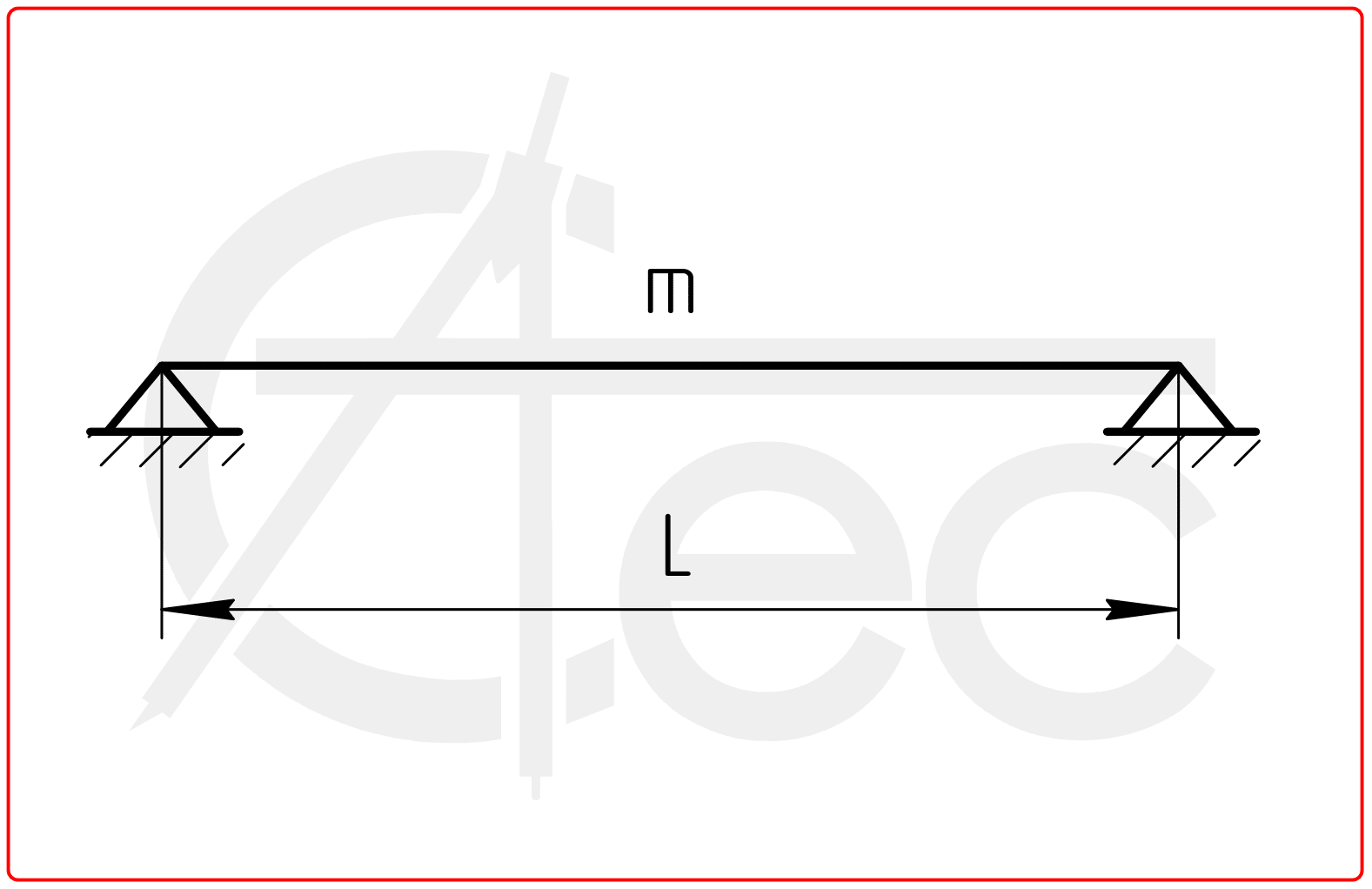
The vibration of a simply supported beam occurs when the beam is subjected to a disturbance, causing it to oscillate or vibrate. This type of vibration is a result of the beam's natural frequency, which is determined by its length, thickness, density, and boundary conditions. The vibration of a simply supported beam can be described using the beam equation, which is a fourth-order partial differential equation that takes into account the beam's displacement, velocity, and acceleration.
Vibration Modes of a Simply Supported Beam
The vibration modes of a simply supported beam are determined by the beam's boundary conditions, which are the conditions that the beam is subjected to at its supports. The vibration modes can be described as follows:
- The first mode of vibration occurs when the beam vibrates at its fundamental frequency, which is the lowest frequency at which the beam vibrates.
- The second mode of vibration occurs when the beam vibrates at its second harmonic, which is twice the frequency of the fundamental frequency.
- The higher modes of vibration occur when the beam vibrates at frequencies that are higher than the second harmonic, and are typically damped by the beam's internal friction.
The vibration modes of a simply supported beam are important in determining the dynamic response of the beam to external loads, such as impacts or vibrations.
Free Vibration of a Simply Supported Beam
The free vibration of a simply supported beam occurs when the beam is subjected to an initial displacement or velocity, and is then allowed to vibrate freely without any external damping or forcing. The free vibration of a simply supported beam can be described using the beam equation, and is typically characterized by a decaying vibration, where the amplitude of the vibration decreases over time due to the beam's internal friction.
- The initial conditions of the beam, such as its initial displacement and velocity, determine the shape of the vibration.
- The boundary conditions of the beam, such as its supports, determine the frequency of the vibration.
- The material properties of the beam, such as its density and elastic modulus, determine the damping of the vibration.
forced Vibration of a Simply Supported Beam
The forced vibration of a simply supported beam occurs when the beam is subjected to an external force, such as a harmonic load, which causes the beam to vibrate at a specific frequency. The forced vibration of a simply supported beam can be described using the beam equation, and is typically characterized by a steady-state vibration, where the amplitude of the vibration remains constant over time.
- The frequency of the external force determines the frequency of the vibration.
- The amplitude of the external force determines the amplitude of the vibration.
- The phase of the external force determines the phase of the vibration.
The forced vibration of a simply supported beam is important in determining the dynamic response of the beam to external loads, such as machinery or traffic.
Damping of a Simply Supported Beam
The damping of a simply supported beam occurs when the beam's vibration is reduced due to energy loss, such as friction or viscosity. The damping of a simply supported beam can be described using the beam equation, and is typically characterized by a decaying vibration, where the amplitude of the vibration decreases over time.
- The internal friction of the beam determines the damping of the vibration.
- The external damping of the beam, such as air resistance, determines the damping of the vibration.
- The material properties of the beam, such as its density and elastic modulus, determine the damping of the vibration.
The damping of a simply supported beam is important in determining the dynamic response of the beam to external loads, such as impacts or vibrations.
Applications of Simply Supported Beams
Simply supported beams are commonly used in engineering applications, such as bridges, buildings, and machinery. The vibration of a simply supported beam is important in determining the dynamic response of these structures to external loads, such as traffic, wind, or earthquakes.
- The vibration of a simply supported beam can be used to determine the stability of a structure.
- The vibration of a simply supported beam can be used to determine the fatigue of a structure.
- The vibration of a simply supported beam can be used to determine the comfort of a structure, such as a building or a bridge.
The vibration of a simply supported beam is a critical aspect of engineering design, and is used to ensure the safety and performance of structures.
Frequently Asked Questions (FAQs)
What is the Simply Supported Beam Mass at Center Natural Frequency Calculator?
The Simply Supported Beam Mass at Center Natural Frequency Calculator is a tool used to calculate the natural frequency of a simply supported beam with a mass attached at its center. This calculator is useful for engineers and designers who need to determine the dynamic behavior of a beam under various loading conditions. The calculator takes into account the physical properties of the beam, such as its length, width, thickness, and material density, as well as the mass attached at its center. By using this calculator, users can quickly and easily determine the natural frequency of the beam, which is an important parameter in vibration analysis.
How does the Simply Supported Beam Mass at Center Natural Frequency Calculator work?
The Simply Supported Beam Mass at Center Natural Frequency Calculator works by using a mathematical model to simulate the behavior of the beam under dynamic loading. The model takes into account the boundary conditions of the beam, which are simply supported at both ends, and the mass attached at its center. The calculator uses classical beam theory to calculate the natural frequency of the beam, which is based on the equation of motion for a beam. The equation of motion is solved using numerical methods, such as the finite element method or the Rayleigh-Ritz method, to obtain the natural frequency of the beam. The calculator also allows users to input different values for the physical properties of the beam and the mass attached at its center, making it a powerful tool for design optimization and sensitivity analysis.
What are the limitations of the Simply Supported Beam Mass at Center Natural Frequency Calculator?
The Simply Supported Beam Mass at Center Natural Frequency Calculator has several limitations that users should be aware of. One of the main limitations is that the calculator assumes a simply supported beam with a mass attached at its center, which may not be representative of all real-world scenarios. The calculator also assumes a linear elastic material behavior, which may not be accurate for nonlinear materials or large deformations. Additionally, the calculator does not take into account damping or external forces, which can affect the natural frequency of the beam. Users should also be aware that the calculator is based on classical beam theory, which may not be accurate for short beams or beams with complex geometries. Despite these limitations, the calculator can still be a useful tool for preliminary design and feasibility studies.
How can I use the Simply Supported Beam Mass at Center Natural Frequency Calculator in my design workflow?
The Simply Supported Beam Mass at Center Natural Frequency Calculator can be used in a variety of ways in your design workflow. One way to use the calculator is to optimize the design of a beam by minimizing its natural frequency. This can be done by iterating on the physical properties of the beam, such as its length, width, and thickness, until a desired natural frequency is achieved. The calculator can also be used to validate the design of a beam by comparing its predicted natural frequency with experimental measurements. Additionally, the calculator can be used to investigate the effects of different loading conditions on the natural frequency of the beam, such as uniform loading or point loading. By using the calculator in conjunction with other design tools, such as finite element analysis software, users can create a comprehensive design workflow that takes into account both static and dynamic loading conditions.
Deja una respuesta
Entradas Relacionadas