
Scissor Lift Jack Equations and Loading Calculator

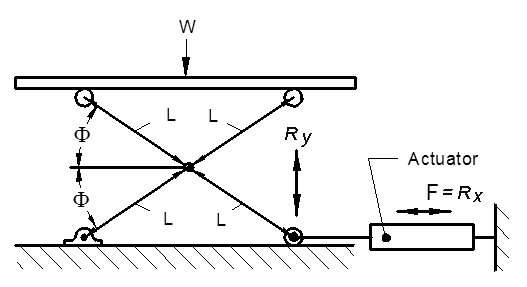
The scissor lift jack is a crucial tool in various industries, providing a safe and efficient way to lift heavy loads. To ensure proper use and minimize risks, understanding the underlying equations and loading calculations is essential. This article delves into the fundamental principles of scissor lift jack equations and provides a comprehensive loading calculator to help operators and engineers determine the optimal lifting configurations. By exploring these equations and using the calculator, users can optimize scissor lift jack performance while maintaining a safe working environment and preventing potential accidents or equipment damage. Safety and efficiency are paramount.
- Understanding Scissor Lift Jack Equations and Loading Calculator
- How do you calculate load for a scissor lift?
- What is the formula for the scissor lift force?
- What is the physics of a scissor jack?
-
Frequently Asked Questions (FAQs)
- What is the purpose of using Scissor Lift Jack Equations and Loading Calculator in industrial settings?
- How do Scissor Lift Jack Equations and Loading Calculator help in reducing accidents and injuries in the workplace?
- What are the key factors to consider when using Scissor Lift Jack Equations and Loading Calculator to determine the maximum weight capacity of a scissor lift?
- How can Scissor Lift Jack Equations and Loading Calculator be used in conjunction with other safety measures to ensure a safe working environment?
Understanding Scissor Lift Jack Equations and Loading Calculator
The Scissor Lift Jack is a crucial piece of equipment in various industries, including construction, manufacturing, and maintenance. It is designed to lift heavy loads to significant heights, making it an essential tool for tasks that require precision and accuracy. However, to ensure safe and efficient operation, it is vital to understand the underlying equations and calculations that govern its performance. The Loading Calculator is a tool used to determine the maximum weight that a scissor lift jack can safely handle, taking into account factors such as the lift height, weight distribution, and stability.
Introduction to Scissor Lift Jack Equations
The scissor lift jack equations are based on the principles of physics and mechanics, which describe the relationship between the force applied to the jack, the weight of the load, and the height to which the load is lifted. These equations are used to calculate the maximum weight capacity of the scissor lift jack, as well as the required force to lift a given load to a specific height. The equations take into account factors such as friction, gravity, and structural integrity.
Understanding the Loading Calculator
The loading calculator is a software tool that uses the scissor lift jack equations to determine the maximum weight that a scissor lift jack can safely handle. The calculator takes into account various factors, including the lift height, weight distribution, and stability of the load. The calculator provides a safe working load (SWL) value, which is the maximum weight that the scissor lift jack can safely handle. The SWL value is calculated based on the strength of the scissor lift jack, the weight of the load, and the height to which the load is lifted.
Key Factors Affecting Scissor Lift Jack Performance
Several factors can affect the performance of a scissor lift jack, including:
| Factor | Description |
|---|---|
| Lift Height | The height to which the load is lifted, which affects the stability and balance of the scissor lift jack. |
| Weight Distribution | The way in which the weight of the load is distributed, which affects the stability and balance of the scissor lift jack. |
| Stability | The ability of the scissor lift jack to remain stable and balanced while lifting a load, which is affected by factors such as the lift height and weight distribution. |
| Friction | The force that opposes the motion of the scissor lift jack, which affects the required force to lift a load. |
| Gravity | The force that affects the weight of the load and the stability of the scissor lift jack. |
Calculating the Required Force
To calculate the required force to lift a load, the following equation can be used:
F = (W x H) / (2 x L), where F is the required force, W is the weight of the load, H is the lift height, and L is the length of the scissor lift jack. This equation takes into account factors such as friction and gravity, and provides a safe and efficient way to lift loads.
Applications of Scissor Lift Jack Equations and Loading Calculator
The scissor lift jack equations and loading calculator have various applications in industries such as construction, manufacturing, and maintenance. They are used to ensure safe and efficient operation of scissor lift jacks, and to prevent accidents and injuries. The equations and calculator are also used to design and develop new scissor lift jacks, and to test and evaluate their performance.
How do you calculate load for a scissor lift?
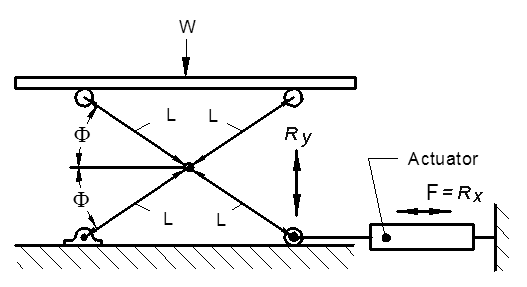
To calculate the load for a scissor lift, you need to consider the weight and distribution of the load, as well as the lift's capacity and stability. The first step is to determine the maximum weight the scissor lift can handle, which is usually indicated on the manufacturer's rating plate. Then, you need to calculate the actual load by adding the weight of the operators, tools, and materials being lifted. It's also important to consider the load's center of gravity and ensure it is within the lift's stability envelope to prevent tilting or toppling.
Understanding Scissor Lift Capacity
The capacity of a scissor lift is determined by the manufacturer and is based on the lift's design and materials. To calculate the load, you need to understand the lift's capacity and how it relates to the load being lifted. Here are some key factors to consider:
- The maximum weight the scissor lift can handle, usually indicated on the rating plate.
- The load's center of gravity, which affects the lift's stability and balance.
- The type of load being lifted, such as people, tools, or materials, which can affect the load's distribution and weight.
Calculating the Actual Load
To calculate the actual load, you need to add the weight of the operators, tools, and materials being lifted. This requires considering the load's distribution and weight to ensure it is within the lift's capacity. Here are some steps to follow:
- Determine the weight of the operators and tools being used.
- Calculate the weight of the materials being lifted, including any equipment or supplies.
- Add the weights together to determine the total load being lifted.
Considering Load Distribution and Balance
The load's distribution and balance are critical factors in calculating the load for a scissor lift. A load that is not evenly distributed can affect the lift's stability and balance, increasing the risk of tilting or toppling. Here are some key considerations:
- The load's center of gravity, which affects the lift's stability and balance.
- The load's distribution, which can affect the lift's stability and capacity.
- The type of load being lifted, such as people, tools, or materials, which can affect the load's distribution and weight.
Ensuring Scissor Lift Stability
Ensuring the stability of the scissor lift is crucial when calculating the load. A stable scissor lift is less likely to tip or topple, reducing the risk of accidents and injuries. Here are some factors to consider:
- The lift's design and materials, which affect its stability and capacity.
- The load's center of gravity, which affects the lift's stability and balance.
- The surface the scissor lift is on, which can affect its stability and balance.
Using Load Calculations to Prevent Accidents
Using load calculations to prevent accidents is an essential part of operating a scissor lift safely and efficiently. By understanding the load and the lift's capacity, you can reduce the risk of accidents and injuries. Here are some key considerations:
- Always follow the manufacturer's guidelines for load calculation and lifting procedures.
- Ensure the load is evenly distributed and within the lift's capacity.
- Use personal protective equipment and follow safety procedures to minimize the risk of accidents and injuries.
What is the formula for the scissor lift force?
The formula for the scissor lift force is based on the mechanical advantage of the scissor mechanism. The force exerted by the scissor lift can be calculated using the formula: F = (P A) / (2 π r), where F is the force exerted, P is the pressure applied, A is the area of the cylinder, and r is the radius of the cylinder. This formula is used to determine the lifting capacity of the scissor lift.
Understanding the Scissor Mechanism
The scissor mechanism is a type of linkage that provides a mechanical advantage when lifting heavy loads. The mechanism consists of a series of pivot points that allow the lift to move up and down. The scissor arms are connected to a cylinder that provides the lifting force. The formula for the scissor lift force takes into account the mechanical advantage of the scissor mechanism, which is the ratio of the output force to the input force.
- The mechanical advantage of the scissor mechanism is determined by the ratio of the length of the scissor arms to the distance between the pivot points.
- The scissor arms are designed to provide a stable and balanced lifting motion.
- The cylinder is the power source that provides the lifting force for the scissor lift.
Critical Components of the Scissor Lift
The critical components of the scissor lift include the cylinder, scissor arms, and pivot points. These components work together to provide a safe and reliable lifting motion. The cylinder provides the lifting force, while the scissor arms and pivot points provide the mechanical advantage. The formula for the scissor lift force takes into account the performance of these critical components.
- The cylinder is the primary source of power for the scissor lift.
- The scissor arms are designed to provide a stable and balanced lifting motion.
- The pivot points are critical to the mechanical advantage of the scissor mechanism.
Calculating the Lifting Capacity
The lifting capacity of the scissor lift can be calculated using the formula: F = (P A) / (2 π r). This formula takes into account the pressure applied, the area of the cylinder, and the radius of the cylinder. The lifting capacity is an important factor in determining the suitability of the scissor lift for a particular application.
- The pressure applied to the cylinder is a critical factor in determining the lifting capacity.
- The area of the cylinder is also an important factor in determining the lifting capacity.
- The radius of the cylinder is used to calculate the mechanical advantage of the scissor mechanism.
Factors Affecting the Scissor Lift Force
The scissor lift force is affected by several factors, including the weight of the load, the friction of the pivot points, and the efficiency of the cylinder. The formula for the scissor lift force takes into account these factors to provide an accurate calculation of the lifting capacity.
- The weight of the load is a critical factor in determining the scissor lift force.
- The friction of the pivot points can reduce the efficiency of the scissor mechanism.
- The efficiency of the cylinder is an important factor in determining the scissor lift force.
Applications of the Scissor Lift Formula
The formula for the scissor lift force has several practical applications in industries such as construction, manufacturing, and warehousing. The formula can be used to determine the lifting capacity of a scissor lift, which is an important factor in ensuring safe and efficient lifting operations.
- The construction industry uses scissor lifts to lift heavy loads to great heights.
- The manufacturing industry uses scissor lifts to lift and move heavy equipment and materials.
- The warehousing industry uses scissor lifts to lift and store heavy loads in high storage areas.
What is the physics of a scissor jack?
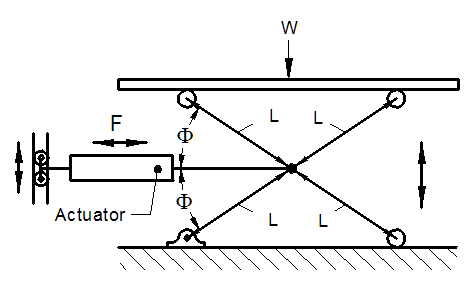
The physics of a scissor jack is based on the principles of mechanical advantage and simple machines. A scissor jack is a type of mechanical device that uses a combination of levers and linkages to lift heavy loads. The jack consists of a pair of interlocking arms that are connected by a pivot point, allowing them to move in a scissor-like motion. As the jack is turned, the arms move apart, creating a mechanical advantage that allows the user to lift heavy loads with relatively little effort.
How Scissor Jacks Work
The operation of a scissor jack is based on the principle of torque and rotation. When the jack is turned, the input force applied to the handle is converted into a rotational force that causes the arms to move apart. This motion creates a mechanical advantage that allows the user to lift heavy loads with relatively little effort. The key components of a scissor jack include:
- The input shaft, which transmits the input force from the handle to the gear system
- The gear system, which converts the rotational force into a linear force that lifts the load
- The linkages, which connect the interlocking arms and allow them to move in a scissor-like motion
Types of Scissor Jacks
There are several types of scissor jacks available, each with its own unique characteristics and applications. Some common types of scissor jacks include:
- Manual scissor jacks, which are operated by hand and are commonly used for lifting and lowering heavy loads
- Electric scissor jacks, which are powered by an electric motor and are often used for industrial and commercial applications
- Hydraulic scissor jacks, which use hydraulic fluid to lift heavy loads and are commonly used for heavy-duty applications
Advantages of Scissor Jacks
Scissor jacks have several advantages that make them a popular choice for lifting and lowering heavy loads. Some of the key benefits of scissor jacks include:
- High mechanical advantage, which allows users to lift heavy loads with relatively little effort
- Compact design, which makes them easy to store and transport
- Low maintenance, which reduces the need for frequent repairs and maintenance
Applications of Scissor Jacks
Scissor jacks have a wide range of applications in various industries and settings. Some common uses of scissor jacks include:
- Automotive repair, where they are used to lift vehicles for maintenance and repair
- Industrial manufacturing, where they are used to lift heavy equipment and machinery
- Construction, where they are used to lift heavy building materials and equipment
Safety Considerations for Scissor Jacks
When using scissor jacks, it is essential to follow safety guidelines to avoid accidents and injuries. Some key safety considerations include:
- Proper training, which ensures that users understand how to operate the jack safely and effectively
- Regular maintenance, which helps to prevent mechanical failures and accidents
- Safe loading, which involves ensuring that the load is properly secured and balanced
Frequently Asked Questions (FAQs)
What is the purpose of using Scissor Lift Jack Equations and Loading Calculator in industrial settings?
The Scissor Lift Jack Equations and Loading Calculator is a crucial tool used in industrial settings to ensure the safe and efficient operation of scissor lifts. The primary purpose of this calculator is to determine the maximum weight capacity of a scissor lift, taking into account various factors such as the lift height, load distribution, and jack capacity. By using this calculator, operators can safely load and unload materials, reducing the risk of accidents and equipment damage. Additionally, the calculator helps to optimize the use of scissor lifts, allowing for more efficient and productive workflow. The calculator is also essential for maintenance and troubleshooting, as it helps to identify potential issues and prevent costly repairs.
How do Scissor Lift Jack Equations and Loading Calculator help in reducing accidents and injuries in the workplace?
The Scissor Lift Jack Equations and Loading Calculator plays a vital role in reducing accidents and injuries in the workplace by providing a safe and reliable way to determine the weight capacity of scissor lifts. By using this calculator, operators can avoid overloading, which is a common cause of accidents and equipment failure. The calculator also helps to identify potential hazards, such as uneven load distribution or insufficient jack capacity, allowing operators to take corrective action and prevent accidents. Furthermore, the calculator helps to promote safe working practices, such as regular maintenance and thorough inspection of scissor lifts, reducing the risk of equipment failure and operator injury. By using the calculator, employers can also demonstrate compliance with safety regulations and industry standards, reducing the risk of fines and penalties.
What are the key factors to consider when using Scissor Lift Jack Equations and Loading Calculator to determine the maximum weight capacity of a scissor lift?
When using the Scissor Lift Jack Equations and Loading Calculator, there are several key factors to consider to determine the maximum weight capacity of a scissor lift. One of the most important factors is the lift height, as it affects the stability and balance of the scissor lift. Another critical factor is the load distribution, as uneven loading can cause instability and accidents. The jack capacity is also a crucial factor, as it determines the maximum weight that the scissor lift can safely lift and hold. Additionally, the calculator takes into account other factors, such as the scissor lift's design and configuration, as well as environmental conditions, such as wind and floor surface. By considering these key factors, operators can ensure that the scissor lift is used safely and efficiently, reducing the risk of accidents and equipment damage.
How can Scissor Lift Jack Equations and Loading Calculator be used in conjunction with other safety measures to ensure a safe working environment?
The Scissor Lift Jack Equations and Loading Calculator can be used in conjunction with other safety measures to ensure a safe working environment. One way to do this is to integrate the calculator with regular maintenance and inspection schedules, ensuring that scissor lifts are properly maintained and inspected before use. Additionally, the calculator can be used in conjunction with operator training programs, teaching operators how to safely use and maintain scissor lifts. The calculator can also be used to develop safety protocols and procedures, such as emergency response plans and hazard reporting systems. By combining the calculator with other safety measures, employers can create a comprehensive safety program that protects operators and prevents accidents. Furthermore, the calculator can be used to monitor and track scissor lift usage, allowing employers to identify areas for improvement and implement corrective actions to ensure a safe and healthy work environment.
Deja una respuesta
Entradas Relacionadas