
Machining Drilling Milling Calculator


The Machining Drilling Milling Calculator is a valuable tool for engineers and machinists, enabling them to calculate critical parameters for various machining operations. This calculator provides instant solutions for drilling, milling, and other processes, helping to optimize production and reduce errors. By inputting specific values, users can determine key factors such as feed rates, cutting speeds, and tool life, making it an essential resource for improving efficiency and accuracy in machining operations, and ultimately enhancing overall productivity and product quality. Its applications are diverse, ranging from small-scale workshops to large industrial settings.
- Machining Drilling Milling Calculator: A Comprehensive Tool for Manufacturing
-
What is the MRR formula for drilling?
- To calculate the MRR, it's essential to understand the backstack calculations involved in the formula. The MRR formula takes into account the diameter of the hole, the feed rate, and the cutting speed. The formula can be broken down into the following steps: Calculate the area of the hole using the formula A = π d^2 / 4 Calculate the volume of material removed per unit time using the formula V = A f Calculate the MRR using the formula MRR = V / t, where t is the time taken to drill the hole
- The MRR formula can be used to optimize the drilling process by identifying the optimal parameters for the diameter, feed rate, and cutting speed. By using the MRR formula, manufacturers can maximize the productivity of their drilling operations while minimizing the cost and time required. The following are some ways to optimize the drilling process: Use high-speed steel or carbide tools to increase the cutting speed and tool life Optimize the feed rate to achieve the maximum MRR while maintaining the desired surface finish Use coolant to reduce the temperature and wear on the tool
- The MRR formula has several applications in manufacturing and industry. The formula can be used to calculate the MRR for drilling, milling, and turning operations. The formula can also be used to optimize the machining process and improve the productivity and efficiency of manufacturing operations. The following are some of the applications: Aerospace and defense industries: use the MRR formula to calculate the MRR for drilling and milling operations Automotive industry: use the MRR formula to optimize the machining process and improve the productivity and efficiency of manufacturing operations Medical device industry: use the MRR formula to calculate the MRR for drilling and milling operations How to calculate machining time for milling?
- Understanding Milling Operations
- Calculating Feed Rate and RPM
- Determining Number of Passes
- Considering Machine Capabilities
- Using Software to Calculate Machining Time
-
Frequently Asked Questions (FAQs)
- What is the purpose of a Machining Drilling Milling Calculator?
- How does a Machining Drilling Milling Calculator improve machining operations?
- What are the key benefits of using a Machining Drilling Milling Calculator?
- Can a Machining Drilling Milling Calculator be used for complex machining operations?
Machining Drilling Milling Calculator: A Comprehensive Tool for Manufacturing
The Machining Drilling Milling Calculator is a software tool designed to assist manufacturers and machinists in calculating various parameters related to drilling and milling operations. This calculator is essential in ensuring that the machining process is efficient, accurate, and safe. It takes into account various factors such as the type of material being machined, the tooling used, and the desired finish.
Introduction to Machining Calculators
Machining calculators are computer-aided tools that help manufacturers and machinists perform complex calculations related to machining operations. These calculators can be used to calculate parameters such as cutting speeds, feed rates, and depths of cut. They can also be used to determine the torque and horsepower required for a particular machining operation. The Machining Drilling Milling Calculator is a type of machining calculator that is specifically designed for drilling and milling operations.
Key Features of the Machining Drilling Milling Calculator
The Machining Drilling Milling Calculator has several key features that make it an essential tool for manufacturers and machinists. Some of these features include:
| Feature | Description |
|---|---|
| Cutting Speed Calculator | Calculates the optimal cutting speed for a given machining operation |
| Feed Rate Calculator | Calculates the optimal feed rate for a given machining operation |
| Depth of Cut Calculator | Calculates the optimal depth of cut for a given machining operation |
| Tool Life Calculator | Calculates the expected tool life for a given machining operation |
| Material Removal Rate Calculator | Calculates the material removal rate for a given machining operation |
Benefits of Using the Machining Drilling Milling Calculator
The Machining Drilling Milling Calculator offers several benefits to manufacturers and machinists. Some of these benefits include:
Increased accuracy and efficiency in machining operations
Reduced tool wear and tear
Improved surface finish and product quality
Increased productivity and throughput
Reduced costs and waste
Common Applications of the Machining Drilling Milling Calculator
The Machining Drilling Milling Calculator has a wide range of applications in various industries, including:
Aerospace and defense
Automotive and transportation
Medical and healthcare
Energy and power generation
Manufacturing and fabrication
Best Practices for Using the Machining Drilling Milling Calculator
To get the most out of the Machining Drilling Milling Calculator, it is essential to follow best practices such as:
Inputting accurate data and parameters
Selecting the correct tooling and machining operation
Monitoring and adjusting the machining process as needed
Maintaining and updating the calculator software and database
Training and supporting users and operators
What is the MRR formula for drilling?

The MRR formula for drilling is a mathematical model that calculates the Material Removal Rate (MRR) in drilling operations. The formula is: MRR = (π d^2 f) / 4, where d is the diameter of the hole, f is the feed rate, and π is a constant representing the ratio of a circle's circumference to its diameter.
To calculate the MRR, it's essential to understand the backstack calculations involved in the formula. The MRR formula takes into account the diameter of the hole, the feed rate, and the cutting speed. The formula can be broken down into the following steps:
- Calculate the area of the hole using the formula A = π d^2 / 4
- Calculate the volume of material removed per unit time using the formula V = A f
- Calculate the MRR using the formula MRR = V / t, where t is the time taken to drill the hole
The MRR formula involves several variables that affect the drilling process. The diameter of the hole, the feed rate, and the cutting speed are the primary variables that influence the MRR. Other factors such as the tool material, workpiece material, and coolant used can also impact the MRR. The following are some of the key variables:
- Diameter of the hole: affects the area of the hole and the volume of material removed
- Feed rate: affects the volume of material removed per unit time
- Cutting speed: affects the tool life and the surface finish of the hole
The MRR formula can be used to optimize the drilling process by identifying the optimal parameters for the diameter, feed rate, and cutting speed. By using the MRR formula, manufacturers can maximize the productivity of their drilling operations while minimizing the cost and time required. The following are some ways to optimize the drilling process:
- Use high-speed steel or carbide tools to increase the cutting speed and tool life
- Optimize the feed rate to achieve the maximum MRR while maintaining the desired surface finish
- Use coolant to reduce the temperature and wear on the tool
The MRR formula has several limitations that must be considered when using it to calculate the MRR. The formula assumes that the drilling process is steady-state and that the tool is sharp and in good condition. The formula also does not take into account the vibration and deflection of the tool and the workpiece. The following are some of the limitations:
- The formula does not account for the non-linear relationship between the feed rate and the cutting speed
- The formula assumes that the tool is rigid and does not deflect during drilling
- The formula does not account for the wear and tear of the tool over time
The MRR formula has several applications in manufacturing and industry. The formula can be used to calculate the MRR for drilling, milling, and turning operations. The formula can also be used to optimize the machining process and improve the productivity and efficiency of manufacturing operations. The following are some of the applications:
- Aerospace and defense industries: use the MRR formula to calculate the MRR for drilling and milling operations
- Automotive industry: use the MRR formula to optimize the machining process and improve the productivity and efficiency of manufacturing operations
- Medical device industry: use the MRR formula to calculate the MRR for drilling and milling operations
How to calculate machining time for milling?
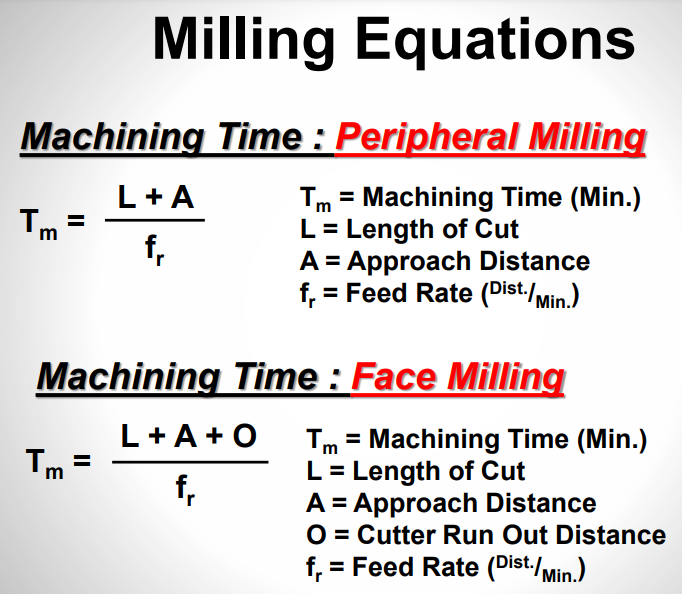
To calculate machining time for milling, you need to consider several factors, including the type of milling operation, the material being machined, the tooling used, and the machine capabilities. The machining time can be calculated using the formula: Machining Time = (Length of Cut x Number of Passes) / (Feed Rate x RPM). However, this formula is often complex and requires additional calculations to determine the feed rate, RPM, and number of passes.
Understanding Milling Operations
To calculate machining time for milling, it's essential to understand the type of milling operation being performed. There are several types of milling operations, including face milling, peripheral milling, and slot milling. Each operation requires different tooling and techniques, which affect the machining time. Some key factors to consider when understanding milling operations include:
- Type of milling operation: Face milling, peripheral milling, or slot milling
- Material being machined: Aluminum, steel, or other materials
- Tooling used: End mills, face mills, or other types of milling cutters
Calculating Feed Rate and RPM
The feed rate and RPM are critical factors in calculating machining time for milling. The feed rate is the rate at which the tool moves along the workpiece, while the RPM is the rotational speed of the tool. To calculate the feed rate and RPM, you need to consider the material being machined, the tooling used, and the machine capabilities. Some key factors to consider when calculating feed rate and RPM include:
- Material removal rate: The rate at which material is removed from the workpiece
- Tool life: The lifespan of the tool
- Machine power: The power output of the machine
Determining Number of Passes
The number of passes required to complete a milling operation depends on the depth of cut, the width of cut, and the material being machined. To determine the number of passes, you need to calculate the depth of cut and width of cut required to achieve the desired surface finish and dimensional accuracy. Some key factors to consider when determining the number of passes include:
- Depth of cut: The distance the tool penetrates the workpiece
- Width of cut: The distance the tool travels along the workpiece
- Surface finish: The desired surface roughness of the workpiece
Considering Machine Capabilities
The machine capabilities, including the spindle power, spindle speed, and axis travel, can significantly impact the machining time for milling. To optimize the machining time, you need to consider the machine capabilities and adjust the feed rate, RPM, and number of passes accordingly. Some key factors to consider when considering machine capabilities include:
- Spindle power: The power output of the spindle
- Spindle speed: The rotational speed of the spindle
- Axis travel: The distance the axis can travel
Using Software to Calculate Machining Time
To simplify the calculation of machining time for milling, you can use computer-aided manufacturing (CAM) software. CAM software can simulate the milling operation and provide an accurate estimate of the machining time based on the material, tooling, and machine capabilities. Some key benefits of using CAM software include:
- Improved accuracy: CAM software can provide an accurate estimate of the machining time
- Increased efficiency: CAM software can optimize the milling operation to reduce machining time
- Reduced errors: CAM software can minimize errors in the milling operation
Frequently Asked Questions (FAQs)
What is the purpose of a Machining Drilling Milling Calculator?
A Machining Drilling Milling Calculator is a tool used to calculate various parameters involved in drilling and milling operations. The primary purpose of this calculator is to provide accurate calculations for drilling and milling processes, taking into account factors such as material properties, tool geometry, and machine settings. By using this calculator, machinists and engineers can determine the optimal cutting conditions, including spindle speed, feed rate, and depth of cut, to achieve high-quality surface finishes and improve productivity. The calculator can also help to reduce errors and minimize waste by providing precise calculations for toolpath planning and material removal.
How does a Machining Drilling Milling Calculator improve machining operations?
A Machining Drilling Milling Calculator improves machining operations by providing quick and accurate calculations for complex drilling and milling operations. By using this calculator, machinists can optimize their machining processes, resulting in improved surface finish, increased accuracy, and reduced machining time. The calculator can also help to extend tool life by providing optimal cutting conditions that minimize tool wear and reduce the risk of tool failure. Additionally, the calculator can enhance collaboration between designers, engineers, and machinists by providing a common language and standardized calculations for machining operations. By using a Machining Drilling Milling Calculator, companies can improve their overall machining efficiency and reduce costs associated with rework, scrap, and machine downtime.
What are the key benefits of using a Machining Drilling Milling Calculator?
The key benefits of using a Machining Drilling Milling Calculator include improved accuracy, increased productivity, and reduced costs. By providing precise calculations for drilling and milling operations, the calculator can help to eliminate errors and minimize waste. The calculator can also help to optimize machining processes, resulting in faster machining times, improved surface finishes, and extended tool life. Additionally, the calculator can enhance collaboration between designers, engineers, and machinists, resulting in better communication and more efficient machining operations. Other benefits of using a Machining Drilling Milling Calculator include reduced machine downtime, minimized rework, and improved overall machining efficiency. By using this calculator, companies can gain a competitive edge in the marketplace and improve their bottom line.
Can a Machining Drilling Milling Calculator be used for complex machining operations?
Yes, a Machining Drilling Milling Calculator can be used for complex machining operations, including multi-axis milling, drilling, and turning. The calculator can handle complex geometries and multiple operations, providing accurate calculations for toolpath planning, material removal, and machine settings. By using this calculator, machinists and engineers can optimize their machining processes for complex parts, resulting in improved surface finishes, increased accuracy, and reduced machining time. The calculator can also help to reduce errors and minimize waste by providing precise calculations for toolpath planning and material removal. Additionally, the calculator can enhance collaboration between designers, engineers, and machinists, resulting in better communication and more efficient machining operations. By using a Machining Drilling Milling Calculator, companies can improve their overall machining efficiency and reduce costs associated with rework, scrap, and machine downtime, even for complex machining operations.
Deja una respuesta
Entradas Relacionadas