
Incident Energy (E) Equations and Calculator per IEEE 1584-2018


The Incident Energy (E) is a critical factor in determining the severity of an electrical arc flash. The IEEE 1584-2018 standard provides equations and methods for calculating the incident energy, which is essential for selecting personal protective equipment (PPE) and ensuring worker safety. This article provides an overview of the incident energy equations and a calculator based on the IEEE 1584-2018 standard, enabling engineers and safety professionals to accurately calculate the incident energy and ensure compliance with industry regulations and standards for arc flash hazard assessments. The calculator is designed to simplify the calculation process.
- Understanding Incident Energy (E) Equations and Calculator per IEEE 1584-2018
- What is the range of IEEE 1584 2018?
- What is the IEEE 1584 standard?
- What is the 2 second rule in IEEE 1584 2018?
- What is the Lee method of IEEE 1584?
-
Frequently Asked Questions (FAQs)
- What is Incident Energy (E) and its significance in electrical safety?
- How do I calculate Incident Energy (E) using the IEEE 1584-2018 standard?
- What are the key factors that influence Incident Energy (E) calculations?
- How can I apply Incident Energy (E) calculations to ensure electrical safety in my facility?
Understanding Incident Energy (E) Equations and Calculator per IEEE 1584-2018
The IEEE 1584-2018 standard provides a method for calculating the incident energy of an electrical arc flash. This standard is widely used in the electrical industry to determine the arc flash hazard and to establish the required personal protective equipment (PPE) for workers. The incident energy is calculated using a set of equations that take into account the short-circuit current, arc duration, and distance from the arc.
Introduction to Incident Energy (E) Calculations
The incident energy calculation is based on the arc flash model developed by the IEEE. The model uses the RMS (root mean square) current and the arc duration to calculate the incident energy. The incident energy is then used to determine the arc flash hazard category and the required PPE. The calculation involves several variables, including the system voltage, short-circuit current, and arc duration.
IEEE 1584-2018 Equations for Incident Energy (E) Calculations
The IEEE 1584-2018 standard provides two equations for calculating the incident energy: the arc flash energy equation and the incident energy equation. The arc flash energy equation calculates the energy released by the arc flash, while the incident energy equation calculates the energy that reaches the worker's body. The equations are as follows:
| Equation | Description |
|---|---|
| E = (10.5 (t I^2 / D^2)) (1 / (1 + (0.0188 D sqrt(I)))) | Incident Energy equation |
| Eaf = (10.5 (t I^2 / D^2)) (1 / (1 + (0.0188 D sqrt(I)))) | Arc Flash Energy equation |
The incident energy equation uses the short-circuit current (I), arc duration (t), and distance from the arc (D) to calculate the incident energy (E).
Incident Energy (E) Calculator per IEEE 1584-2018
The incident energy calculator is a tool used to calculate the incident energy using the IEEE 1584-2018 equations. The calculator takes into account the system voltage, short-circuit current, arc duration, and distance from the arc to calculate the incident energy. The calculator is available in various formats, including software and online tools. The calculator provides a quick and accurate way to determine the incident energy and the required PPE.
Applications of Incident Energy (E) Calculations
The incident energy calculation has several applications in the electrical industry. The calculation is used to determine the arc flash hazard category and the required PPE for workers. The calculation is also used to design electrical systems and to develop safety procedures. The incident energy calculation is an essential tool for ensuring the safety of workers and the reliability of electrical systems.
Limitations of Incident Energy (E) Calculations
The incident energy calculation has several limitations. The calculation assumes a specific arc flash model and does not take into account other factors that may affect the arc flash hazard. The calculation also requires accurate input data, including the short-circuit current and arc duration. The incident energy calculation should be used in conjunction with other safety procedures to ensure the safety of workers and the reliability of electrical systems. The incident energy calculation is a valuable tool, but it should be used with caution and in conjunction with other safety methods. The incident energy calculation is an essential component of any arc flash safety program.
What is the range of IEEE 1584 2018?
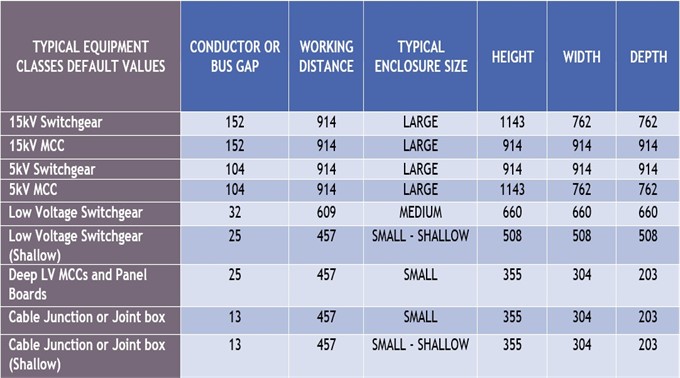
The range of IEEE 1584 2018 refers to the scope of the standard's application, which is primarily focused on the calculation and prediction of arc flash energies in electrical systems. The standard provides a comprehensive methodology for determining the arc flash hazard and the incident energy that workers may be exposed to during electrical maintenance and operation tasks.
Introduction to IEEE 1584 2018
IEEE 1584 2018 is a standard that provides a methodology for calculating the arc flash energy and incident energy in electrical systems. The standard is widely used in the electrical industry to ensure the safety of workers and to prevent injuries and fatalities due to arc flash. The range of the standard includes:
- The standard applies to three-phase and single-phase electrical systems with a voltage range of 208V to 15kV.
- The standard covers a wide range of electrical equipment, including switchgear, panelboards, and transformers.
- The standard provides a methodology for calculating the arc flash energy and incident energy for various types of electrical equipment and configurations.
Arc Flash Energy Calculation
The arc flash energy calculation is a critical component of the IEEE 1584 2018 standard. The calculation involves determining the incident energy that workers may be exposed to during an arc flash event. The calculation takes into account various factors, including the system voltage, current, and distance from the arc flash source. The range of the calculation includes:
- The calculation applies to various types of electrical equipment, including switchgear, panelboards, and transformers.
- The calculation takes into account the system voltage and current, as well as the distance from the arc flash source.
- The calculation provides a detailed methodology for determining the incident energy that workers may be exposed to during an arc flash event.
Incident Energy Calculation
The incident energy calculation is another critical component of the IEEE 1584 2018 standard. The calculation involves determining the energy that workers may be exposed to during an arc flash event. The calculation takes into account various factors, including the system voltage, current, and distance from the arc flash source. The range of the calculation includes:
- The calculation applies to various types of electrical equipment, including switchgear, panelboards, and transformers.
- The calculation takes into account the system voltage and current, as well as the distance from the arc flash source.
- The calculation provides a detailed methodology for determining the incident energy that workers may be exposed to during an arc flash event.
Electrical System Voltage Range
The electrical system voltage range is an important consideration in the IEEE 1584 2018 standard. The standard applies to electrical systems with a voltage range of 208V to 15kV. The range of the standard includes:
- The standard applies to three-phase and single-phase electrical systems.
- The standard covers a wide range of electrical equipment, including switchgear, panelboards, and transformers.
- The standard provides a methodology for calculating the arc flash energy and incident energy for various types of electrical equipment and configurations.
Apply to Various Electrical Equipment
The IEEE 1584 2018 standard applies to various types of electrical equipment, including switchgear, panelboards, and transformers. The range of the standard includes:
- The standard applies to three-phase and single-phase electrical systems with a voltage range of 208V to 15kV.
- The standard covers a wide range of electrical equipment, including switchgear, panelboards, and transformers.
- The standard provides a methodology for calculating the arc flash energy and incident energy for various types of electrical equipment and configurations.
What is the IEEE 1584 standard?
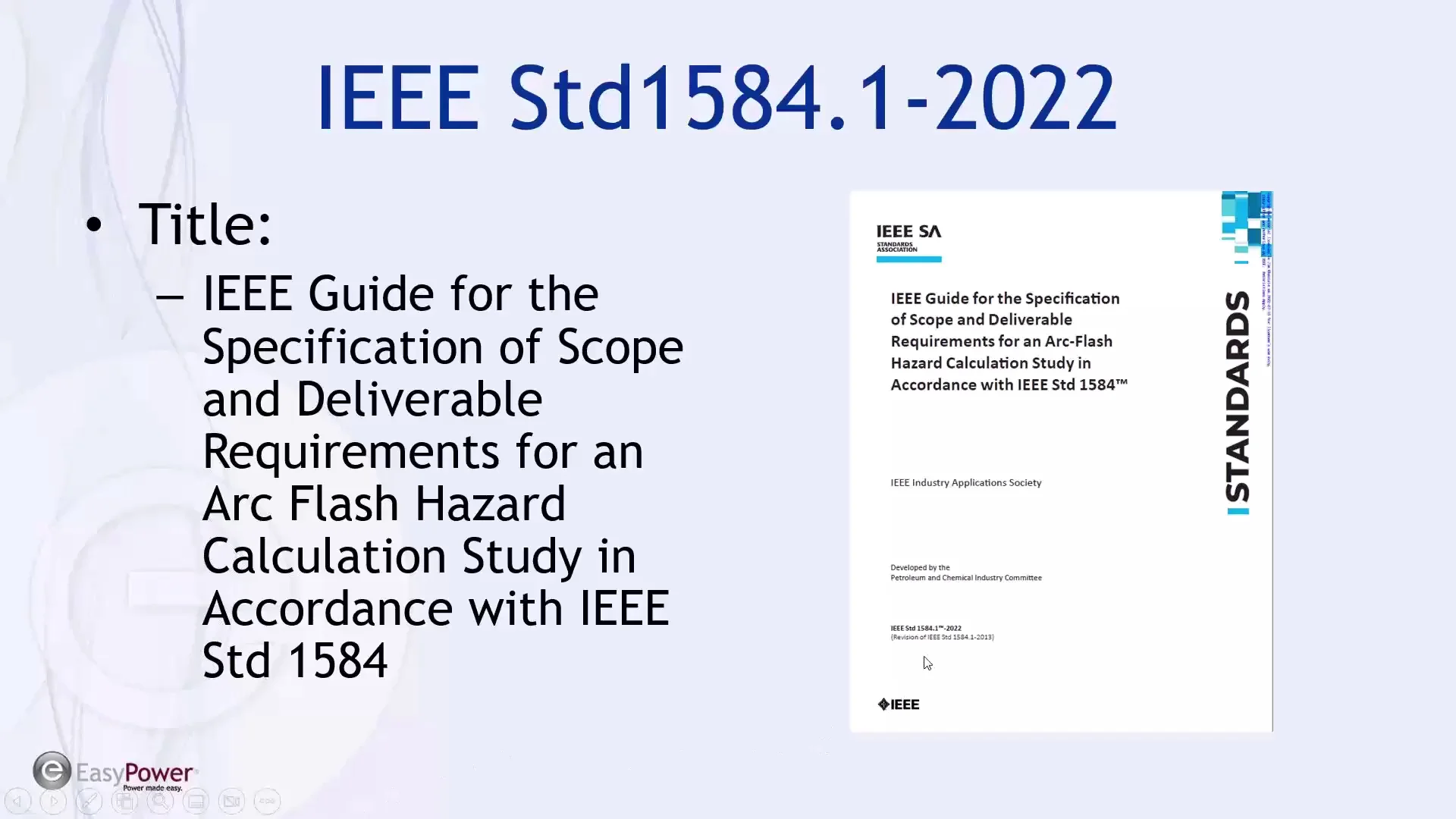
The IEEE 1584 standard is a guide for performing arc flash hazard calculations. This standard provides a method for determining the incident energy exposure to workers from electrical arcs, which can occur during maintenance or other activities on electrical systems. The standard also provides guidance on how to calculate the arc flash boundary, which is the distance from the electrical equipment at which the incident energy exposure is at a certain level. The IEEE 1584 standard is widely used in the electrical industry to help protect workers from arc flash hazards.
Introduction to Arc Flash Hazards
Arc flash hazards are a significant concern in the electrical industry, as they can cause severe injuries and fatalities. The IEEE 1584 standard provides a method for calculating the incident energy exposure from electrical arcs, which is essential for determining the arc flash boundary. The standard takes into account various factors, including the type of electrical equipment, the short-circuit current, and the clearing time of the electrical system. Some key considerations when assessing arc flash hazards include:
- Electrical equipment: The type and configuration of the electrical equipment can affect the incident energy exposure.
- Short-circuit current: The magnitude of the short-circuit current can impact the severity of the arc flash hazard.
- Clearing time: The time it takes for the electrical system to clear the fault can also affect the incident energy exposure.
Arc Flash Hazard Calculation Methods
The IEEE 1584 standard provides two methods for calculating the incident energy exposure: the Lee method and the IEEE method. The Lee method is a simplified approach that uses a set of curves to estimate the incident energy exposure, while the IEEE method is a more detailed approach that takes into account various factors, including the electrical equipment, short-circuit current, and clearing time. Some key considerations when selecting a calculation method include:
- Complexity: The IEEE method is more complex and requires more detailed information about the electrical system.
- Accuracy: The IEEE method is generally more accurate than the Lee method.
- Conservatism: The Lee method can be more conservative, meaning it may overestimate the incident energy exposure.
Applications of the IEEE 1584 Standard
The IEEE 1584 standard has a wide range of applications in the electrical industry, including arc flash hazard analysis, electrical system design, and worker training. The standard can be used to determine the arc flash boundary and to select personal protective equipment (PPE) that provides adequate protection against arc flash hazards. Some key applications of the standard include:
- Arc flash hazard analysis: The standard can be used to perform a detailed analysis of the arc flash hazards associated with a particular electrical system.
- Electrical system design: The standard can be used to design electrical systems that minimize arc flash hazards.
- Worker training: The standard can be used to develop training programs that educate workers about arc flash hazards and how to protect themselves.
Limitations of the IEEE 1584 Standard
While the IEEE 1584 standard is widely used and accepted, it has some limitations. One of the main limitations is that it only applies to three-phase electrical systems and does not address single-phase systems or dc systems. Additionally, the standard assumes that the arc flash hazard is the primary hazard, and does not consider other hazards, such as electrical shock or fire. Some key limitations of the standard include:
- Scope: The standard only applies to three-phase electrical systems.
- Assumptions: The standard makes certain assumptions about the electrical system and the arc flash hazard.
- Hazard assessment: The standard only addresses arc flash hazards and does not consider other hazards.
Future Developments in Arc Flash Hazard Analysis
There are ongoing efforts to improve and expand the IEEE 1584 standard, including the development of new calculation methods and the incorporation of new technologies, such as arc flash modeling software. Additionally, there is a growing recognition of the need to consider arc flash hazards in the context of overall electrical safety, rather than as a separate hazard. Some key areas of future development include:
- New calculation methods: Researchers are developing new methods for calculating incident energy exposure that are more accurate and efficient.
- Arc flash modeling software: New software tools are being developed that can simulate arc flash hazards and help predict incident energy exposure.
- Electrical safety: There is a growing recognition of the need to consider arc flash hazards as part of overall electrical safety.
What is the 2 second rule in IEEE 1584 2018?
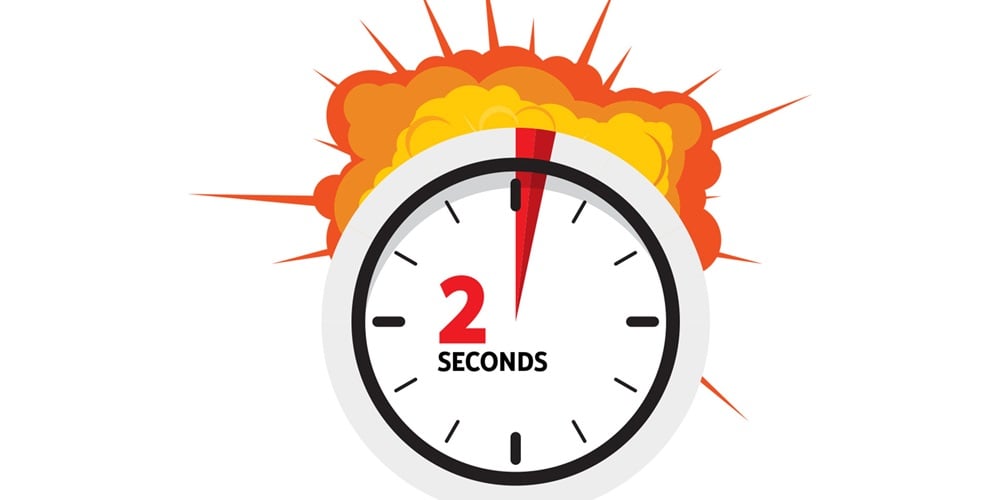
The 2 second rule in IEEE 1584 2018 refers to the arc flash hazard calculation method that takes into account the incident energy released during an arc fault event. This rule states that the arc fault duration should not exceed 2 seconds in order to prevent severe injuries or fatalities. The IEEE 1584 standard provides a method for calculating the arc flash hazard and the 2 second rule is a critical component of this calculation.
Introduction to IEEE 1584 2018
The IEEE 1584 2018 standard is a widely used guideline for calculating arc flash hazards in electrical systems. The standard provides a method for determining the incident energy released during an arc fault event, which is critical for selecting personal protective equipment (PPE) and developing safety protocols. The 2 second rule is an important aspect of this standard, as it helps to ensure that the arc fault duration is limited to prevent severe injuries or fatalities.
- The IEEE 1584 2018 standard provides a method for calculating the arc flash hazard using the Lee method or the NFPA 70E method.
- The 2 second rule is a critical component of the arc flash hazard calculation, as it helps to limit the arc fault duration.
- The incident energy released during an arc fault event is an important factor in determining the arc flash hazard.
Arc Flash Hazard Calculation
The arc flash hazard calculation is a complex process that involves several factors, including the system voltage, fault current, and arc fault duration. The 2 second rule is an important aspect of this calculation, as it helps to limit the arc fault duration and prevent severe injuries or fatalities. The arc flash hazard calculation is typically performed using software tools or spreadsheet calculations.
- The arc flash hazard calculation involves determining the incident energy released during an arc fault event.
- The 2 second rule is used to limit the arc fault duration and prevent severe injuries or fatalities.
- The arc flash hazard calculation is an important factor in selecting personal protective equipment (PPE) and developing safety protocols.
Personal Protective Equipment (PPE) Selection
The selection of personal protective equipment (PPE) is critical for preventing severe injuries or fatalities during an arc fault event. The 2 second rule is an important aspect of this selection process, as it helps to ensure that the PPE is adequate for the arc flash hazard. The PPE selection process involves considering several factors, including the incident energy, arc fault duration, and system voltage.
- The PPE selection process involves determining the incident energy released during an arc fault event.
- The 2 second rule is used to limit the arc fault duration and prevent severe injuries or fatalities.
- The PPE selection process is an important factor in developing safety protocols and preventing arc flash hazards.
Safety Protocols and Procedures
The development of safety protocols and procedures is critical for preventing severe injuries or fatalities during an arc fault event. The 2 second rule is an important aspect of this development process, as it helps to ensure that the safety protocols are adequate for the arc flash hazard. The safety protocols and procedures should be developed in accordance with the IEEE 1584 2018 standard and should include procedures for lockout/tagout, personal protective equipment (PPE), and emergency response.
- The safety protocols and procedures should be developed in accordance with the IEEE 1584 2018 standard.
- The 2 second rule is used to limit the arc fault duration and prevent severe injuries or fatalities.
- The safety protocols and procedures should include procedures for lockout/tagout, personal protective equipment (PPE), and emergency response.
Training and Education
The training and education of personnel is critical for preventing severe injuries or fatalities during an arc fault event. The 2 second rule is an important aspect of this training and education process, as it helps to ensure that personnel understand the arc flash hazard and the safety protocols required to prevent severe injuries or fatalities. The training and education should be provided in accordance with the IEEE 1584 2018 standard and should include information on arc flash hazards, personal protective equipment (PPE), and safety protocols.
- The training and education of personnel is critical for preventing severe injuries or fatalities during an arc fault event.
- The 2 second rule is used to limit the arc fault duration and prevent severe injuries or fatalities.
- The training and education should include information on arc flash hazards, personal protective equipment (PPE), and safety protocols.
What is the Lee method of IEEE 1584?
The Lee method of IEEE 1584 is a widely used technique for calculating arc flash energies and incident energy levels in electrical systems. This method provides a simplified approach to estimating the thermal energy released during an arc flash event, which is essential for selecting personal protective equipment (PPE) and designing electrical systems to minimize the risk of arc flash injuries. The Lee method is based on the work of R.H. Lee, who developed a set of empirical equations to calculate the incident energy level at a given distance from the arc flash source.
Introduction to the Lee Method
The Lee method is a simplified approach to calculating arc flash energies, which involves using a set of predefined equations to estimate the incident energy level. This method is based on the assumption that the arc flash event is a three-phase fault, and that the electrical system is symmetrical. The Lee method requires the user to input system parameters such as the system voltage, short-circuit current, and distance from the arc flash source. The method then uses these parameters to calculate the incident energy level, which is expressed in cal/cm². Some of the key parameters used in the Lee method include:
- System voltage: The voltage of the electrical system, which affects the arc flash energy.
- Short-circuit current: The current that flows during a short-circuit fault, which affects the arc flash energy.
- Distance: The distance from the arc flash source to the point of interest, which affects the incident energy level.
Limitations of the Lee Method
The Lee method has several limitations, which can affect its accuracy. One of the main limitations is that the method assumes a three-phase fault, which may not always be the case. Additionally, the method does not account for asymmetrical faults, which can affect the arc flash energy. The Lee method also requires the user to input system parameters, which may not always be available or accurate. Furthermore, the method does not account for mitigating factors such as arc flash reduction systems, which can reduce the incident energy level. Some of the key limitations of the Lee method include:
- Assumes three-phase fault: The method assumes a three-phase fault, which may not always be the case.
- Does not account for asymmetrical faults: The method does not account for asymmetrical faults, which can affect the arc flash energy.
- Requires system parameters: The method requires the user to input system parameters, which may not always be available or accurate.
Applications of the Lee Method
The Lee method has several applications in the electrical industry, including arc flash hazard analysis and personal protective equipment (PPE) selection. The method is widely used by electrical engineers and technicians to calculate the incident energy level and select the appropriate PPE. The Lee method is also used in electrical system design to minimize the risk of arc flash injuries. Some of the key applications of the Lee method include:
- Arc flash hazard analysis: The method is used to calculate the incident energy level and identify potential arc flash hazards.
- Personal protective equipment (PPE) selection: The method is used to select the appropriate PPE based on the calculated incident energy level.
- Electrical system design: The method is used to design electrical systems that minimize the risk of arc flash injuries.
Comparison with Other Methods
The Lee method is one of several methods available for calculating arc flash energies, including the IEEE 1584 method and the NFPA 70E method. The Lee method is simpler and faster than the IEEE 1584 method, but may be less accurate. The NFPA 70E method is more comprehensive than the Lee method, but may be more complex. Some of the key differences between the Lee method and other methods include:
- Simplicity: The Lee method is simpler and faster than the IEEE 1584 method.
- Accuracy: The Lee method may be less accurate than the IEEE 1584 method.
- Comprehensive: The NFPA 70E method is more comprehensive than the Lee method.
Future Developments and Research
The Lee method is a widely used technique for calculating arc flash energies, but there is still ongoing research to improve its accuracy and applicability. Some of the key areas of research include improving the accuracy of the method, developing new methods, and integrating the method with other electrical system analysis tools. Some of the key future developments and research areas include:
- Improving accuracy: Research is ongoing to improve the accuracy of the Lee method.
- Developing new methods: New methods are being developed to calculate arc flash energies, such as the finite element method.
- Integration with other tools: The Lee method is being integrated with other electrical system analysis tools, such as power system simulation software.
Frequently Asked Questions (FAQs)
What is Incident Energy (E) and its significance in electrical safety?
Incident Energy (E) is a critical parameter in electrical safety that refers to the amount of energy released by an arc flash event. The IEEE 1584-2018 standard provides a comprehensive guide for calculating Incident Energy (E) and its application in determining the hazard risk category of electrical equipment. The calculation of Incident Energy (E) is essential in assessing the safety risks associated with electrical systems and ensuring that personnel are adequately protected from arc flash hazards. By understanding Incident Energy (E), electrical engineers and technicians can design and implement safety protocols to minimize the risk of injuries and fatalities. The Incident Energy (E) equations and calculator provided in the IEEE 1584-2018 standard enable users to accurately calculate the Incident Energy (E) for various electrical systems and configurations.
How do I calculate Incident Energy (E) using the IEEE 1584-2018 standard?
Calculating Incident Energy (E) using the IEEE 1584-2018 standard involves a series of complex equations and variables. The standard provides a step-by-step approach to calculating Incident Energy (E), including the determination of arc duration, arc voltage, and arc current. The Incident Energy (E) calculator provided in the standard is a valuable tool that simplifies the calculation process by automating the equations and variables. To calculate Incident Energy (E), users must first gather data on the electrical system, including the voltage, current, and fault duration. This data is then used to calculate the arc energy, which is a critical component of the Incident Energy (E) calculation. The IEEE 1584-2018 standard also provides correction factors and adjustments to account for various system configurations and conditions. By following the guidelines outlined in the standard, users can accurately calculate Incident Energy (E) and ensure compliance with electrical safety regulations.
What are the key factors that influence Incident Energy (E) calculations?
Several key factors influence Incident Energy (E) calculations, including system voltage, available fault current, and arc duration. The IEEE 1584-2018 standard emphasizes the importance of accurately determining these factors to ensure reliable Incident Energy (E) calculations. System configuration, including the type of electrical equipment and cable sizing, also plays a significant role in determining Incident Energy (E). Additionally, environmental factors, such as ambient temperature and humidity, can impact Incident Energy (E) calculations. The Incident Energy (E) equations and calculator provided in the standard account for these factors and enable users to accurately calculate Incident Energy (E) for various electrical systems and configurations. Correction factors and adjustments are also provided to account for system variations and uncertainties. By understanding the key factors that influence Incident Energy (E) calculations, users can ensure accurate and reliable results.
How can I apply Incident Energy (E) calculations to ensure electrical safety in my facility?
Applying Incident Energy (E) calculations to ensure electrical safety in a facility involves a proactive approach to hazard identification and risk assessment. By calculating Incident Energy (E) for various electrical systems and configurations, facility owners and operators can identify hazardous areas and implement safety protocols to minimize the risk of arc flash incidents. The IEEE 1584-2018 standard provides guidelines for labeling electrical equipment with incident energy levels, which enables personnel to take necessary precautions when working with electrical systems. Personal protective equipment (PPE) can also be selected based on the calculated Incident Energy (E) levels to ensure that personnel are adequately protected from arc flash hazards. Regular maintenance and inspections of electrical systems are also crucial in preventing arc flash incidents. By applying Incident Energy (E) calculations and following the guidelines outlined in the IEEE 1584-2018 standard, facility owners and operators can ensure a safe working environment for personnel and minimize the risk of electrical-related injuries and fatalities.
Deja una respuesta
Entradas Relacionadas