
Comparative Shafts Torsional Strengths & Weight Calculator

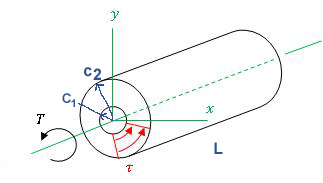
The comparative shafts torsional strengths and weight calculator is a valuable tool for engineers and designers. It allows users to compare the torsional strengths of different shaft materials and calculate their weights. This calculator is particularly useful in the design of power transmission systems, where shafts are subject to torsional stresses. By inputting the shaft's dimensions and material properties, users can determine the optimal shaft design for their application, taking into account factors such as strength, weight, and cost. This calculator can help optimize shaft design and improve overall system performance and efficiency. Accurate calculations are crucial.
- Comparative Shafts Torsional Strengths & Weight Calculator
- How to calculate shaft strength?
- Is a hollow shaft stronger than a solid shaft?
- What is the equation to calculate the shear strength of solid and hollow shaft?
- What is a solid shaft?
-
Frequently Asked Questions (FAQs)
- What is the purpose of the Comparative Shafts Torsional Strengths & Weight Calculator?
- How does the Comparative Shafts Torsional Strengths & Weight Calculator work?
- What are the benefits of using the Comparative Shafts Torsional Strengths & Weight Calculator?
- What types of applications can the Comparative Shafts Torsional Strengths & Weight Calculator be used for?
Comparative Shafts Torsional Strengths & Weight Calculator
The Comparative Shafts Torsional Strengths & Weight Calculator is a tool used to compare the torsional strengths and weights of different shaft materials and designs. This calculator is useful for engineers and designers who need to select the most suitable shaft material and design for their application. The calculator takes into account various parameters such as shaft diameter, length, material, and load to calculate the torsional strength and weight of the shaft.
Introduction to Torsional Strength
Torsional strength is the ability of a shaft to resist twisting forces. It is an important parameter in the design of shafts as it determines the maximum torque that a shaft can withstand without failing. The torsional strength of a shaft depends on its material, diameter, and length. Materials with high torsional strength such as steel and titanium are often used in high-performance applications.
Factors Affecting Torsional Strength
Several factors affect the torsional strength of a shaft, including material properties, shaft geometry, and loading conditions. The material properties such as yield strength, ultimate strength, and modulus of elasticity play a crucial role in determining the torsional strength of a shaft. The shaft geometry, including diameter and length, also affects the torsional strength. Additionally, the loading conditions, such as torque and bending moment, can significantly impact the torsional strength of a shaft.
Comparative Analysis of Shaft Materials
A comparative analysis of different shaft materials is essential to select the most suitable material for a specific application. The analysis involves comparing the torsional strengths, weights, and costs of different materials. The following table compares the properties of different shaft materials:
| Material | Torsional Strength | Weight | Cost |
|---|---|---|---|
| Steel | High | High | Moderate |
| Titanium | High | Low | High |
| Aluminum | Low | Low | Low |
Design Considerations for Shafts
When designing a shaft, several considerations must be taken into account, including torsional strength, weight, and cost. The design should also consider the operating conditions, such as temperature, humidity, and vibration. Additionally, the design should ensure that the shaft is balanced and aligned properly to minimize vibration and wear.
Weight Reduction Strategies
Weight reduction is an important consideration in the design of shafts, as it can improve the efficiency and performance of the system. Several strategies can be used to reduce the weight of a shaft, including using lightweight materials, optimizing the shaft geometry, and minimizing the installation of unnecessary components. The use of advanced materials such as composites and hybrids can also help reduce the weight of a shaft while maintaining its torsional strength.
How to calculate shaft strength?
To calculate shaft strength, you need to consider several factors, including the material properties, geometry, and loading conditions. The shaft strength calculation typically involves determining the ultimate strength, yield strength, and fatigue life of the shaft. This can be done using various formulas and equations, such as the torsional stress formula, which calculates the stress induced by a twisting force. Additionally, finite element analysis (FEA) can be used to simulate the behavior of the shaft under different loading conditions and predict its strength and stiffness.
Understanding Shaft Geometry
The geometry of the shaft plays a crucial role in determining its strength. The diameter, length, and cross-sectional area of the shaft all affect its ability to withstand loads and stresses. To calculate shaft strength, you need to understand the relationships between these geometric parameters and how they impact the shaft's mechanical properties. Some key factors to consider include:
- The shaft diameter affects the polar moment of inertia, which is a measure of the shaft's resistance to torsion.
- The shaft length affects the buckling load, which is the load at which the shaft will buckle or become unstable.
- The cross-sectional area affects the axial load-carrying capacity, which is the maximum load that the shaft can withstand without failing.
Material Properties and Selection
The material properties of the shaft, such as its yield strength, ultimate strength, and elastic modulus, are critical in determining its strength. Different materials have varying levels of strength, stiffness, and ductility, which must be considered when selecting a material for a shaft. Some key factors to consider include:
- The yield strength of the material, which is the stress at which the material will begin to deform plastically.
- The ultimate strength of the material, which is the maximum stress that the material can withstand without failing.
- The elastic modulus of the material, which is a measure of its stiffness and ability to resist deformation.
Loading Conditions and Stress Analysis
The loading conditions and stress analysis are essential in determining the shaft strength. The shaft may be subject to various types of loads, including axial loads, torsional loads, and bending loads. Each type of load induces different types of stresses, such as tensile stress, compressive stress, and shear stress. To calculate shaft strength, you need to analyze the stress distribution and stress concentration in the shaft. Some key factors to consider include:
- The axial load, which induces tensile or compressive stress in the shaft.
- The torsional load, which induces shear stress in the shaft.
- The bending load, which induces bending stress and shear stress in the shaft.
Finite Element Analysis and Simulation
Finite element analysis (FEA) is a powerful tool for simulating the behavior of the shaft under different loading conditions. FEA involves dividing the shaft into small elements and analyzing the stress and strain in each element. This allows for a detailed understanding of the stress distribution and stress concentration in the shaft. Some key benefits of FEA include:
- The ability to simulate complex loading conditions and nonlinear behavior.
- The ability to analyze the stress distribution and stress concentration in the shaft.
- The ability to optimize the shaft design and material selection for maximum strength and efficiency.
Design and Optimization of Shafts
The design and optimization of shafts involve using the calculated shaft strength to select the optimal material, geometry, and loading conditions. This may involve iterative design and optimization techniques, such as genetic algorithms or gradient-based optimization. Some key factors to consider include:
- The design constraints, such as space limitations, weight constraints, and cost constraints.
- The performance requirements, such as maximum speed, maximum load, and minimum lifespan.
- The material selection, which must balance strength, stiffness, and ductility with cost and availability.
Is a hollow shaft stronger than a solid shaft?
The strength of a hollow shaft compared to a solid shaft depends on various factors, including the material, size, and application. In general, a hollow shaft can be stronger than a solid shaft of the same weight and material, due to its higher moment of inertia and torsional stiffness. This is because the material is distributed away from the center of the shaft, which provides a mechanical advantage in terms of resistance to bending and torsion.
Material Selection
The choice of material plays a crucial role in determining the strength of a hollow shaft versus a solid shaft. For example, steel and titanium are commonly used materials for hollow shafts due to their high strength-to-weight ratio. The selection of material should be based on the specific application and requirements of the shaft. Some key factors to consider when selecting a material include:
- Yield strength: The maximum stress that a material can withstand without deforming.
- Ultimate tensile strength: The maximum stress that a material can withstand before failing.
: The maximum stress that a material can withstand over a long period of time without failing.
Design Considerations
The design of a hollow shaft is critical to its strength and performance. The wall thickness, diameter, and length of the shaft must be carefully selected to ensure that it can withstand the loads and stresses imposed upon it. For example, a hollow shaft with a thick wall! may be stronger than a solid shaft of the same diameter, but it may also be heavier. Some key design considerations include:
- Wall thickness: The thickness of the wall of the hollow shaft.
- Diameter: The diameter of the hollow shaft.
- Length: The length of the hollow shaft.
Applications
Hollow shafts are used in a wide range of applications, including aerospace, automotive, and industrial. Some examples of applications where hollow shafts are used include:
- Axles: Hollow shafts are used as axles in vehicles due to their high strength-to-weight ratio.
- Propeller shafts: Hollow shafts are used as propeller shafts in aircraft and ships due to their high torsional stiffness.
- Drive shafts: Hollow shafts are used as drive shafts in industrial applications due to their high strength and durability.
Manufacturing Process
The manufacturing process used to produce a hollow shaft can also affect its strength and performance. For example, hollow shafts can be produced using extrusion, drawing, or machining. The choice of manufacturing process will depend on the specific application and requirements of the shaft. Some key factors to consider when selecting a manufacturing process include:
- Material properties: The properties of the material used to produce the hollow shaft.
- Dimensional accuracy: The accuracy of the dimensions of the hollow shaft.
- Surface finish: The finish of the surface of the hollow shaft.
Testing and Inspection
Hollow shafts must be tested and inspected to ensure that they meet the required standards and specifications. The testing and inspection process typically includes non-destructive testing and destructive testing. Some key factors to consider when testing and inspecting a hollow shaft include:
- Visual inspection: A visual inspection of the hollow shaft to check for any defects or damage.
- Dimensional inspection: An inspection of the dimensions of the hollow shaft to ensure that they meet the required specifications.
- Material testing: Testing of the material used to produce the hollow shaft to ensure that it meets the required standards.
What is the equation to calculate the shear strength of solid and hollow shaft?

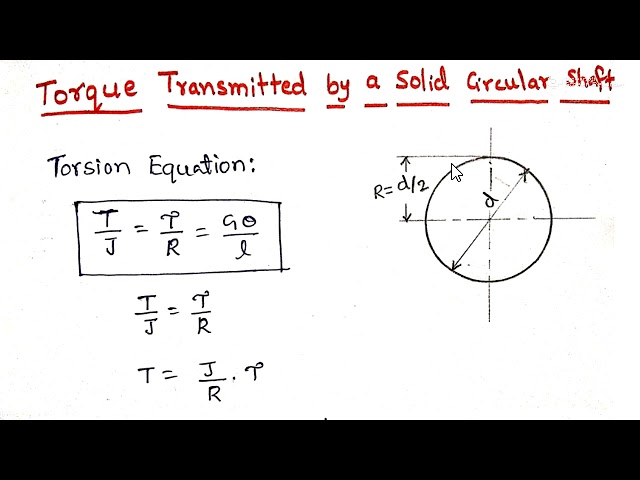
The equation to calculate the shear strength of a solid shaft is given by the Torsional Formula: T = (π d^3 τ) / 16, where T is the torque, d is the diameter of the shaft, and τ is the shear stress. For a hollow shaft, the equation is modified to: T = (π (d_o^4 - d_i^4) τ) / 32 d_o, where d_o is the outer diameter and d_i is the inner diameter of the hollow shaft.
Understanding the Torsional Formula
The Torsional Formula is used to calculate the shear strength of a shaft under torque. The formula takes into account the polar moment of inertia of the shaft, which is a measure of the shaft's resistance to torsion. The formula can be applied to both solid and hollow shafts, with modifications to account for the hollow shaft's inner diameter. Some key considerations when using the Torsional Formula include:
- Ensuring the material properties of the shaft are well understood, including the shear modulus and yield strength.
- Accurately calculating the polar moment of inertia of the shaft, which can be complex for hollow shafts.
- Considering the boundary conditions of the shaft, including any constraints or loads that may affect its behavior.
Factors Affecting Shear Strength of Shafts
The shear strength of a shaft is affected by several factors, including the material properties, geometric parameters, and loading conditions. The diameter and length of the shaft, as well as the torque applied to it, all play a role in determining its shear strength. Additionally, the surface finish and residual stresses in the shaft can also impact its shear strength. Some key factors to consider include:
- The yield strength of the material, which determines the maximum stress the shaft can withstand.
- The diameter of the shaft, which affects its polar moment of inertia and resistance to torsion.
- The loading conditions, including the torque and any bending moments applied to the shaft.
Shaft Design Considerations
When designing a shaft, several considerations must be taken into account to ensure its shear strength is adequate. The shaft material and geometry must be carefully selected to meet the design requirements, including the torque and speed of the application. Additionally, the shaft must be designed to withstand any external loads, such as bending moments or axial forces. Some key design considerations include:
- Material selection, including the choice of metal alloy or composite material.
- Geometry optimization, including the selection of the diameter, length, and cross-sectional shape of the shaft.
- Shaft support, including the design of any bearings or mounts that will be used to support the shaft.
Testing and Validation of Shaft Design
Once a shaft design has been completed, it must be tested and validated to ensure its shear strength is adequate. This can involve physical testing, such as torque testing or fatigue testing, as well as numerical analysis, such as finite element analysis. The results of these tests can be used to refine the shaft design and ensure it meets the design requirements. Some key testing and validation methods include:
- Torque testing, which involves applying a known torque to the shaft and measuring its deformation or failure.
- Fatigue testing, which involves subjecting the shaft to repeated loading and measuring its endurance limit.
- Finite element analysis, which involves using numerical methods to simulate the behavior of the shaft under various loading conditions.
Applications of Shafts in Mechanical Systems
Shafts are used in a wide range of mechanical systems, including gearboxes, pumps, and motors. The shear strength of the shaft is critical in these applications, as it must be able to withstand the torque and loading conditions imposed by the system. Some key considerations when selecting a shaft for a mechanical system include:
- Torque requirements, including the maximum torque and speed of the application.
- Loading conditions, including any bending moments or axial forces that may be applied to the shaft.
- Material properties, including the yield strength and corrosion resistance of the shaft material.
What is a solid shaft?

A solid shaft is a type of shaft that is made from a single piece of material, typically metal, and is characterized by its thickness and rigidity. It is a continuous, unbroken length of material that is used to transmit rotational motion or torque from one point to another. Solid shafts are commonly used in a wide range of applications, including machinery, mechanisms, and power transmission systems.
Design and Manufacturing of Solid Shafts
The design and manufacturing of solid shafts involves several key considerations, including the material selection, dimensional tolerancing, and surface finish. The material used for the shaft must be able to withstand the stresses and loads that it will be subjected to, while also providing the necessary strength and stiffness. Some common materials used for solid shafts include steel, aluminum, and titanium. The design and manufacturing process can be summarized as follows:
- Material selection: Choosing a material that meets the required strength, stiffness, and durability standards.
- Dimensional tolerancing: Ensuring that the shaft is manufactured to the required dimensions and tolerances.
- Surface finish: Applying a surface finish that meets the required standards for roughness and smoothness.
Applications of Solid Shafts
Solid shafts are used in a wide range of applications, including power transmission systems, machinery, and mechanisms. They are commonly used to transmit rotational motion or torque from one point to another, and are often used in conjunction with other components such as gears, bearings, and couplings. Some examples of applications that use solid shafts include:
- Automotive transmissions: Solid shafts are used to transmit power from the engine to the wheels.
- Industrial machinery: Solid shafts are used to transmit power and motion in manufacturing equipment and processing machinery.
- Aerospace applications: Solid shafts are used in aircraft and spacecraft to transmit power and motion.
Advantages of Solid Shafts
Solid shafts have several advantages, including their high strength, high stiffness, and low cost. They are also relatively easy to manufacture and can be made to tight tolerances. Additionally, solid shafts are often more reliable than other types of shafts, such as hollow shafts, and are less prone to failure. Some of the advantages of solid shafts can be summarized as follows:
- High strength: Solid shafts are able to withstand high stresses and loads.
- High stiffness: Solid shafts are able to resist deformation and maintain their shape.
- Low cost: Solid shafts are often less expensive to manufacture than other types of shafts.
Limitations of Solid Shafts
While solid shafts have several advantages, they also have some limitations, including their weight, size, and limited flexibility. They can be heavy and bulky, which can make them difficult to handle and install. Additionally, solid shafts are often less flexible than other types of shafts, which can make them more prone to failure. Some of the limitations of solid shafts can be summarized as follows:
- Weight: Solid shafts can be heavy and bulky, which can make them difficult to handle and install.
- Size: Solid shafts can be large and unwieldy, which can make them difficult to store and transport.
- Limited flexibility: Solid shafts are often less flexible than other types of shafts, which can make them more prone to failure.
Maintenance and Repair of Solid Shafts
Solid shafts require regular maintenance and repair to ensure that they continue to function properly. This can include inspecting the shaft for damage or wear, cleaning the shaft to prevent corrosion, and replacing worn or damaged components. Some examples of maintenance and repair tasks for solid shafts include:
- Inspecting: Inspecting the shaft for damage or wear, such as cracks or pitting.
- Cleaning: Cleaning the shaft to prevent corrosion and contamination.
- Replacing: Replacing worn or damaged components, such as bearings or seals.
Frequently Asked Questions (FAQs)
What is the purpose of the Comparative Shafts Torsional Strengths & Weight Calculator?
The Comparative Shafts Torsional Strengths & Weight Calculator is a tool designed to help engineers and designers compare the torsional strengths and weights of different shafts. This calculator is useful in various engineering applications, such as mechanical engineering, aerospace engineering, and automotive engineering, where the selection of materials and design of shafts are critical to the performance and efficiency of machines and mechanisms. By using this calculator, engineers can quickly and easily compare the torsional strengths and weights of different shafts, taking into account factors such as material properties, shaft diameter, and length. This allows them to make informed decisions about the design and selection of shafts for their specific applications, ensuring that the shafts are strong enough to withstand the torsional loads and stresses imposed on them, while also minimizing weight and maximizing efficiency.
How does the Comparative Shafts Torsional Strengths & Weight Calculator work?
The Comparative Shafts Torsional Strengths & Weight Calculator works by using mathematical models and algorithms to calculate the torsional strengths and weights of different shafts based on their geometric properties and material characteristics. The calculator takes into account factors such as shaft diameter, length, material density, and yield strength, and uses these inputs to calculate the polar moment of inertia, torsional stiffness, and weight of each shaft. The calculator then compares these values to provide a ranked list of shafts, allowing engineers to quickly and easily identify the strongest and lightest shafts for their specific application. The calculator also provides visualizations and plots to help engineers understand the relationships between the different variables and how they affect the torsional strength and weight of the shafts.
What are the benefits of using the Comparative Shafts Torsional Strengths & Weight Calculator?
The Comparative Shafts Torsional Strengths & Weight Calculator offers several benefits to engineers and designers. One of the main benefits is the ability to quickly and easily compare the torsional strengths and weights of different shafts, allowing for informed decision-making and optimized design. The calculator also saves time and effort by automating the calculation process, eliminating the need for manual calculations and trial-and-error methods. Additionally, the calculator provides accurate and reliable results, reducing the risk of errors and miscalculations. The calculator also allows engineers to explore different design scenarios and what-if analyses, enabling them to optimize their designs and improve performance. Overall, the Comparative Shafts Torsional Strengths & Weight Calculator is a valuable tool for any engineer or designer working with shafts and torsional loads.
What types of applications can the Comparative Shafts Torsional Strengths & Weight Calculator be used for?
The Comparative Shafts Torsional Strengths & Weight Calculator can be used for a wide range of engineering applications, including mechanical engineering, aerospace engineering, automotive engineering, and industrial engineering. The calculator is particularly useful for designing and optimizing shafts and rotating machinery, such as gears, pumps, turbines, and engines. It can also be used for analyzing and simulating the behavior of complex systems, such as power transmission systems, propulsion systems, and mechanical drives. Additionally, the calculator can be used for research and development purposes, allowing engineers to explore new materials and design concepts, and to optimize existing designs for improved performance and efficiency. The calculator's flexibility and customizability make it a valuable tool for any engineer or designer working with shafts and torsional loads, regardless of the specific application or industry.
Deja una respuesta
Entradas Relacionadas