
Calculating Gravity Using a Bouncy Ball Equation and Calculator

Gravity is a fundamental force of nature that affects everything with mass. Calculating gravity can be complex, but a simple and interesting way to approach this is by using a bouncy ball equation and a calculator. This method involves using the ball's bounce height and other factors to estimate the acceleration due to gravity. By inputting values into a calculator, individuals can derive an accurate calculation of gravity, making this a fun and educational experiment for physics enthusiasts and students alike, providing a hands-on understanding of this universal force. The equation is straightforward and easy to apply.
- Calculating Gravity Using a Bouncy Ball Equation and Calculator
- What is the equation for the bouncy ball?
- How do you calculate the gravity of a ball?
- How does gravity affect a bouncy ball?
-
Frequently Asked Questions (FAQs)
- What is the Bouncy Ball Equation and how does it relate to Calculating Gravity?
- How does the Bouncy Ball Equation account for the effects of Gravity on a bouncy ball's motion?
- What are the limitations of the Bouncy Ball Equation in Calculating Gravity, and how can they be addressed?
- How can a Calculator be used to solve the Bouncy Ball Equation and calculate Gravity?
Calculating Gravity Using a Bouncy Ball Equation and Calculator
The concept of calculating gravity using a bouncy ball equation and calculator is a fascinating topic that combines physics and mathematics. By understanding the principles of gravity and the motion of a bouncy ball, we can develop a equation that can be used to calculate the force of gravity. This equation can be used in conjunction with a calculator to obtain accurate results.
Understanding the Physics of a Bouncy Ball
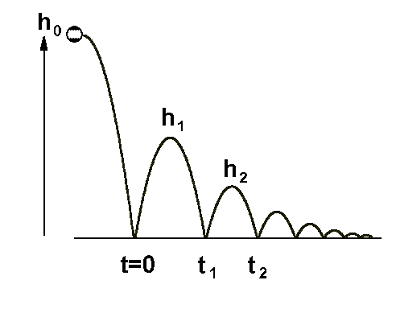
The physics of a bouncy ball is based on the principles of elasticity and kinetic energy. When a bouncy ball is dropped, it converts its potential energy into kinetic energy as it falls towards the ground. Upon impact, the ball's kinetic energy is converted back into potential energy, causing it to bounce back up. The height and velocity of the ball can be used to calculate the force of gravity.
Deriving the Bouncy Ball Equation
The bouncy ball equation can be derived using the principles of physics and mathematics. The equation is based on the acceleration of the ball as it falls towards the ground, and the restitution coefficient of the ball, which determines the amount of energy lost during the impact. The equation can be expressed as: h = (v^2 (1 - e^2)) / (2 g), where h is the height of the ball, v is the initial velocity, e is the restitution coefficient, and g is the acceleration due to gravity.
Using a Calculator to Calculate Gravity
A calculator can be used to calculate the force of gravity using the bouncy ball equation. By inputting the initial height and velocity of the ball, as well as the restitution coefficient, the calculator can compute the acceleration due to gravity. This can be done using a variety of calculators, including graphing calculators and online calculators.
Applications of the Bouncy Ball Equation
The bouncy ball equation has a variety of applications in physics and engineering. It can be used to calculate the force of gravity on different planets and moons, as well as to determine the Terminal Velocity of an object. The equation can also be used to design ballistic systems, such as catapults and cannons.
Limitations and Assumptions of the Bouncy Ball Equation
The bouncy ball equation is based on several assumptions and limitations. It assumes that the ball is perfectly elastic and that the air resistance is negligible. It also assumes that the ball is in a vacuum, where there is no air resistance. In reality, these assumptions may not always be valid, and the equation may need to be modified to account for these factors.
| Variable | Description |
|---|---|
| h | The height of the ball |
| v | The initial velocity of the ball |
| e | The restitution coefficient of the ball |
| g | The acceleration due to gravity |
What is the equation for the bouncy ball?
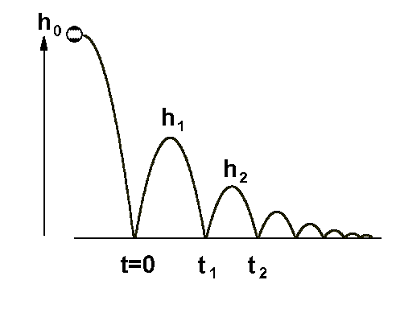
The equation for the bouncy ball is based on the concept of elastic collision and motion. When a ball is dropped from a certain height, it experiences a free fall due to the force of gravity. As it hits the ground, it bounces back up due to the elasticity of the ball and the surface it is dropped on. The equation that governs this motion is a combination of the kinematic equations and the equations of motion under the influence of gravity.
Introduction to Bouncy Ball Motion
The motion of a bouncy ball can be described using the equations of motion under the influence of gravity. These equations take into account the initial velocity, acceleration due to gravity, and the elasticity of the ball. The key factors that affect the motion of the bouncy ball are:
- The initial height from which the ball is dropped
- The coefficient of restitution, which determines the bounciness of the ball
- The acceleration due to gravity, which is 9.8 m/s^2 on Earth
Mathematical Model of Bouncy Ball Motion
The mathematical model of the bouncy ball motion involves using the kinematic equations to describe the motion of the ball. The position, velocity, and acceleration of the ball can be calculated using these equations. The model also takes into account the elastic collision between the ball and the ground, which affects the velocity and direction of the ball after the bounce. The key equations used in this model are:
- The equation of motion under the influence of gravity: s = s0 + v0t + (1/2)at^2
- The equation of velocity: v = v0 + at
- The equation of acceleration: a = -g, where g is the acceleration due to gravity
Factors Affecting Bouncy Ball Motion
Several factors can affect the motion of a bouncy ball, including the surface it is dropped on, the air resistance, and the temperature. The coefficient of restitution is also an important factor, as it determines the bounciness of the ball. The key factors that affect the motion of the bouncy ball are:
- The surface roughness, which can affect the friction between the ball and the surface
- The air density, which can affect the air resistance experienced by the ball
- The temperature, which can affect the elasticity of the ball
Experimental Verification of Bouncy Ball Motion
The motion of a bouncy ball can be verified experimentally by measuring the height and velocity of the ball at different times. The experimental setup can include a high-speed camera to measure the velocity and position of the ball, and a sensor to measure the impact of the ball on the surface. The key steps involved in the experimental verification are:
- Measuring the initial height and velocity of the ball
- Measuring the height and velocity of the ball at different times after the drop
- Comparing the experimental results with the theoretical predictions
Applications of Bouncy Ball Motion
The study of bouncy ball motion has several practical applications, including the design of toys and games that involve bouncing balls. The understanding of the equations of motion and the factors that affect the motion of the ball can help designers create more realistic and engaging games. The key applications of bouncy ball motion are:
- Design of toys and games that involve bouncing balls
- Understanding the physics behind sports that involve bouncing balls, such as basketball and tennis
- Design of safe and efficient systems that involve bouncing balls, such as conveyer belts and Sorting machines
How do you calculate the gravity of a ball?

To calculate the gravity of a ball, we need to consider the mass of the ball and the radius of the ball, as well as the distance from the center of the ball to the point where we want to calculate the gravity. The force of gravity is calculated using the formula F = G (m1 m2) / r^2, where F is the force of gravity, G is the gravitational constant, m1 and m2 are the masses of the two objects, and r is the distance between the centers of the two objects.
Understanding the Gravitational Constant
The gravitational constant (G) is a fundamental constant of nature that describes the strength of the gravitational force between two objects. To understand the gravitational constant, we need to consider the following factors:
- The value of the gravitational constant is approximately 6.67408e-11 N m^2 kg^-2.
- The units of the gravitational constant are N m^2 kg^-2, which represents the force of gravity per unit mass per unit distance squared.
- The significance of the gravitational constant is that it allows us to calculate the force of gravity between two objects, given their masses and the distance between them.
Calculating the Mass of the Ball
To calculate the mass of the ball, we need to consider its density and volume. The mass of the ball is calculated using the formula m = ρ V, where m is the mass, ρ is the density, and V is the volume. The key factors to consider are:
- The density of the ball, which is typically measured in units of kg/m^3.
- The volume of the ball, which is typically measured in units of m^3.
- The formula for calculating the mass of the ball, which involves multiplying the density and volume.
Measuring the Radius of the Ball
To measure the radius of the ball, we need to consider its diameter and circumference. The radius of the ball is calculated using the formula r = d / 2, where r is the radius and d is the diameter. The key factors to consider are:
- The diameter of the ball, which is typically measured in units of meters.
- The circumference of the ball, which is typically measured in units of meters.
- The formula for calculating the radius of the ball, which involves dividing the diameter by 2.
Calculating the Distance from the Center of the Ball
To calculate the distance from the center of the ball to the point where we want to calculate the gravity, we need to consider the position of the point in 3D space. The distance is calculated using the formula d = √((x2 - x1)^2 + (y2 - y1)^2 + (z2 - z1)^2), where d is the distance, and (x1, y1, z1) and (x2, y2, z2) are the coordinates of the two points. The key factors to consider are:
- The coordinates of the two points in 3D space.
- The formula for calculating the distance between the two points, which involves taking the square root of the sum of the squares of the differences in coordinates.
- The units of the distance, which are typically measured in units of meters.
Applying the Formula for Gravity
To apply the formula for gravity, we need to plug in the values for the mass of the ball, the radius of the ball, and the distance from the center of the ball to the point where we want to calculate the gravity. The formula is F = G (m1 m2) / r^2, where F is the force of gravity, G is the gravitational constant, m1 and m2 are the masses of the two objects, and r is the distance between the centers of the two objects. The key factors to consider are:
- The values of the masses of the two objects.
- The value of the gravitational constant.
- The value of the distance between the centers of the two objects.
How does gravity affect a bouncy ball?
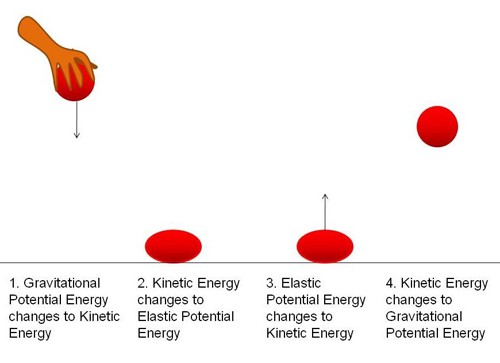
Gravity affects a bouncy ball by pulling it towards the ground, causing it to accelerate downwards at a rate of 9.8 meters per second squared. This force, also known as weight, is proportional to the mass of the ball and the strength of the gravitational field. As the ball falls, its velocity increases, and it gains kinetic energy. When the ball hits the ground, some of this energy is converted into elastic energy, causing the ball to bounce back up. The ball's buoyancy and air resistance also play a role in its motion, but gravity remains the dominant force.
How Gravity Affects the Ball's Motion
Gravity affects the ball's motion by causing it to follow a parabolic trajectory. As the ball is thrown upwards, it initially moves away from the ground, but gravity soon takes over, and the ball begins to fall back down. The ball's velocity and acceleration are constantly changing due to gravity's influence. Some key factors that affect the ball's motion include:
- The ball's initial velocity, which determines how high it will go
- The angle of projection, which affects the ball's range and maximum height
- The air resistance, which slows the ball down and reduces its range
The Role of Elastic Energy in Bouncing
Elastic energy plays a crucial role in the bouncing of the ball. When the ball hits the ground, its kinetic energy is converted into elastic energy, causing the ball to compress and then expand. This elastic deformation allows the ball to bounce back up, with some of the energy being converted back into kinetic energy. The ball's coefficient of restitution, which is a measure of its bounciness, determines how much energy is retained during the bounce. Some key factors that affect the ball's elastic energy include:
- The ball's material properties, such as its young's modulus and poisson's ratio
- The impact velocity, which affects the amount of energy transferred during the bounce
- The surface roughness, which can reduce the ball's coefficient of restitution
Gravity's Effect on the Ball's Spin
Gravity also affects the ball's spin, which is the rotation of the ball around its axis. As the ball falls, its spin can cause it to experience a torque, which is a rotational force. This torque can affect the ball's angular velocity and angular acceleration, causing it to wobble or precess. Some key factors that affect the ball's spin include:
- The ball's initial spin, which determines its angular velocity
- The air resistance, which can slow the ball down and reduce its spin
- The ball's shape, which can affect its aerodynamics and stability
How Gravity Affects the Ball's Range
Gravity affects the ball's range, which is the distance it travels from the point of projection to the point where it hits the ground. The ball's initial velocity, angle of projection, and air resistance all play a role in determining its range. As the ball travels through the air, gravity pulls it downwards, causing it to follow a parabolic trajectory. Some key factors that affect the ball's range include:
- The ball's initial velocity, which determines how far it will go
- The angle of projection, which affects the ball's range and maximum height
- The air resistance, which slows the ball down and reduces its range
Measuring the Effects of Gravity on a Bouncy Ball
Measuring the effects of gravity on a bouncy ball can be done using various sensors and instruments. Accelerometers can be used to measure the ball's acceleration, while high-speed cameras can be used to track its motion. Force sensors can be used to measure the force of the ball's impact with the ground, and spin sensors can be used to measure its angular velocity. Some key factors that affect the measurement of gravity's effects include:
- The accuracy and precision of the sensors and instruments
- The sampling rate, which affects the resolution of the data
- The data analysis, which requires statistical and mathematical techniques to extract meaningful information
Frequently Asked Questions (FAQs)
What is the Bouncy Ball Equation and how does it relate to Calculating Gravity?
The Bouncy Ball Equation is a mathematical formula used to calculate the trajectory of a bouncy ball under the influence of gravity. This equation takes into account the initial velocity, angle of projection, and coefficients of restitution to predict the height and distance the ball will travel. By using this equation, we can gain a deeper understanding of how gravity affects the motion of objects and make accurate predictions about their behavior. The Bouncy Ball Equation is often used in physics and engineering to model real-world phenomena and make calculations about the motion of objects under the influence of gravity. By using a calculator to solve the equation, we can quickly and easily calculate the trajectory of the bouncy ball and gain valuable insights into the nature of gravity and its effects on motion.
How does the Bouncy Ball Equation account for the effects of Gravity on a bouncy ball's motion?
The Bouncy Ball Equation accounts for the effects of gravity on a bouncy ball's motion by incorporating the acceleration due to gravity into the calculation. This acceleration, denoted by g, is a fundamental constant that represents the rate at which objects fall towards the ground under the influence of gravity. By including g in the equation, we can accurately model the curvature of the ball's trajectory and predict how gravity will affect its motion. The equation also takes into account the initial velocity and angle of projection, which allows us to calculate the range and maximum height of the ball's trajectory. By using a calculator to solve the equation, we can quickly and easily calculate the effects of gravity on the bouncy ball's motion and gain a deeper understanding of the underlying physics.
What are the limitations of the Bouncy Ball Equation in Calculating Gravity, and how can they be addressed?
The Bouncy Ball Equation has several limitations that can affect its accuracy in calculating gravity. One of the main limitations is that the equation assumes a constant acceleration due to gravity, which is not always the case in real-world scenarios. Gravity can vary depending on the location and altitude, and the equation does not account for these variations. Additionally, the equation assumes a perfectly elastic collision, which is not always the case with real bouncy balls. To address these limitations, we can use more advanced equations that take into account the variable acceleration due to gravity and the coefficients of restitution. We can also use numerical methods to solve the equation, which can provide more accurate results. By using a calculator to solve the equation, we can quickly and easily calculate the effects of gravity on the bouncy ball's motion and gain a deeper understanding of the underlying physics.
How can a Calculator be used to solve the Bouncy Ball Equation and calculate Gravity?
A calculator can be used to solve the Bouncy Ball Equation by inputting the initial velocity, angle of projection, and coefficients of restitution into the equation. The calculator can then be used to perform the necessary calculations to determine the trajectory of the bouncy ball, including the maximum height and range. By using a calculator, we can quickly and easily solve the equation and gain valuable insights into the nature of gravity and its effects on motion. The calculator can also be used to graph the trajectory of the bouncy ball, which can provide a visual representation of the ball's motion and help to illustrate the effects of gravity. By using a calculator to solve the Bouncy Ball Equation, we can gain a deeper understanding of the underlying physics and make accurate predictions about the motion of objects under the influence of gravity.
Deja una respuesta
Entradas Relacionadas