
Wrinkling Stress or Structural Composite Equation and Calculator

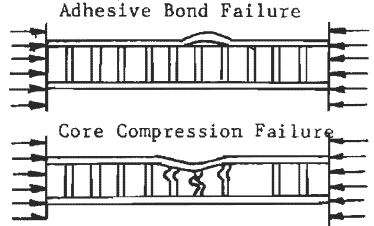
The study of wrinkling stress and structural composite equations has become increasingly important in the field of materials science and engineering. Wrinkling stress occurs when a material is subjected to compressive forces, causing it to buckle and form wrinkles. Understanding the underlying mechanics of wrinkling stress is crucial for designing and optimizing composite materials and structures. This article aims to provide an in-depth look at the equations and calculations involved in determining wrinkling stress, along with a comprehensive calculator to aid in the analysis of structural composites. Accurate calculations are essential for safe design.
- Understanding Wrinkling Stress or Structural Composite Equation and Calculator
-
Understanding Wrinkling Stress and its Impact on Structural Composites
- Introduction to Wrinkling Stress and its Significance in Composite Materials
- Mathematical Formulation of the Wrinkling Stress Equation
- Role of Material Properties in Determining Wrinkling Stress
- Applications of the Wrinkling Stress Equation in Aerospace Engineering
- Limitations and Challenges of the Wrinkling Stress Equation
-
Frequently Asked Questions (FAQs)
- What is Wrinkling Stress and its significance in Structural Composite materials?
- How does the Structural Composite Equation and Calculator work?
- What are the key factors that influence the Wrinkling Stress in Structural Composite materials?
- How can the Wrinkling Stress Calculator be used to optimize the design of Structural Composite materials and structures?
Understanding Wrinkling Stress or Structural Composite Equation and Calculator
The Wrinkling Stress or Structural Composite Equation and Calculator is a crucial tool in the field of engineering, particularly in the design and analysis of composite structures. Composite materials are widely used in various industries, including aerospace, automotive, and construction, due to their unique properties, such as high strength-to-weight ratio, corrosion resistance, and durability. However, composite materials are also prone to wrinkling, which can lead to a significant reduction in their structural integrity. The Wrinkling Stress or Structural Composite Equation and Calculator is used to predict the onset of wrinkling in composite structures, allowing engineers to design and optimize their structures to minimize the risk of wrinkling.
Introduction to Wrinkling Stress
Wrinkling stress refers to the compressive stress that causes a composite material to wrinkle or buckle. This type of stress can occur in composite structures, such as laminated plates or shells, when they are subjected to external loads or internal stresses. The wrinkling stress is a critical parameter in the design of composite structures, as it can affect their performance, safety, and reliability. Engineers use various methods, including analytical and numerical techniques, to predict the wrinkling stress in composite structures.
Structural Composite Equation
The structural composite equation is a mathematical model that describes the behavior of composite materials under various types of loading. The equation takes into account the properties of the composite material, such as its elastic modulus, Poisson's ratio, and thickness, as well as the external loads and boundary conditions. The equation is used to predict the stress and strain distributions in the composite material, allowing engineers to design and optimize their structures for maximum performance and safety.
Calculator for Wrinkling Stress
The calculator for wrinkling stress is a software tool that uses the structural composite equation to predict the wrinkling stress in composite structures. The calculator takes into account various input parameters, such as the material properties, geometry, and loading conditions, and provides the user with the predicted wrinkling stress and other relevant results. The calculator is a valuable tool for engineers, as it allows them to quickly and accurately evaluate the performance of their designs and make informed decisions.
Applications of Wrinkling Stress Calculator
The wrinkling stress calculator has a wide range of applications in various industries, including:
| Industry | Application |
|---|---|
| Aerospace | Design of aircraft skins and structures |
| Automotive | Design of vehicle bodies and chassis |
| Construction | Design of building facades and structural components |
| Marine | Design of boat hulls and offshore structures |
| Wind Energy | Design of wind turbine blades and towers |
The calculator is used to optimize the design of composite structures, minimize the risk of wrinkling, and ensure the safety and reliability of the structure.
Limitations and Future Developments
While the wrinkling stress calculator is a powerful tool, it has some limitations, such as the assumption of linear elastic behavior and the neglect of non-linear effects. Future developments are expected to address these limitations, such as the inclusion of non-linear material models and the effect of defects and imperfections. Additionally, the calculator is expected to be integrated with other design and analysis tools, such as finite element analysis and computational fluid dynamics, to provide a more comprehensive design and analysis capability. The future developments will enable engineers to design and optimize composite structures with greater accuracy and confidence, leading to improved performance, safety, and reliability. Advanced materials and manufacturing techniques will also play a critical role in the development of composite structures, and the wrinkling stress calculator will be an essential tool in the design and analysis of these structures.
Understanding Wrinkling Stress and its Impact on Structural Composites
Wrinkling stress is a critical factor in the design and analysis of structural composites, particularly in the context of aerospace engineering and materials science. It refers to the stress that causes a composite material to buckle or wrinkle, leading to a loss of structural integrity and potentially catastrophic consequences. The wrinkling stress equation is a mathematical model that predicts the likelihood of wrinkling in a composite material, taking into account factors such as material properties, geometric parameters, and loading conditions. The calculator is a tool used to simplify the calculation process, allowing engineers to quickly and accurately determine the wrinkling stress of a particular composite material.
Introduction to Wrinkling Stress and its Significance in Composite Materials
Wrinkling stress is a type of instability that can occur in composite materials, particularly when they are subjected to compressive loads. It is characterized by a sudden and localized buckling of the material, which can lead to a significant loss of structural stiffness and strength. The wrinkling stress equation is a critical tool in the design and analysis of composite materials, as it allows engineers to predict the likelihood of wrinkling and take steps to mitigate its effects. Finite element analysis and experimental testing are commonly used to validate the predictions of the wrinkling stress equation and ensure the reliability and safety of composite structures.
Mathematical Formulation of the Wrinkling Stress Equation
The wrinkling stress equation is a mathematical model that describes the relationship between stress, strain, and material properties. It is typically expressed in terms of the critical stress required to cause wrinkling, which is a function of the elastic modulus, Poisson's ratio, and thickness of the composite material. The equation also takes into account the boundary conditions and loading conditions of the material, as well as any imperfections or defects that may be present. Numerical methods such as the finite difference method and finite element method are often used to solve the wrinkling stress equation, particularly in cases where the material properties and loading conditions are complex and nonlinear.
Role of Material Properties in Determining Wrinkling Stress
The material properties of a composite material play a critical role in determining its wrinkling stress. Elastic modulus, Poisson's ratio, and thickness are all important factors, as they affect the stiffness and strength of the material. Fiber orientation and volume fraction are also important, as they can influence the anisotropy and heterogeneity of the material. Experimental testing and numerical modeling are commonly used to determine the material properties of a composite material, and to validate the predictions of the wrinkling stress equation. Sensitivity analysis is also used to identify the most critical material properties and to optimize the design of the composite material.
Applications of the Wrinkling Stress Equation in Aerospace Engineering
The wrinkling stress equation has a wide range of applications in aerospace engineering, particularly in the design and analysis of aircraft and spacecraft structures. It is used to predict the buckling and wrinkling behavior of composite panels and shells, and to optimize their design for minimum weight and maximum strength. The equation is also used to analyze the stability and dynamic response of composite structures, and to validate the predictions of finite element models. Wind tunnel testing and flight testing are commonly used to validate the predictions of the wrinkling stress equation, and to ensure the reliability and safety of aerospace structures.
Limitations and Challenges of the Wrinkling Stress Equation
The wrinkling stress equation is a powerful tool for predicting the wrinkling behavior of composite materials, but it also has several limitations and challenges. One of the main limitations is the simplifying assumptions that are made in the equation, which can lead to inaccuracies and uncertainties in the predictions. Nonlinear effects and material imperfections can also be difficult to model and analyze, particularly in cases where the material properties and loading conditions are complex and anisotropic. Experimental testing and numerical modeling are commonly used to validate the predictions of the wrinkling stress equation, and to address the challenges and limitations of the equation. Research and development are ongoing to improve the accuracy and reliability of the wrinkling stress equation, and to extend its applications to new and emerging fields.
Frequently Asked Questions (FAQs)
What is Wrinkling Stress and its significance in Structural Composite materials?
Wrinkling stress is a critical factor in the design and analysis of structural composite materials, particularly in the context of laminated composites. It refers to the stress that causes the formation of wrinkles or undulations in the composite material, which can lead to a significant reduction in its mechanical properties. The wrinkling stress is influenced by various factors, including the material properties, such as the elastic modulus and Poisson's ratio, as well as the geometric parameters, like the thickness and aspect ratio of the composite. Understanding the wrinkling stress is essential to predict the failure modes of composite structures and to optimize their design for improved performance and durability. The equations used to calculate the wrinkling stress are complex and involve the solution of differential equations, which can be challenging to solve analytically. Therefore, numerical methods and computational tools are often employed to analyze the wrinkling behavior of composite materials.
How does the Structural Composite Equation and Calculator work?
The Structural Composite Equation and Calculator is a powerful tool used to analyze the wrinkling behavior of composite materials. It is based on a set of mathematical equations that describe the mechanical response of the composite material under various loading conditions. The equation takes into account the material properties, such as the elastic modulus, Poisson's ratio, and shear modulus, as well as the geometric parameters, like the thickness and aspect ratio of the composite. The calculator uses numerical methods, such as the finite element method or finite difference method, to solve the equations and predict the wrinkling stress and strain in the composite material. The calculator also allows users to input various boundary conditions and loading scenarios, enabling them to simulate real-world applications and design scenarios. The results obtained from the calculator can be used to optimize the design of composite structures, predict their performance under different loading conditions, and identify potential failure modes.
What are the key factors that influence the Wrinkling Stress in Structural Composite materials?
The wrinkling stress in structural composite materials is influenced by several key factors, including the material properties, geometric parameters, and loading conditions. The elastic modulus and Poisson's ratio of the composite material play a significant role in determining the wrinkling stress, as they affect the stiffness and compliance of the material. The thickness and aspect ratio of the composite also have a significant impact on the wrinkling stress, as they influence the bending stiffness and buckling resistance of the material. Additionally, the loading conditions, such as the magnitude and direction of the applied stress, can significantly affect the wrinkling behavior of the composite material. Other factors, such as the fiber orientation, fiber volume fraction, and interfacial properties, can also influence the wrinkling stress and must be carefully considered in the design and analysis of composite structures. By understanding the effects of these factors, designers and engineers can optimize the design of composite materials and structures to minimize the risk of wrinkling and failure.
How can the Wrinkling Stress Calculator be used to optimize the design of Structural Composite materials and structures?
The Wrinkling Stress Calculator is a valuable tool for optimizing the design of structural composite materials and structures. By using the calculator, designers and engineers can predict the wrinkling stress and strain in the composite material under various loading conditions, enabling them to identify potential failure modes and optimize the design to minimize the risk of wrinkling and failure. The calculator can be used to investigate the effects of different material properties, geometric parameters, and loading conditions on the wrinkling behavior of the composite material, allowing designers to trade-off different design variables and optimize the design for improved performance and durability. Additionally, the calculator can be used to validate the design of composite structures against experimental data and empirical models, providing a high degree of confidence in the design and reducing the risk of failure. By leveraging the capabilities of the Wrinkling Stress Calculator, designers and engineers can create optimized designs that meet the performance and safety requirements of various applications, including aerospace, automotive, and energy industries.
Deja una respuesta
Entradas Relacionadas