
Worm and WormGear Design Equations and Calculator


The design of worm and worm gear systems is a complex task that requires careful consideration of various factors, including tooth profiles, pitch, and pressure angles. To simplify this process, engineers use specific equations and calculations to ensure optimal performance and efficiency. This article provides a comprehensive overview of the key design equations and offers a calculator tool to facilitate the design process, enabling engineers to quickly and accurately determine the necessary parameters for their worm and worm gear systems, resulting in improved reliability and reduced design time.
- Worm and WormGear Design Equations and Calculator
- What is the formula of worm and worm wheel?
- How to calculate gear ratio of worm and worm wheel?
- How to calculate module of worm gear?
- What is the formula for the pitch of a worm gear?
-
Frequently Asked Questions (FAQs)
- What are the key considerations in designing a worm and worm gear system?
- How do I calculate the torque and speed of a worm and worm gear system?
- What are the advantages and disadvantages of using a worm and worm gear system?
- How can I optimize the design of a worm and worm gear system for a specific application?
Worm and WormGear Design Equations and Calculator
The design of worm and worm gear systems involves a complex set of equations and calculations to ensure efficient and reliable operation. A worm gear is a type of gear that uses a worm to drive a gear or wheel, and is commonly used in applications where high torque and low speed are required. The design of these systems requires careful consideration of factors such as tooth profile, pitch, and lead, as well as the materials and manufacturing processes used.
Introduction to Worm and WormGear Design
The design of worm and worm gear systems begins with an understanding of the basic principles of gear design. This includes the use of equations such as the involute equation, which describes the shape of the teeth on a gear. The worm is designed to mesh with the gear, and the tooth profile of the worm is typically a straight or helical thread. The pitch of the worm and gear must be carefully matched to ensure smooth operation.
Worm and WormGear Design Equations
The design of worm and worm gear systems involves the use of a number of equations, including the pitch equation, the lead equation, and the tooth profile equation. These equations are used to determine the dimensions and shape of the worm and gear, as well as the forces and stresses that act on the system. The designer must also consider factors such as friction, wear, and efficiency when selecting the materials and manufacturing processes used.
| Equation | Description |
|---|---|
| Pitch Equation | Used to determine the pitch of the worm and gear |
| Lead Equation | Used to determine the lead of the worm |
| Tooth Profile Equation | Used to determine the shape of the teeth on the worm and gear |
Worm and WormGear Design Calculator
A calculator can be used to simplify the design process for worm and worm gear systems. The calculator can be used to perform calculations such as pitch, lead, and tooth profile, and can also be used to determine the forces and stresses that act on the system. The calculator can be based on equations such as the involute equation, and can be used to optimize the design of the worm and gear.
Materials and Manufacturing for Worm and WormGear Design
The materials and manufacturing processes used for worm and worm gear design are critical to the performance and reliability of the system. The materials used must be able to withstand the forces and stresses that act on the system, and the manufacturing processes used must be able to produce components with the required tolerances and surface finish. Materials such as steel and brass are commonly used for worm and worm gear design, and manufacturing processes such as machining and grinding are used to produce the components.
Applications of Worm and WormGear Design
Worm and worm gear design is used in a wide range of applications, including industrial machinery, automotive transmissions, and aerospace systems. The design of these systems requires careful consideration of factors such as torque, speed, and efficiency, as well as the materials and manufacturing processes used. The use of worm and worm gear design can provide a number of benefits, including high torque and low speed, as well as compact and reliable operation.
What is the formula of worm and worm wheel?

The formula of worm and worm wheel is based on the pitch circle diameter and the number of threads. The pitch circle diameter is the diameter of the circle that passes through the center of the worm threads, and it is used to calculate the lead angle and the pressure angle. The lead angle is the angle between the worm axis and the tangent to the worm thread, and it is used to determine the efficiency of the worm gear. The pressure angle is the angle between the worm thread and the normal to the worm wheel tooth, and it is used to determine the contact stress on the worm wheel.
Worm Gear Design
The design of a worm gear involves calculating the pitch circle diameter, the number of threads, and the lead angle. To design a worm gear, you need to consider the following factors:
- Torque and speed requirements: The worm gear must be designed to transmit the required torque and speed.
- Efficiency: The efficiency of the worm gear depends on the lead angle and the pressure angle.
- Contact stress: The contact stress on the worm wheel must be within the allowable limits to prevent wear and damage.
Worm Wheel Calculation
The calculation of the worm wheel involves determining the number of teeth, the pitch circle diameter, and the face width. To calculate the worm wheel, you need to consider the following factors:
- Diameter and width: The diameter and width of the worm wheel must be calculated based on the pitch circle diameter and the number of threads.
- Number of teeth: The number of teeth on the worm wheel must be calculated based on the ratio of the worm gear.
- Face width: The face width of the worm wheel must be calculated based on the lead angle and the pressure angle.
Worm Thread Calculation
The calculation of the worm thread involves determining the pitch, the lead, and the thread angle. To calculate the worm thread, you need to consider the following factors:
- Pitch: The pitch of the worm thread must be calculated based on the pitch circle diameter and the number of threads.
- Lead: The lead of the worm thread must be calculated based on the pitch and the number of threads.
- Thread angle: The thread angle of the worm thread must be calculated based on the lead angle and the pressure angle.
Worm Gear Efficiency
The efficiency of a worm gear depends on the lead angle and the pressure angle. To maximize the efficiency, you need to consider the following factors:
- Lead angle: The lead angle must be optimized to minimize the sliding friction and maximize the efficiency.
- Pressure angle: The pressure angle must be optimized to minimize the contact stress and maximize the efficiency.
- Lubrication: The lubrication of the worm gear must be optimized to minimize the friction and maximize the efficiency.
Worm Gear Application
The worm gear is commonly used in power transmission applications where high reduction ratios and low speeds are required. To apply the worm gear in a power transmission system, you need to consider the following factors:
- Load and speed: The load and speed requirements of the power transmission system must be determined to select the appropriate worm gear.
- Ratio: The ratio of the worm gear must be selected based on the speed and torque requirements of the power transmission system.
- Mounting: The mounting of the worm gear must be designed to ensure proper alignment and support.
How to calculate gear ratio of worm and worm wheel?
To calculate the gear ratio of a worm and worm wheel, you need to understand the basic principles of gear ratios and how they apply to worm gears. The gear ratio is calculated by dividing the number of teeth on the worm wheel by the number of threads on the worm. This ratio determines the torque and speed of the output shaft.
Understanding Worm Gears
Worm gears are a type of gear that uses a worm to drive a worm wheel. The worm is a cylindrical gear with a thread that wraps around its circumference, while the worm wheel is a toothed gear that meshes with the worm. To calculate the gear ratio, you need to know the number of threads on the worm and the number of teeth on the worm wheel. Here are the steps to calculate the gear ratio:
- Count the number of threads on the worm
- Count the number of teeth on the worm wheel
- Divide the number of teeth on the worm wheel by the number of threads on the worm
Calculating Gear Ratio
The gear ratio of a worm and worm wheel is calculated using the formula: Gear Ratio = Number of teeth on the worm wheel ÷ Number of threads on the worm. This ratio determines the torque and speed of the output shaft. A higher gear ratio results in more torque and less speed, while a lower gear ratio results in less torque and more speed. Here are some key points to consider:
- The gear ratio must be a whole number to ensure proper meshing of the worm and worm wheel
- A higher gear ratio can result in more heat generation due to increased friction
- A lower gear ratio can result in less efficiency due to increased slip
Factors Affecting Gear Ratio
There are several factors that can affect the gear ratio of a worm and worm wheel, including the diameter of the worm and worm wheel, the pitch of the worm, and the material used to manufacture the gears. The diameter of the worm and worm wheel can affect the gear ratio by changing the number of teeth that mesh with the worm. Here are some factors to consider:
- The diameter of the worm and worm wheel must be carefully selected to ensure proper meshing
- The pitch of the worm must be matched to the pitch of the worm wheel to ensure proper meshing
- The material used to manufacture the gears can affect the gear ratio by changing the friction and wear characteristics
Design Considerations
When designing a worm and worm wheel gearbox, there are several design considerations that must be taken into account, including the gear ratio, torque, and speed requirements. The gear ratio must be selected to provide the required torque and speed, while also considering the efficiency and reliability of the gearbox. Here are some design considerations:
- The gear ratio must be selected to provide the required torque and speed
- The torque and speed requirements must be carefully considered to ensure proper design
- The efficiency and reliability of the gearbox must be considered to ensure long-term operation
Applications of Worm Gears
Worm gears are used in a variety of applications, including machine tools, conveyors, and pumps. They are particularly useful in high-torque and low-speed applications, such as lifting and hoisting. The gear ratio of the worm and worm wheel can be adjusted to provide the required torque and speed for the specific application. Here are some applications of worm gears:
- Machine tools require high torque and low speed to perform cutting and drilling operations
- Conveyors require high torque and low speed to move heavy loads
- Pumps require high torque and low speed to provide high-pressure fluid flow
How to calculate module of worm gear?

To calculate the module of a worm gear, we need to understand the gear's geometry and the pitches involved. The module is the ratio of the pitch diameter to the number of teeth. For a worm gear, the module is calculated using the pitch circle diameter of the worm and the number of threads on the worm. The pitch circle diameter is the diameter of the worm at which the teeth are formed, and the number of threads is the number of starts on the worm.
Understanding Worm Gear Geometry
To calculate the module of a worm gear, we need to understand the gear's geometry, including the pitch circle diameter, number of threads, and pressure angle. The pitch circle diameter is the diameter at which the teeth are formed, and the number of threads is the number of starts on the worm. The pressure angle is the angle between the tooth surface and the pitch circle. Here are the key factors to consider:
- The pitch circle diameter is calculated using the worm diameter and the number of threads.
- The number of threads is the number of starts on the worm.
- The pressure angle is typically between 14.5° and 30° for worm gears.
Calculating Pitch Circle Diameter
The pitch circle diameter is a critical factor in calculating the module of a worm gear. To calculate the pitch circle diameter, we need to know the worm diameter and the number of threads. The pitch circle diameter can be calculated using the formula: pitch circle diameter = (worm diameter + number of threads thread pitch) / 2. Here are the key steps:
- Determine the worm diameter and number of threads.
- Calculate the thread pitch using the lead and number of threads.
- Use the formula to calculate the pitch circle diameter.
Determining Number of Threads
The number of threads is an essential factor in calculating the module of a worm gear. The number of threads is the number of starts on the worm, and it can be calculated using the lead and pitch of the worm. Here are the key considerations:
- The lead is the distance the worm advances in one rotation.
- The pitch is the distance between two adjacent threads.
- The number of threads can be calculated using the lead and pitch.
Considering Pressure Angle
The pressure angle is another critical factor in calculating the module of a worm gear. The pressure angle is the angle between the tooth surface and the pitch circle, and it affects the tooth geometry and the gear performance. Here are the key points to consider:
- The pressure angle is typically between 14.5° and 30° for worm gears.
- A higher pressure angle can result in a more efficient gear, but it can also increase the stress on the teeth.
- A lower pressure angle can result in a less efficient gear, but it can also reduce the stress on the teeth.
Using Thread Pitch to Calculate Module
The thread pitch is the distance between two adjacent threads, and it is used to calculate the module of a worm gear. To calculate the module, we need to know the pitch circle diameter and the number of threads. The thread pitch can be calculated using the lead and number of threads. Here are the key steps:
- Calculate the thread pitch using the lead and number of threads.
- Use the pitch circle diameter and number of threads to calculate the module.
- Consider the pressure angle and its effect on the tooth geometry and gear performance.
What is the formula for the pitch of a worm gear?
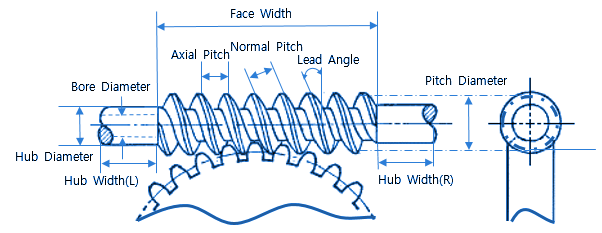
The formula for the pitch of a worm gear is given by the lead of the worm, which is the distance the worm advances in one revolution, divided by the number of threads on the worm. This can be expressed mathematically as: pitch = lead / number of threads.
Understanding Worm Gears
Worm gears are a type of gearset that consists of a worm and a gear. The worm is a cylindrical shaft with threads, similar to a screw, and the gear is a toothed wheel. When the worm rotates, it turns the gear, providing a speed reduction and torque increase. The pitch of the worm gear is a critical factor in determining the overall performance of the gearset.
- The pitch diameter of the worm is the diameter of the worm at the point where the threads are cut.
- The lead angle of the worm is the angle between the axis of the worm and the direction of the threads.
- The number of threads on the worm determines the pitch of the worm gear.
Calculating Pitch
To calculate the pitch of a worm gear, you need to know the lead of the worm and the number of threads. The lead can be calculated using the pitch diameter and the lead angle. The number of threads can be determined by counting the number of threads on the worm.
- The pitch is calculated by dividing the lead by the number of threads.
- The lead can be calculated using the pitch diameter and the lead angle.
- The number of threads can be determined by counting the number of threads on the worm.
Types of Worm Gears
There are several types of worm gears, each with its own unique characteristics. The most common types are single-thread, multi-thread, and self-locking worm gears. The pitch of the worm gear can vary depending on the type of worm gear.
- Single-thread worm gears have a single thread and are the most common type.
- Multi-thread worm gears have multiple threads and provide a higher speed reduction.
- Self-locking worm gears have a self-locking mechanism that prevents the gear from rotating backwards.
Applications of Worm Gears
Worm gears are used in a variety of applications, including machine tools, conveyor systems, and gearboxes. The pitch of the worm gear is an important factor in determining the performance of the gearset in these applications.
- Machine tools use worm gears to provide a high speed reduction and torque increase.
- Conveyor systems use worm gears to provide a smooth and consistent motion.
- Gearboxes use worm gears to provide a high speed reduction and torque increase.
Design Considerations
When designing a worm gear, there are several factors to consider, including the pitch, lead, and number of threads. The materials used to make the worm and gear are also important, as they can affect the performance and durability of the gearset.
- The pitch of the worm gear can affect the speed reduction and torque increase.
- The lead of the worm can affect the smoothness and consistency of the motion.
- The number of threads can affect the pitch and performance of the gearset.
Frequently Asked Questions (FAQs)
What are the key considerations in designing a worm and worm gear system?
When designing a worm and worm gear system, there are several key considerations that must be taken into account to ensure optimal performance and efficiency. One of the most important factors is the gear ratio, which determines the speed and torque of the output. A higher gear ratio can provide more torque, but it can also reduce the speed of the output. Another critical consideration is the material selection, as the choice of material for the worm and gear can affect the system's durability, wear resistance, and thermal conductivity. Additionally, the lubrication system is crucial in reducing friction and wear between the worm and gear teeth. Proper lubrication can help extend the lifespan of the system and prevent overheating. Furthermore, the design of the worm thread and the gear tooth profile must be carefully considered to ensure smooth engagement and disengagement, as well as to minimize backlash and vibration.
How do I calculate the torque and speed of a worm and worm gear system?
To calculate the torque and speed of a worm and worm gear system, you can use a combination of mathematical equations and calculators. The first step is to determine the input torque and speed of the worm, as well as the gear ratio of the system. Then, you can use the torque equation to calculate the output torque, which is given by the formula: Tout = Tin (gear ratio). Similarly, you can use the speed equation to calculate the output speed, which is given by the formula: Sout = Sin / (gear ratio). It is also important to consider the efficiency of the system, as it can affect the overall performance. Efficiency can be calculated using the formula: Efficiency = (output power / input power) 100%. By using these equations and calculators, you can quickly and easily determine the torque and speed of your worm and worm gear system.
What are the advantages and disadvantages of using a worm and worm gear system?
Worm and worm gear systems have several advantages that make them a popular choice for many applications. One of the main advantages is their high gear ratio, which can provide a significant reduction in speed and increase in torque. This makes them ideal for applications where a high torque output is required, such as in conveyors, pumps, and mixers. Another advantage is their compact design, which can be beneficial in applications where space is limited. Additionally, worm and worm gear systems are relatively low maintenance, as they have fewer moving parts compared to other types of gear systems. However, there are also some disadvantages to consider. One of the main disadvantages is their low efficiency, which can result in heat generation and energy loss. Another disadvantage is their sensitivity to alignment, which can affect the performance and lifespan of the system. Furthermore, worm and worm gear systems can be noisy, which can be a problem in applications where quiet operation is required.
How can I optimize the design of a worm and worm gear system for a specific application?
To optimize the design of a worm and worm gear system for a specific application, you must consider several factors, including the required torque and speed, the available space, and the desired lifespan. One of the most important steps is to select the right materials for the worm and gear, as this can affect the system's durability, wear resistance, and thermal conductivity. You must also consider the lubrication system, as proper lubrication can help extend the lifespan of the system and prevent overheating. Additionally, the design of the worm thread and the gear tooth profile must be carefully considered to ensure smooth engagement and disengagement, as well as to minimize backlash and vibration. Computer simulations and prototype testing can be used to validate the design and identify areas for improvement. By using design optimization techniques, such as finite element analysis and genetic algorithms, you can optimize the design of your worm and worm gear system for maximum performance, efficiency, and reliability.
Deja una respuesta
Entradas Relacionadas