
Stock Cost, Profit, Loss Calculator

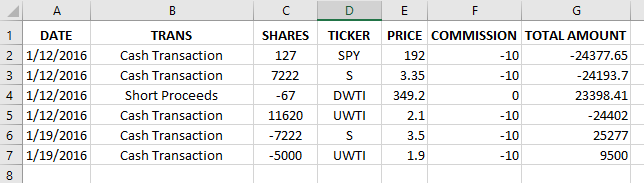
The Stock Cost, Profit, Loss Calculator is a valuable tool for investors and traders to accurately determine the financial outcomes of their investments. This calculator takes into account the initial investment, selling price, and other relevant factors to calculate the profit or loss made on a particular stock. By using this calculator, individuals can make informed decisions about their investments and gain a better understanding of the financial implications of buying and selling stocks. It provides a clear and concise way to evaluate investment performance. Accurate calculations are essential for successful trading and investment strategies.
- Understanding the Stock Cost, Profit, Loss Calculator
- How do you calculate profit loss on a stock?
- What is the formula for cost profit loss?
- How much would I have made on a stock?
- What is the profit and loss percentage of a stock?
-
Frequently Asked Questions (FAQs)
- What is the purpose of a Stock Cost, Profit, Loss Calculator and how does it work?
- How do I use a Stock Cost, Profit, Loss Calculator to calculate my investment returns?
- What are the benefits of using a Stock Cost, Profit, Loss Calculator for investment analysis?
- Can I use a Stock Cost, Profit, Loss Calculator to calculate the tax implications of my investments?
Understanding the Stock Cost, Profit, Loss Calculator
The Stock Cost, Profit, Loss Calculator is a tool designed to help investors and traders calculate the cost of their stock investments, as well as the profit or loss they may incur. This calculator takes into account various factors such as the purchase price, selling price, number of shares, and transaction fees to provide an accurate calculation of the investor!s return on investment.
How to Use the Stock Cost, Profit, Loss Calculator
Using the Stock Cost, Profit, Loss Calculator is relatively straightforward. Investors simply need to input the purchase price and selling price of their stock, as well as the number of shares they have bought or sold. The calculator will then automatically calculate the total cost, total revenue, and profit or loss. Additionally, investors can also input transaction fees such as brokerage fees and taxes to get a more accurate calculation of their return on investment.
Key Features of the Stock Cost, Profit, Loss Calculator
The Stock Cost, Profit, Loss Calculator has several key features that make it a useful tool for investors. These include:
| Feature | Description |
|---|---|
| Cost Calculation | Calculates the total cost of the stock investment, including transaction fees |
| Profit/Loss Calculation | Calculates the profit or loss incurred on the stock investment |
| Break-Even Analysis | Calculates the break-even point of the stock investment, where the total revenue equals the total cost |
Benefits of Using the Stock Cost, Profit, Loss Calculator
There are several benefits to using the Stock Cost, Profit, Loss Calculator. These include:
Improved accuracy: The calculator provides accurate calculations of the investor!s return on investment, taking into account various factors such as transaction fees and taxes.
Increased transparency: The calculator provides a clear breakdown of the costs and revenues associated with the stock investment, allowing investors to make informed decisions.
Enhanced decision-making: The calculator enables investors to make more informed decisions about their stock investments, by providing a detailed analysis of the profit or loss incurred.
Limitations of the Stock Cost, Profit, Loss Calculator
While the Stock Cost, Profit, Loss Calculator is a useful tool for investors, it has several limitations. These include:
Assumes a fixed purchase price and selling price: The calculator assumes that the investor has bought or sold the stock at a fixed price, which may not reflect the actual market conditions.
Does not account for dividend payments: The calculator does not take into account dividend payments, which can impact the investor!s return on investment.
Real-World Applications of the Stock Cost, Profit, Loss Calculator
The Stock Cost, Profit, Loss Calculator has several real-world applications. These include:
Investment analysis: The calculator can be used to analyze the profit or loss incurred on a stock investment, and to identify areas for improvement.
Portfolio management: The calculator can be used to manage a portfolio of stocks, by providing a detailed analysis of the costs and revenues associated with each stock investment.
How do you calculate profit loss on a stock?
:max_bytes(150000):strip_icc()/TermDefinitions_Profit_Loss_Ratio-c8ef191e850a41baa6cd27fa4f98d9be.jpg)
To calculate profit and loss on a stock, you need to know the purchase price, selling price, and the number of shares. The profit or loss is calculated by subtracting the purchase price from the selling price and then multiplying by the number of shares. If the result is positive, it's a profit, and if it's negative, it's a loss.
Understanding Stock Prices
To calculate profit and loss, you need to understand the different types of stock prices, including the bid price, ask price, and market price. The bid price is the highest price a buyer is willing to pay, while the ask price is the lowest price a seller is willing to accept. The market price is the current price at which the stock is trading. Here are some key points to consider:
- The bid price is used to calculate profit when selling a stock.
- The ask price is used to calculate loss when buying a stock.
- The market price is used to calculate the current value of a stock.
Calculating Profit and Loss
The profit and loss calculation is straightforward: profit = (selling price - purchase price) x number of shares. If the selling price is higher than the purchase price, it's a profit, and if it's lower, it's a loss. Here are some key points to consider:
- Profit is calculated by subtracting the purchase price from the selling price.
- Loss is calculated by subtracting the selling price from the purchase price.
- The number of shares is used to calculate the total profit or loss.
Considering Fees and Commissions
When calculating profit and loss, it's essential to consider fees and commissions charged by brokers and exchanges. These fees can eat into your profit or add to your loss. Here are some key points to consider:
- Brokerage fees are charged for buying and selling stocks.
- Exchange fees are charged for trading on certain exchanges.
- Other fees may include management fees, administrative fees, and taxes.
Using Stop-Loss Orders
A stop-loss order is a trading strategy used to limit losses. It's an order to sell a stock when it reaches a certain price, usually below the current market price. Here are some key points to consider:
- A stop-loss order can help limit losses in a falling market.
- A stop-loss order can also help lock in profits in a rising market.
- Stop-loss orders can be used in conjunction with take-profit orders to manage risk.
Managing Risk and Reward
When investing in stocks, it's essential to manage risk and reward. This involves setting clear goals, diversifying your portfolio, and using risk management strategies such as stop-loss orders and position sizing. Here are some key points to consider:
- Risk management is critical to successful stock investing.
- Diversification can help reduce risk by spreading investments across different assets.
- Position sizing involves adjusting the size of your trades to manage risk.
What is the formula for cost profit loss?
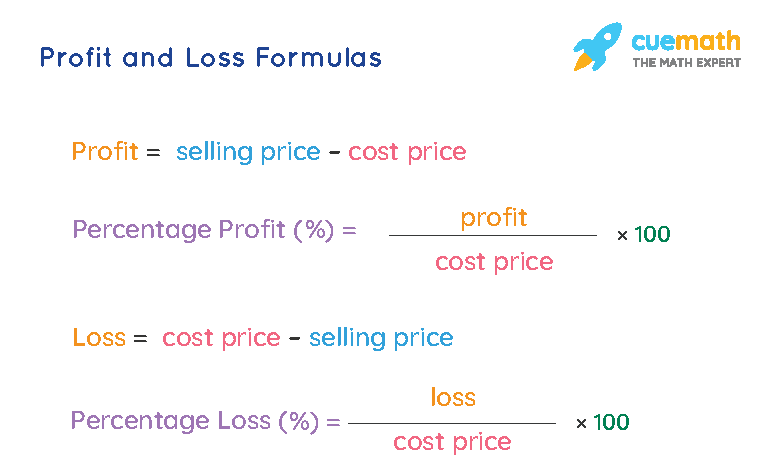
The formula for cost, profit, and loss is a fundamental concept in business and finance. It is used to determine the profit or loss made by a business or individual on a particular transaction or activity. The formula is: Selling Price (SP) - Cost Price (CP) = Profit (P) or Loss (L). If the result is positive, it is a profit, and if it is negative, it is a loss.
Understanding Cost Price
The cost price is the amount paid to acquire or produce a product or service. It includes the direct costs such as materials, labor, and overheads, as well as indirect costs such as marketing and distribution expenses. To calculate the cost price, you need to consider the following factors:
- The purchase price of the product or service
- The production costs such as labor, materials, and overheads
- The indirect costs such as marketing and distribution expenses
These factors help to determine the total cost of the product or service, which is essential for calculating the profit or loss.
Calculating Selling Price
The selling price is the amount at which a product or service is sold to the customer. It is essential to calculate the selling price correctly to ensure that the business makes a profit. To calculate the selling price, you need to consider the following factors:
- The cost price of the product or service
- The desired profit margin
- The market conditions such as competition and demand
These factors help to determine the optimal selling price that balances the need to make a profit with the need to be competitive in the market.
Determining Profit or Loss
The profit or loss is determined by subtracting the cost price from the selling price. If the result is positive, it is a profit, and if it is negative, it is a loss. To determine the profit or loss, you need to consider the following factors:
- The selling price of the product or service
- The cost price of the product or service
- The quantity sold
These factors help to determine the total profit or loss made by the business, which is essential for making informed decisions about pricing, production, and investment.
Importance of Cost Profit Loss Formula
The cost profit loss formula is essential for businesses to make informed decisions about pricing, production, and investment. It helps to determine the profitability of a product or service, which is critical for making decisions about whether to continue or discontinue a product line. To understand the importance of the cost profit loss formula, you need to consider the following factors:
- The impact on profitability
- The impact on cash flow
- The impact on investment decisions
These factors highlight the significance of the cost profit loss formula in business decision-making.
Real-World Applications of Cost Profit Loss Formula
The cost profit loss formula has numerous real-world applications in business and finance. It is used to determine the profitability of a product or service, to make informed decisions about pricing and production, and to evaluate the financial performance of a business. To understand the real-world applications of the cost profit loss formula, you need to consider the following factors:
- The use in financial reporting
- The use in pricing decisions
- The use in investment analysis
These factors demonstrate the practical applications of the cost profit loss formula in business and finance, and highlight its importance in making informed decisions.
How much would I have made on a stock?

To calculate how much you would have made on a stock, you need to consider the initial investment, the number of shares purchased, and the selling price. You can use a simple formula: (Selling price - Buying price) Number of shares. This will give you the total profit or loss. Additionally, you should consider dividends and fees that may have been paid or incurred during the holding period.
Understanding Stock Prices
To determine how much you would have made on a stock, you need to understand the stock prices at the time of purchase and sale. The buying price is the price at which you purchased the stock, while the selling price is the price at which you sold the stock. You can use the following formula to calculate the profit:
- Identify the buying price and selling price of the stock
- Calculate the price difference by subtracting the buying price from the selling price
- Multiply the price difference by the number of shares to get the total profit
Calculating Returns on Investment
To calculate the return on investment (ROI), you need to consider the initial investment and the total profit. The ROI is calculated by dividing the total profit by the initial investment and multiplying by 100. This will give you the percentage return on your investment. You can use the following steps to calculate the ROI:
- Calculate the total profit using the formula (Selling price - Buying price) Number of shares
- Divide the total profit by the initial investment
- Multiply the result by 100 to get the percentage return
Considering Dividends and Fees
When calculating how much you would have made on a stock, you need to consider dividends and fees that may have been paid or incurred during the holding period. Dividends are payments made by the company to its shareholders, while fees are charges incurred for buying or selling the stock. You can use the following steps to account for dividends and fees:
- Identify the dividends paid during the holding period
- Calculate the total dividends received
- Subtract any fees incurred from the total profit
Using Historical Stock Prices
To calculate how much you would have made on a stock, you can use historical stock prices. You can find historical stock prices on financial websites or by contacting the company directly. You can use the following steps to calculate the profit using historical stock prices:
- Identify the historical stock prices for the desired time period
- Calculate the buying price and selling price using the historical stock prices
- Calculate the total profit using the formula (Selling price - Buying price) Number of shares
Accounting for Taxes and Inflation
When calculating how much you would have made on a stock, you need to consider taxes and inflation. Taxes can reduce your total profit, while inflation can erode the purchasing power of your investment. You can use the following steps to account for taxes and inflation:
- Calculate the taxes owed on the total profit
- Subtract the taxes from the total profit
- Adjust the total profit for inflation using a cost-of-living index
What is the profit and loss percentage of a stock?
The profit and loss percentage of a stock is a measure of the return on investment (ROI) that an investor can expect from buying and selling a particular stock. It is calculated by comparing the current price of the stock to its previous price, and expressing the difference as a percentage. The profit and loss percentage can be used to evaluate the performance of a stock over a given period of time, and to compare the performance of different stocks.
What is the Formula for Calculating Profit and Loss Percentage?
The formula for calculating profit and loss percentage is: ((current price - previous price) / previous price) x 100. This formula can be used to calculate the profit or loss percentage of a stock over a given period of time. For example, if the current price of a stock is $50 and the previous price was $40, the profit percentage would be: ((50 - 40) / 40) x 100 = 25%. Some key points to consider when using this formula include:
- The current price and! previous price should be the same type of price (e.g. both closing prices or both opening prices).
- The time period over which the profit or loss percentage is calculated can affect the results.
- Dividends and splits can affect the profit and loss percentage calculation.
How to Calculate Profit Percentage?
To calculate the profit percentage of a stock, you need to know the buying price and the selling price. The formula for calculating profit percentage is: (profit / cost price) x 100. For example, if you buy a stock for $100 and sell it for $120, the profit percentage would be: (20 / 100) x 100 = 20%. Some key points to consider when calculating profit percentage include:
- The buying price and selling price should be the same type of price (e.g. both closing prices or both opening prices).
- Commissions and fees can affect the profit percentage calculation.
- Taxes can also affect the profit percentage calculation.
What are the Factors that Affect Profit and Loss Percentage?
There are several factors that can affect the profit and loss percentage of a stock, including market trends, company performance, and economic conditions. For example, if a company is performing well and the market is trending upward, the stock price may increase, resulting in a higher profit percentage. On the other hand, if the company is performing poorly and the market is trending downward, the stock price may decrease, resulting in a higher loss percentage. Some key factors that can affect profit and loss percentage include:
- Earnings per share (EPS) and dividend yield can affect the profit and loss percentage.
- Industry trends and competitive landscape can also affect the profit and loss percentage.
- Interest rates and inflation can affect the profit and loss percentage.
How to Use Profit and Loss Percentage to Evaluate Stock Performance?
The profit and loss percentage can be used to evaluate the performance of a stock over a given period of time. For example, if a stock has a high profit percentage over a given period, it may indicate that the stock is performing well and is a good investment. On the other hand, if a stock has a high loss percentage over a given period, it may indicate that the stock is performing poorly and is a bad investment. Some key points to consider when using profit and loss percentage to evaluate stock performance include:
- The time period over which the profit or loss percentage is calculated can affect the results.
- Risk tolerance and investment goals can affect the profit and loss percentage evaluation.
- Diversification and asset allocation can also affect the profit and loss percentage evaluation.
What are the Limitations of Profit and Loss Percentage?
There are several limitations to using profit and loss percentage to evaluate stock performance, including volatile markets, irregular trading, and accounting irregularities. For example, if a stock is traded infrequently, the profit and loss percentage may not accurately reflect the stock's performance. Some key limitations to consider include:
- Liquidity and trading volume can affect the profit and loss percentage calculation.
- Stock splits and dividends can affect the profit and loss percentage calculation.
- Accounting errors and fraud can also affect the profit and loss percentage calculation.
Frequently Asked Questions (FAQs)
What is the purpose of a Stock Cost, Profit, Loss Calculator and how does it work?
A Stock Cost, Profit, Loss Calculator is a tool designed to help investors and traders calculate the cost of their stock investments, including the profit or loss they may incur. This calculator typically takes into account various factors such as the purchase price, selling price, number of shares, and transaction fees. By entering these values, the calculator can provide a detailed breakdown of the total cost, total revenue, and net profit or net loss. The primary purpose of this calculator is to help users make informed decisions about their investments by providing a clear and accurate picture of their financial gains or losses. With this information, users can adjust their investment strategies to maximize profits and minimize losses.
How do I use a Stock Cost, Profit, Loss Calculator to calculate my investment returns?
To use a Stock Cost, Profit, Loss Calculator, you will typically need to enter several key pieces of information, including the purchase price of the stock, the selling price, the number of shares you own, and any transaction fees associated with the trade. You may also need to enter the date of purchase and date of sale to calculate the holding period and any applicable taxes. Once you have entered this information, the calculator will use a formula to calculate the total cost, total revenue, and net profit or net loss. The calculator may also provide additional information, such as the percentage return on investment and the break-even point. By using a Stock Cost, Profit, Loss Calculator, you can quickly and easily calculate your investment returns and make informed decisions about your investment portfolio.
What are the benefits of using a Stock Cost, Profit, Loss Calculator for investment analysis?
There are several benefits to using a Stock Cost, Profit, Loss Calculator for investment analysis. One of the primary advantages is that it allows you to quickly and easily calculate the profit or loss of your investments, taking into account various factors such as transaction fees and taxes. This can help you to maximize profits and minimize losses by identifying areas where you can improve your investment strategy. Additionally, a Stock Cost, Profit, Loss Calculator can help you to track your investment performance over time, providing valuable insights into your investment portfolio. By using a calculator, you can also reduce errors and save time, as the calculations are performed automatically. Overall, a Stock Cost, Profit, Loss Calculator is a valuable tool for anyone looking to optimize their investment strategy and achieve their financial goals.
Can I use a Stock Cost, Profit, Loss Calculator to calculate the tax implications of my investments?
Yes, many Stock Cost, Profit, Loss Calculators can be used to calculate the tax implications of your investments. These calculators typically take into account various tax factors, such as the capital gains tax rate, tax brackets, and holding periods. By entering this information, the calculator can provide a detailed breakdown of the tax liability associated with your investments, including the amount of taxes owed and the net profit or net loss after taxes. This can help you to plan your taxes and minimize your tax liability, ensuring that you maximize your after-tax returns. Additionally, some calculators may also provide information on tax strategies, such as harvesting losses or deferring gains, to help you optimize your tax situation. By using a Stock Cost, Profit, Loss Calculator to calculate the tax implications of your investments, you can make informed decisions about your investment portfolio and reduce your tax burden.
Deja una respuesta
Entradas Relacionadas