
Sprocket Center Distance Equation and Calculator

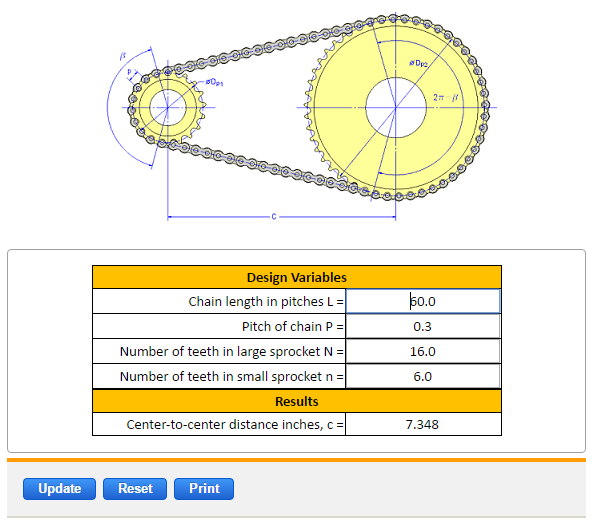
The Sprocket Center Distance equation is a crucial formula in mechanical engineering, particularly in the design and calculation of systems involving gears and sprockets. It determines the distance between the centers of two sprockets, which is essential for ensuring proper alignment and efficient power transmission. By using the Sprocket Center Distance equation and calculator, engineers and designers can accurately calculate this distance, taking into account the pitch circle diameters and the number of teeth on each sprocket, to achieve optimal system performance and reliability. This calculation helps in avoiding potential issues.
- Sprocket Center Distance Equation and Calculator
- How to calculate sprocket center distance?
- What is the center distance between sprockets?
- What is the formula for a sprocket?
- How do you calculate the PCD of a sprocket?
-
Frequently Asked Questions (FAQs)
- What is the Sprocket Center Distance Equation and how is it calculated?
- How does the Sprocket Center Distance Calculator work and what are its benefits?
- What are the key factors to consider when using the Sprocket Center Distance Equation and Calculator?
- How can the Sprocket Center Distance Equation and Calculator be applied in real-world scenarios?
Sprocket Center Distance Equation and Calculator
The Sprocket Center Distance Equation and Calculator is a fundamental tool in the design and analysis of sprocket systems, which are widely used in various industries, including mechanical engineering, manufacturing, and automotive. The sprocket center distance is the distance between the centers of two sprockets, and it plays a critical role in determining the pitch circle diameter, chain length, and sprocket tooth profile.
Introduction to Sprocket Center Distance
The sprocket center distance is an essential parameter in the design of sprocket systems, as it affects the chain tension, sprocket wear, and system efficiency. The sprocket center distance is typically calculated using the pitch circle diameter and the number of teeth on each sprocket. The equation for calculating the sprocket center distance is: C = (D1 + D2) / 2, where C is the sprocket center distance, D1 is the pitch circle diameter of the first sprocket, and D2 is the pitch circle diameter of the second sprocket.
Sprocket Center Distance Equation
The sprocket center distance equation is a simple yet powerful tool for designing and analyzing sprocket systems. The equation takes into account the pitch circle diameter, number of teeth, and chain pitch to calculate the sprocket center distance. The equation is: C = (D1 + D2) / 2, where C is the sprocket center distance, D1 is the pitch circle diameter of the first sprocket, and D2 is the pitch circle diameter of the second sprocket. The equation can be used to calculate the sprocket center distance for both simple and compound sprocket systems.
Calculator for Sprocket Center Distance
A calculator for sprocket center distance is a useful tool for designers and engineers to quickly calculate the sprocket center distance for various sprocket configurations. The calculator typically requires input parameters such as pitch circle diameter, number of teeth, and chain pitch, and then calculates the sprocket center distance using the equation: C = (D1 + D2) / 2. The calculator can be used to optimize the sprocket design and chain selection for various applications.
Applications of Sprocket Center Distance
The sprocket center distance has a wide range of applications in various industries, including mechanical engineering, manufacturing, and automotive. The sprocket center distance is used to design and analyze sprocket systems, chain drives, and gear systems. The sprocket center distance is also used to optimize the system efficiency, chain life, and sprocket wear.
Importance of Sprocket Center Distance
The sprocket center distance is a critical parameter in the design and analysis of sprocket systems, as it affects the chain tension, sprocket wear, and system efficiency. A correct calculation of the sprocket center distance is essential to ensure proper chain alignment, reduced wear, and increased system life. The sprocket center distance is also used to optimize the sprocket design and chain selection for various applications.
| Parameter | Description |
|---|---|
| Pitch Circle Diameter | The diameter of the pitch circle of a sprocket |
| Number of Teeth | The number of teeth on a sprocket |
| Chain Pitch | The distance between the centers of two adjacent links in a chain |
| Sprocket Center Distance | The distance between the centers of two sprockets |
| System Efficiency | The efficiency of a sprocket system, including chain life and sprocket wear |
How to calculate sprocket center distance?
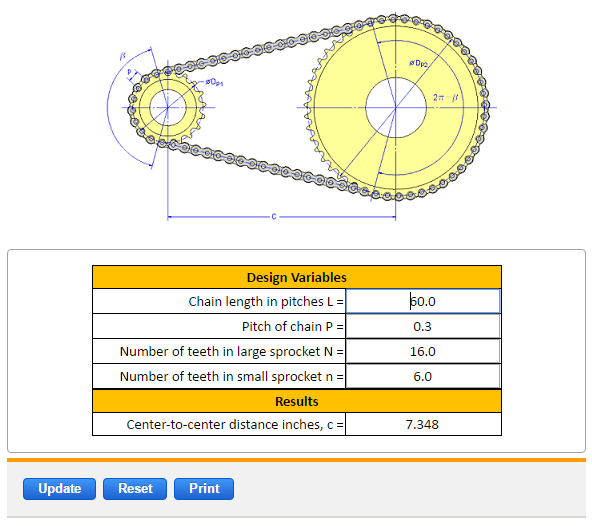
To calculate the sprocket center distance, you need to consider the pitch circle diameter of the sprockets, the chain pitch, and the number of teeth on each sprocket. The sprocket center distance is the distance between the centers of the two sprockets, and it is a critical factor in determining the chain length and tension. The sprocket center distance can be calculated using the following formula: sprocket center distance = (pitch circle diameter of driving sprocket + pitch circle diameter of driven sprocket) / 2 + (chain pitch x number of teeth on driven sprocket).
Understanding Sprocket Terminology
Understanding the terminology related to sprockets is essential to calculate the sprocket center distance. The pitch circle diameter is the diameter of the circle that passes through the center of the sprocket teeth, and it is used to calculate the sprocket center distance. The chain pitch is the distance between the centers of two adjacent chain pins, and it is a critical factor in determining the chain length. Some key points to consider are:
- The pitch circle diameter is the diameter of the circle that passes through the center of the sprocket teeth.
- The chain pitch is the distance between the centers of two adjacent chain pins.
- The number of teeth on each sprocket affects the sprocket center distance and the chain length.
Calculating Pitch Circle Diameter
The pitch circle diameter is calculated using the number of teeth and the pitch of the sprocket. The pitch is the distance between the centers of two adjacent sprocket teeth, and it is typically measured in inches or millimeters. The pitch circle diameter can be calculated using the following formula: pitch circle diameter = (number of teeth x pitch) / pi. Some key points to consider are:
- The number of teeth affects the pitch circle diameter and the sprocket center distance.
- The pitch is the distance between the centers of two adjacent sprocket teeth.
- The pitch circle diameter is used to calculate the sprocket center distance.
Understanding Chain Pitch and Length
The chain pitch and length are critical factors in determining the sprocket center distance. The chain pitch is the distance between the centers of two adjacent chain pins, and it is typically measured in inches or millimeters. The chain length is the total length of the chain, including the chain pins and the chain plates. Some key points to consider are:
- The chain pitch affects the sprocket center distance and the chain length.
- The chain length is the total length of the chain, including the chain pins and the chain plates.
- The chain pitch and length must be carefully calculated to ensure proper chain tension and sprocket alignment.
Factors Affecting Sprocket Center Distance
Several factors affect the sprocket center distance, including the pitch circle diameter, chain pitch, and number of teeth on each sprocket. The sprocket center distance must be carefully calculated to ensure proper chain tension and sprocket alignment. Some key points to consider are:
- The pitch circle diameter affects the sprocket center distance.
- The chain pitch affects the sprocket center distance and the chain length.
- The number of teeth on each sprocket affects the sprocket center distance and the chain length.
Best Practices for Sprocket Installation
Proper sprocket installation is critical to ensure chain tension and sprocket alignment. The sprockets should be installed with the correct sprocket center distance, and the chain should be properly tensioned to prevent chain wear and sprocket damage. Some key points to consider are:
- The sprockets should be installed with the correct sprocket center distance.
- The chain should be properly tensioned to prevent chain wear and sprocket damage.
- The sprockets and chain should be regularly inspected and maintained to ensure proper chain tension and sprocket alignment.
What is the center distance between sprockets?
The center distance between sprockets is the distance between the centers of two or more sprockets in a chain drive system. This distance is critical in determining the tension and wear of the chain, as well as the overall efficiency of the system. The center distance is typically measured between the centers of the sprockets and is usually expressed in units of length, such as inches or millimeters.
Calculating Center Distance
To calculate the center distance between sprockets, you need to know the pitch diameter of each sprocket and the number of teeth on each sprocket. The center distance can be calculated using the following formula: Center Distance = (Pitch Diameter of Large Sprocket + Pitch Diameter of Small Sprocket) / 2. Here are the steps to calculate the center distance:
- Measure the pitch diameter of each sprocket using a caliper or other measuring device.
- Count the number of teeth on each sprocket to determine the gear ratio.
- Use the formula to calculate the center distance, plugging in the values for the pitch diameters and gear ratio.
Factors Affecting Center Distance
Several factors can affect the center distance between sprockets, including the type of chain, sprocket material, and system alignment. The chain type can affect the center distance due to variations in chain width and pitch. The sprocket material can also affect the center distance, as different materials have different coefficients of friction. Here are some factors that can affect the center distance:
- Chain type: Different types of chains have different widths and pitches, which can affect the center distance.
- Sprocket material: The material of the sprockets can affect the center distance due to variations in coefficients of friction.
- System alignment: The alignment of the sprockets and shafts can affect the center distance and overall system efficiency.
Importance of Center Distance
The center distance between sprockets is critical in determining the efficiency and reliability of a chain drive system. A properly aligned system with the correct center distance can minimize wear and maximize efficiency, while a misaligned system can lead to premature wear and reduced efficiency. Here are the importance of center distance:
- Efficiency: The center distance affects the efficiency of the system, as a properly aligned system can minimize energy loss.
- Reliability: The center distance affects the reliability of the system, as a misaligned system can lead to premature wear and system failure.
- Wear: The center distance affects the wear of the chain and sprockets, as a properly aligned system can minimize wear.
Measuring Center Distance
Measuring the center distance between sprockets requires precision measuring instruments, such as calipers or micrometers. The measurement should be taken between the centers of the sprockets, and care should be taken to ensure that the sprockets are properly aligned. Here are the steps to measure the center distance:
- Use a caliper or micrometer to measure the distance between the centers of the sprockets.
- Ensure that the sprockets are properly aligned before taking the measurement.
- Take multiple measurements to ensure accuracy and reliability.
Design Considerations
When designing a chain drive system, several design considerations must be taken into account, including the center distance between sprockets. The designer must consider the type of chain, sprocket material, and system alignment when determining the center distance. Here are the design considerations:
- Chain type: The designer must select a chain type that is suitable for the application and load requirements.
- Sprocket material: The designer must select a sprocket material that is suitable for the application and load requirements.
- System alignment: The designer must ensure that the sprockets and shafts are properly aligned to minimize wear and maximize efficiency.
What is the formula for a sprocket?
The formula for a sprocket is related to its pitch circle diameter, which is the diameter of the circle that passes through the center of the teeth. The formula is: pitch circle diameter = (number of teeth x pitch) / (pi). This formula is used to calculate the diameter of the sprocket, which is essential in determining its speed ratio and torque.
Understanding Sprocket Geometry
The geometry of a sprocket is crucial in determining its efficiency and performance. The pitch circle diameter is the most important dimension in sprocket geometry, as it determines the speed ratio and torque of the sprocket. The formula for calculating the pitch circle diameter is: pitch circle diameter = (number of teeth x pitch) / (pi). Here are some key points to consider:
- The number of teeth on the sprocket affects its speed ratio and torque.
- The pitch of the sprocket determines the distance between teeth and affects its efficiency.
- The pi value is a constant that represents the ratio of a circle's circumference to its diameter.
Calculating Sprocket Speed Ratio
The speed ratio of a sprocket is calculated by dividing the input speed by the output speed. The formula for calculating the speed ratio is: speed ratio = (input speed) / (output speed). The speed ratio is affected by the number of teeth on the sprocket and the pitch circle diameter. Here are some key points to consider:
- The input speed is the speed at which the sprocket is driven.
- The output speed is the speed at which the sprocket drives the output shaft.
- The speed ratio affects the torque and efficiency of the sprocket.
Determining Sprocket Torque
The torque of a sprocket is calculated by multiplying the force applied to the sprocket by the radius of the sprocket. The formula for calculating the torque is: torque = (force x radius). The torque is affected by the number of teeth on the sprocket and the pitch circle diameter. Here are some key points to consider:
- The force applied to the sprocket affects its torque and efficiency.
- The radius of the sprocket affects its torque and speed ratio.
- The torque affects the efficiency and performance of the sprocket.
Understanding Sprocket Materials
The materials used to manufacture sprockets can affect their efficiency, performance, and durability. Steel and aluminum are common materials used to manufacture sprockets. The strength and density of the material affect the torque and speed ratio of the sprocket. Here are some key points to consider:
- The strength of the material affects its torque and efficiency.
- The density of the material affects its weight and balance.
- The corrosion resistance of the material affects its durability and maintenance.
Designing Sprockets for Specific Applications
Sprockets can be designed for specific applications, such as bicycles, motorcycles, and industrial machinery. The design of the sprocket affects its efficiency, performance, and durability. The number of teeth, pitch circle diameter, and materials used can be optimized for specific applications. Here are some key points to consider:
- The number of teeth affects the speed ratio and torque of the sprocket.
- The pitch circle diameter affects the efficiency and performance of the sprocket.
- The materials used affect the durability and maintenance of the sprocket.
How do you calculate the PCD of a sprocket?
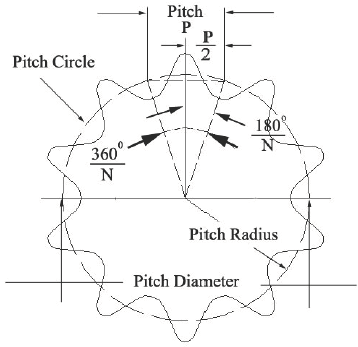
To calculate the Pitch Circle Diameter (PCD) of a sprocket, you need to understand the relationship between the number of teeth, pitch, and diameter of the sprocket. The PCD is the diameter of the circle that passes through the centers of the teeth on a sprocket. It is an important dimension in designing and manufacturing sprockets, as it determines the meshing of the sprocket with a chain or belt.
Understanding Sprocket Dimensions
The calculation of PCD involves understanding the sprocket dimensions, including the number of teeth, pitch, and diameter. The pitch is the distance between the centers of two adjacent teeth, and it is usually measured in inches or millimeters. The diameter of the sprocket is the distance from one side of the sprocket to the other, passing through its center. To calculate the PCD, you need to know the number of teeth and the pitch of the sprocket. Here are the steps to calculate the PCD:
- Determine the number of teeth on the sprocket
- Measure the pitch of the sprocket
- Use a calculator to calculate the PCD using the formula: PCD = (Number of teeth x Pitch) / 3.14159
Importance of Pitch Circle Diameter
The Pitch Circle Diameter (PCD) is a critical dimension in designing and manufacturing sprockets. It determines the meshing of the sprocket with a chain or belt, and it affects the efficiency and reliability of the system. A correct PCD ensures that the sprocket and chain or belt mesh properly, reducing wear and tear and noise. Here are some reasons why PCD is important:
- Meshing: PCD determines the meshing of the sprocket with a chain or belt
- Efficiency: A correct PCD ensures efficient power transmission
- Reliability: PCD affects the reliability of the system, reducing wear and tear and noise
Calculating PCD for Different Sprocket Types
The calculation of PCD varies depending on the type of sprocket. For example, simplex sprockets have a single row of teeth, while duplex sprockets have two rows of teeth. The calculations for these sprockets are different, and they require specialized formulas. Here are some steps to calculate PCD for different sprocket types:
- Determine the type of sprocket (simplex, duplex, etc.)
- Use the appropriate formula to calculate the PCD
- Verify the calculation using a calculator or CAD software
Using CAD Software to Calculate PCD
CAD software can be used to calculate the PCD of a sprocket quickly and accurately. These software programs have built-in formulas and algorithms that can calculate the PCD based on the sprocket dimensions. Here are some steps to use CAD software to calculate PCD:
- Create a 2D drawing of the sprocket using CAD software
- Input the sprocket dimensions, including the number of teeth and pitch
- Run the calculation using the CAD software's built-in formulas
Tolerancing and Precision in PCD Calculation
Tolerancing and precision are critical in calculating the PCD of a sprocket. Small errors in calculation can result in inaccurate PCD values, which can affect the performance and reliability of the system. Here are some considerations for tolerancing and precision in PCD calculation:
- Use precise measurements and calculations to minimize errors
- Apply tolerancing principles to ensure compatibility with other system components
- Verify the calculation using multiple methods to ensure accuracy
Frequently Asked Questions (FAQs)
What is the Sprocket Center Distance Equation and how is it calculated?
The Sprocket Center Distance Equation is a mathematical formula used to calculate the distance between the centers of two sprockets in a chain drive system. This equation is crucial in ensuring that the chain is properly tensioned and that the system operates efficiently. The equation takes into account the pitch circle diameter of each sprocket, as well as the number of teeth on each sprocket. By using this equation, engineers can determine the optimal center distance between the sprockets, which is essential for minimizing wear and tear on the chain and other system components. The equation is typically represented as: Center Distance = (Pitch Circle Diameter of Sprocket 1 + Pitch Circle Diameter of Sprocket 2)/2 + (Number of Teeth on Sprocket 1 - Number of Teeth on Sprocket 2)/2. By using this equation, engineers can ensure that the chain drive system is properly designed and functions as intended.
How does the Sprocket Center Distance Calculator work and what are its benefits?
The Sprocket Center Distance Calculator is a tool used to simplify the process of calculating the center distance between two sprockets. This calculator uses the Sprocket Center Distance Equation to provide an accurate calculation of the center distance, taking into account the pitch circle diameter and number of teeth on each sprocket. The calculator is typically used by engineers and designers to quickly and easily determine the optimal center distance for a chain drive system. The benefits of using the calculator include increased accuracy, reduced calculation time, and improved system design. By using the calculator, engineers can ensure that the chain drive system is properly designed, which can lead to increased efficiency, reduced maintenance costs, and improved overall performance. Additionally, the calculator can help to reduce errors and improve safety by providing a reliable and accurate calculation of the center distance.
What are the key factors to consider when using the Sprocket Center Distance Equation and Calculator?
When using the Sprocket Center Distance Equation and Calculator, there are several key factors to consider. First, it is essential to ensure that the pitch circle diameter and number of teeth on each sprocket are accurate and up-to-date. This information can typically be found on the manufacturer's specifications or on the sprocket itself. Additionally, engineers should consider the type of chain being used, as this can affect the calculation. For example, roller chains and toothed chains have different characteristics that can impact the center distance calculation. It is also important to consider the operating conditions of the chain drive system, including the speed, load, and environmental factors. By taking these factors into account, engineers can ensure that the calculation is accurate and reliable, and that the chain drive system is properly designed. Furthermore, engineers should also consider safety factors and design tolerances to ensure that the system is safe and reliable.
How can the Sprocket Center Distance Equation and Calculator be applied in real-world scenarios?
The Sprocket Center Distance Equation and Calculator can be applied in a variety of real-world scenarios, including the design and installation of chain drive systems in industrial machinery, automotive applications, and bicycle transmissions. For example, in the manufacturing industry, engineers can use the equation and calculator to design and optimize chain drive systems for conveyor belts, pumps, and gearboxes. In automotive applications, the equation and calculator can be used to design and optimize the transmission system, including the gear ratios and chain tension. In bicycle transmissions, the equation and calculator can be used to optimize the chain length and gear ratios for efficient pedaling and smooth shifting. By applying the Sprocket Center Distance Equation and Calculator in these scenarios, engineers can ensure that the chain drive system is properly designed, efficient, and reliable, which can lead to increased productivity, reduced maintenance costs, and improved overall performance.
Deja una respuesta
Entradas Relacionadas