
Solid Shaft Equivalent of Hollow Shaft Strength Formula and Calculator

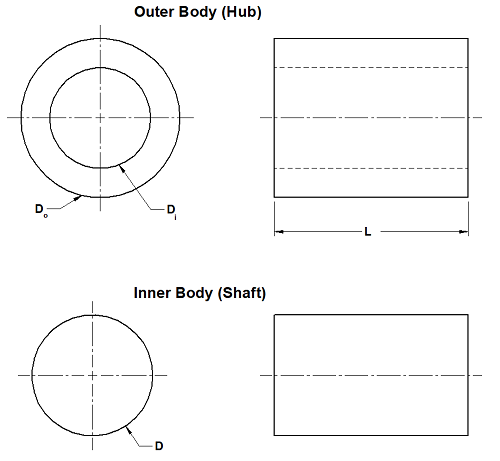
The strength of a hollow shaft is often compared to that of a solid shaft to determine its equivalent strength. This comparison is crucial in engineering designs where weight reduction is a priority, but strength and durability must be maintained. The solid shaft equivalent of a hollow shaft strength formula provides a way to calculate and compare the strength of both types of shafts. This article will delve into the formula and provide a calculator to help engineers and designers make informed decisions about shaft selection and design. The calculator will enable easy comparison and selection of shafts.
- Solid Shaft Equivalent of Hollow Shaft Strength Formula and Calculator
- What is the strength comparison of solid and hollow shaft?
- What is the equation to calculate the shear strength of solid and hollow shaft?
- How to calculate shaft strength?
- How do you calculate the weight of a solid shaft?
-
Frequently Asked Questions (FAQs)
- What is the Solid Shaft Equivalent of Hollow Shaft Strength Formula and Calculator?
- How does the Solid Shaft Equivalent of Hollow Shaft Strength Formula and Calculator work?
- What are the advantages of using the Solid Shaft Equivalent of Hollow Shaft Strength Formula and Calculator?
- What are the limitations of the Solid Shaft Equivalent of Hollow Shaft Strength Formula and Calculator?
Solid Shaft Equivalent of Hollow Shaft Strength Formula and Calculator
The solid shaft equivalent of a hollow shaft is a crucial concept in engineering, particularly in the design of rotating machinery, such as gears, shafts, and axles. The strength formula and calculator for solid shaft equivalent of hollow shaft are used to determine the equivalent diameter of a solid shaft that can withstand the same torque and bending moment as a hollow shaft. This is essential in ensuring the structural integrity and reliability of the shaft.
Introduction to Hollow Shaft Strength Formula
The hollow shaft strength formula is used to calculate the maximum allowable torque and bending moment that a hollow shaft can withstand without failing. The formula takes into account the outer diameter, inner diameter, and material properties of the shaft. The hollow shaft strength formula is given by:
T = (π/16) (d_o^4 - d_i^4) (τ (1 + (d_i/d_o)^2))
where T is the maximum allowable torque, d_o is the outer diameter, d_i is the inner diameter, and τ is the material yield strength.
Derivation of Solid Shaft Equivalent Formula
The solid shaft equivalent formula is derived by equating the polar moment of inertia of the hollow shaft to that of a solid shaft. The polar moment of inertia is a measure of the shaft's resistance to torsion. The formula for the solid shaft equivalent is given by:
d_s = √((d_o^4 - d_i^4) / (d_o^2 + d_i^2))
where d_s is the equivalent diameter of the solid shaft.
Calculator for Solid Shaft Equivalent of Hollow Shaft
The calculator for solid shaft equivalent of hollow shaft is a tool used to determine the equivalent diameter of a solid shaft that can withstand the same torque and bending moment as a hollow shaft. The calculator takes into account the outer diameter, inner diameter, and material properties of the shaft. The calculator can be used to design and optimize the shaft for various applications.
Advantages of Solid Shaft Equivalent of Hollow Shaft
The solid shaft equivalent of a hollow shaft offers several advantages, including:
| Advantages | Description |
|---|---|
| Increased Strength | The solid shaft equivalent of a hollow shaft can withstand higher torque and bending moment than the original hollow shaft. |
| Improved Reliability | The solid shaft equivalent of a hollow shaft is less prone to fatigue failure and stress concentrations. |
| Reduced Weight | The solid shaft equivalent of a hollow shaft can be lighter than the original hollow shaft, while maintaining the same strength and stiffness. |
Applications of Solid Shaft Equivalent of Hollow Shaft
The solid shaft equivalent of a hollow shaft has various applications in engineering, including:
| Applications | Description |
|---|---|
| Aerospace | The solid shaft equivalent of a hollow shaft is used in aircraft engines and helicopter transmissions. |
| Automotive | The solid shaft equivalent of a hollow shaft is used in automotive transmissions and driveshafts. |
| Industrial | The solid shaft equivalent of a hollow shaft is used in industrial machinery, such as pumps and gearboxes. |
What is the strength comparison of solid and hollow shaft?

The strength comparison of solid and hollow shafts is a critical aspect in engineering design, particularly in the selection of materials and structures for various applications. A solid shaft is a cylindrical rod with a solid cross-section, whereas a hollow shaft has a tubular shape with a hollow interior. The strength of a shaft is determined by its ability to withstand stress, strain, and load without failing.
Introduction to Solid and Hollow Shafts
The design of solid and hollow shafts involves considering factors such as material properties, geometric configuration, and loading conditions. A solid shaft is often used in applications where high torque and low speed are required, such as in power transmission systems. In contrast, hollow shafts are used in applications where lightweight and high strength-to-weight ratio are essential, such as in aerospace and automotive industries. Some key factors to consider when comparing solid and hollow shafts include:
- Material selection: The choice of material affects the strength, stiffness, and density of the shaft.
- Cross-sectional area: The area of the shaft's cross-section influences its resistance to bending and torsion.
- Wall thickness: The thickness of the hollow shaft's wall affects its strength and stability.
Advantages of Hollow Shafts
Hollow shafts offer several advantages over solid shafts, including reduced weight, increased strength-to-weight ratio, and improved corrosion resistance. The hollow interior of the shaft also provides a conduit for fluid or gas transmission. Additionally, hollow shafts can be manufactured using various techniques, such as extrusion or welding. Some benefits of hollow shafts include:
- Weight reduction: Hollow shafts are lighter than solid shafts, making them easier to handle and transport.
- Increased strength: The hollow design can provide additional strength and stability due to the distribution of material.
- Improved corrosion resistance: The hollow interior can be protected from corrosion using coatings or linings.
Disadvantages of Hollow Shafts
Despite their advantages, hollow shafts also have some disadvantages, including reduced stiffness, increased complexity, and higher manufacturing costs. The hollow design can also make the shaft more prone to buckling and instability. Some drawbacks of hollow shafts include:
- Reduced stiffness: Hollow shafts can be more flexible than solid shafts, making them less resistant to bending.
- Increased complexity: The hollow design can require more complex manufacturing processes and assembly techniques.
- Higher manufacturing costs: Hollow shafts can be more expensive to produce than solid shafts due to the additional manufacturing steps.
Applications of Solid and Hollow Shafts
Solid and hollow shafts are used in a wide range of applications, including power transmission, aerospace, automotive, and industrial systems. The choice of shaft type depends on the specific requirements of the application, including load, speed, and environmental conditions. Some examples of applications include:
- Power transmission: Solid shafts are often used in power transmission systems, such as gearboxes and transmissions.
- Aerospace: Hollow shafts are used in aerospace applications, such as aircraft and spacecraft, due to their high strength-to-weight ratio.
- Automotive: Hollow shafts are used in automotive applications, such as drive shafts and propeller shafts, due to their lightweight and high strength.
Design Considerations for Solid and Hollow Shafts
The design of solid and hollow shafts requires careful consideration of material properties, geometric configuration, and loading conditions. The shaft must be able to withstand stress, strain, and load without failing, while also meeting performance and safety requirements. Some key design considerations include:
- Material selection: The choice of material affects the strength, stiffness, and density of the shaft.
- Cross-sectional area: The area of the shaft's cross-section influences its resistance to bending and torsion.
- Wall thickness: The thickness of the hollow shaft's wall affects its strength and stability.
What is the equation to calculate the shear strength of solid and hollow shaft?

The equation to calculate the shear strength of solid and hollow shafts is based on the torque and the polar moment of inertia of the shaft. The formula for calculating the shear stress in a solid shaft is τ = T r / J, where τ is the shear stress, T is the torque, r is the radius of the shaft, and J is the polar moment of inertia. For hollow shafts, the formula is τ = T r / J, where J is calculated based on the outer and inner radii of the shaft.
Introduction to Shear Strength Calculation
The calculation of shear strength is crucial in designing and analyzing shafts and other mechanical components. The equation for shear strength is based on the material properties and the geometric parameters of the shaft. To calculate the shear strength, the following steps are necessary:
- Determine the torque applied to the shaft
- Calculate the polar moment of inertia of the shaft
- Use the formula for shear stress to calculate the shear strength
Understanding Polar Moment of Inertia
The polar moment of inertia is a critical parameter in calculating the shear strength of a shaft. It is a measure of the resistance of the shaft to torsional deformation. The polar moment of inertia is calculated based on the geometric parameters of the shaft, such as the radius and the wall thickness. For solid shafts, the polar moment of inertia is calculated using the formula J = π d^4 / 32, where d is the diameter of the shaft. For hollow shafts, the formula is J = π (d_o^4 - d_i^4) / 32, where d_o and d_i are the outer and inner diameters of the shaft, respectively.
Shear Strength of Solid Shafts
The shear strength of solid shafts is calculated using the formula τ = T r / J, where τ is the shear stress, T is the torque, r is the radius of the shaft, and J is the polar moment of inertia. The material properties, such as the yield strength and the ultimate strength, are also important factors in determining the shear strength of the shaft. The following steps are necessary to calculate the shear strength of solid shafts:
- Determine the torque applied to the shaft
- Calculate the polar moment of inertia of the shaft
- Use the formula for shear stress to calculate the shear strength
Shear Strength of Hollow Shafts
The shear strength of hollow shafts is calculated using the formula τ = T r / J, where J is calculated based on the outer and inner radii of the shaft. The wall thickness of the shaft is also an important factor in determining the shear strength. The following steps are necessary to calculate the shear strength of hollow shafts:
- Determine the torque applied to the shaft
- Calculate the polar moment of inertia of the shaft
- Use the formula for shear stress to calculate the shear strength
Importance of Shear Strength in Shaft Design
The shear strength is a critical factor in designing and analyzing shafts and other mechanical components. The shear strength determines the maximum torque that a shaft can withstand without failing. The materials used in shaft design, such as steels and aluminum alloys, have different shear strengths and must be selected based on the application and the required strength. The following factors are important in determining the shear strength of a shaft:
- Material properties, such as yield strength and ultimate strength
- Geometric parameters, such as radius and wall thickness
- Torque applied to the shaft
How to calculate shaft strength?
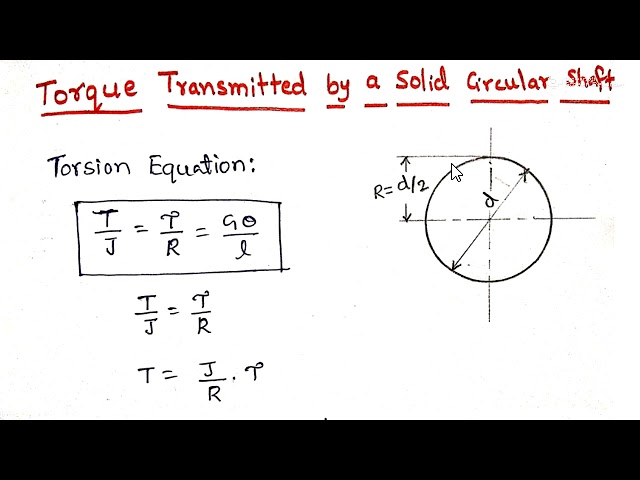
The calculation of shaft strength is a critical aspect of engineering design, as it ensures the structural integrity of rotating or stationary shafts under various loads. To calculate shaft strength, engineers must consider factors such as material properties, geometry, and loading conditions. The first step is to determine the maximum stress that the shaft will experience, which can be due to tension, compression, torsion, or bending. This is typically done using finite element analysis or classical mechanics formulas. Once the maximum stress is determined, the yield strength and ultimate strength of the material must be considered to ensure that the shaft does not fail.
Understanding Material Properties
When calculating shaft strength, it is essential to understand the material properties of the shaft, including its elastic modulus, Poisson's ratio, and density. These properties can be found in material databases or manufacturers' specifications. The yield strength and ultimate strength of the material are also critical, as they determine the maximum stress that the shaft can withstand without failing. The following are key material properties to consider:
- Yield strength: the stress at which the material begins to deform plastically
- Ultimate strength: the maximum stress that the material can withstand without failing
- Elastic modulus: a measure of the material's stiffness
Calculating Maximum Stress
The maximum stress that a shaft will experience is a critical factor in determining its strength. This can be calculated using finite element analysis or classical mechanics formulas, such as the torsion formula or bending formula. The maximum stress will depend on the loading conditions, including torque, bending moment, and axial force. The following are key steps in calculating maximum stress:
- Define the loading conditions: determine the torque, bending moment, and axial force that the shaft will experience
- Calculate the maximum stress: use finite element analysis or classical mechanics formulas to calculate the maximum stress
- Consider stress concentrations: take into account any stress concentrations that may occur due to geometry or material defects
Determining Shaft Geometry
The geometry of the shaft is also a critical factor in determining its strength. The diameter, length, and cross-sectional area of the shaft all play a role in determining its moment of inertia and section modulus, which are used to calculate bending stress and torsional stress. The following are key geometric parameters to consider:
- Diameter: the diameter of the shaft, which affects its moment of inertia and section modulus
- Length: the length of the shaft, which affects its bending stress and torsional stress
- Cross-sectional area: the cross-sectional area of the shaft, which affects its axial stress and shear stress
Considering Loading Conditions
The loading conditions that a shaft will experience are critical in determining its strength. Torque, bending moment, and axial force all play a role in determining the maximum stress that the shaft will experience. The following are key loading conditions to consider:
- Torque: the rotational force applied to the shaft, which causes torsional stress
- Bending moment: the force applied to the shaft that causes it to bend, which causes bending stress
- Axial force: the force applied to the shaft in the axial direction, which causes axial stress
Ensuring Safety Factors
Finally, it is essential to ensure that the shaft has a sufficient safety factor to prevent failure. A safety factor is a ratio of the ultimate strength of the material to the maximum stress that the shaft will experience. The following are key steps in ensuring safety factors:
- Calculate the maximum allowable stress: divide the ultimate strength of the material by the required safety factor to determine the maximum allowable stress
- Compare to the maximum stress: compare the maximum allowable stress to the maximum stress calculated earlier to ensure that the shaft has a sufficient safety factor
How do you calculate the weight of a solid shaft?

To calculate the weight of a solid shaft, you need to know its density, length, and cross-sectional area. The weight of the shaft can be calculated using the formula: weight = density x volume. The volume of the shaft can be calculated using the formula: volume = length x cross-sectional area. For a circular shaft, the cross-sectional area can be calculated using the formula: area = π x (diameter/2)^2.
Understanding the Formula for Calculating Weight
The formula for calculating the weight of a solid shaft is based on the principle of density. The density of a material is defined as its mass per unit volume. To calculate the weight of the shaft, you need to know its density, length, and cross-sectional area. Here are the steps to follow:
- Determine the density of the material used to make the shaft.
- Measure the length of the shaft.
- Calculate the cross-sectional area of the shaft using the formula: area = π x (diameter/2)^2.
Factors Affecting the Weight of a Solid Shaft
Several factors can affect the weight of a solid shaft, including its material, size, and shape. The density of the material used to make the shaft is a critical factor in determining its weight. For example, a shaft made of steel will be heavier than a shaft made of aluminum. Here are some factors to consider:
- Material: The density of the material used to make the shaft.
- Size: The length and diameter of the shaft.
- Shape: The cross-sectional shape of the shaft, such as circular or rectangular.
Importance of Accurate Calculations
Accurate calculations are crucial when determining the weight of a solid shaft. Inaccurate calculations can lead to design flaws and safety issues. For example, if the weight of the shaft is underestimated, it can lead to structural failures. Here are some reasons why accurate calculations are important:
- Safety: Accurate calculations ensure the safety of people and equipment.
- Design: Accurate calculations help to optimize the design of the shaft.
- Cost: Accurate calculations can help to reduce costs associated with material waste and rework.
Methods for Measuring the Density of a Material
There are several methods for measuring the density of a material, including displacement and weighing. The displacement method involves measuring the volume of the material by displacing a known volume of water. The weighing method involves measuring the weight of the material and dividing it by its volume. Here are some methods for measuring density:
- Displacement method: Measures the volume of the material by displacing a known volume of water.
- Weighing method: Measures the weight of the material and divides it by its volume.
- Hydrometer method: Uses a hydrometer to measure the density of a liquid.
Common Applications of Solid Shafts
Solid shafts are used in a variety of applications, including machinery, vehicles, and aerospace. They are often used as drive shafts, axles, and gears. Here are some common applications of solid shafts:
- Drive shafts: Used to transmit power from a motor or engine to a gearbox or wheels.
- Axles: Used to support the weight of a vehicle and transmit power to the wheels.
- Gears: Used to transmit power and change the torque and speed of a machine.
Frequently Asked Questions (FAQs)
What is the Solid Shaft Equivalent of Hollow Shaft Strength Formula and Calculator?
The Solid Shaft Equivalent of Hollow Shaft Strength Formula and Calculator is a mathematical model used to determine the strength of a hollow shaft based on its geometric parameters. This formula allows engineers and designers to calculate the equivalent solid shaft diameter that would have the same strength as a given hollow shaft. The calculator is a tool that implements this formula, providing a quick and easy way to perform the calculations. The input parameters for the calculator include the outer diameter, inner diameter, and material properties of the hollow shaft, such as its yield strength and ultimate tensile strength.
How does the Solid Shaft Equivalent of Hollow Shaft Strength Formula and Calculator work?
The Solid Shaft Equivalent of Hollow Shaft Strength Formula and Calculator works by using a complex algorithm that takes into account the geometric parameters of the hollow shaft, such as its outer diameter, inner diameter, and wall thickness, as well as the material properties of the shaft material. The formula uses these input parameters to calculate the polar moment of inertia, section modulus, and torsional stiffness of the hollow shaft, which are then used to determine the equivalent solid shaft diameter. The calculator implements this formula using a user-friendly interface that allows users to input the required parameters and obtain the results in a clear and concise format. The calculator also provides additional information, such as the stress and strain values for the hollow shaft, which can be used to optimize the design of the shaft.
What are the advantages of using the Solid Shaft Equivalent of Hollow Shaft Strength Formula and Calculator?
The advantages of using the Solid Shaft Equivalent of Hollow Shaft Strength Formula and Calculator are numerous. Firstly, it allows engineers and designers to quickly and easily calculate the strength of a hollow shaft, which can save time and effort in the design process. Secondly, the calculator provides a high degree of accuracy, which is essential for ensuring the safety and reliability of machinery and equipment. Thirdly, the calculator can be used to optimize the design of the shaft, by allowing users to iterate on different design parameters and evaluate their effect on the strength of the shaft. Finally, the calculator is a cost-effective solution, as it eliminates the need for complex calculations and specialized software.
What are the limitations of the Solid Shaft Equivalent of Hollow Shaft Strength Formula and Calculator?
The limitations of the Solid Shaft Equivalent of Hollow Shaft Strength Formula and Calculator are mainly related to the assumptions and simplifications made in the mathematical model. For example, the formula assumes that the hollow shaft is made of a homogeneous and isotropic material, and that the stress and strain values are uniformly distributed across the shaft cross-section. Additionally, the calculator does not take into account other factors that can affect the strength of the shaft, such as residual stresses, surface roughness, and corrosion. Therefore, the results obtained from the calculator should be carefully evaluated and verified using other methods, such as finite element analysis or experimental testing, to ensure that they are accurate and reliable.
Deja una respuesta
Entradas Relacionadas