
Pipe Support Spacing For Deflection Control Design Calculator


The Pipe Support Spacing For Deflection Control Design Calculator is a crucial tool for engineers and designers involved in piping systems. Proper support spacing is essential to control pipe deflection, ensuring the structural integrity and safety of the system. This calculator helps determine the optimal support spacing to minimize pipe deflection, reducing the risk of damage, stress, and potential failures. By using this calculator, designers can optimize their piping systems, meeting industry standards and regulations while minimizing costs and ensuring reliable operation. Accurate calculations are vital for efficient and safe piping system design and installation.
- Pipe Support Spacing For Deflection Control Design Calculator: A Comprehensive Guide
- How do you calculate pipe support spacing?
- What is the allowable deflection between pipe supports?
- What is the determination of maximum span between pipe supports?
-
Frequently Asked Questions (FAQs)
- What is the Pipe Support Spacing For Deflection Control Design Calculator and its purpose?
- How does the Pipe Support Spacing For Deflection Control Design Calculator work and what inputs are required?
- What are the benefits of using the Pipe Support Spacing For Deflection Control Design Calculator in piping design?
- Can the Pipe Support Spacing For Deflection Control Design Calculator be used for both onshore and offshore piping applications?
Pipe Support Spacing For Deflection Control Design Calculator: A Comprehensive Guide
The Pipe Support Spacing For Deflection Control Design Calculator is a crucial tool used in the design and installation of piping systems. It helps engineers and designers determine the optimal spacing of pipe supports to control deflection and ensure the structural integrity of the pipe. Deflection is a critical factor in pipe design, as excessive deflection can lead to pipe damage, leakage, and even catastrophic failure.
Pipe Support Spacing Calculation Methods
There are several methods used to calculate pipe support spacing, including the Spanner method, the Kelly method, and the ASME B31.1 method. Each method takes into account different factors, such as pipe material, pipe size, and operating conditions. The choice of method depends on the specific application and the design requirements of the piping system. A design calculator can help simplify the calculation process and ensure accuracy.
Importance of Deflection Control
Deflection control is essential in piping systems to prevent pipe sagging, buckling, and collapse. Excessive deflection can also lead to stress concentrations, which can cause pipe failure. By controlling deflection, engineers can ensure the structural integrity of the pipe and prevent catastrophic failures. A design calculator can help determine the optimal pipe support spacing to control deflection and ensure the safety and reliability of the piping system.
Pipe Support Types and Materials
There are various types of pipe supports, including rigid supports, flexible supports, and spring supports. Each type of support has its own advantages and disadvantages, and the choice of support depends on the specific application and design requirements. Pipe support materials can also vary, including carbon steel, stainless steel, and fiberglass. A design calculator can help determine the optimal pipe support type and material for a given application.
Design Considerations for Pipe Support Spacing
When designing a piping system, there are several factors to consider when determining pipe support spacing. These include pipe size, pipe material, operating conditions, and design requirements. Engineers must also consider thermal expansion, vibration, and seismic activity when determining pipe support spacing. A design calculator can help simplify the design process and ensure that all factors are taken into account.
Applications of Pipe Support Spacing Calculators
Pipe support spacing calculators have a wide range of applications in various industries, including oil and gas, chemical processing, and power generation. These calculators can be used to design and optimize piping systems for new construction projects, as well as for retrofitting existing systems. By using a design calculator, engineers can ensure that piping systems are designed and installed to meet safety and regulatory requirements.
| Calculator Type | Pipe Material | Pipe Size | Operating Conditions | Design Requirements |
|---|---|---|---|---|
| Spanner Method | Carbon Steel | 6 inches | High Temperature | ASME B31.1 |
| Kelly Method | Stainless Steel | 12 inches | High Pressure | API 650 |
| ASME B31.1 Method | Fiberglass | 24 inches | Cryogenic | ASME B31.3 |
How do you calculate pipe support spacing?

To calculate pipe support spacing, you need to consider several factors, including the type of pipe, its diameter, wall thickness, and the material it is made of. The weight of the pipe, as well as the fluid it is carrying, also play a crucial role in determining the support spacing. Additionally, the temperature and pressure of the fluid can affect the pipe's behavior and therefore the support spacing.
Understanding Pipe Support Spacing Requirements
Pipe support spacing is critical to ensure the stability and safety of the pipe system. The spacing of supports depends on the flexibility of the pipe and its ability to withstand stresses and loads. To calculate pipe support spacing, you need to consider the following factors:
- Pipe size and material: The size and material of the pipe affect its weight and flexibility.
- Fluid properties: The density and viscosity of the fluid being transported also impact the pipe's behavior.
- Operating conditions: The temperature and pressure of the fluid can cause the pipe to expand or contract.
Calculating Pipe Support Spacing Using Formulas
There are several formulas and equations that can be used to calculate pipe support spacing. One common method is to use the span length formula, which takes into account the pipe diameter, wall thickness, and material properties. The formula is: span length = (pipe diameter x wall thickness x material factor) / (pipe weight x fluid weight). You can also use:
- ASME B31.1 code: Provides guidelines for calculating pipe support spacing based on pipe size and material.
- Pipe support spacing charts: Can be used to determine the maximum span length based on pipe diameter and wall thickness.
- Finite element analysis: Can be used to simulate the behavior of the pipe under different loads and conditions.
Considering Pipe Support Types and Materials
The type and material of the pipe supports also play a crucial role in determining the support spacing. Rigid supports, such as clamps and hangers, can provide more stability than flexible supports, such as springs and dampers. The material of the supports, such as steel or aluminum, can also affect their strength and durability. You should consider:
- Support type: The type of support used can affect the pipe's behavior and support spacing.
- Material properties: The strength and durability of the support material can impact the support spacing.
- Corrosion resistance: The corrosion resistance of the support material can affect its lifetime and performance.
Analyzing Pipe Support Spacing for Different Pipe Sizes
The pipe size and diameter can significantly impact the support spacing. Larger pipes require more support due to their weight and flexibility. Smaller pipes, on the other hand, may require less support due to their stiffness and rigidity. You should consider:
- Pipe diameter: The diameter of the pipe affects its weight and flexibility.
- Pipe wall thickness: The wall thickness of the pipe affects its strength and stiffness.
- Pipe material: The material of the pipe affects its weight and flexibility.
Verifying Pipe Support Spacing with Industry Standards and Codes
It is essential to verify the calculated pipe support spacing with industry standards and codes, such as ASME B31.1 and API 5L. These standards provide guidelines for calculating pipe support spacing based on pipe size, material, and operating conditions. You should also consider:
- Code requirements: The code requirements for pipe support spacing can vary depending on the industry and application.
- Standard practices: The standard practices for pipe support spacing can provide guidance on design and installation.
- Regulatory requirements: The regulatory requirements for pipe support spacing can impact the design and operation of the pipe system.
What is the allowable deflection between pipe supports?
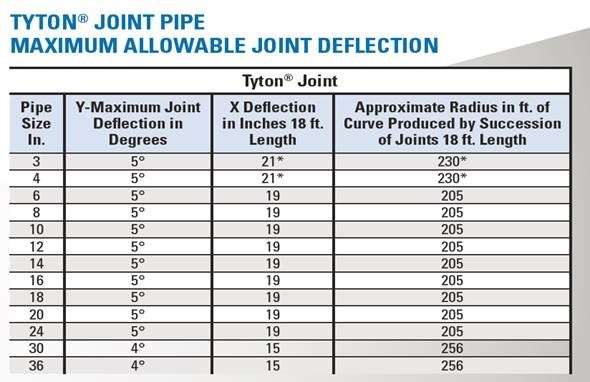
The allowable deflection between pipe supports is a critical factor in ensuring the stability and integrity of piping systems. It refers to the maximum amount of movement or flexure that a pipe can experience between its supports without compromising its structural or functional performance. This deflection limit is typically specified in piping codes and standards, such as the ASME B31.1 or API 650, and is dependent on factors like pipe material, size, and operating conditions.
Factors Affecting Allowable Deflection
The allowable deflection between pipe supports is influenced by several factors, including pipe diameter, wall thickness, and material properties. Other factors like operating temperature, pressure, and support spacing also play a crucial role in determining the allowable deflection. For example:
- The flexibility of the pipe, which is a measure of its ability to withstand bending and tension without suffering damage.
- The weight of the pipe and its contents, which can cause sagging or deflection between supports.
- The type and spacing of pipe supports, which can affect the stability and rigidity of the piping system.
Pipe Support Systems
Pipe support systems are designed to provide structural support and restraint to piping systems, while also allowing for thermal expansion and contraction. These systems typically consist of supports, hangers, and anchors, which work together to maintain the position and orientation of the pipe. For example:
- Rigid supports, which provide fixed points of support and can help to minimize deflection.
- Flexible supports, which allow for controlled movement and can help to reduce stresses.
- Spring supports, which can provide variable support and help to maintain constant pipe position.
Deflection Limits and Calculations
Deflection limits are typically specified in terms of maximum allowable displacement or rotation between pipe supports. These limits can be calculated using finite element analysis or other numerical methods, which take into account factors like pipe geometry, material properties, and operating conditions. For example:
- The Simplified method, which uses approximations and simplifications to estimate deflection limits.
- The Detailed method, which uses complex calculations and finite element analysis to determine deflection limits.
- The Experimental method, which uses physical testing and measurement to determine deflection limits.
Consequences of Excessive Deflection
Excessive deflection between pipe supports can have serious consequences, including pipe failure, leakage, and environmental damage. It can also lead to reduced pipe life, increased maintenance costs, and decreased system reliability. For example:
- Cracking or fracture of the pipe, which can occur due to excessive stress or fatigue.
- Corrosion or erosion, which can occur due to exposure to harsh environments or flow-induced turbulence.
- Vibration or instability, which can occur due to unbalanced or resonant forces.
Design Considerations for Pipe Supports
When designing pipe supports, it is essential to consider factors like pipe size, material, and operating conditions, as well as support spacing and type. The design should also take into account thermal expansion and contraction, as well as seismic and wind loads. For example:
- Load calculations, which should include weight, pressure, and thermal loads.
- Stress analysis, which should consider bending, tension, and torsion stresses.
- Material selection, which should be based on strength, ductility, and corrosion resistance.
What is the determination of maximum span between pipe supports?

The determination of the maximum span between pipe supports is crucial to ensure the stability and integrity of the piping system. This calculation takes into account various factors such as the pipe material, size, weight, and the type of fluid being transported. The maximum span is the distance between two consecutive supports that can be safely allowed without causing excessive deflection or stress on the pipe.
Factors Affecting Maximum Span
The maximum span between pipe supports is affected by several factors, including the pipe diameter, wall thickness, and material properties. Other factors such as the temperature and pressure of the fluid being transported also play a significant role. The following are some key factors to consider:
- Pipe size and material: Larger pipes with thinner walls are more prone to deflection and require closer spacing of supports.
- Fluid properties: The density and viscosity of the fluid being transported can affect the pipe's stress and deflection.
- Operating conditions: The temperature and pressure of the fluid can also impact the pipe's stability and integrity.
Calculation Methods
There are various calculation methods available to determine the maximum span between pipe supports, including empirical formulas and numerical simulations. These methods take into account the pipe geometry, material properties, and operating conditions. The following are some common calculation methods:
- Empirical formulas: These formulas provide a simplified approach to calculating the maximum span based on pipe size and material.
- Finite element analysis: This method provides a more detailed analysis of the pipe's stress and deflection under various operating conditions.
- Pipe stress analysis software: Specialized software can be used to simulate the pipe's behavior and determine the maximum span between supports.
Pipe Support Types
The type of pipe support used can also impact the maximum span between supports. Different types of supports, such as rigid supports, flexible supports, and spring supports, can affect the pipe's stability and integrity. The following are some common types of pipe supports:
- Rigid supports: These supports provide fixed points of support and can help to reduce deflection.
- Flexible supports: These supports allow for some movement and can help to reduce stress on the pipe.
- Spring supports: These supports use springs to provide variable support and can help to reduce vibration.
Industry Standards and Codes
Industry standards and codes, such as ASME B31.1 and API 650, provide guidelines for the design and installation of piping systems, including the determination of the maximum span between pipe supports. These standards take into account various factors such as pipe material, size, and operating conditions. The following are some key industry standards and codes:
- ASME B31.1: This code provides guidelines for the design and installation of power piping systems.
- API 650: This standard provides guidelines for the design and installation of welded steel tanks for oil storage.
- ANSI B16.5: This standard provides guidelines for the design and installation of pipe flanges and flanged fittings.
Design Considerations
The design of the piping system, including the determination of the maximum span between pipe supports, requires careful consideration of various factors such as pipe geometry, material properties, and operating conditions. The following are some key design considerations:
- Pipe routing: The route of the pipe can affect the maximum span between supports, with longer horizontal runs requiring closer spacing of supports.
- Support spacing: The spacing of supports can impact the pipe's stability and integrity, with closer spacing required for larger pipes or pipes with thinner walls.
- Vibration and noise: The vibration and noise of the piping system can also impact the maximum span between supports, with higher vibration levels requiring closer spacing of supports.
Frequently Asked Questions (FAQs)
What is the Pipe Support Spacing For Deflection Control Design Calculator and its purpose?
The Pipe Support Spacing For Deflection Control Design Calculator is a specialized tool designed to assist engineers and piping professionals in determining the optimal spacing of pipe supports to control deflection in piping systems. The primary purpose of this calculator is to ensure that the piping system is properly supported to prevent excessive deflection, which can lead to stress, strain, and potentially catastrophic failure. By using this calculator, engineers can determine the required support spacing to maintain the structural integrity of the piping system, while also ensuring compliance with relevant industry standards and regulations. The calculator takes into account various factors, including the pipe material, size, and configuration, as well as the operating conditions, such as temperature and pressure.
How does the Pipe Support Spacing For Deflection Control Design Calculator work and what inputs are required?
The Pipe Support Spacing For Deflection Control Design Calculator works by using complex algorithms and formulas to analyze the piping system and determine the optimal support spacing. To use the calculator, engineers must input various parameters, including the pipe properties, such as diameter, wall thickness, and material density, as well as the operating conditions, such as fluid density, velocity, and pressure. Additionally, the calculator requires information about the support type and configuration, including the support spacing and type. The calculator then uses this information to calculate the deflection and stress in the piping system, and determines the required support spacing to control deflection and prevent failure. The calculator also provides output in the form of charts, graphs, and tables, which can be used to visualize the results and make informed design decisions.
What are the benefits of using the Pipe Support Spacing For Deflection Control Design Calculator in piping design?
The Pipe Support Spacing For Deflection Control Design Calculator offers several benefits in piping design, including improved accuracy and reduced uncertainty. By using the calculator, engineers can ensure that the piping system is properly supported to prevent excessive deflection and stress, which can lead to premature failure. The calculator also helps to optimize the piping design, by determining the required support spacing and type, which can lead to cost savings and improved efficiency. Additionally, the calculator can help to reduce the risk of pipe failure, which can have severe consequences, including injury, damage, and environmental harm. The calculator also provides a detailed report of the calculation results, which can be used to document the design process and verify compliance with relevant industry standards and regulations.
Can the Pipe Support Spacing For Deflection Control Design Calculator be used for both onshore and offshore piping applications?
Yes, the Pipe Support Spacing For Deflection Control Design Calculator can be used for both onshore and offshore piping applications. The calculator is designed to be versatile and flexible, and can be used to analyze a wide range of piping systems, including onshore pipelines, offshore pipelines, and plant piping. The calculator takes into account the unique challenges and requirements of each application, including seismic activity, wind, and wave loading for offshore applications, and soil settlement and thermal expansion for onshore applications. The calculator also provides industry-specific features and functions, such as API and ASME compliance, to ensure that the design meets the relevant standards and regulations. Additionally, the calculator can be used to analyze complex piping systems, including multi-span and multi-support systems, and provides advanced features, such as non-linear analysis and dynamic simulation, to ensure accurate and reliable results.
Deja una respuesta
Entradas Relacionadas