
Pipe Burst Working Pressure Calculator Barlow's Formula

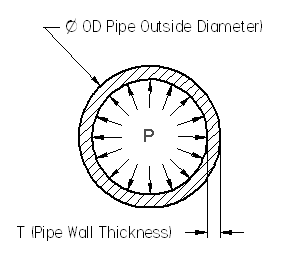
The Pipe Burst Working Pressure Calculator utilizing Barlow's Formula is a crucial tool for engineers and pipe designers. It calculates the maximum internal pressure a pipe can withstand before bursting. This formula considers factors such as pipe material, diameter, and wall thickness. By inputting these parameters, users can determine the maximum allowable working pressure, ensuring the safe and efficient operation of piping systems. The calculator helps prevent pipe failures, reducing the risk of accidents and environmental damage. Accurate calculations are essential for designing and maintaining reliable pipelines, making this calculator an indispensable resource in the field.
- Pipe Burst Working Pressure Calculator Barlow's Formula
- How do you calculate burst pressure for pipe?
- What is the Barlow's formula for SMYS?
- What is the formula for ASME burst pressure?
- How to calculate the working pressure of a pipe?
-
Frequently Asked Questions (FAQs)
- What is the Pipe Burst Working Pressure Calculator Barlow's Formula and how does it work?
- What are the key factors that affect the accuracy of the Pipe Burst Working Pressure Calculator Barlow's Formula?
- How does the Pipe Burst Working Pressure Calculator Barlow's Formula account for different types of pipe materials and their properties?
- What are the limitations and potential sources of error when using the Pipe Burst Working Pressure Calculator Barlow's Formula?
Pipe Burst Working Pressure Calculator Barlow's Formula
The Pipe Burst Working Pressure Calculator Barlow's Formula is a mathematical tool used to calculate the maximum allowable working pressure of a pipe. This formula is crucial in ensuring the safety and integrity of piping systems in various industries, including oil and gas, chemical processing, and power generation. The formula takes into account the pipe's material, diameter, wall thickness, and other factors to determine the maximum pressure it can withstand without rupturing.
Introduction to Barlow's Formula
Barlow's Formula is a widely accepted method for calculating the maximum allowable working pressure of a pipe. The formula is named after its developer, Peter Barlow, who introduced it in the 19th century. The formula is based on the principle that the maximum allowable working pressure of a pipe is directly proportional to the pipe's wall thickness and inversely proportional to its diameter. The formula is expressed as: P = (2 S t) / (D - 2 t), where P is the maximum allowable working pressure, S is the material's yield strength, t is the pipe's wall thickness, and D is the pipe's diameter.
Key Factors Affecting Pipe Burst Pressure
Several factors can affect the pipe burst pressure, including the pipe's material, diameter, wall thickness, and temperature. The pipe's material is a critical factor, as different materials have varying levels of strength and resistance to corrosion. The pipe's diameter and wall thickness also play a significant role, as they affect the pipe's ability to withstand internal pressure. Temperature is another important factor, as high temperatures can reduce the pipe's strength and increase the risk of rupture.
Calculating Pipe Burst Pressure using Barlow's Formula
To calculate the pipe burst pressure using Barlow's Formula, the following steps are taken:
1. Determine the pipe's material and its corresponding yield strength.
2. Measure the pipe's diameter and wall thickness.
3. Determine the desired safety factor, which is typically between 1.5 and 2.0.
4. Plug the values into the formula and calculate the maximum allowable working pressure.
The formula is: P = (2 S t) / (D - 2 t), where P is the maximum allowable working pressure, S is the material's yield strength, t is the pipe's wall thickness, and D is the pipe's diameter.
Importance of Pipe Burst Pressure Calculation
Calculating the pipe burst pressure is crucial in ensuring the safety and integrity of piping systems. A pipe that is operated above its maximum allowable working pressure can rupture, leading to catastrophic consequences, including injuries, fatalities, and environmental damage. By calculating the pipe burst pressure, operators can ensure that their piping systems are operating within safe limits, reducing the risk of accidents and downtime.
Limitations and Assumptions of Barlow's Formula
While Barlow's Formula is a widely accepted method for calculating the maximum allowable working pressure of a pipe, it has several limitations and assumptions. The formula assumes that the pipe is cylindrical in shape and that the material is isotropic. It also assumes that the pipe is subject to internal pressure only and that there are no external loads or stresses. Additionally, the formula does not account for corrosion or erosion, which can reduce the pipe's strength and increase the risk of rupture.
| Parameter | Unit | Description |
|---|---|---|
| P | psi | Maximum allowable working pressure |
| S | psi | Material's yield strength |
| t | in | Pipe's wall thickness |
| D | in | Pipe's diameter |
How do you calculate burst pressure for pipe?

To calculate the burst pressure for a pipe, you need to consider several factors, including the pipe's material, diameter, wall thickness, and the temperature and pressure conditions it will be subject to. The calculation typically involves using the Barlow's formula, which is a widely accepted method for determining the maximum allowable pressure of a pipe. The formula is: P = (2 S t) / (D - 2 t), where P is the burst pressure, S is the yield strength of the material, t is the wall thickness, and D is the outside diameter of the pipe.
Here are some key considerations for calculating burst pressure:
Understanding Pipe Materials
When calculating the burst pressure for a pipe, it's essential to understand the properties of the pipe material, including its yield strength, tensile strength, and elastic modulus. Different materials have varying levels of resistance to pressure and temperature, which can affect the pipe's burst limit. For example:
- Steel pipes have a high yield strength and are often used in high-pressure applications.
- Copper pipes have a high tensile strength and are often used in plumbing and heating applications.
- PVC pipes have a lower yield strength and are often used in low-pressure applications such as drainage and sewage systems.
Calculating Pipe Wall Thickness
The pipe wall thickness is a critical factor in determining the burst pressure. A thicker pipe wall can withstand higher pressures, while a thinner pipe wall is more susceptible to bursting. To calculate the pipe wall thickness, you need to consider the design pressure, design temperature, and the corrosion allowance. For example:
- Thicker pipes are often used in high-pressure applications such as oil and gas pipelines.
- Thinner pipes are often used in low-pressure applications such as water supply systems.
- Corrosion allowance must be considered to account for the potential loss of wall thickness due to corrosion.
Considering Temperature and Pressure Effects
Temperature and pressure can significantly affect the burst pressure of a pipe. High temperatures can reduce the yield strength of the material, while high pressures can increase the stress on the pipe. To calculate the burst pressure, you need to consider the design temperature and design pressure. For example:
- High-temperature applications such as power plants require pipes with high thermal resistance.
- High-pressure applications such as oil and gas pipelines require pipes with high yield strength.
- Pressure and temperature fluctuations can affect the pipe's burst limit and must be considered in the calculation.
Using Barlow's Formula
Barlow's formula is a widely accepted method for calculating the burst pressure of a pipe. The formula takes into account the pipe's material, diameter, wall thickness, and the yield strength of the material. To use the formula, you need to know the outside diameter and wall thickness of the pipe, as well as the yield strength of the material. For example:
- Input values such as outside diameter, wall thickness, and yield strength are required to calculate the burst pressure.
- The formula is: P = (2 S t) / (D - 2 t), where P is the burst pressure.
- The calculation can be performed using a calculator or software to determine the burst pressure.
Assessing Burst Pressure Safety Factors
When calculating the burst pressure, it's essential to consider safety factors to ensure the pipe can withstand unexpected pressure surges or temperature fluctuations. A safety factor is a margin of safety that is applied to the calculated burst pressure to account for uncertainties and variabilities. For example:
- A safety factor of 1.5 or 2.0 is often applied to the calculated burst pressure to account for uncertainties.
- The safety factor can vary depending on the application and industry standards.
- Regular inspections and maintenance are necessary to ensure the pipe's integrity and safety.
What is the Barlow's formula for SMYS?

The Barlow's formula for SMYS (Specified Minimum Yield Strength) is a mathematical equation used to calculate the minimum yield strength of a pipe. The formula is: SMYS = (2 P t) / (D - 2 t), where P is the design pressure, t is the wall thickness, and D is the outside diameter of the pipe. This formula is widely used in the oil and gas industry to determine the yield strength of pipes and ensure their structural integrity.
Understanding the Variables in Barlow's Formula
The variables in Barlow's formula are crucial in determining the SMYS of a pipe. The formula takes into account the design pressure, which is the maximum allowable working pressure of the pipe, the wall thickness, which is the thickness of the pipe wall, and the outside diameter, which is the diameter of the pipe. To calculate the SMYS, the following steps can be taken:
- Determine the design pressure of the pipe, which is typically specified by the manufacturer or regulatory agencies.
- Measure the wall thickness and outside diameter of the pipe, which can be obtained from the pipe specifications or measurements.
- Plug in the values into the Barlow's formula and calculate the SMYS.
Importance of SMYS in Pipeline Design
The SMYS is a critical parameter in pipeline design, as it determines the maximum allowable working pressure of the pipe. A higher SMYS indicates a stronger pipe, which can withstand higher pressures and stresses. The SMYS is also used to determine the pipe's resistance to corrosion, erosion, and other forms of degradation. To ensure the integrity of the pipe, the following factors can be considered:
- Material selection: Choose a pipe material with a high SMYS to ensure the pipe can withstand the design pressure.
- Wall thickness: Increase the wall thickness to reduce the stress on the pipe and increase its SMYS.
- Corrosion protection: Apply corrosion protection measures, such as coatings or cathodic protection, to prevent corrosion and maintain the SMYS.
Limitations of Barlow's Formula
While Barlow's formula is widely used, it has some limitations. The formula assumes a perfect pipe with no defects or imperfections, which is not always the case. Additionally, the formula does not take into account other factors that can affect the SMYS, such as temperature, corrosion, and erosion. To overcome these limitations, the following can be done:
- Use more advanced formulas: Use more advanced formulas, such as the Lamel formula, which takes into account additional factors that can affect the SMYS.
- Conduct pipeline inspections: Conduct regular pipeline inspections to detect any defects or imperfections that can affect the SMYS.
- Apply safety factors: Apply safety factors to the SMYS to account for any uncertainties or variabilities in the pipe's material properties.
Applications of Barlow's Formula
Barlow's formula has numerous applications in the oil and gas industry, including pipeline design, pipe sizing, and pressure vessel design. The formula is also used in other industries, such as chemical processing, power generation, and water transmission. Some of the key applications of Barlow's formula include:
- Pipeline design: Use Barlow's formula to determine the SMYS of a pipe and ensure it can withstand the design pressure.
- Pipe sizing: Use Barlow's formula to determine the required pipe size for a given flow rate and pressure drop.
- Pressure vessel design: Use Barlow's formula to determine the SMYS of a pressure vessel and ensure it can withstand the design pressure.
Comparison with Other Formulas
Barlow's formula is one of several formulas used to calculate the SMYS of a pipe. Other formulas, such as the Lamel formula and the Boardman formula, can also be used. Each formula has its own advantages and disadvantages, and the choice of formula depends on the specific application and industry. Some of the key differences between Barlow's formula and other formulas include:
- Lamel formula: The Lamel formula is more comprehensive than Barlow's formula, as it takes into account additional factors that can affect the SMYS.
- Boardman formula: The Boardman formula is more conservative than Barlow's formula, as it assumes a lower SMYS for a given pipe size.
- Other formulas: Other formulas, such as the ASME formula, can also be used to calculate the SMYS of a pipe, depending on the specific application and industry.
What is the formula for ASME burst pressure?
The formula for ASME burst pressure is a critical calculation in the design and construction of pressure vessels, such as pipes, tubes, and boilers. The American Society of Mechanical Engineers (ASME) provides guidelines and standards for the calculation of burst pressure, which is the maximum pressure that a vessel can withstand without rupturing. The formula for ASME burst pressure is: P = (2 S t) / (D - 2 t), where P is the burst pressure, S is the ultimate tensile strength of the material, t is the wall thickness of the vessel, and D is the outside diameter of the vessel.
Understanding the Variables in the Formula
The variables in the formula for ASME burst pressure are critical to understanding the calculation. The ultimate tensile strength of the material is the maximum stress that the material can withstand without failing. The wall thickness of the vessel is the distance between the inside and outside surfaces of the vessel. The outside diameter of the vessel is the diameter of the vessel, including the wall thickness. The formula takes into account the material properties and the geometric dimensions of the vessel to calculate the burst pressure.
- The ultimate tensile strength is a critical material property that affects the burst pressure.
- The wall thickness and outside diameter are geometric dimensions that affect the burst pressure.
- The ASME code provides guidelines for the calculation of burst pressure, including the use of safety factors to ensure the vessel can withstand expected pressures.
Importance of Material Properties in Burst Pressure Calculation
The material properties of the vessel are critical in the calculation of burst pressure. The ultimate tensile strength and yield strength of the material are used to determine the burst pressure. The material properties can be affected by temperature, corrosion, and other environmental factors. The ASME code provides guidelines for the selection of materials and the calculation of burst pressure based on the material properties.
- The ultimate tensile strength is a critical material property that affects the burst pressure.
- The yield strength is another important material property that affects the burst pressure.
- The material properties can be affected by environmental factors, such as temperature and corrosion.
Geometric Dimensions and Burst Pressure
The geometric dimensions of the vessel, such as the wall thickness and outside diameter, are critical in the calculation of burst pressure. The ASME code provides guidelines for the calculation of burst pressure based on the geometric dimensions of the vessel. The wall thickness and outside diameter can be affected by manufacturing tolerances and other factors.
- The wall thickness is a critical geometric dimension that affects the burst pressure.
- The outside diameter is another important geometric dimension that affects the burst pressure.
- The geometric dimensions can be affected by manufacturing tolerances and other factors.
Safety Factors in Burst Pressure Calculation
The ASME code provides guidelines for the use of safety factors in the calculation of burst pressure. The safety factors are used to ensure that the vessel can withstand expected pressures and operating conditions. The safety factors can be affected by environmental factors, such as temperature and corrosion.
- The safety factors are used to ensure that the vessel can withstand expected pressures and operating conditions.
- The ASME code provides guidelines for the use of safety factors in the calculation of burst pressure.
- The safety factors can be affected by environmental factors, such as temperature and corrosion.
Applications of the ASME Burst Pressure Formula
The ASME burst pressure formula has a wide range of applications in the design and construction of pressure vessels, such as pipes, tubes, and boilers. The formula is used to ensure that the vessel can withstand expected pressures and operating conditions. The ASME code provides guidelines for the calculation of burst pressure and the use of safety factors to ensure the vessel can withstand expected pressures.
- The ASME burst pressure formula is used in the design and construction of pressure vessels.
- The formula is used to ensure that the vessel can withstand expected pressures and operating conditions.
- The ASME code provides guidelines for the calculation of burst pressure and the use of safety factors.
How to calculate the working pressure of a pipe?
To calculate the working pressure of a pipe, you need to consider several factors, including the pipe material, size, and wall thickness, as well as the fluid properties and operating conditions. The working pressure is the maximum pressure that a pipe can withstand during normal operation, and it is typically expressed in units of pounds per square inch (PSI) or bar.
Understanding Pipe Material and Size
The pipe material and size play a crucial role in determining the working pressure of a pipe. Different materials have different strength and durability properties, which affect their ability to withstand pressure. For example, steel pipes are generally stronger than plastic pipes and can withstand higher pressures. The size of the pipe also affects its working pressure, as larger pipes have a greater volume and surface area that can withstand more pressure. Here are some key factors to consider:
- The pipe material must be selected based on its chemical resistance and mechanical strength properties.
- The pipe size must be chosen based on the flow rate and pressure drop requirements of the system.
- The wall thickness of the pipe must be sufficient to withstand the working pressure and external loads.
Calculating Working Pressure using the Barlow Formula
The Barlow formula is a widely used method for calculating the working pressure of a pipe. The formula takes into account the pipe material, size, and wall thickness, as well as the fluid properties and operating conditions. The formula is: P = (2 S t) / (D E), where P is the working pressure, S is the material strength, t is the wall thickness, D is the pipe diameter, and E is the joint efficiency. Here are some key steps to follow:
- Determine the material strength and joint efficiency of the pipe.
- Calculate the wall thickness required to withstand the working pressure.
- Apply the Barlow formula to calculate the working pressure of the pipe.
Considering Fluid Properties and Operating Conditions
The fluid properties and operating conditions of the system must also be considered when calculating the working pressure of a pipe. The fluid density and viscosity affect the pressure drop and flow rate of the system, while the operating temperature and pressure affect the pipe material properties. Here are some key factors to consider:
- Determine the fluid density and viscosity of the system.
- Calculate the pressure drop and flow rate of the system.
- Consider the operating temperature and pressure range of the system.
Using Standards and Codes for Working Pressure Calculation
There are several standards and codes that provide guidelines for calculating the working pressure of a pipe. These include the ASME B31.1 and B31.3 codes for power and process piping, as well as the API 5L and API 5CT standards for line pipe and casing. Here are some key steps to follow:
- Review the relevant standards and codes for the specific application.
- Calculate the working pressure using the Barlow formula or other approved methods.
- Verify that the pipe design meets the requirements of the relevant standards and codes.
Verifying Pipe Design and Testing
Finally, the pipe design must be verified and tested to ensure that it meets the working pressure requirements of the system. This includes hydrostatic testing and pneumatic testing to verify the pipe integrity and leak tightness. Here are some key steps to follow:
- Perform hydrostatic testing to verify the pipe integrity.
- Perform pneumatic testing to verify the leak tightness of the pipe.
- Verify that the pipe design meets the requirements of the relevant standards and codes.
Frequently Asked Questions (FAQs)
What is the Pipe Burst Working Pressure Calculator Barlow's Formula and how does it work?
The Pipe Burst Working Pressure Calculator Barlow's Formula is a mathematical formula used to calculate the burst pressure of a pipe. This formula is based on the Barlow's formula, which is a well-established equation in the field of fluid mechanics and pipe design. The formula takes into account the internal pressure of the pipe, the outside diameter of the pipe, the wall thickness of the pipe, and the yield strength of the pipe material. By plugging in these values, the calculator can determine the maximum allowable working pressure of the pipe, which is the pressure at which the pipe is likely to burst or fail. This is an important consideration in the design and installation of piping systems, as it helps to ensure the safety and reliability of the system. The calculator is widely used in various industries, including oil and gas, chemical processing, and power generation, where high-pressure piping systems are common.
What are the key factors that affect the accuracy of the Pipe Burst Working Pressure Calculator Barlow's Formula?
The accuracy of the Pipe Burst Working Pressure Calculator Barlow's Formula depends on several key factors, including the accuracy of the input values, the type of pipe material, and the conditions of the piping system. The outside diameter and wall thickness of the pipe must be measured accurately, as small errors in these values can lead to significant errors in the calculated burst pressure. The yield strength of the pipe material is also critical, as it determines the maximum stress that the pipe can withstand without failing. Additionally, the temperature and corrosion conditions of the piping system can affect the accuracy of the calculation, as these factors can impact the strength and durability of the pipe material. It is also important to note that the Barlow's formula is based on a theoretical model, and actual pipe behavior may vary depending on various factors, such as manufacturing defects and installation errors. Therefore, it is essential to use the calculator in conjunction with sound engineering judgment and industry standards to ensure the reliability and safety of the piping system.
How does the Pipe Burst Working Pressure Calculator Barlow's Formula account for different types of pipe materials and their properties?
The Pipe Burst Working Pressure Calculator Barlow's Formula accounts for different types of pipe materials and their properties by using the yield strength and ultimate tensile strength of the material as input values. The yield strength is the stress at which the material begins to deform plastically, while the ultimate tensile strength is the maximum stress that the material can withstand without failing. The calculator uses these values to determine the maximum allowable working pressure of the pipe, taking into account the strength and ductility of the material. The calculator can be used with a wide range of pipe materials, including carbon steel, stainless steel, copper, and plastics, each with its own unique properties and characteristics. The calculator also allows users to input custom material properties, making it a versatile tool for designing and analyzing piping systems with non-standard materials. Additionally, the calculator provides warnings and notifications if the input values are outside the recommended ranges for the selected material, helping to prevent errors and inaccuracies in the calculation.
What are the limitations and potential sources of error when using the Pipe Burst Working Pressure Calculator Barlow's Formula?
The Pipe Burst Working Pressure Calculator Barlow's Formula has several limitations and potential sources of error that users should be aware of. One of the main limitations is that the formula assumes a perfect pipe with no defects or imperfections, which is not always the case in real-world applications. Additionally, the formula does not account for dynamic loads, such as water hammer or pulsating flows, which can affect the burst pressure of the pipe. The calculator also assumes a constant temperature and corrosion environment, which may not be representative of the actual operating conditions of the piping system. Furthermore, the accuracy of the calculation depends on the quality of the input values, and small errors in these values can lead to significant errors in the calculated burst pressure. Therefore, it is essential to use the calculator in conjunction with sound engineering judgment and industry standards, and to validate the results with experimental data or alternative calculations whenever possible. By being aware of these limitations and potential sources of error, users can use the calculator effectively and safely design and analyze piping systems.
Deja una respuesta
Entradas Relacionadas