
Modulus of Resilience Formulae and Calculator

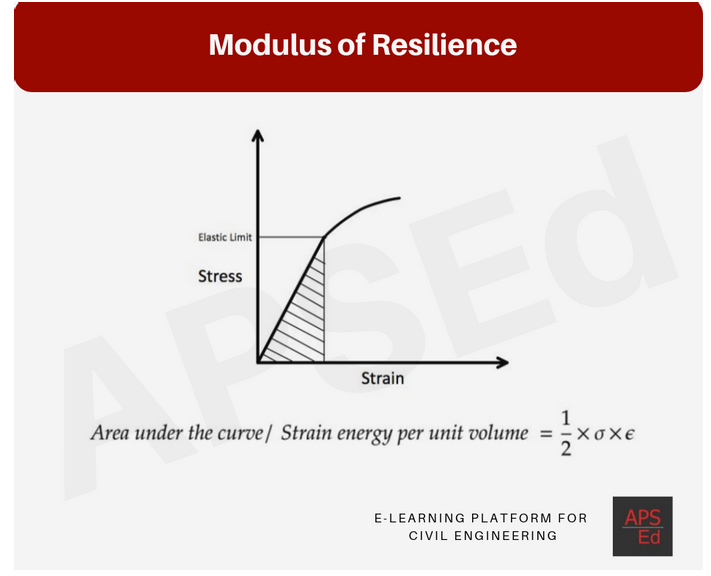
The modulus of resilience is a measure of a material's ability to absorb energy when it is deformed elastically. It is defined as the amount of energy that a material can absorb per unit volume without creating a permanent distortion. The modulus of resilience can be calculated using the formula: U = (σ^2) / (2E), where U is the modulus of resilience, σ is the yield strength, and E is the modulus of elasticity. This article provides a comprehensive overview of the modulus of resilience formulae and a calculator to simplify the calculation process.
- Understanding Modulus of Resilience Formulae and Calculator
- What is the formula for resilient modulus?
- What is the formula for calculating resilience?
- What is the resilience modulus?
-
Frequently Asked Questions (FAQs)
- What is the Modulus of Resilience and its importance in engineering?
- How is the Modulus of Resilience calculated using the given formula and calculator?
- What are the limitations and assumptions of the Modulus of Resilience formula and calculator?
- How can the Modulus of Resilience be used in real-world engineering applications?
Understanding Modulus of Resilience Formulae and Calculator
The modulus of resilience is a measure of a material's ability to absorb energy when it is deformed elastically and then, upon unloading, return to its original shape without significant permanent deformation. This property is crucial in designing structures and components that are subject to cyclic loading, as it helps in predicting the material's behavior under stress. The modulus of resilience can be calculated using the stress-strain curve of the material, specifically from the area under the curve up to the yield point. This area represents the energy that can be absorbed by the material per unit volume without causing permanent deformation.
Definition and Significance of Modulus of Resilience
The modulus of resilience is defined as the amount of energy that a material can absorb per unit volume when it is stressed to its yield point and then unloaded. This property is significant because it indicates how much energy a material can absorb without suffering permanent damage. Materials with a high modulus of resilience are preferable in applications where components are subject to impact or cyclic loading, such as in automotive and aerospace engineering.
Calculating Modulus of Resilience
To calculate the modulus of resilience, one needs to understand the material's stress-strain relationship. The formula for the modulus of resilience (U) is given by (U = frac{sigma^2}{2E}) for materials that behave elastically up to the yield point, where (sigma) is the yield strength of the material, and (E) is the Young's modulus (or modulus of elasticity). This formula is derived from the area under the stress-strain curve up to the yield point.
Importance in Material Selection
The modulus of resilience plays a critical role in the material selection process, especially for applications where fatigue resistance and impact resistance are required. Materials with a higher modulus of resilience are more capable of absorbing energy without deforming permanently, making them suitable for applications such as springs, engine components, and crash structures in vehicles.
Limitations and Considerations
While the modulus of resilience is a useful property, it has limitations. It does not account for the material's behavior beyond the yield point, such as plastic deformation and fracture toughness. Additionally, the calculation assumes elastic behavior up to the yield point, which might not hold true for all materials. Therefore, it is essential to consider other material properties in conjunction with the modulus of resilience for a comprehensive assessment.
Applications of Modulus of Resilience Calculator
A modulus of resilience calculator can be a valuable tool in various engineering disciplines. It allows for the quick calculation of a material's resilience based on its yield strength and Young's modulus. This is particularly useful in design optimization processes where the material's ability to absorb energy without permanent deformation is a critical factor. The calculator can help engineers compare different materials and select the most suitable one for their application.
| Material Property | Unit | Description |
|---|---|---|
| Yield Strength | Pascal (Pa) | The stress at which a material begins to deform plastically. |
| Young's Modulus | Pascal (Pa) | A measure of the stiffness of a solid material. |
| Modulus of Resilience | Joule per cubic meter (J/m^3) | The energy that a material can absorb per unit volume when stressed to its yield point. |
What is the formula for resilient modulus?

The formula for resilient modulus is a measure of the stiffness of a material, typically used to characterize the behavior of asphalt and soil materials under repeated loading. The resilient modulus is calculated using the following formula: Mr = σd / εr, where Mr is the resilient modulus, σd is the deviatoric stress, and εr is the recoverable strain.
Definition of Resilient Modulus
The resilient modulus is a measure of a material's ability to recover its original shape after being subjected to a repeated load. This property is essential for designing and analyzing pavement and geotechnical structures. The resilient modulus is typically measured using a repeated load triaxial test, which involves applying a repeated load to a specimen and measuring the resulting deformation. Some key points to consider when defining resilient modulus include:
- The stress and strain relationships are non-linear, and the resilient modulus is typically calculated using a secant modulus approach.
- The repeated load test is used to simulate the traffic loads that a pavement or soil structure would experience in the field.
- The resilient modulus is a critical parameter in mechanistic-empirical pavement design methods, as it helps to predict the performance of the pavement over time.
Factors Affecting Resilient Modulus
The resilient modulus of a material is influenced by several factors, including the moisture content, density, and temperature. The stress state of the material, including the confining pressure and deviatoric stress, also plays a significant role in determining the resilient modulus. Some key factors to consider include:
- The moisture content of the material can significantly affect its resilient modulus, with higher moisture contents typically resulting in lower resilient moduli.
- The density of the material is also an important factor, as higher densities typically result in higher resilient moduli.
- The temperature of the material can also influence its resilient modulus, with higher temperatures typically resulting in lower resilient moduli.
Measurement of Resilient Modulus
The resilient modulus is typically measured using a repeated load triaxial test, which involves applying a repeated load to a specimen and measuring the resulting deformation. The test is usually performed using a triaxial cell, which allows for the application of a confining pressure and deviatoric stress to the specimen. Some key points to consider when measuring resilient modulus include:
- The specimen must be carefully prepared to ensure that it is representative of the material being tested.
- The test conditions, including the stress state and temperature, must be carefully controlled to ensure that the results are reliable.
- The data analysis must be thorough, with careful consideration given to the stress and strain relationships and the calculation of the resilient modulus.
Applications of Resilient Modulus
The resilient modulus is a critical parameter in mechanistic-empirical pavement design methods, as it helps to predict the performance of the pavement over time. The resilient modulus is also used in geotechnical engineering to design and analyze foundations and embankments. Some key applications of resilient modulus include:
- Pavement design, where the resilient modulus is used to predict the rutting and cracking of the pavement over time.
- Geotechnical engineering, where the resilient modulus is used to design and analyze foundations and embankments.
- Soil mechanics, where the resilient modulus is used to predict the behavior of soils under static and dynamic loading conditions.
Limitations of Resilient Modulus
While the resilient modulus is a useful parameter for characterizing the behavior of asphalt and soil materials, it has several limitations. The resilient modulus is typically measured using a repeated load triaxial test, which can be time-consuming and expensive. Some key limitations of resilient modulus include:
- The test conditions may not be representative of the field conditions, which can limit the applicability of the results.
- The data analysis can be complex, requiring specialized software and expertise.
- The resilient modulus may not be sensitive to all of the factors that affect the behavior of the material, such as the aging and damage of the material over time.
What is the formula for calculating resilience?

The formula for calculating resilience is a complex and multi-faceted concept that can vary depending on the context and perspective. However, a commonly used framework for calculating resilience is the Resilience Formula, which is based on the idea that resilience is a function of an individual's or system's ability to absorb and recover from disruptions or stressors. This formula can be expressed as: Resilience = (Capacity x Flexibility x Adaptability) / (Vulnerability x Exposure).
Understanding the Components of Resilience
The components of resilience, including capacity, flexibility, and adaptability, are crucial in calculating resilience. These components can be broken down into:
- Capacity refers to the ability of an individual or system to withstand disruptions or stressors.
- Flexibility refers to the ability of an individual or system to adapt to changing circumstances.
- Adaptability refers to the ability of an individual or system to learn from experience and modify its behavior in response to changing circumstances.
Assessing Vulnerability and Exposure
Vulnerability and exposure are critical factors in calculating resilience, as they can impact an individual's or system's ability to absorb and recover from disruptions or stressors. These factors can be assessed by:
- Identifying potential threats and hazards that could impact an individual or system.
- Analyzing the likelihood and impact of these threats and hazards.
- Developing strategies to mitigate or manage these risks.
Measuring Resilience in Different Contexts
Resilience can be measured in different contexts, including individual, organizational, and community settings. In each context, the formula for calculating resilience may vary, but the underlying principles remain the same. For example:
- In individual contexts, resilience may be measured by assessing an individual's coping skills and emotional intelligence.
- In organizational contexts, resilience may be measured by assessing an organization's ability to adapt to changing circumstances and its capacity to innovate.
- In community contexts, resilience may be measured by assessing a community's social cohesion and ability to respond to disasters or crises.
Applications of Resilience in Real-World Scenarios
The formula for calculating resilience has numerous applications in real-world scenarios, including disaster management, business continuity, and public health. For example:
- In disaster management, resilience can be used to predict and prepare for natural disasters such as hurricanes or earthquakes.
- In business continuity, resilience can be used to develop strategies for managing risks and ensuring business continuity in the face of disruptions or crises.
- In public health, resilience can be used to develop programs for promoting mental health and well-being in the face of adversity or trauma.
Future Directions for Resilience Research and Practice
The field of resilience research and practice is rapidly evolving, with new theories and methodologies emerging to advance our understanding of resilience. Future directions for resilience research and practice may include:
- Developing more sophisticated models of resilience that incorporate complex systems and non-linear dynamics.
- Investigating the neurobiological and psychological mechanisms underlying resilience.
- Developing interventions and strategies for enhancing resilience in individuals, organizations, and communities.
What is the resilience modulus?

The resilience modulus is a measure of a material's ability to absorb energy when it is deformed elastically and then, upon unloading, return to its original shape without significant permanent deformation. This property is particularly important in the design of structures and components that are subject to repetitive loading and unloading cycles, such as bridges, aircraft, and automotive parts. The resilience modulus is a key factor in determining the fatigue life of a material, which is the number of load cycles it can withstand before failing due to fatigue.
Definition and Calculation
The resilience modulus is defined as the ratio of the energy stored in a material when it is deformed elastically to the volume of the material. It can be calculated using the following formula: resilience modulus = (energy stored) / (volume of material). The energy stored can be calculated using the stress-strain curve of the material, which is a graphical representation of the relationship between the stress and strain of the material.
- The stress-strain curve is typically obtained through tensile testing, where a sample of the material is subjected to increasing tension until it fails.
- The energy stored in the material can be calculated by integrating the area under the stress-strain curve.
- The volume of the material is typically measured using dimensional analysis, where the dimensions of the material are carefully measured and used to calculate its volume.
Importance in Materials Science
The resilience modulus is an important property in materials science, as it determines the ability of a material to withstand repetitive loading and unloading cycles. Materials with high resilience modulus are more resistant to fatigue failure, which is a common mode of failure in structures and components that are subject to repetitive loading. The resilience modulus is also an important factor in the design of composite materials, which are materials that are made from two or more distinct materials with different properties.
- The resilience modulus of composite materials can be tailored by adjusting the composition and microstructure of the material.
- For example, the addition of reinforcing fibers can increase the resilience modulus of a composite material.
- The resilience modulus can also be affected by the interface between the different components of the composite material.
Applications in Engineering
The resilience modulus has a wide range of applications in engineering, particularly in the design of structures and components that are subject to repetitive loading and unloading cycles. For example, aircraft and automotive parts are designed to withstand the fatigue loads that occur during flight or driving. The resilience modulus is also an important factor in the design of bridges and other civil infrastructure, where repetitive loading can occur due to traffic or environmental factors.
- The resilience modulus is used to design fatigue-resistant structures and components that can withstand repetitive loading and unloading cycles.
- For example, aircraft components are designed to withstand the fatigue loads that occur during flight.
- The resilience modulus is also used to develop maintenance schedules for structures and components, which can help to prevent fatigue failure.
Measurement Techniques
The resilience modulus can be measured using a variety of techniques, including tensile testing, compressive testing, and dynamic mechanical analysis. These techniques involve subjecting a sample of the material to a controlled loading and unloading cycle, and measuring the resulting stress and strain. The resilience modulus can then be calculated from the measured stress-strain curve.
- The tensile testing technique involves subjecting a sample of the material to increasing tension until it fails.
- The compressive testing technique involves subjecting a sample of the material to increasing compression until it fails.
- The dynamic mechanical analysis technique involves subjecting a sample of the material to a controlled loading and unloading cycle, and measuring the resulting stress and strain.
Limitations and Challenges
While the resilience modulus is an important property in materials science and engineering, there are several limitations and challenges associated with its measurement and application. For example, the resilience modulus can be difficult to measure accurately, particularly for materials with complex microstructures or nonlinear behavior. Additionally, the resilience modulus is not always a consistent or reliable indicator of a material's fatigue resistance, and other factors such as environmental conditions and loading history must also be considered.
- The resilience modulus can be difficult to measure accurately, particularly for materials with complex microstructures or nonlinear behavior.
- The resilience modulus is not always a consistent or reliable indicator of a material's fatigue resistance.
- Other factors such as environmental conditions and loading history must also be considered when evaluating a material's fatigue resistance.
Frequently Asked Questions (FAQs)
What is the Modulus of Resilience and its importance in engineering?
The Modulus of Resilience is a measure of a material's ability to absorb energy when it is deformed elastically and then, upon unloading, return to its original shape without significant permanent deformation. This property is crucial in engineering because it helps designers and engineers to determine the suitability of a material for a specific application, particularly in situations where the material will be subjected to repeated loading and unloading cycles. The Modulus of Resilience is calculated using the formula: U = (σ^2) / (2 E), where U is the modulus of resilience, σ is the yield strength of the material, and E is the elastic modulus of the material. Understanding the Modulus of Resilience is essential for designing components that can withstand various types of loading without failing, thereby ensuring the safety and reliability of engineering structures and machinery.
How is the Modulus of Resilience calculated using the given formula and calculator?
Calculating the Modulus of Resilience involves using the formula: U = (σ^2) / (2 E), where U is the modulus of resilience, σ is the yield strength of the material, and E is the elastic modulus of the material. To use the calculator, simply input the values of σ and E into the corresponding fields, and the calculator will compute the Modulus of Resilience using the given formula. It is essential to ensure that the units of σ and E are consistent, typically measured in pascals (Pa) for σ and pascals (Pa) for E, to obtain an accurate result. The calculator can be a valuable tool for engineers and designers to quickly and easily calculate the Modulus of Resilience for various materials, allowing them to make informed decisions about material selection and component design.
What are the limitations and assumptions of the Modulus of Resilience formula and calculator?
While the Modulus of Resilience formula and calculator provide a useful estimate of a material's ability to absorb energy, there are several limitations and assumptions that must be considered. One key assumption is that the material behaves elastically, meaning that it returns to its original shape upon unloading without significant permanent deformation. However, many materials exhibit plastic deformation or other non-elastic behavior, which can affect the accuracy of the Modulus of Resilience calculation. Additionally, the formula assumes that the material is isotropic, meaning that its properties are the same in all directions, which may not be the case for anisotropic materials. Furthermore, the calculator is only as accurate as the input values, so it is essential to use reliable and consistent data for σ and E to obtain a valid result.
How can the Modulus of Resilience be used in real-world engineering applications?
The Modulus of Resilience has numerous practical applications in engineering, particularly in the design of components that are subjected to repeated loading and unloading cycles. For example, in the automotive industry, the Modulus of Resilience is used to design engine components, such as crankshafts and camshafts, that can withstand the repeated stresses and strains of engine operation. Similarly, in the aerospace industry, the Modulus of Resilience is used to design aircraft components, such as wings and fuselages, that can withstand the repeated stresses and strains of flight. By understanding the Modulus of Resilience of a material, engineers can optimize their designs to minimize the risk of failure and ensure the safety and reliability of their products.
Deja una respuesta
Entradas Relacionadas