
Mile Statute Units Conversion Calculator


The Mile Statute Units Conversion Calculator is a valuable tool for individuals who need to convert between different units of measurement, specifically those related to distance and length. This calculator is designed to simplify the process of converting between miles, yards, feet, and inches, as well as other units such as kilometers and meters. By providing a user-friendly interface and accurate calculations, this calculator aims to assist professionals and individuals in various fields, including engineering, architecture, and everyday applications, to efficiently convert between different units of measurement with ease and precision. It offers a convenient solution.
Mile Statute Units Conversion Calculator: Understanding the Basics
The Mile Statute Units Conversion Calculator is a tool designed to simplify the process of converting between different units of measurement, specifically focusing on the statute mile. This calculator is essential for individuals who need to convert distances, lengths, or speeds between various units, such as miles, kilometers, meters, or feet.
Introduction to Statute Miles
A statute mile is a unit of distance equal to 5,280 feet or 1,760 yards. It is a standard unit of measurement in the United States and is widely used in various fields, including transportation, construction, and surveying. The Mile Statute Units Conversion Calculator takes into account the precise conversion rates between statute miles and other units, ensuring accurate results.
Conversion Options and Features
The Mile Statute Units Conversion Calculator offers a range of conversion options, including:
| Unit | Conversion Rate |
|---|---|
| Miles to Kilometers | 1 mile = 1.60934 kilometers |
| Meters to Feet | 1 meter = 3.28084 feet |
| Yards to Meters | 1 yard = 0.9144 meters |
These conversion rates are pre-programmed into the calculator, allowing users to easily switch between units.
Applications and Uses
The Mile Statute Units Conversion Calculator has various practical applications in fields such as:
Transportation: calculating distances, speeds, and fuel efficiency
Construction: measuring lengths, widths, and heights of buildings and structures
Surveying: determining property boundaries and GPS coordinates
Sports: tracking running distances, cycling speeds, and swimming lengths
Benefits and Advantages
Using the Mile Statute Units Conversion Calculator offers several benefits, including:
Time-saving: quickly and accurately convert between units
Error-reduction: minimize errors caused by manual calculations
Increased productivity: focus on other tasks while the calculator handles conversions
Improved accuracy: ensure precise results in various applications
Online Availability and Accessibility
The Mile Statute Units Conversion Calculator is readily available online, making it accessible to anyone with an internet connection. This convenient tool can be used on desktop computers, laptops, tablets, and smartphones, allowing users to convert units anytime and anywhere.
What does 1 statute mile mean?
One statute mile is a unit of distance in the Imperial system, equivalent to 5,280 feet or 1,760 yards. It is a standard unit of measurement for distance, particularly in the United States and other countries that have not adopted the metric system. The statute mile is used to measure distances between locations, and it is an important unit of measurement in various fields such as transportation, surveying, and mapping.
Definition and History of Statute Mile
The statute mile has its roots in the Roman Empire, where it was known as the mille passus, meaning thousand paces. Over time, the definition of the statute mile has evolved, and it is now defined as a precise distance of 5,280 feet. The statute mile is an important part of the Imperial system, which is still widely used in many countries. Some key features of the statute mile include:
- Equivalent to 5,280 feet
- Equivalent to 1,760 yards
- Defined as a precise distance
Uses of Statute Mile in Transportation
The statute mile is widely used in the transportation industry, particularly in the United States. It is used to measure distances between locations, and it is an important unit of measurement for car travel, air travel, and shipping. The statute mile is also used to calculate speed limits, fuel efficiency, and travel times. Some key applications of the statute mile in transportation include:
- Measuring distances between cities and towns
- Calculating speed limits and travel times
- Determining fuel efficiency and emissions
Conversion of Statute Mile to Other Units
The statute mile can be converted to other units of measurement, such as kilometers, meters, and yards. The conversion factors are as follows: 1 statute mile is equal to 1.60934 kilometers, 1609.34 meters, or 1760 yards. The statute mile can also be converted to nautical miles, which are used for measuring distances at sea. Some key conversion factors include:
- 1 statute mile = 1.60934 kilometers
- 1 statute mile = 1609.34 meters
- 1 statute mile = 1760 yards
Relationship Between Statute Mile and Surveying
The statute mile is an important unit of measurement in surveying, which is the process of measuring and mapping the Earth's surface. Surveyors use the statute mile to measure distances between landmarks and to determine the boundaries of properties. The statute mile is also used to calculate the area of properties and to determine the elevation of land. Some key applications of the statute mile in surveying include:
- Measuring distances between landmarks
- Determining the boundaries of properties
- Calculating the area of properties
The statute mile is a critical unit of measurement in mapping and navigation, which involve creating and using maps to navigate the world. The statute mile is used to measure distances between locations and to determine the scale of maps. The statute mile is also used to calculate directions and to determine the position of objects on the Earth's surface. Some key applications of the statute mile in mapping and navigation include:
- Measuring distances between locations
- Determining the scale of maps
- Calculating directions and position
How is statute mile measured?

The statute mile is a unit of length that is equal to 5,280 feet or 1,760 yards. It is a standard unit of measurement for distance, particularly in the United States and other countries that use the Imperial system. The statute mile is measured by dividing the distance into smaller units, such as feet or yards, and then adding them up to equal one mile.
Definition of a Statute Mile
A statute mile is defined as a unit of length that is equal to 5,280 feet or 1,760 yards. This definition is based on the Imperial system of measurement, which is used in many countries, including the United States. The statute mile is used to measure distances, particularly on land, and is an important unit of measurement in many fields, including transportation, construction, and surveying.
- The statute mile is equal to 5,280 feet.
- The statute mile is equal to 1,760 yards.
- The statute mile is a standard unit of measurement for distance.
Measurement of a Statute Mile
The measurement of a statute mile involves dividing the distance into smaller units, such as feet or yards, and then adding them up to equal one mile. This can be done using a variety of methods, including surveying techniques and GPS technology. The measurement of a statute mile is important in many fields, including transportation, construction, and land development.
- The statute mile is measured by dividing the distance into smaller units.
- The statute mile is measured using surveying techniques and GPS technology.
- The measurement of a statute mile is important in many fields.
Conversion of a Statute Mile
The statute mile can be converted to other units of measurement, such as meters or kilometers, using conversion factors. This is important in many fields, including international trade and global communication, where different units of measurement are used. The conversion of a statute mile to other units of measurement involves multiplying or dividing the distance by a conversion factor.
- The statute mile can be converted to meters or kilometers.
- The conversion of a statute mile involves multiplying or dividing the distance by a conversion factor.
- The conversion of a statute mile is important in many fields.
Applications of a Statute Mile
The statute mile has many applications in different fields, including transportation, construction, and land development. It is used to measure distances, particularly on land, and is an important unit of measurement in many industries. The statute mile is also used in recreational activities, such as running and cycling, where distance is an important factor.
- The statute mile is used in transportation, construction, and land development.
- The statute mile is used in recreational activities, such as running and cycling.
- The statute mile is an important unit of measurement in many industries.
Comparison with Other Units of Measurement
The statute mile can be compared to other units of measurement, such as the nautical mile and the metric mile. The nautical mile is equal to 6,076.1 feet, while the metric mile is equal to 1,000 meters. The statute mile is an important unit of measurement in many countries, particularly in the United States, while the metric mile is used in many other countries.
- The statute mile is equal to 5,280 feet.
- The nautical mile is equal to 6,076.1 feet.
- The metric mile is equal to 1,000 meters.
What is the conversion of 100 mph to SI units?
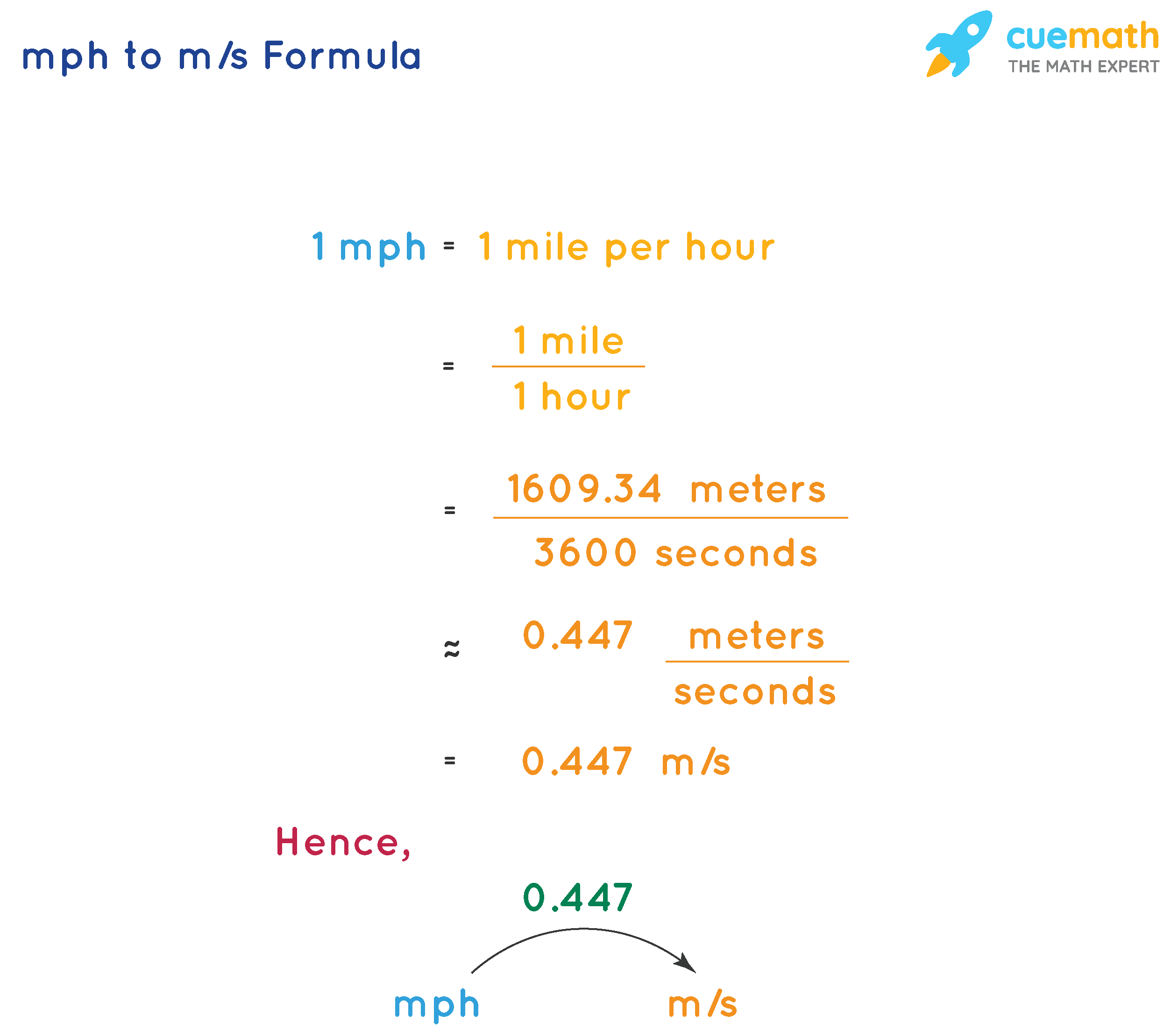
The conversion of 100 mph to SI units is 160.9344 kilometers per hour (km/h). This conversion is based on the definition of a mile as 1609.34 meters and an hour as 3600 seconds.
Understanding the Conversion Factor
To convert 100 mph to SI units, we need to understand the conversion factor between miles and kilometers. The conversion factor is 1 mile = 1.60934 kilometers. We can use this conversion factor to convert 100 mph to kilometers per hour. The formula for conversion is: speed in km/h = speed in mph 1.60934. Using this formula, we can calculate the conversion of 100 mph to SI units as follows:
- Speed in mph: 100 mph
- Conversion factor: 1 mile = 1.60934 kilometers
- Speed in km/h: 100 mph 1.60934 = 160.9344 km/h
The Importance of SI Units in Physics
SI units are widely used in physics and other scientific fields because they provide a consistent and coherent system of measurement. The use of SI units ensures that measurements are accurate and reliable, and it facilitates communication and collaboration among scientists and engineers. In the context of speed measurement, SI units provide a standardized way of expressing speed, which is essential for comparing and analyzing different physical phenomena. For example:
- Speed is a fundamental concept in physics, and it is often measured in SI units such as meters per second (m/s) or kilometers per hour (km/h)
- Acceleration is another important concept in physics, and it is often measured in SI units such as meters per second squared (m/s^2)
- Force is also an important concept in physics, and it is often measured in SI units such as newtons (N)
Applications of Speed Measurement in Real-World Scenarios
The measurement of speed is crucial in many real-world scenarios, such as transportation, sports, and engineering. In transportation, speed measurement is used to monitor and control the speed of vehicles, which is essential for ensuring safety and preventing accidents. In sports, speed measurement is used to track the performance of athletes, which is essential for determining winners and losers. In engineering, speed measurement is used to design and optimize systems, such as cars, airplanes, and trains. For example:
- Cars are designed to operate at high speeds, and their speed is measured using speedometers
- Airplanes are designed to operate at high speeds, and their speed is measured using pilot tubes and radar systems
- Trains are designed to operate at high speeds, and their speed is measured using speed sensors and control systems
The Role of Conversion Factors in Scientific Calculations
Conversion factors play a crucial role in scientific calculations, as they enable us to convert between different units of measurement. In the context of speed measurement, conversion factors are used to convert between miles per hour (mph) and kilometers per hour (km/h). Conversion factors are also used to convert between other units of measurement, such as meters per second (m/s) and feet per second (ft/s). For example:
- Length conversion factors: 1 meter = 3.2808 feet, 1 kilometer = 0.621371 miles
- Time conversion factors: 1 hour = 3600 seconds, 1 day = 86400 seconds
- Speed conversion factors: 1 mile per hour = 1.60934 kilometers per hour, 1 meter per second = 3.2808 feet per second
Common Mistakes to Avoid When Converting Units
When converting units, it is essential to avoid common mistakes that can lead to inaccurate results. One of the most common mistakes is unit confusion, which occurs when we mix up different units of measurement. Another common mistake is conversion factor error, which occurs when we use an incorrect conversion factor. To avoid these mistakes, we need to be careful and meticulous when converting units. For example:
- Unit confusion: Make sure to use the correct units of measurement, and avoid mixing up different units
- Conversion factor error: Use the correct conversion factor, and avoid using incorrect or outdated conversion factors
- Calculation errors: Double-check your calculations, and avoid making mistakes when converting units
Frequently Asked Questions (FAQs)
What is the purpose of the Mile Statute Units Conversion Calculator?
The Mile Statute Units Conversion Calculator is a tool designed to simplify the process of converting between different units of measurement, specifically focusing on mile and statute units. This calculator is essential for individuals who work with distance and length measurements in various fields such as engineering, architecture, and surveying. The calculator allows users to easily convert between miles, feet, inches, and other units, making it a valuable resource for anyone who needs to perform conversions on a regular basis. By using this calculator, users can quickly and accurately convert between different units, saving time and reducing the risk of errors.
How does the Mile Statute Units Conversion Calculator work?
The Mile Statute Units Conversion Calculator works by using a set of pre-defined conversion factors to convert between different units of measurement. Users simply need to enter the value they want to convert and select the unit they want to convert from and to. The calculator then uses the conversion factors to perform the calculation and displays the result in the desired unit. The calculator also allows users to customize their conversions by selecting from a range of units and precision levels, making it a flexible and user-friendly tool. The calculator's algorithm is based on the standard conversion factors for mile and statute units, ensuring that the results are accurate and reliable.
What are the benefits of using the Mile Statute Units Conversion Calculator?
The Mile Statute Units Conversion Calculator offers several benefits to users, including convenience, accuracy, and speed. The calculator is easy to use, even for those who are not familiar with unit conversions, and provides instant results, making it a time-saving tool. The calculator also reduces the risk of errors by using pre-defined conversion factors, ensuring that the results are reliable and trustworthy. Additionally, the calculator is free to use and can be accessed from any device with an internet connection, making it a accessible resource for anyone who needs to perform unit conversions. By using the calculator, users can improve their productivity and efficiency, and focus on more complex tasks.
Can the Mile Statute Units Conversion Calculator be used for complex conversions?
The Mile Statute Units Conversion Calculator is designed to handle both simple and complex conversions, making it a versatile tool for a range of applications. The calculator can be used to convert between multiple units, including mile, foot, inch, and other statute units, and can also perform compound conversions, such as converting from miles to feet and then to inches. The calculator's advanced features, such as customizable units and precision levels, make it a powerful tool for complex conversions. Additionally, the calculator's algorithm is based on standard conversion factors, ensuring that the results are accurate and reliable, even for complex conversions. By using the calculator, users can simplify complex conversions and reduce the risk of errors, making it a valuable resource for anyone who needs to perform unit conversions.
Deja una respuesta
Entradas Relacionadas