
Maximum Power Dissipation Transistor Equations and Calculator

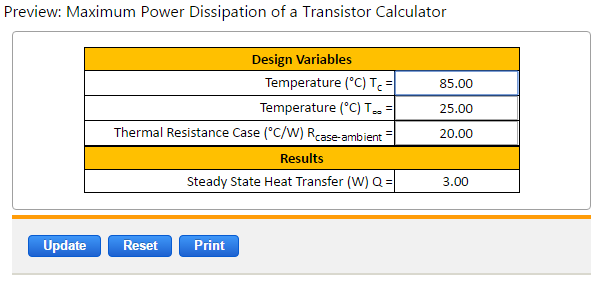
The Maximum Power Dissipation of a transistor is a critical parameter that determines its reliability and lifespan. When a transistor operates beyond its maximum power dissipation limit, it can lead to overheating, damage, and eventual failure. To ensure safe and efficient operation, it is essential to understand the equations that govern maximum power dissipation in transistors. This article provides an overview of the key equations and offers a calculator to help designers and engineers determine the maximum power dissipation of a transistor, enabling them to make informed decisions in their circuit designs. Accurate calculations are crucial in this process.
- Maximum Power Dissipation Transistor Equations and Calculator
- What is the formula for maximum power dissipation of a transistor?
- How do you calculate power dissipation?
- What is maximum power dissipation PD?
-
Frequently Asked Questions (FAQs)
- What is Maximum Power Dissipation in Transistors and How is it Calculated?
- How do Transistor Equations Relate to Maximum Power Dissipation Calculator?
- What are the Key Factors that Affect Maximum Power Dissipation in Transistors?
- How can the Maximum Power Dissipation Calculator be Used in Transistor Circuit Design?
Maximum Power Dissipation Transistor Equations and Calculator
The maximum power dissipation of a transistor is a critical parameter that determines its ability to handle high power applications. It is essential to calculate the maximum power dissipation to ensure that the transistor does not overheat, which can lead to damage or failure. The maximum power dissipation can be calculated using various equations, and there are also online calculators available to simplify the process.
Introduction to Maximum Power Dissipation
Maximum power dissipation refers to the maximum amount of power that a transistor can handle without overheating. This is typically specified in the datasheet of the transistor and is usually given in units of watts. The maximum power dissipation is dependent on several factors, including the temperature of the transistor, the current flowing through it, and the voltage applied across it. To calculate the maximum power dissipation, the following equation can be used: Pd = (Tj - Ta) / Rth, where Pd is the maximum power dissipation, Tj is the junction temperature, Ta is the ambient temperature, and Rth is the thermal resistance.
Transistor Power Dissipation Equations
There are several equations that can be used to calculate the maximum power dissipation of a transistor. One of the most common equations is: Pd = Vce Ic, where Vce is the collector-emitter voltage and Ic is the collector current. Another equation that can be used is: Pd = (Vce Ic) + (Vbe Ib), where Vbe is the base-emitter voltage and Ib is the base current. These equations can be used to calculate the maximum power dissipation of a transistor, but it is essential to note that they are only approximations and may not reflect the actual power dissipation of the transistor.
| Parameter | Unit | Description |
|---|---|---|
| Pd | W | Maximum power dissipation |
| Tj | °C | Junction temperature |
| Ta | °C | Ambient temperature |
| Rth | °C/W | Thermal resistance |
| Vce | V | Collector-emitter voltage |
| Ic | A | Collector current |
Maximum Power Dissipation Calculator
There are several online calculators available that can be used to calculate the maximum power dissipation of a transistor. These calculators typically require the user to input the parameters of the transistor, such as the junction temperature, ambient temperature, and thermal resistance. The calculator then uses these parameters to calculate the maximum power dissipation of the transistor. Some calculators also allow the user to input the Voltage and Current of the transistor, and then calculate the maximum power dissipation based on these values.
Factors Affecting Maximum Power Dissipation
There are several factors that can affect the maximum power dissipation of a transistor. One of the most significant factors is the temperature of the transistor. As the temperature increases, the maximum power dissipation of the transistor decreases. Another factor that can affect the maximum power dissipation is the thermal resistance of the transistor. A higher thermal resistance can reduce the maximum power dissipation of the transistor. The voltage and current of the transistor can also affect the maximum power dissipation, as higher voltages and currents can increase the power dissipation of the transistor.
Importance of Maximum Power Dissipation in Transistor Design
The maximum power dissipation is a critical parameter in transistor design. It determines the reliability and performance of the transistor, and is essential for ensuring that the transistor can handle high power applications. The maximum power dissipation also affects the thermal management of the transistor, as higher power dissipation can require more complex thermal management systems. By understanding the maximum power dissipation of a transistor, designers can create more efficient and reliable transistor designs that can handle high power applications.
What is the formula for maximum power dissipation of a transistor?

The formula for maximum power dissipation of a transistor is given by P = (Vce Ic), where Vce is the collector-emitter voltage and Ic is the collector current. However, the actual power dissipation is limited by the thermal resistance and maximum junction temperature of the transistor.
Understanding the Power Dissipation Formula
The power dissipation formula is a fundamental concept in electronics engineering. To understand this formula, one needs to consider the following points:
- The voltage and current ratings of the transistor, which determine the maximum power it can handle.
- The thermal resistance of the transistor, which affects its ability to dissipate heat.
- The maximum junction temperature, which is the highest temperature the transistor can tolerate without suffering damage.
This formula is crucial in designing electronic circuits that involve transistors, as it helps engineers to ensure that the transistors are not overstressed and are operating within their safe operating area.
Factors Affecting Power Dissipation
Several factors affect the power dissipation of a transistor, including the ambient temperature, transistor packaging, and cooling methods.
- The ambient temperature affects the thermal resistance of the transistor, which in turn affects its power dissipation.
- The transistor packaging can influence the thermal resistance and maximum power dissipation of the transistor.
- The cooling methods, such as heat sinks or fans, can significantly impact the power dissipation of the transistor.
These factors must be carefully considered when designing electronic systems that involve transistors, as they can significantly impact the reliability and performance of the system.
Calculating Maximum Power Dissipation
To calculate the maximum power dissipation of a transistor, one needs to consider the voltage and current ratings of the transistor, as well as its thermal resistance and maximum junction temperature.
- The voltage and current ratings of the transistor determine the maximum power it can handle.
- The thermal resistance of the transistor affects its ability to dissipate heat.
- The maximum junction temperature is the highest temperature the transistor can tolerate without suffering damage.
By using the formula P = (Vce Ic) and considering these factors, engineers can ensure that the transistors in their designs are operating within their safe operating area.
Importance of Power Dissipation in Electronics
Power dissipation is a critical consideration in electronics design, as it affects the reliability, performance, and lifespan of electronic devices.
- Excessive power dissipation can lead to thermal runaway, causing the transistor to fail.
- Inadequate cooling methods can result in overheating, reducing the lifespan of the transistor.
- Proper power dissipation techniques, such as heat sinking and thermal management, can ensure the reliability and performance of electronic devices.
By understanding and managing power dissipation, engineers can design reliable and high-performance electronic systems that meet the demands of modern technologies.
Applications of Power Dissipation in Electronics
The concept of power dissipation has numerous applications in electronics engineering, including amplifier design, power supply design, and thermal management.
- In amplifier design, power dissipation is crucial in determining the maximum power output and efficiency of the amplifier.
- In power supply design, power dissipation affects the efficiency and reliability of the power supply.
- In thermal management, power dissipation is critical in ensuring the reliability and performance of electronic devices in high-temperature environments.
By applying the principles of power dissipation, engineers can design efficient, reliable, and high-performance electronic systems that meet the demands of modern applications.
How do you calculate power dissipation?

To calculate power dissipation, you need to understand the concept of electrical power and how it is dissipated in a circuit. Power dissipation is the process by which electrical energy is converted into heat energy, and it occurs in all electrical circuits. The calculation of power dissipation involves understanding the voltage, current, and resistance of the circuit.
Understanding the Formula for Power Dissipation
The formula for power dissipation is P = VI, where P is the power dissipated, V is the voltage, and I is the current. This formula shows that power dissipation is directly proportional to the voltage and current of the circuit. To calculate power dissipation, you need to know the voltage and current of the circuit, and then you can use the formula to calculate the power dissipated.
- The voltage of the circuit is measured in volts (V)
- The current of the circuit is measured in amperes (A)
- The power dissipation is measured in watts (W)
Factors Affecting Power Dissipation
There are several factors that affect power dissipation in a circuit, including the resistance of the circuit, the temperature of the circuit, and the frequency of the signal. The resistance of the circuit determines how much power is dissipated, as a higher resistance results in more power dissipation. The temperature of the circuit also affects power dissipation, as a higher temperature can increase the resistance of the circuit and result in more power dissipation.
- Resistance is the opposition to the flow of current in a circuit
- Temperature affects the resistance of the circuit and the power dissipation
- Frequency of the signal can affect the power dissipation in the circuit
Importance of Power Dissipation in Electronic Design
Power dissipation is an important consideration in electronic design, as excessive power dissipation can result in overheating and damage to the circuit. Electronic designers need to carefully consider the power dissipation of a circuit when designing it, and take steps to minimize power dissipation where possible. This can involve using low-power components, optimizing the circuit design, and using heat sinks to dissipate heat.
- Overheating can cause damage to the circuit and reduce its lifespan
- Low-power components can help reduce power dissipation
- Heat sinks can be used to dissipate heat and reduce the temperature of the circuit
Methods for Reducing Power Dissipation
There are several methods for reducing power dissipation in a circuit, including using low-power components, reducing the voltage, and optimizing the circuit design. Using low-power components can help reduce power dissipation, as these components are designed to consume less power. Reducing the voltage of the circuit can also help reduce power dissipation, as a lower voltage results in less power being dissipated.
- Low-power components can help reduce power dissipation
- Reducing the voltage can help reduce power dissipation
- Optimizing the circuit design can help reduce power dissipation
Tools for Calculating Power Dissipation
There are several tools available for calculating power dissipation, including spreadsheets, circuit simulators, and online calculators. These tools can help electronic designers calculate the power dissipation of a circuit and optimize the design to minimize power dissipation. Circuit simulators can be used to simulate the behavior of the circuit and calculate the power dissipation, while online calculators can be used to quickly calculate the power dissipation of a circuit.
- Spreadsheets can be used to calculate power dissipation using formulas
- Circuit simulators can be used to simulate the behavior of the circuit and calculate power dissipation
- Online calculators can be used to quickly calculate the power dissipation of a circuit
What is maximum power dissipation PD?
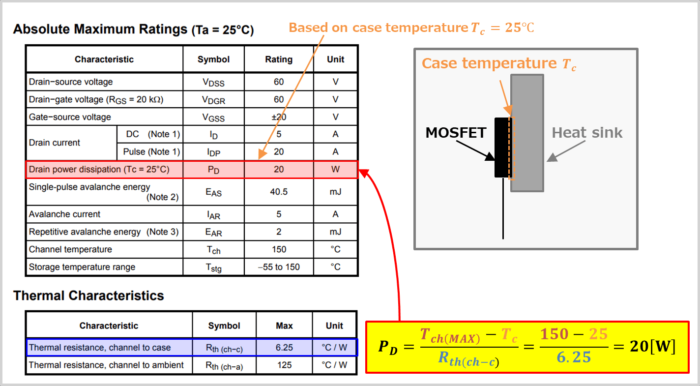
Maximum power dissipation (PD) refers to the maximum amount of power that a device can safely dissipate without suffering damage or degradation. This parameter is critical in the design and operation of electronic systems, as excessive power dissipation can lead to overheating, reduced lifespan, and even catastrophic failure.
Understanding Maximum Power Dissipation
Maximum power dissipation is determined by the device's thermal resistance, ambient temperature, and power consumption. It is essential to consider these factors to ensure that the device operates within its safe operating area. The maximum power dissipation is typically specified in the device's datasheet, and it is crucial to adhere to this limit to prevent thermal runaway.
- The thermal resistance of a device is a measure of its ability to dissipate heat, and it is typically expressed in units of degrees Celsius per watt.
- The ambient temperature is the temperature of the surrounding environment, and it can significantly impact the device's maximum power dissipation.
- The power consumption of a device is the amount of power it requires to operate, and it is typically expressed in units of watts.
Factors Affecting Maximum Power Dissipation
Several factors can affect the maximum power dissipation of a device, including its size, material, and cooling system. The device's geometry and layout can also impact its thermal performance, and it is essential to consider these factors during the design phase. Additionally, the operating frequency and voltage of the device can also influence its maximum power dissipation.
- The size of a device can impact its thermal resistance, with smaller devices typically having higher thermal resistance.
- The material used to construct a device can affect its thermal conductivity, with some materials being more thermally conductive than others.
- The cooling system used to dissipate heat from a device can significantly impact its maximum power dissipation, with active cooling systems typically being more effective than passive cooling systems.
Methods for Calculating Maximum Power Dissipation
There are several methods for calculating the maximum power dissipation of a device, including analytical models, numerical simulations, and experimental measurements. These methods can be used to estimate the device's thermal performance and maximum power dissipation, and they are essential for ensuring that the device operates within its safe operating area.
- Analytical models can be used to estimate the thermal resistance and maximum power dissipation of a device, and they are typically based on simplifying assumptions.
- Numerical simulations can be used to model the thermal behavior of a device, and they are typically more accurate than analytical models.
- Experimental measurements can be used to directly measure the maximum power dissipation of a device, and they are typically more reliable than analytical models or numerical simulations.
Importance of Maximum Power Dissipation in Electronic Design
The maximum power dissipation is a critical parameter in electronic design, as it can impact the reliability, performance, and lifespan of a device. Exceeding the maximum power dissipation can lead to thermal runaway, device failure, and even catastrophic failure, and it is essential to consider this parameter during the design phase.
- The maximum power dissipation can impact the reliability of a device, with excessive power dissipation leading to premature failure.
- The maximum power dissipation can impact the performance of a device, with excessive power dissipation leading to reduced performance.
- The maximum power dissipation can impact the lifespan of a device, with excessive power dissipation leading to reduced lifespan.
Techniques for Reducing Maximum Power Dissipation
There are several techniques for reducing the maximum power dissipation of a device, including heat sinking, cooling systems, and low-power design. These techniques can be used to reduce the device's thermal resistance, power consumption, and maximum power dissipation, and they are essential for ensuring that the device operates within its safe operating area.
- Heat sinking can be used to reduce the thermal resistance of a device, and it typically involves attaching a heat sink to the device.
- Cooling systems can be used to reduce the temperature of a device, and they typically involve active cooling or passive cooling methods.
- Low-power design can be used to reduce the power consumption of a device, and it typically involves minimizing the device's power requirements.
Frequently Asked Questions (FAQs)
What is Maximum Power Dissipation in Transistors and How is it Calculated?
The maximum power dissipation in transistors is a critical parameter that determines the reliability and lifetime of the device. It is defined as the maximum amount of power that a transistor can safely dissipate without exceeding its temperature limits. The power dissipation calculation is based on the collector current, collector-emitter voltage, and base current. To calculate the maximum power dissipation, the transistor's thermal resistance and ambient temperature must also be considered. The thermal resistance is a measure of how well the transistor can dissipate heat, and the ambient temperature is the temperature of the surrounding environment. By using the maximum power dissipation equation, designers can ensure that their transistor circuits operate within safe limits and do not overheat, which can lead to device failure.
How do Transistor Equations Relate to Maximum Power Dissipation Calculator?
The transistor equations used to calculate the maximum power dissipation are based on the physical properties of the transistor and its operating conditions. The maximum power dissipation equation takes into account the collector current, collector-emitter voltage, and base current, as well as the thermal resistance and ambient temperature. By using these equations, designers can calculate the maximum power dissipation of a transistor and ensure that it operates within safe limits. The maximum power dissipation calculator is a tool that uses these equations to calculate the maximum power dissipation of a transistor based on user-input parameters. The calculator can be used to optimize transistor circuits for maximum power handling and minimum heat generation, which is critical in high-power applications. By using the calculator, designers can quickly and accurately determine the maximum power dissipation of a transistor and design their circuits accordingly.
What are the Key Factors that Affect Maximum Power Dissipation in Transistors?
The key factors that affect the maximum power dissipation in transistors include the collector current, collector-emitter voltage, base current, thermal resistance, and ambient temperature. The collector current and collector-emitter voltage determine the power dissipation of the transistor, while the base current affects the efficiency of the transistor. The thermal resistance and ambient temperature determine how well the transistor can dissipate heat, which affects the maximum power dissipation. Additionally, the transistor's packaging and heat sink can also affect the maximum power dissipation. The packaging and heat sink can improve or degrade the transistor's ability to dissipate heat, depending on their design and implementation. By understanding these key factors, designers can optimize their transistor circuits for maximum power handling and minimum heat generation.
How can the Maximum Power Dissipation Calculator be Used in Transistor Circuit Design?
The maximum power dissipation calculator can be used in transistor circuit design to optimize the circuit for maximum power handling and minimum heat generation. By using the calculator, designers can quickly and accurately determine the maximum power dissipation of a transistor based on user-input parameters. The calculator can be used to simulate different transistor circuits and operating conditions, allowing designers to evaluate and compare different design options. The calculator can also be used to identify potential bottlenecks in the circuit and optimize the design for maximum performance. By using the calculator, designers can reduce the risk of device failure due to overheating and improve the overall reliability and lifetime of the transistor circuit. Additionally, the calculator can be used to educate and train designers on the importance of thermal management in transistor circuit design.
Deja una respuesta
Entradas Relacionadas