
Large and Small Diameter Lifting Pulley Drums Equation and Calculator

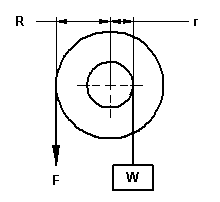
Large diameter lifting pulley drums are critical components in various mechanical systems, such as cranes, elevators, and winches. The calculation of their size and strength is crucial for ensuring safe and efficient operation. This article provides an in-depth examination of the equations and calculations involved in designing large and small diameter lifting pulley drums, including the factors that influence their performance and the mathematical formulas used to determine their specifications. A calculator is also provided to simplify the calculation process, making it a valuable resource for engineers and designers. Accurate calculations are essential for optimal performance.
- Large and Small Diameter Lifting Pulley Drums Equation and Calculator
- How to calculate rpm from pulley diameter?
- What is the formula for calculating the size of a pulley?
-
Frequently Asked Questions (FAQs)
- What is the purpose of the Large and Small Diameter Lifting Pulley Drums Equation and Calculator?
- How does the Large and Small Diameter Lifting Pulley Drums Equation and Calculator work?
- What are the benefits of using the Large and Small Diameter Lifting Pulley Drums Equation and Calculator?
- What are the limitations of the Large and Small Diameter Lifting Pulley Drums Equation and Calculator?
Large and Small Diameter Lifting Pulley Drums Equation and Calculator
The Large and Small Diameter Lifting Pulley Drums Equation and Calculator is a set of mathematical formulas and online tools used to calculate the mechanical advantage and efficiency of pulley systems with large and small diameter drums. These calculations are crucial in various fields, including engineering, architecture, and construction, where pulley systems are used to lift and move heavy loads.
Introduction to Pulley Systems
Pulley systems are used to change the direction of force or motion, and to gain mechanical advantage. A pulley system consists of a wheel with a grooved rim and a rope or cable wrapped around it. The large diameter drum is typically used for lifting heavy loads, while the small diameter drum is used for precision applications. The equation for calculating the mechanical advantage of a pulley system is: MA = (D Large / D Small), where MA is the mechanical advantage, D Large is the diameter of the large drum, and D Small is the diameter of the small drum.
Calculating Mechanical Advantage
To calculate the mechanical advantage of a pulley system, you need to know the diameters of the large and small drums. The formula for calculating mechanical advantage is: MA = (D Large / D Small). For example, if the diameter of the large drum is 10 inches and the diameter of the small drum is 2 inches, the mechanical advantage would be: MA = (10 / 2) = 5. This means that the pulley system can lift a load that is 5 times heavier than the force applied to the rope or cable.
Efficiency of Pulley Systems
The efficiency of a pulley system is a measure of how much of the input energy is converted into useful work. The efficiency of a pulley system can be calculated using the formula: Efficiency = (Work Output / Work Input) x 100%. The work output is the amount of energy transferred to the load, and the work input is the amount of energy applied to the rope or cable. For example, if the work output is 1000 ft-lbs and the work input is 1200 ft-lbs, the efficiency would be: Efficiency = (1000 / 1200) x 100% = 83.3%.
Large Diameter Lifting Pulley Drums Equation
The large diameter lifting pulley drums equation is used to calculate the load capacity of a pulley system with a large diameter drum. The equation is: Load Capacity = (D Large x R x μ) / (D Small x F), where Load Capacity is the maximum weight that can be lifted, D Large is the diameter of the large drum, R is the radius of the large drum, μ is the coefficient of friction, D Small is the diameter of the small drum, and F is the force applied to the rope or cable.
Small Diameter Lifting Pulley Drums Equation
The small diameter lifting pulley drums equation is used to calculate the precision of a pulley system with a small diameter drum. The equation is: Precision = (D Small x R x μ) / (D Large x F), where Precision is the degree of accuracy of the pulley system, D Small is the diameter of the small drum, R is the radius of the small drum, μ is the coefficient of friction, D Large is the diameter of the large drum, and F is the force applied to the rope or cable.
| Parameter | Unit | Description |
|---|---|---|
| D Large | inches | Diameter of the large drum |
| D Small | inches | Diameter of the small drum |
| MA | numeric | Mechanical advantage of the pulley system |
| Efficiency | percentage | Efficiency of the pulley system |
| Load Capacity | pounds | Maximum weight that can be lifted |
How to calculate rpm from pulley diameter?

To calculate RPM (revolutions per minute) from pulley diameter, you need to know the speed of the belt or chain and the diameter of the pulley. The formula to calculate RPM is: RPM = (speed of the belt or chain in feet per minute) / (circumference of the pulley in feet). The circumference of the pulley can be calculated using the formula: circumference = π x diameter.
Understanding Pulley Diameter and Its Importance
The pulley diameter is a critical component in calculating RPM. A larger pulley diameter will result in a lower RPM, while a smaller pulley diameter will result in a higher RPM. To calculate RPM, you need to know the pulley diameter and the speed of the belt or chain. Here are the steps to calculate RPM:
- Measure the pulley diameter in feet or inches
- Calculate the circumference of the pulley using the formula: circumference = π x diameter
- Measure the speed of the belt or chain in feet per minute
Calculating Circumference of the Pulley
The circumference of the pulley is calculated using the formula: circumference = π x diameter. This is a critical step in calculating RPM. A larger circumference will result in a lower RPM, while a smaller circumference will result in a higher RPM. Here are the steps to calculate circumference:
- Measure the pulley diameter in feet or inches
- Use the formula: circumference = π x diameter to calculate the circumference
- Use the calculated circumference to calculate RPM
Importance of Speed in Calculating RPM
The speed of the belt or chain is a critical component in calculating RPM. A faster speed will result in a higher RPM, while a slower speed will result in a lower RPM. To calculate RPM, you need to know the speed of the belt or chain and the circumference of the pulley. Here are the steps to calculate RPM:
- Measure the speed of the belt or chain in feet per minute
- Calculate the circumference of the pulley using the formula: circumference = π x diameter
- Use the formula: RPM = (speed of the belt or chain in feet per minute) / (circumference of the pulley in feet) to calculate RPM
Using the Formula to Calculate RPM
The formula to calculate RPM is: RPM = (speed of the belt or chain in feet per minute) / (circumference of the pulley in feet). This formula is critical in calculating RPM. A larger circumference will result in a lower RPM, while a smaller circumference will result in a higher RPM. Here are the steps to calculate RPM:
- Measure the speed of the belt or chain in feet per minute
- Calculate the circumference of the pulley using the formula: circumference = π x diameter
- Use the formula: RPM = (speed of the belt or chain in feet per minute) / (circumference of the pulley in feet) to calculate RPM
Practical Applications of Calculating RPM
Calculating RPM is important in many industrial applications, such as machinery and engine design. A higher RPM can result in increased efficiency, while a lower RPM can result in decreased efficiency. To calculate RPM, you need to know the speed of the belt or chain and the circumference of the pulley. Here are the steps to calculate RPM:
- Measure the speed of the belt or chain in feet per minute
- Calculate the circumference of the pulley using the formula: circumference = π x diameter
- Use the formula: RPM = (speed of the belt or chain in feet per minute) / (circumference of the pulley in feet) to calculate RPM
What is the formula for calculating the size of a pulley?
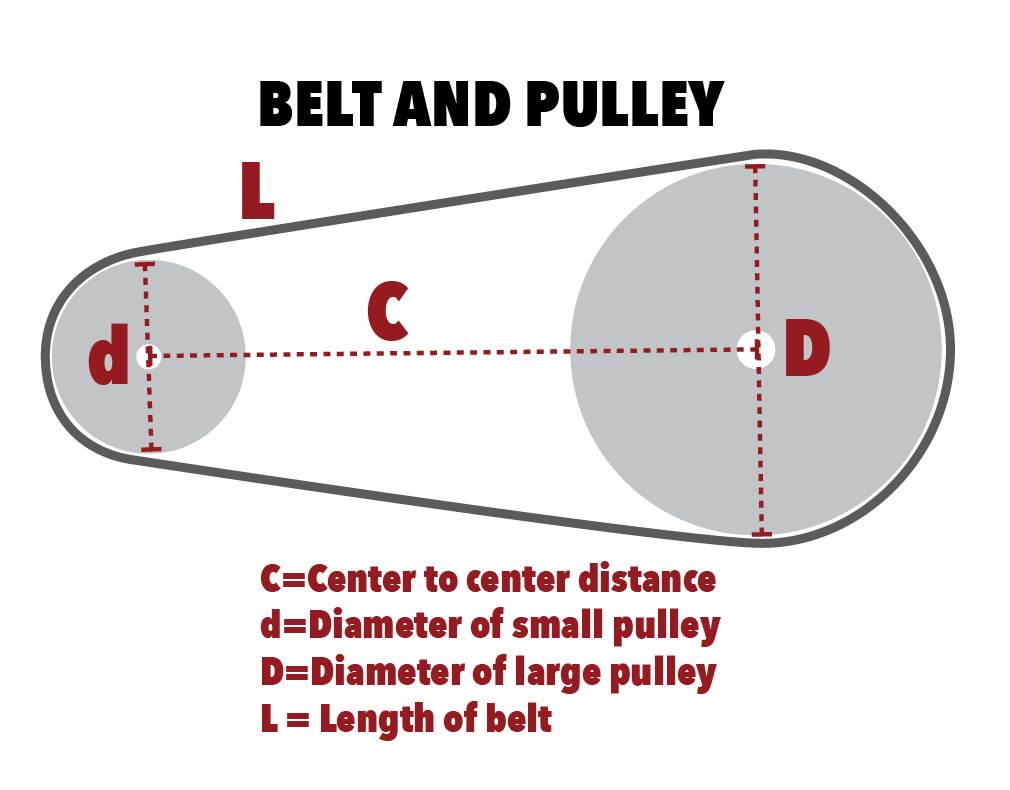
The formula for calculating the size of a pulley is based on the diameter and width of the pulley, as well as the type of belt or cable being used. The calculation involves determining the pitch diameter of the pulley, which is the diameter of the pulley at the point where the belt or cable rides. This can be calculated using the formula: pitch diameter = (number of teeth x pitch) / (pi).
Understanding Pulley Size Calculations
The calculation of pulley size is crucial for ensuring proper belt or cable tension and alignment. A pulley that is too small may not provide enough traction, while a pulley that is too large may cause slippage or vibration. To calculate the size of a pulley, the following factors must be considered:
- The type of belt or cable being used, including its width and thickness.
- The diameter of the shaft or axle that the pulley will be mounted on.
- The desired speed ratio or torque ratio of the system.
Pulley Diameter and Width Considerations
When calculating the size of a pulley, the diameter and width of the pulley must be carefully considered. A larger diameter pulley may be required for high-speed applications or for heavy-duty use, while a smaller diameter pulley may be sufficient for low-speed applications or for light-duty use. The width of the pulley must also be considered, as it will affect the contact area between the belt or cable and the pulley.
- The diameter of the pulley should be at least 10 times the thickness of the belt or cable.
- The width of the pulley should be at least 1.5 times the width of the belt or cable.
- The diameter and width of the pulley should be matched to the specific application and requirements.
Types of Pulleys and Their Applications
There are several types of pulleys available! each with its own unique characteristics and applications. The most common types of pulleys include wheel pulleys, tapered pulleys, and flat pulleys. The type of pulley used will depend on the specific application and requirements, including the type of belt or cable being used and the desired speed ratio or torque ratio.
- Wheel pulleys are used for high-speed applications and are typically smaller in diameter.
- Tapered pulleys are used for variable-speed applications and are typically larger in diameter.
- Flat pulleys are used for low-speed applications and are typically wider in width.
Pulley Material and Construction Considerations
The material and construction of a pulley can also affect its performance and durability. Pulleys can be made from a variety of materials, including steel, aluminum, and plastics. The construction of the pulley may also include features such as bearings, seals, and coatings.
- The material of the pulley should be matched to the specific application and requirements.
- The construction of the pulley should include features that enhance its performance and durability.
- The pulley should be properly maintained and inspected to ensure optimal performance.
Calculating Pulley Size Using Formulas and Charts
The size of a pulley can be calculated using formulas and charts. The most common formula used to calculate pulley size is the pitch diameter formula, which takes into account the number of teeth on the pulley and the pitch of the belt or cable. Charts and graphs can also be used to determine the proper pulley size based on the specific application and requirements.
- The pitch diameter formula can be used to calculate the proper pulley size.
- Charts and graphs can be used to determine the proper pulley size based on the specific application and requirements.
- The pulley size should be verified using multiple methods to ensure accuracy.
Frequently Asked Questions (FAQs)
What is the purpose of the Large and Small Diameter Lifting Pulley Drums Equation and Calculator?
The Large and Small Diameter Lifting Pulley Drums Equation and Calculator is a tool designed to calculate the tension and force required to lift a load using a pulley system with drums of different diameters. This equation and calculator are essential in various industries, such as construction, manufacturing, and engineering, where pulley systems are commonly used to lift and move heavy loads. The calculator takes into account the weight of the load, the diameter of the pulley drums, and the efficiency of the system to determine the required tension and force. By using this equation and calculator, users can ensure that their pulley system is designed and operated safely and efficiently, reducing the risk of accidents and equipment failure.
How does the Large and Small Diameter Lifting Pulley Drums Equation and Calculator work?
The Large and Small Diameter Lifting Pulley Drums Equation and Calculator works by using a complex mathematical formula that takes into account the physical properties of! the pulley system, including the diameter of the drums, the weight of the load, and the coefficient of friction. The calculator uses this formula to calculate the tension required to lift the load, as well as the force required to operate the pulley system. The calculator also takes into account the efficiency of the system, which can be affected by factors such as friction and wear and tear on the pulley components. By inputting the relevant values into the calculator, users can quickly and easily determine the required tension and force, allowing them to design and operate their pulley system with confidence and accuracy. The calculator is a valuable tool for anyone working with pulley systems, as it helps to ensure safe and efficient operation.
What are the benefits of using the Large and Small Diameter Lifting Pulley Drums Equation and Calculator?
The Large and Small Diameter Lifting Pulley Drums Equation and Calculator offers several benefits to users, including increased safety and efficiency. By accurately calculating the required tension and force, users can ensure that their pulley system is designed and operated to minimize the risk of accidents and equipment failure. The calculator also helps to reduce costs by optimizing the design of the pulley system and minimizing the amount of energy required to operate it. Additionally, the calculator is a time-saving tool, as it quickly and easily provides the required calculations, eliminating the need for manual calculations or trial and error. The calculator is also a valuable resource for educational purposes, as it helps to illustrate the principles of pulley systems and the importance of accurate calculations in engineering and design.
What are the limitations of the Large and Small Diameter Lifting Pulley Drums Equation and Calculator?
The Large and Small Diameter Lifting Pulley Drums Equation and Calculator has several limitations that users should be aware of. One of the main limitations is that the calculator assumes a simple pulley system with a single load and a single pulley drum. In real-world applications, pulley systems can be much more complex, with multiple loads and pulley drums, and the calculator may not be able to accurately account for these complexities. Additionally, the calculator assumes a constant coefficient of friction, which may not always be the case in practice. The calculator also requires accurate input values, including the weight of the load and the diameter of the pulley drums, and small errors in these values can result in large errors in the calculated tension and force. Furthermore, the calculator is only a tool and should not be relied upon as the sole means of designing or operating a pulley system. Users should always consult with qualified engineers or experts to ensure that their pulley system is designed and operated safely and efficiently.
Deja una respuesta
Entradas Relacionadas