
Gradability Equation and Calculator


The concept of gradability refers to the degree or extent to which something possesses a particular quality or characteristic. In various fields such as engineering, economics, and social sciences, gradability is crucial for analysis and decision-making. The gradability equation is a mathematical representation that enables the calculation of gradability, providing a quantitative measure of the extent to which a certain attribute is present. With the advent of technology, gradability calculators have been developed to simplify and expedite this process, offering a user-friendly tool for evaluating and comparing gradability in diverse contexts and applications. Calculators enhance accuracy and efficiency.
- Understanding Gradability Equation and Calculator
- How do you calculate gradability?
- How do you calculate grade steepness?
- How to calculate weighted average calculator?
-
Frequently Asked Questions (FAQs)
- What is the Gradability Equation and how does it relate to the Calculator?
- How does the Gradability Equation and Calculator handle complex variables and parameters?
- What are the applications of the Gradability Equation and Calculator in real-world scenarios?
- How can I interpret the results from the Gradability Equation and Calculator, and what do they mean in the context of my research or application?
Understanding Gradability Equation and Calculator
The gradability equation is a mathematical formula used to determine the gradability of a slope or an inclination. It is commonly used in various fields such as engineering, architecture, and construction. A calculator is often used to simplify the calculation process, making it easier to determine the gradability of a particular slope or inclination.
What is Gradability Equation?
The gradability equation is a mathematical formula that takes into account the rise and run of a slope or inclination to determine its gradability. The rise refers to the vertical distance between two points, while the run refers to the horizontal distance between the same two points. The gradability equation is often expressed as a ratio of the rise to the run, which is then converted to a percentage or a degree.
How to Use a Gradability Calculator
A gradability calculator is a tool used to simplify the calculation process of determining the gradability of a slope or inclination. To use a gradability calculator, simply enter the rise and run values into the calculator, and it will provide the gradability value as a percentage or degree.
Applications of Gradability Equation and Calculator
The gradability equation and calculator have various applications in different fields. In engineering, it is used to design and construct roads, bridges, and buildings. In architecture, it is used to design and construct staircases, ramps, and inclined planes. In construction, it is used to ensure that slopes and inclinations are safe and accessible.
Benefits of Using a Gradability Calculator
Using a gradability calculator has several benefits. It saves time and effort by providing quick and accurate calculations. It also reduces errors and mistakes, which can be costly and time-consuming to correct. Additionally, a gradability calculator can help to ensure that slopes and inclinations are safe and accessible, which is essential in various industries.
Limitations of Gradability Equation and Calculator
While the gradability equation and calculator are useful tools, they have limitations. The gradability equation assumes a straight-line slope or inclination, which may not always be the case in real-world applications. Additionally, the calculator may not take into account other factors that can affect the gradability of a slope or inclination, such as friction and weight.
| Gradability | Rise | Run | Calculator |
|---|---|---|---|
| 10% | 1 | 10 | Gradability Calculator |
| 20% | 2 | 10 | Gradability Calculator |
| 30% | 3 | 10 | Gradability Calculator |
How do you calculate gradability?
To calculate gradability, it is essential to understand the concept of gradable adjectives, which are words that can be modified by adverbs such as very, extremely, or slightly. Gradability is a fundamental aspect of linguistics and semantics, as it allows us to express nuanced meanings and subtle distinctions. The calculation of gradability involves analyzing the lexical semantics of adjectives and their relationships with other words in a sentence.
Defining Gradability
Gradability is the ability of an adjective to be modified by an adverb, indicating the degree or extent of the property being described. To calculate gradability, it is necessary to identify the gradable adjectives in a sentence and determine the adverbs that can modify them. This involves analyzing the semantic meaning of the adjectives and their relationships with other words. Some examples of gradable adjectives include:
- Big, which can be modified by very, extremely, or slightly
- Happy, which can be modified by very, extremely, or slightly
- Intelligent, which can be modified by very, extremely, or slightly
The calculation of gradability requires an understanding of the syntactic and semantic properties of adjectives and adverbs.
Types of Gradability
There are different types of gradability, including absolute gradability, relative gradability, and comparative gradability. Absolute gradability refers to the ability of an adjective to be modified by an adverb without reference to any other entity. Relative gradability, on the other hand, involves comparing the degree of a property between two or more entities. Comparative gradability is a type of relative gradability that involves using comparative forms such as more or less. To calculate gradability, it is necessary to identify the type of gradability involved and the adverbs that can be used to modify the adjectives. Some examples of adverbs that can be used to modify gradable adjectives include:
- Very, which indicates a high degree of the property
- Extremely, which indicates an extremely high degree of the property
- Slightly, which indicates a low degree of the property
The calculation of gradability requires an understanding of the semantic meaning of adverbs and their relationships with gradable adjectives.
Calculating Gradability with Adverbs
Adverbs play a crucial role in calculating gradability, as they provide information about the degree or extent of a property. To calculate gradability, it is necessary to analyze the adverbs that can be used to modify the adjectives and determine their semantic meaning. Some examples of adverbs that can be used to calculate gradability include:
- Very, which indicates a high degree of the property
- Extremely, which indicates an extremely high degree of the property
- Slightly, which indicates a low degree of the property
The calculation of gradability with adverbs requires an understanding of the syntactic and semantic properties of adverbs and their relationships with gradable adjectives.
Gradability and Semantic Meaning
Gradability is closely related to semantic meaning, as it involves analyzing the meaning of adjectives and adverbs in a sentence. To calculate gradability, it is necessary to understand the lexical semantics of adjectives and their relationships with other words. Some examples of gradable adjectives and their semantic meanings include:
- Big, which means having a large size
- Happy, which means feeling pleased or content
- Intelligent, which means having a high mental capacity
The calculation of gradability requires an understanding of the semantic meaning of adjectives and their relationships with other words in a sentence.
Gradability in Linguistic Theory
Gradability is a fundamental concept in linguistic theory, as it provides insights into the syntactic and semantic properties of adjectives and adverbs. To calculate gradability, it is necessary to understand the theoretical frameworks that underlie linguistic analysis, such as generative grammar and cognitive linguistics. Some examples of theoretical frameworks that can be used to calculate gradability include:
- Generative grammar, which provides a framework for analyzing the syntactic structure of sentences
- Cognitive linguistics, which provides a framework for analyzing the semantic meaning of words and phrases
- Pragmatics, which provides a framework for analyzing the relationships between language and context
The calculation of gradability requires an understanding of the theoretical frameworks that underlie linguistic analysis and the semantic meaning of adjectives and adverbs.
How do you calculate grade steepness?
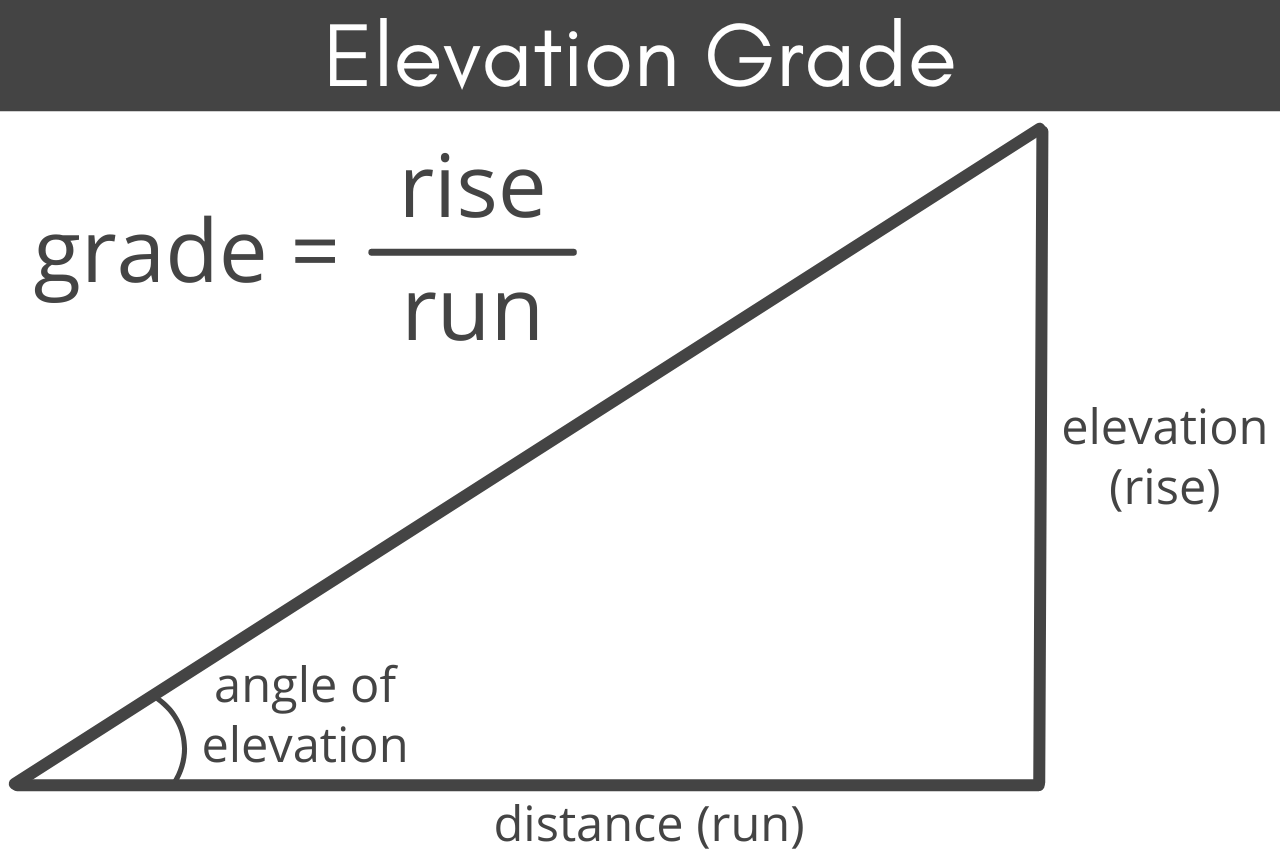
To calculate grade steepness, you need to understand the concept of slope and angle. Grade steepness is a measure of how steep a slope is, and it is typically expressed as a percentage or a ratio. The formula to calculate grade steepness is: rise / run 100, where rise is the vertical distance and run is the horizontal distance. This formula gives you the percentage of the slope, which can be used to determine the steepness of the grade.
Understanding Slope and Angle
To calculate grade steepness, you need to understand the concept of slope and angle. A slope is a measure of how steep a line or a surface is, and it is typically expressed as a ratio of vertical to horizontal distance. The angle of a slope can be calculated using the arctangent function, which gives you the angle in degrees. The angle can be used to determine the steepness of the grade, with higher angles indicating steeper slopes.
- The slope of a line or a surface can be calculated using the formula: rise / run.
- The angle of a slope can be calculated using the arctangent function.
- The angle can be used to determine the steepness of the grade.
Calculating Grade Steepness using Percentage
To calculate grade steepness using percentage, you need to use the formula: rise / run 100. This formula gives you the percentage of the slope, which can be used to determine the steepness of the grade. For example, if the rise is 10 meters and the run is 100 meters, the grade steepness would be 10%.
- The formula to calculate grade steepness using percentage is: rise / run 100.
- The percentage of the slope can be used to determine the steepness of the grade.
- A higher percentage indicates a steeper slope.
Calculating Grade Steepness using Ratio
To calculate grade steepness using ratio, you need to use the formula: rise / run. This formula gives you the ratio of the slope, which can be used to determine the steepness of the grade. For example, if the rise is 10 meters and the run is 100 meters, the grade steepness would be 1:10.
- The formula to calculate grade steepness using ratio is: rise / run.
- The ratio of the slope can be used to determine the steepness of the grade.
- A higher ratio indicates a steeper slope.
Applications of Grade Steepness
Grade steepness has many applications in various fields, including engineering, architecture, and geography. It is used to design roads, bridges, and buildings, and to determine the stability of slopes and hillsides.
- Grade steepness is used to design roads and highways.
- Grade steepness is used to design bridges and buildings.
- Grade steepness is used to determine the stability of slopes and hillsides.
Measuring Grade Steepness in the Field
Measuring grade steepness in the field can be done using various instruments, including clinometers and levels. A clinometer measures the angle of a slope, while a level measures the difference in elevation between two points.
- A clinometer measures the angle of a slope.
- A level measures the difference in elevation between two points.
- GPS devices can also be used to measure grade steepness.
How to calculate weighted average calculator?

To calculate the weighted average, you need to multiply each value by its corresponding weight, add up the results, and then divide by the sum of the weights. The formula for calculating the weighted average is: (value1 weight1 + value2 weight2 + ... + valuenn weightn) / (weight1 + weight2 + ... + weightn). This formula can be used in a variety of contexts, including finance, statistics, and data analysis.
Understanding Weighted Average Calculations
The weighted average calculation is a method of calculating the average of a set of values where each value has a different level of importance or weight. To perform this calculation, you need to first assign a weight to each value, then multiply each value by its corresponding weight, and finally add up the results and divide by the sum of the weights. This can be done using a calculator or a spreadsheet.
- Assign a weight to each value
- Multiply each value by its corresponding weight
- Add up the results and divide by the sum of the weights
Using a Weighted Average Calculator
A weighted average calculator is a tool that can be used to calculate the weighted average of a set of values. This tool can be found online or in a statistics textbook. To use a weighted average calculator, you need to enter the values and their corresponding weights, and then click the calculate button. The calculator will then display the weighted average.
- Enter the values and their corresponding weights
- Click the calculate button
- View the weighted average
Weighted Average Applications
The weighted average has a number of practical applications, including calculating grade point averages, stock prices, and economic indicators. It can also be used to calculate the average of a set of values where each value has a different level of importance or weight. For example, in finance, the weighted average can be used to calculate the cost of capital.
- Calculating grade point averages
- Calculating stock prices
- Calculating economic indicators
Calculating Weighted Average in Excel
Microsoft Excel is a spreadsheet software that can be used to calculate the weighted average. To calculate the weighted average in Excel, you need to use the SUMPRODUCT and SUM functions. The SUMPRODUCT function multiplies each value by its corresponding weight and adds up the results, while the SUM function adds up the weights.
- Enter the values and their corresponding weights in a spreadsheet
- Use the SUMPRODUCT function to calculate the weighted sum
- Use the SUM function to calculate the sum of the weights
Weighted Average Formula and Example
The weighted average formula is: (value1 weight1 + value2 weight2 + ... + valuenn weightn) / (weight1 + weight2 + ... + weightn). For example, if you want to calculate the weighted average of the grades of a student, where the grades are 90, 80, and 70, and the weights are 0.4, 0.3, and 0.3, respectively, you can use the following calculation: (90 0.4 + 80 0.3 + 70 0.3) / (0.4 + 0.3 + 0.3) = (36 + 24 + 21) / 1 = 81 / 1 = 81.
- Identify the values and their corresponding weights
- Plug the values and weights into the formula
- Calculate the weighted average
Frequently Asked Questions (FAQs)
What is the Gradability Equation and how does it relate to the Calculator?
The Gradability Equation is a mathematical formula used to determine the gradability of a particular phenomenon or process. It takes into account various parameters and variables to calculate the degree of gradability, which is essential in understanding the behavior and characteristics of the phenomenon. The Gradability Calculator is a tool designed to simplify the process of applying the Gradability Equation, allowing users to input the required values and parameters to obtain the desired results. By using the Gradability Calculator, users can quickly and accurately determine the gradability of a particular phenomenon, which is crucial in research, engineering, and scientific applications. The calculator is user-friendly and provides a step-by-step approach to solving the Gradability Equation, making it accessible to a wide range of users, from students to professionals.
How does the Gradability Equation and Calculator handle complex variables and parameters?
The Gradability Equation is capable of handling complex variables and parameters, which is essential in accurately determining the gradability of a phenomenon. The equation takes into account non-linear relationships and interactions between variables, allowing for a more comprehensive understanding of the phenomenon. The Gradability Calculator is designed to handle these complex variables and parameters, providing users with the ability to input multiple variables and parameters to obtain a more accurate result. The calculator also provides advanced features, such as sensitivity analysis and uncertainty quantification, which enable users to evaluate the robustness of their results and identify potential sources of error. By using the Gradability Calculator, users can confidently handle complex variables and parameters, and obtain reliable results that are essential in decision-making and problem-solving.
What are the applications of the Gradability Equation and Calculator in real-world scenarios?
The Gradability Equation and Calculator have a wide range of applications in real-world scenarios, including engineering, scientific research, and environmental monitoring. In engineering, the Gradability Equation and Calculator can be used to design and optimize systems, such as materials science and mechanical engineering. In scientific research, the equation and calculator can be used to model and simulate complex phenomena, such as climate change and population dynamics. In environmental monitoring, the Gradability Equation and Calculator can be used to track and predict the behavior of environmental pollutants, such as air quality and water quality. The Gradability Calculator is also useful in education, providing students with a hands-on approach to learning about mathematical modeling and scientific computing. By applying the Gradability Equation and Calculator, users can gain insights into complex phenomena and make informed decisions that are essential in real-world applications.
How can I interpret the results from the Gradability Equation and Calculator, and what do they mean in the context of my research or application?
Interpreting the results from the Gradability Equation and Calculator requires a thorough understanding of the mathematical concepts and assumptions underlying the equation. The results provide a quantitative measure of the gradability of a phenomenon, which can be used to compare and contrast different scenarios or predict future behavior. The Gradability Calculator provides detailed output, including graphs and tables, which can be used to visualize and analyze the results. To interpret the results, users should consider the context of their research or application, including the parameters and variables used in the calculation. The results can be used to identify trends and patterns, evaluate the efficacy of different strategies or interventions, and inform decision-making. By carefully interpreting the results from the Gradability Equation and Calculator, users can gain a deeper understanding of the phenomenon being studied and make more informed decisions that are essential in research, engineering, and scientific applications.
Deja una respuesta
Entradas Relacionadas