
Ekman Number Equation and Calculator

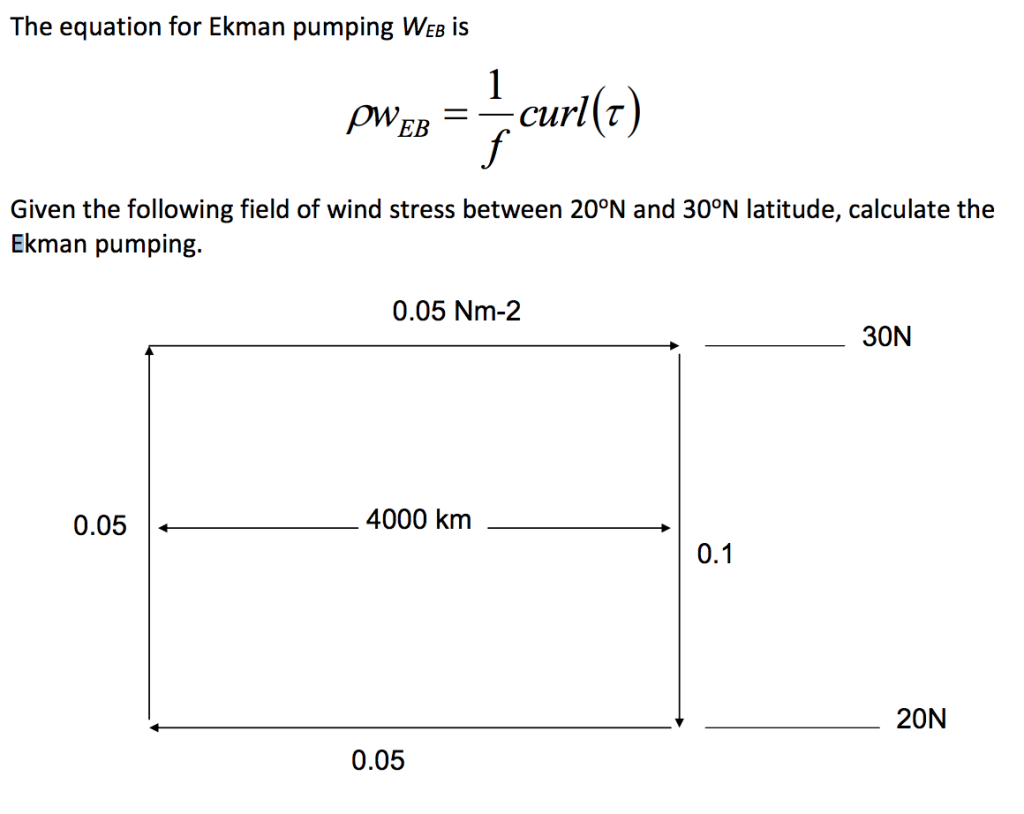
The Ekman Number is a dimensionless quantity used to characterize the ratio of viscous forces to Coriolis forces in a fluid. It is a crucial parameter in oceanography and meteorology, helping to understand the behavior of geophysical fluids. The Ekman Number equation is a mathematical representation of this ratio, and it plays a significant role in predicting various phenomena, such as ocean currents and atmospheric circulation patterns. This article provides an overview of the Ekman Number equation and offers a calculator to simplify the calculation process for researchers and students alike, facilitating a deeper understanding of fluid dynamics.
- Understanding the Ekman Number Equation and Calculator
- What is the formula for the Ekman number?
- What is the Ekman depth?
-
Frequently Asked Questions (FAQs)
- What is the Ekman Number and its significance in fluid dynamics?
- How is the Ekman Number calculated and what are the limitations of the Ekman Number equation?
- What are the applications of the Ekman Number equation in oceanography and atmospheric science?
- How does the Ekman Number calculator work and what are its advantages and limitations?
Understanding the Ekman Number Equation and Calculator
The Ekman number is a dimensionless quantity used to characterize the ratio of viscous forces to Coriolis forces in a fluid. It is an important parameter in the study of geophysical fluid dynamics, particularly in the context of ocean currents and atmospheric circulation. The Ekman number equation is a mathematical expression that relates the Ekman number to the viscosity of the fluid, the Coriolis parameter, and the velocity of the fluid.
Definition of the Ekman Number
The Ekman number is defined as the ratio of the viscous force to the Coriolis force. It is a measure of the relative importance of these two forces in a fluid. A small Ekman number indicates that the Coriolis force is dominant, while a large Ekman number indicates that the viscous force is dominant. The Ekman number is typically denoted by the symbol Ek and is defined as: Ek = viscosity / (Coriolis parameter velocity length scale).
Ekman Number Equation
The Ekman number equation is a mathematical expression that relates the Ekman number to the viscosity of the fluid, the Coriolis parameter, and the velocity of the fluid. The equation is: Ek = ν / (f u L), where ν is the kinematic viscosity, f is the Coriolis parameter, u is the velocity, and L is the length scale.
Ekman Number Calculator
An Ekman number calculator is a tool used to calculate the Ekman number for a given set of parameters. The calculator typically takes as input the viscosity, Coriolis parameter, velocity, and length scale of the fluid, and outputs the corresponding Ekman number. The calculator can be used to determine the relative importance of viscous and Coriolis forces in a fluid, and to identify the dominant forces in a particular geophysical flow.
Applications of the Ekman Number
The Ekman number has a wide range of applications in geophysical fluid dynamics, including the study of ocean currents, atmospheric circulation, and climate modeling. It is used to characterize the boundary layers in these flows, and to determine the transport of momentum and heat. The Ekman number is also used in the study of turbulence, where it is used to characterize the turbulent flow.
Table of Ekman Number Values
The following table shows some typical values of the Ekman number for different geophysical flows:
| Flow | Ekman Number | Viscosity | Coriolis Parameter | Velocity | Length Scale |
|---|---|---|---|---|---|
| Ocean Currents | 10^-3 | 10^-6 m^2/s | 10^-4 s^-1 | 1 m/s | 100 km |
| Atmospheric Circulation | 10^-5 | 10^-5 m^2/s | 10^-4 s^-1 | 10 m/s | 1000 km |
| Climate Modeling | 10^-4 | 10^-6 m^2/s | 10^-4 s^-1 | 1 m/s | 1000 km |
In this table, the viscosity, Coriolis parameter, velocity, and length scale are all strong parameters that affect the value of the Ekman number. The Ekman number is a dimensionless quantity that characterizes the ratio of viscous forces to Coriolis forces in a fluid.
What is the formula for the Ekman number?
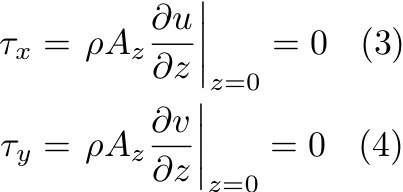
The formula for the Ekman number is given by Ek = ν / (2ΩL^2), where ν is the kinematic viscosity, Ω is the angular velocity, and L is the length scale. This dimensionless number is used to characterize the ratio of viscous forces to Coriolis forces in a fluid. It is an important parameter in the study of ocean currents, atmospheric flows, and other geophysical phenomena.
Introduction to the Ekman Number
The Ekman number is a fundamental concept in geophysical fluid dynamics, which is the study of the behavior of fluids in the Earth's oceans and atmosphere. The Ekman number is used to determine the importance of frictional forces in the boundary layers of a fluid. Some key factors that influence the Ekman number include:
- The viscosity of the fluid, which affects the rate at which momentum is transferred between different layers of the fluid.
- The rotation rate of the Earth, which affects the magnitude of the Coriolis force that acts on the fluid.
- The length scale of the fluid, which affects the magnitude of the frictional forces that act on the fluid.
Applications of the Ekman Number
The Ekman number has a wide range of applications in oceanography and atmospheric science. It is used to study the behavior of ocean currents, atmospheric flows, and other geophysical phenomena. Some examples of applications of the Ekman number include:
- Ocean circulation models, which use the Ekman number to simulate the behavior of ocean currents and heat transport.
- Atmospheric circulation models, which use the Ekman number to simulate the behavior of atmospheric flows and weather patterns.
- Climate modeling, which uses the Ekman number to study the impact of climate change on the Earth's oceans and atmosphere.
Derivation of the Ekman Number
The Ekman number is derived from the Navier-Stokes equations, which describe the behavior of viscous fluids. The derivation of the Ekman number involves non-dimensionalizing the Navier-Stokes equations and identifying the key dimensionless parameters that characterize the behavior of the fluid. Some key steps in the derivation of the Ekman number include:
- Non-dimensionalizing the Navier-Stokes equations to eliminate the units of the variables.
- Identifying the key dimensionless parameters that characterize the behavior of the fluid, such as the Reynolds number and the Rossby number.
- Simplifying the non-dimensionalized equations to obtain a simplified model of the fluid behavior.
Physical Interpretation of the Ekman Number
The Ekman number has a physical interpretation in terms of the ratio of viscous forces to Coriolis forces in a fluid. A small Ekman number indicates that the Coriolis force dominates the behavior of the fluid, while a large Ekman number indicates that the viscous forces dominate the behavior of the fluid. Some examples of physical interpretations of the Ekman number include:
- Ocean currents, where a small Ekman number indicates that the Coriolis force dominates the behavior of the current.
- Atmospheric flows, where a large Ekman number indicates that the viscous forces dominate the behavior of the flow.
Limitations and Extensions of the Ekman Number
The Ekman number has limitations and extensions that are important to consider in practical applications. Some examples of limitations and extensions of the Ekman number include:
- Non-linear effects, which can become important when the Ekman number is small or large.
- Turbulence, which can affect the behavior of the fluid and require the use of turbulence models.
- Complex geometries, which can affect the behavior of the fluid and require the use of numerical methods.
What is the Ekman depth?

The Ekman depth refers to the depth in the ocean at which the turbulent mixing caused by the wind stress at the surface is balanced by the buoyancy of the water column. This concept is crucial in understanding ocean circulation and heat transport. The Ekman depth is named after the Swedish oceanographer Vagn Walfrid Ekman, who first described this phenomenon in the early 20th century.
Introduction to Ekman Depth
The Ekman depth is an important parameter in oceanography, as it determines the depth to which the ocean mixed layer extends. The mixed layer is the upper layer of the ocean where the temperature and salinity are relatively uniform due to the turbulent mixing caused by the wind. The Ekman depth is typically around 100-200 meters, but it can vary depending on the latitude, season, and ocean basin.
- The Ekman depth is influenced by the Coriolis force, which causes the water to rotate as it moves downwards.
- The wind stress at the surface drives the ocean circulation, which in turn affects the Ekman depth.
- The buoyancy of the water column, which is determined by the temperature and salinity, also plays a crucial role in determining the Ekman depth.
Factors Affecting Ekman Depth
Several factors can affect the Ekman depth, including the wind speed, latitude, and ocean stratification. In general, the Ekman depth is shallower in the tropics and deeper in the mid-latitudes. The Ekman depth can also vary seasonally, with deeper mixed layers in the winter and shallower mixed layers in the summer.
- The wind speed and direction can affect the Ekman depth by changing the turbulent mixing and ocean circulation.
- The latitude affects the Ekman depth due to the Coriolis force, which is stronger at higher latitudes.
- The ocean stratification, which is determined by the temperature and salinity, can also influence the Ekman depth.
Importance of Ekman Depth
The Ekman depth is a critical parameter in understanding ocean circulation and heat transport. It determines the depth to which the ocean mixed layer extends, which in turn affects the ocean-atmosphere interactions. The Ekman depth is also important for understanding climate change, as it can impact the global ocean circulation and heat transport.
- The Ekman depth affects the ocean-atmosphere interactions, which are crucial for understanding climate change.
- The Ekman depth influences the ocean circulation, which in turn affects the global heat transport.
- The Ekman depth is also important for understanding ocean productivity, as it determines the depth to which nutrients are mixed.
Measurement of Ekman Depth
The Ekman depth can be measured using various techniques, including moorings, profiling floats, and satellite remote sensing. These techniques can provide information on the temperature, salinity, and velocity of the water column, which can be used to estimate the Ekman depth.
- Moorings can provide long-term measurements of the ocean currents and temperature.
- Profiling floats can provide high-resolution measurements of the temperature and salinity profiles.
- Satellite remote sensing can provide large-scale information on the ocean circulation and mixed layer depth.
Applications of Ekman Depth
The Ekman depth has various applications in oceanography, climate science, and fisheries management. It can be used to understand ocean circulation, heat transport, and ocean productivity, which are crucial for predicting climate change and managing fisheries.
- The Ekman depth can be used to predict climate change, as it affects the global ocean circulation and heat transport.
- The Ekman depth is important for understanding ocean productivity, which affects the fisheries and marine ecosystems.
- The Ekman depth can also be used to improve weather forecasting, as it affects the ocean-atmosphere interactions.
Frequently Asked Questions (FAQs)
What is the Ekman Number and its significance in fluid dynamics?
The Ekman Number is a dimensionless quantity used to characterize the ratio of viscous forces to Coriolis forces in a fluid. It is an important parameter in fluid dynamics, particularly in the study of oceanography and atmospheric science. The Ekman Number is defined as the ratio of the kinematic viscosity of a fluid to the product of the Coriolis parameter and the square of the length scale of the flow. A small Ekman Number indicates that the Coriolis forces dominate the viscous forces, while a large Ekman Number indicates that the viscous forces dominate. The Ekman Number is used to predict the behavior of geophysical flows, such as ocean currents and atmospheric winds, and is a crucial parameter in the development of numerical models of these flows.
How is the Ekman Number calculated and what are the limitations of the Ekman Number equation?
The Ekman Number is calculated using the Ekman Number equation, which involves the kinematic viscosity, Coriolis parameter, and length scale of the flow. The equation is given by Ek = ν / (f L^2), where Ek is the Ekman Number, ν is the kinematic viscosity, f is the Coriolis parameter, and L is the length scale of the flow. The limitations of the Ekman Number equation arise from the assumptions made in its derivation, such as the assumption of a laminar flow and the neglect of turbulent effects. Additionally, the Ekman Number equation is only applicable to rotating fluids and is not valid for non-rotating fluids. The Ekman Number equation is also sensitive to the choice of length scale, which can vary depending on the specific application. Despite these limitations, the Ekman Number equation remains a useful tool for predicting the behavior of geophysical flows and for understanding the physical processes that govern these flows.
What are the applications of the Ekman Number equation in oceanography and atmospheric science?
The Ekman Number equation has numerous applications in oceanography and atmospheric science. In oceanography, the Ekman Number equation is used to predict the behavior of ocean currents, such as the Ekman spiral, which is a spiral-shaped current that forms in the ocean boundary layer. The Ekman Number equation is also used to study the upwelling of nutrient-rich water in the ocean, which is an important process for marine ecosystems. In atmospheric science, the Ekman Number equation is used to predict the behavior of atmospheric winds, such as the jet stream, which is a fast-moving band of air that plays a crucial role in weather patterns. The Ekman Number equation is also used to study the atmospheric circulation, which is the large-scale movement of air in the atmosphere. The Ekman Number equation is a valuable tool for understanding the physical processes that govern these flows and for predicting the behavior of geophysical flows in a wide range of applications.
How does the Ekman Number calculator work and what are its advantages and limitations?
The Ekman Number calculator is a software tool that calculates the Ekman Number using the Ekman Number equation. The calculator typically requires the user to input the kinematic viscosity, Coriolis parameter, and length scale of the flow, and then calculates the Ekman Number using these values. The advantages of the Ekman Number calculator include its ease of use, speed, and accuracy. The calculator can quickly and accurately calculate the Ekman Number for a wide range of applications, making it a valuable tool for researchers and scientists. However, the limitations of the Ekman Number calculator arise from the limitations of the Ekman Number equation itself, such as the assumption of a laminar flow and the neglect of turbulent effects. Additionally, the calculator requires the user to input accurate values for the kinematic viscosity, Coriolis parameter, and length scale, which can be difficult to obtain in some cases. Despite these limitations, the Ekman Number calculator remains a useful tool for predicting the behavior of geophysical flows and for understanding the physical processes that govern these flows.
Deja una respuesta
Entradas Relacionadas