
Dams Spillway Flow Calculator

The Dams Spillway Flow Calculator is a crucial tool for dam operators and engineers to determine the rate at which water flows through a spillway. Accurate calculations are essential to ensure the safe and efficient operation of dams, preventing overflow and potential disasters. This calculator takes into account various factors such as water level, spillway geometry, and gate openings to provide precise flow rates. By using this calculator, dam operators can make informed decisions and maintain the structural integrity of the dam, ultimately protecting downstream communities and ecosystems from potential harm. Effective calculation is key to dam safety.
Dams Spillway Flow Calculator: A Crucial Tool for Hydroelectric Power Plants
The Dams Spillway Flow Calculator is a vital instrument used to determine the flow rate of water through a dam's spillway, which is essential for the safe and efficient operation of hydroelectric power plants. The calculator takes into account various factors such as the water level, spillway width, and flow velocity to calculate the flow rate. This information is crucial for dam operators to make informed decisions about water release and flood control.
Introduction to Dams Spillway Flow Calculator
The Dams Spillway Flow Calculator is a computer-based model that uses hydrological and hydraulic principles to simulate the flow of water through a dam's spillway. The calculator is designed to provide accurate and reliable results, taking into account various factors that affect the flow rate, such as inflow, outflow, and water storage. The calculator is widely used in the hydroelectric power industry to optimize the operation of dams and ensure safe and efficient energy production.
Key Components of Dams Spillway Flow Calculator
The Dams Spillway Flow Calculator consists of several key components, including the spillway geometry, water level, and flow velocity. The spillway geometry includes the width, height, and shape of the spillway, which affect the flow rate. The water level and flow velocity are also critical factors that determine the flow rate. The calculator uses mathematical equations to simulate the flow of water through the spillway, taking into account these factors.
Application of Dams Spillway Flow Calculator
The Dams Spillway Flow Calculator has a wide range of applications in the hydroelectric power industry. It is used to optimize the operation of dams, ensuring safe and efficient energy production. The calculator is also used for flood control, water supply management, and environmental impact assessment. Additionally, the calculator is used to design and optimize new dams, as well as to retrofit existing ones.
Benefits of Using Dams Spillway Flow Calculator
The use of the Dams Spillway Flow Calculator offers several benefits, including improved accuracy, increased efficiency, and enhanced safety. The calculator provides accurate and reliable results, allowing dam operators to make informed decisions about water release and flood control. The calculator also helps to optimize the operation of dams, reducing the risk of accidents and environmental damage.
Limitations and Future Developments of Dams Spillway Flow Calculator
While the Dams Spillway Flow Calculator is a powerful tool, it has some limitations. The calculator assumes a steady-state flow condition, which may not always be the case in reality. Additionally, the calculator does not account for uncertainties in the input data. Future developments of the calculator will focus on addressing these limitations, including the incorporation of advanced numerical methods and uncertainty analysis.
| Parameter | Unit | Description |
|---|---|---|
| Water Level | m | The elevation of the water surface above a reference point |
| Spillway Width | m | The width of the spillway, which affects the flow rate |
| Flow Velocity | m/s | The velocity of the water flowing through the spillway |
| Inflow | m3/s | The rate at which water flows into the dam |
| Outflow | m3/s | The rate at which water flows out of the dam |
How to calculate flow over a spillway?
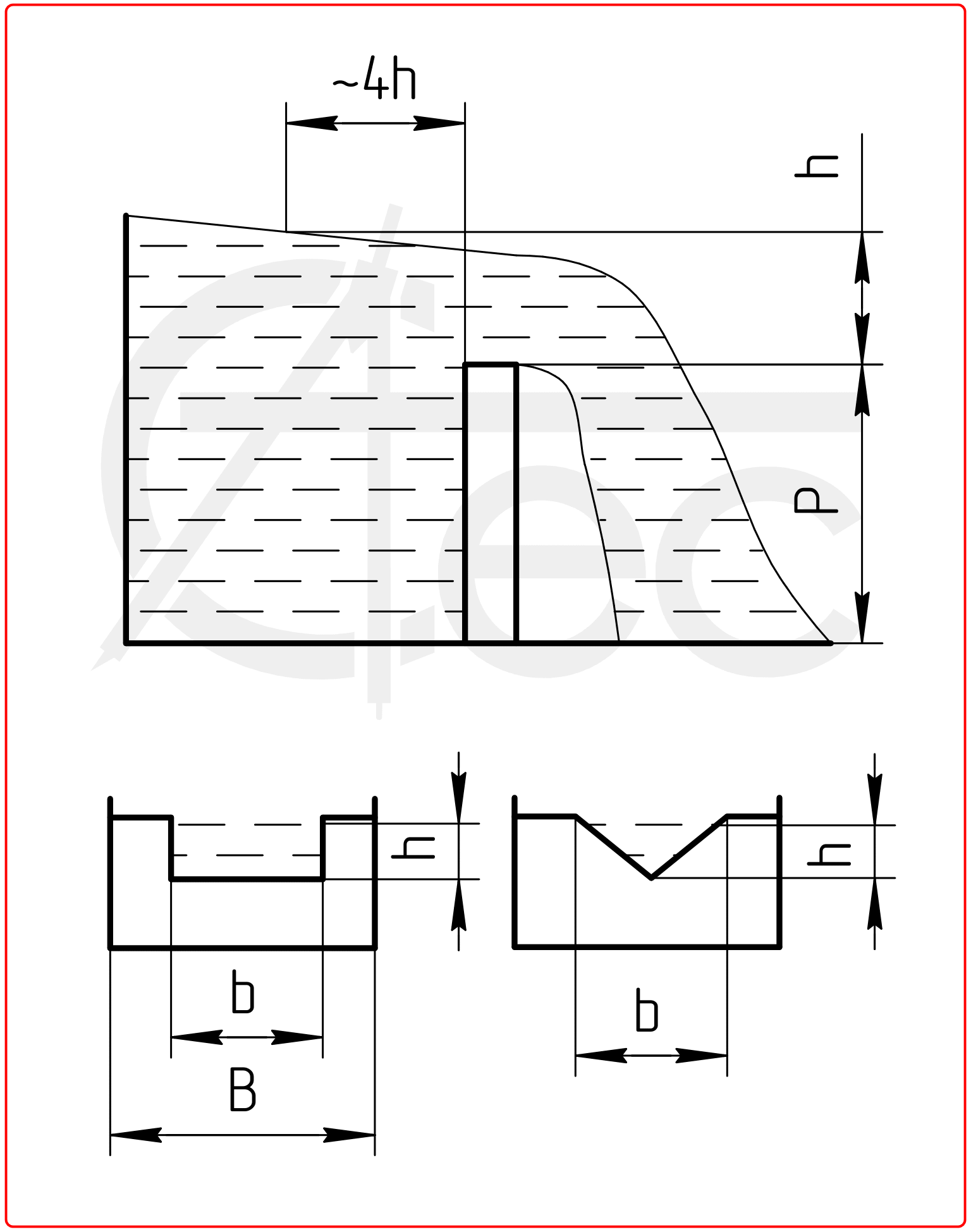
To calculate the flow over a spillway, it is essential to understand the hydraulic characteristics of the spillway and the water levels upstream and downstream. The flow over a spillway can be calculated using the weir equation, which takes into account the crest height, length, and head of water. The discharge coefficient, which depends on the shape and size of the spillway, must also be considered.
Introduction to Spillway Calculations
The calculation of flow over a spillway involves determining the volume of water that flows over the spillway per unit time. This can be achieved by using the weir equation, which is based on the principles of fluid mechanics. The equation takes into account the parameters that affect the flow, such as the height and length of the spillway, as well as the water level upstream. The calculation involves the following steps:
- Determine the crest height and length of the spillway
- Measure the water level upstream and downstream
- Calculate the head of water using the measured water levels
Factors Affecting Spillway Flow
Several factors can affect the flow over a spillway, including the shape and size of the spillway, the water level upstream and downstream, and the discharge coefficient. The discharge coefficient is a dimensionless quantity that depends on the geometry of the spillway and the flow conditions. The coefficient can be determined using empirical equations or experimental data. The factors that affect the flow over a spillway include:
- Spillway geometry, including the crest height and length
- Water level upstream and downstream
- Discharge coefficient, which depends on the shape and size of the spillway
Spillway Types and Calculations
There are several types of spillways, including ogee, straight, and curved spillways. Each type of spillway has its own characteristics and equations for calculating the flow. The ogee spillway, for example, has a curved shape that allows for a smooth flow of water. The calculation of flow over an ogee spillway involves using the weir equation with a discharge coefficient that depends on the curve of the spillway. The different types of spillways and their calculations include:
- Ogee spillway, with a curved shape and a smooth flow of water
- Straight spillway, with a linear shape and a simple flow calculation
- Curved spillway, with a complex shape and a more detailed flow calculation
Applications of Spillway Calculations
The calculation of flow over a spillway has several practical applications, including the design of dams and reservoirs, the operation of hydroelectric power plants, and the management of water resources. The calculation of flow over a spillway is also essential for flood control and water supply management. The applications of spillway calculations include:
- Dam design, including the height and length of the spillway
- Hydroelectric power plant operation, including the flow of water through the turbines
- Water resource management, including the allocation of water for irrigation and drinking water
Limitations and Uncertainties of Spillway Calculations
There are several limitations and uncertainties associated with the calculation of flow over a spillway, including the simplifications and assumptions made in the weir equation, the variability of the discharge coefficient, and the measurement errors in the water level and flow data. The limitations and uncertainties of spillway calculations include:
- Simplifications and assumptions made in the weir equation
- Variability of the discharge coefficient
- Measurement errors in the water level and flow data
How do you calculate the flow rate of a dam?
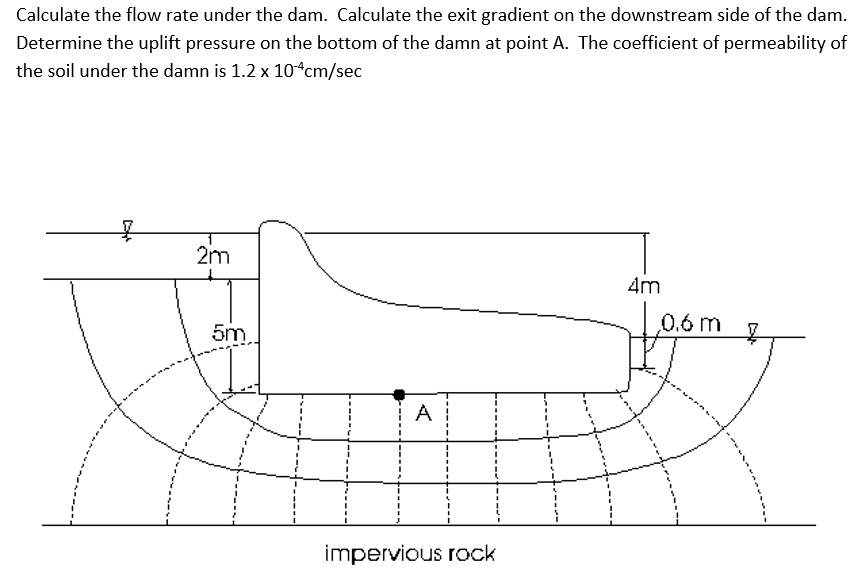
To calculate the flow rate of a dam, you need to understand the concept of discharge, which is the volume of water that flows through a given area in a certain amount of time. The flow rate of a dam is typically measured in cubic meters per second (m³/s) or cubic feet per second (ft³/s). The calculation involves several factors, including the height of the water, the width of the dam, and the coefficient of discharge. The coefficient of discharge is a value that takes into account the efficiency of the dam in allowing water to flow through it.
Understanding the Formula for Flow Rate Calculation
The formula for calculating the flow rate of a dam is Q = (1/n) A R^2/3 S^1/2, where Q is the flow rate, n is the Manning's roughness coefficient, A is the cross-sectional area of the water, R is the hydraulic radius, and S is the slope of the dam. To apply this formula, you need to have a good understanding of the hydraulic properties of the dam and the surrounding water.
- Determine the Manning's roughness coefficient (n) based on the material and condition of the dam and the surrounding water.
- Calculate the cross-sectional area (A) of the water, taking into account the width and depth of the water.
- Find the hydraulic radius (R) by dividing the cross-sectional area by the wetted perimeter of the dam.
Measuring the Height and Width of the Dam
To calculate the flow rate, you need to measure the height and width of the dam. The height of the dam is typically measured from the crest of the dam to the tailwater level, while the width is measured at the crest of the dam. These measurements are crucial in determining the cross-sectional area of the water and the hydraulic radius.
- Use a measuring tape or laser level to measure the height of the dam.
- Measure the width of the dam at the crest, taking into account any obstructions or irregularities.
- Record the measurements accurately to ensure a precise calculation of the flow rate.
Calculating the Coefficient of Discharge
The coefficient of discharge is a critical factor in calculating the flow rate of a dam. It takes into account the efficiency of the dam in allowing water to flow through it. The coefficient of discharge can be calculated using the orifice equation, which is Q = C A sqrt(2 g h), where Q is the flow rate, C is the coefficient of discharge, A is the cross-sectional area, g is the acceleration due to gravity, and h is the height of the water.
- Determine the type of dam and the orifice equation applicable to it.
- Calculate the cross-sectional area (A) of the water and the height (h) of the water.
- Use the orifice equation to calculate the coefficient of discharge (C).
Accounting for Energy Losses
Energy losses can occur due to friction, turbulence, and other factors, which can affect the flow rate of a dam. These losses can be accounted for by using the Darcy-Weisbach equation, which is a friction factor that takes into account the roughness of the dam and the surrounding water.
- Determine the friction factor (f) based on the roughness of the dam and the surrounding water.
- Calculate the head loss (h_f) due to friction using the Darcy-Weisbach equation.
- Account for other energy losses such as turbulence and cavitation.
Using Computational Models for Flow Rate Calculation
Computational models such as the finite element method and computational fluid dynamics can be used to calculate the flow rate of a dam. These models can take into account the complex geometry of the dam and the surrounding water, as well as non-uniform flow conditions.
- Choose a suitable computational model based on the geometry and flow conditions of the dam.
- Mesh the computational domain to discretize the flow equations.
- Solve the flow equations using a numerical method such as the finite element method or finite difference method.
How to calculate spillway discharge?

To calculate spillway discharge, it is essential to consider the type of spillway, the head of water, and the coefficient of discharge. The spillway discharge can be calculated using the formula Q = C × A × √(2 × g × H), where Q is the discharge, C is the coefficient of discharge, A is the area of the spillway, g is the acceleration due to gravity, and H is the head of water. The coefficient of discharge is a critical factor in determining the accuracy of the calculation, as it varies depending on the type of spillway and the water level.
Types of Spillways
The type of spillway used can significantly impact the calculation of spillway discharge. There are several types of spillways, including free overflow, gated, and shaft spillways. Each type has its own unique characteristics and design considerations. When calculating spillway discharge, it is crucial to consider the type of spillway and its operating conditions. Some key factors to consider when calculating spillway discharge for different types of spillways include:
- Free overflow spillways: These spillways are designed to allow water to flow over the crest, and the discharge is calculated based on the head of water and the coefficient of discharge.
- Gated spillways: These spillways have gates that control the flow of water, and the discharge is calculated based on the gate opening and the water level.
- Shaft spillways: These spillways have a vertical or inclined shaft that carries the water, and the discharge is calculated based on the shaft diameter and the water level.
Coefficient of Discharge
The coefficient of discharge is a critical factor in calculating spillway discharge. It is a dimensionless value that represents the efficiency of the spillway in conveying water. The coefficient of discharge can vary depending on the type of spillway, the water level, and the operating conditions. When calculating spillway discharge, it is essential to use the correct coefficient of discharge for the specific spillway and operating conditions. Some key factors to consider when determining the coefficient of discharge include:
- Spillway type: Different types of spillways have unique coefficients of discharge, and it is crucial to use the correct value for the specific spillway.
- Water level: The water level can impact the coefficient of discharge, and it is essential to consider the water level when calculating spillway discharge.
- Operating conditions: The operating conditions, such as the flow rate and water temperature, can also impact the coefficient of discharge.
Head of Water
The head of water is a critical factor in calculating spillway discharge. It is the vertical distance from the water surface to the crest of the spillway. The head of water can vary depending on the water level and the spillway design. When calculating spillway discharge, it is essential to use the correct head of water for the specific spillway and operating conditions. Some key factors to consider when determining the head of water include:
- Water level: The water level can impact the head of water, and it is crucial to consider the water level when calculating spillway discharge.
- Spillway design: The spillway design can also impact the head of water, and it is essential to consider the spillway dimensions and geometry.
- Operating conditions: The operating conditions, such as the flow rate and water temperature, can also impact the head of water.
Spillway Design Considerations
The spillway design can significantly impact the calculation of spillway discharge. The spillway design should consider factors such as the water level, flow rate, and operating conditions. When designing a spillway, it is essential to consider the hydraulic and structural requirements to ensure safe and efficient operation. Some key factors to consider when designing a spillway include:
- Hydraulic design: The hydraulic design should consider factors such as the water level, flow rate, and coefficient of discharge.
- Structural design: The structural design should consider factors such as the spillway material, geometry, and loading conditions.
- Operational considerations: The operational considerations should consider factors such as the water level, flow rate, and maintenance requirements.
Applications of Spillway Discharge Calculations
The calculation of spillway discharge has several practical applications in water resources engineering. It is used to design and operate dams, reservoirs, and flood control structures. The calculation of spillway discharge is also used to predict flood events and water levels, and to design irrigation and drainage systems. Some key applications of spillway discharge calculations include:
- Dam design: The calculation of spillway discharge is used to design dams and reservoirs, and to ensure safe and efficient operation.
- Flood control: The calculation of spillway discharge is used to predict flood events and water levels, and to design flood control structures.
- Irrigation and drainage: The calculation of spillway discharge is used to design irrigation and drainage systems, and to ensure efficient water use.
How to calculate inflow of dam?

To calculate the inflow of a dam, you need to consider several factors, including the catchment area, precipitation, runoff, and evaporation. The inflow of a dam is the amount of water that flows into the dam from the surrounding area, and it is typically measured in cubic meters per second (m³/s) or cubic feet per second (ft³/s). The calculation of inflow is crucial for the design and operation of a dam, as it affects the water level, water quality, and hydroelectric power generation.
Understanding the Catchment Area
The catchment area is the area of land that drains water into the dam, and it plays a critical role in determining the inflow. The catchment area is typically defined by the topography of the land, and it can be affected by factors such as land use, vegetation, and geology. To calculate the inflow, you need to understand the characteristics of the catchment area, including its size, shape, and elevation. Some key factors to consider when understanding the catchment area include:
- Topographic maps to identify the boundaries of the catchment area
- Soil type and geology to determine the permeability and runoff characteristics of the area
- Land use and vegetation to determine the evapotranspiration and runoff rates
Measuring Precipitation and Runoff
Precipitation and runoff are two critical components of the inflow calculation. Precipitation refers to the amount of rainfall or snowfall that falls on the catchment area, while runoff refers to the amount of water that flows over the land and into the dam. To calculate the inflow, you need to measure the precipitation and runoff rates, which can be done using rain gauges, stream gauges, and water level sensors. Some key factors to consider when measuring precipitation and runoff include:
- Rainfall intensity and duration to determine the runoff rate
- Soil moisture and groundwater levels to determine the infiltration rate
- Stream flow and water level measurements to determine the runoff rate and inflow
Calculating Evaporation and Losses
Evaporation and losses are two important factors that affect the inflow calculation. Evaporation refers to the amount of water that is lost to the atmosphere through evaporation and transpiration, while losses refer to the amount of water that is lost through leakage, seepage, and spillage. To calculate the inflow, you need to estimate the evaporation and losses, which can be done using evaporation pans, water balance models, and leak detection systems. Some key factors to consider when calculating evaporation and losses include:
- Evaporation rates and pan evaporation data to estimate the evaporation loss
- Water balance models to estimate the infiltration and percolation rates
- Leak detection and spillage measurement to estimate the losses
Using Hydrological Models
Hydrological models are computer-based models that simulate the hydrological processes that occur in the catchment area, including precipitation, runoff, infiltration, and evaporation. These models can be used to calculate the inflow of a dam, and they are particularly useful for predicting future inflow rates and water levels. Some key factors to consider when using hydrological models include:
- Model selection and calibration to ensure that the model is accurate and reliable
- Input data and parameters to ensure that the model is well-constrained and realistic
- Model output and validation to ensure that the model is accurate and useful
Monitoring and Adjusting the Inflow Calculation
Monitoring and adjusting the inflow calculation is crucial to ensure that the dam is operating safely and efficiently. The inflow calculation should be monitored regularly using real-time data and historical records, and it should be adjusted as necessary to reflect changes in the catchment area, precipitation, and evaporation rates. Some key factors to consider when monitoring and adjusting the inflow calculation include:
- Real-time data and historical records to monitor the inflow rate and water level
- Automated systems and alarms to detect changes in the inflow rate and water level
- Manual adjustments and reviews to ensure that the inflow calculation is accurate and reliable
Frequently Asked Questions (FAQs)
What is the purpose of a Dams Spillway Flow Calculator?
The purpose of a Dams Spillway Flow Calculator is to calculate the flow rate of water over a spillway, which is a critical component of a dam's design. The calculator takes into account various factors such as the water level, spillway crest elevation, and coefficient of discharge to determine the flow rate. This information is essential for dam operators to ensure that the spillway is functioning properly and that the dam is safe during periods of high inflow. The calculator can also be used to design new spillways or to evaluate the performance of existing ones. By using a Dams Spillway Flow Calculator, engineers and dam operators can make informed decisions about the operation and maintenance of the dam, which is critical for ensuring the safety of people and property downstream.
How does a Dams Spillway Flow Calculator work?
A Dams Spillway Flow Calculator works by using a combination of hydraulic equations and empirical formulas to calculate the flow rate over the spillway. The calculator typically requires input values such as the water level upstream of the spillway, the spillway crest elevation, and the coefficient of discharge. The calculator then uses these input values to calculate the flow rate over the spillway, taking into account factors such as the spillway geometry and the water surface profile. The calculator may also use numerical methods such as the finite difference method or the finite element method to solve the hydraulic equations and calculate the flow rate. The output of the calculator is typically a flow rate value, which can be used to evaluate the performance of the spillway and make informed decisions about the operation and maintenance of the dam.
What are the benefits of using a Dams Spillway Flow Calculator?
The benefits of using a Dams Spillway Flow Calculator are numerous. One of the main benefits is that it allows dam operators to optimize the operation of the spillway, which can help to reduce the risk of flooding downstream. The calculator can also be used to evaluate the performance of the spillway, which can help to identify potential problems and improve the safety of the dam. Additionally, the calculator can be used to design new spillways or to evaluate the effectiveness of existing spillway designs. The calculator can also be used to train personnel on the operation and maintenance of the dam, which can help to improve the overall safety of the dam. Overall, a Dams Spillway Flow Calculator is a valuable tool for anyone involved in the design, operation, or maintenance of a dam.
What are the limitations of a Dams Spillway Flow Calculator?
While a Dams Spillway Flow Calculator is a powerful tool, it does have some limitations. One of the main limitations is that it relies on simplifying assumptions and empirical formulas to calculate the flow rate over the spillway. This means that the calculator may not always be able to accurately predict the flow rate, especially in complex or unusual scenarios. Additionally, the calculator may not be able to account for all of the factors that affect the flow rate over the spillway, such as turbulence or cavitation. The calculator may also require calibration or
Deja una respuesta
Entradas Relacionadas