
Annular Capacity Casing and Pipe Calculator

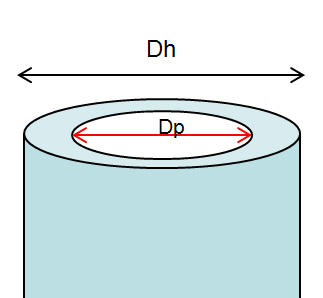
The Annular Capacity Casing and Pipe Calculator is a valuable tool for oil and gas professionals, enabling them to calculate the annular capacity of casings and pipes with precision. This calculator takes into account various factors, including the outer and inner diameters of the casing and pipe, as well as the type of fluid being transported. With its user-friendly interface and accurate calculations, this calculator simplifies the process of determining annular capacity, saving time and reducing errors in critical drilling and production operations. Accurate calculations are crucial for efficient drilling operations.
Understanding Annular Capacity Casing and Pipe Calculator
The Annular Capacity Casing and Pipe Calculator is a tool used to calculate the volume of fluid that can flow through the annulus of a casing and pipe in oil and gas wells. This calculator is essential in determining the flow rate and pressure of fluids in the well, which is critical in maintaining a safe and efficient operation.
What is Annular Capacity?
Annular capacity refers to the volume of fluid that can flow through the annulus, which is the space between the casing and pipe. The annular capacity is affected by various factors, including the diameter and length of the casing and pipe, as well as the viscosity and density of the fluid. The calculator takes into account these factors to provide an accurate calculation of the annular capacity.
Importance of Accurate Calculations
Accurate calculations of the annular capacity are crucial in maintaining a safe and efficient operation. Inaccurate calculations can lead to overpressure, which can cause equipment failure and environmental damage. On the other hand, underestimating the annular capacity can result in reduced flow rates and decreased productivity. The calculator helps to ensure that the annular capacity is calculated accurately, reducing the risk of errors and ensuring a safe and efficient operation.
Factors Affecting Annular Capacity
Several factors affect the annular capacity, including:
| Factor | Effect on Annular Capacity |
|---|---|
| Diameter of casing and pipe | Affects the cross-sectional area of the annulus |
| Length of casing and pipe | Affects the volume of the annulus |
| Viscosity of fluid | Affects the flow rate of the fluid |
| Density of fluid | Affects the weight of the fluid |
Calculator Features
The Annular Capacity Casing and Pipe Calculator has several features, including:
User-friendly interface for easy input of data
Accurate calculations based on industry-recognized formulas
Real-time results for quick decision-making
Flexible units for input and output data
Applications in Oil and Gas Industry
The Annular Capacity Casing and Pipe Calculator has various applications in the oil and gas industry, including:
Well design and planning
Production optimization
Safety and risk assessment
Environmental monitoring and regulatory compliance
What is the casing annulus capacity?

The casing annulus capacity refers to the volume of fluid that can be contained within the annular space between the casing and the tubing in a wellbore. This capacity is an important consideration in well design and completion operations, as it affects the hydraulic and mechanical behavior of the well.
Introduction to Casing Annulus Capacity
The casing annulus capacity is determined by the diameter and length of the casing and tubing, as well as the annular clearance between them. To calculate the casing annulus capacity, the following factors must be considered:
- The inner diameter of the casing and the outer diameter of the tubing
- The length of the casing and tubing
- The annular clearance between the casing and tubing
These factors will determine the volume of fluid that can be contained within the annular space.
Importance of Casing Annulus Capacity in Well Design
The casing annulus capacity plays a crucial role in well design, as it affects the hydraulic and mechanical behavior of the well. A larger casing annulus capacity can provide a greater margin of safety during completion operations, while a smaller casing annulus capacity can increase the risk of well control problems. To ensure safe and efficient operations, the casing annulus capacity must be carefully considered during well design:
- Wellbore stability and hydraulic behavior
- Casing and tubing selection
- Completion and workover operations
These considerations will help to determine the optimal casing annulus capacity for the well.
Casing Annulus Capacity Calculations
The casing annulus capacity can be calculated using various mathematical models and software tools. These calculations typically involve the following steps:
- Determine the inner diameter of the casing and the outer diameter of the tubing
- Calculate the annular clearance between the casing and tubing
- Apply the mathematical model or software tool to calculate the casing annulus capacity
These calculations will provide the necessary data to determine the casing annulus capacity and ensure safe and efficient operations.
Factors Affecting Casing Annulus Capacity
Several factors can affect the casing annulus capacity, including:
- Casing and tubing diameter and length
- Annular clearance between the casing and tubing
- Wellbore geometry and trajectory
These factors can influence the casing annulus capacity and must be carefully considered during well design and completion operations to ensure safe and efficient operations.
Applications of Casing Annulus Capacity in Oil and Gas Industry
The casing annulus capacity has important applications in the oil and gas industry, including:
- Well completion and workover operations
- Wellbore integrity and stability
- Hydraulic and mechanical behavior of the well
These applications rely on accurate calculations of the casing annulus capacity to ensure safe and efficient operations, and to optimize the performance of the well. The casing annulus capacity is a critical parameter in the oil and gas industry, and its accurate calculation is essential for successful and profitable operations.
How to calculate volume of annulus?
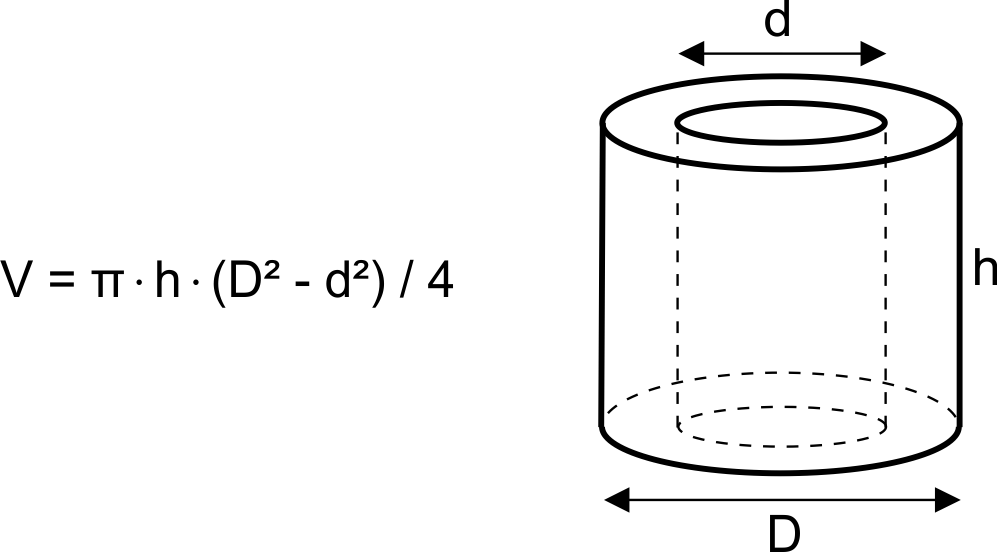
To calculate the volume of an annulus, we need to understand that an annulus is a ring-shaped object, and its volume can be calculated by finding the difference between the volumes of two cylinders. The formula to calculate the volume of an annulus is given by πh(R^2 - r^2), where h is the height of the annulus, R is the outer radius, and r is the inner radius.
Understanding the Formula
The formula to calculate the volume of an annulus is based on the principle of finding the difference between the volumes of two cylinders. The volume of a cylinder is given by πr^2h, where r is the radius and h is the height. To calculate the volume of an annulus, we need to find the volume of the outer cylinder and subtract the volume of the inner cylinder. This can be done using the formula:
- The height of the annulus is the same as the height of the two cylinders.
- The outer radius is the radius of the outer cylinder.
- The inner radius is the radius of the inner cylinder.
Calculating the Volume of the Outer Cylinder
To calculate the volume of the outer cylinder, we use the formula πR^2h, where R is the outer radius and h is the height of the cylinder. This formula gives us the volume of the entire outer cylinder, which includes the annulus and the inner cylinder.
- First, we need to find the value of π, which is approximately 3.14159.
- Next, we square the outer radius (R) to get R^2.
- Then, we multiply R^2 by the height (h) to get the volume.
Calculating the Volume of the Inner Cylinder
To calculate the volume of the inner cylinder, we use the formula πr^2h, where r is the inner radius and h is the height of the cylinder. This formula gives us the volume of the entire inner cylinder, which needs to be subtracted from the outer cylinder to get the volume of the annulus.
- We need to find the value of π, which is approximately 3.14159.
- We square the inner radius (r) to get r^2.
- We multiply r^2 by the height (h) to get the volume.
Subtracting the Volumes
Once we have calculated the volumes of the outer and inner cylinders, we can subtract the volume of the inner cylinder from the volume of the outer cylinder to get the volume of the annulus. This is done using the formula: πh(R^2 - r^2), where h is the height, R is the outer radius, and r is the inner radius.
- We calculate the difference between R^2 and r^2.
- We multiply this difference by π and the height (h).
- The result gives us the volume of the annulus.
Applying the Formula to Real-World Problems
The formula to calculate the volume of an annulus can be applied to various real-world problems, such as finding the volume of a ring-shaped container or the volume of a hollow cylinder.
- We need to identify the outer and inner radii of the annulus.
- We need to determine the height of the annulus.
- We can then use the formula πh(R^2 - r^2) to calculate the volume.
Frequently Asked Questions (FAQs)
What is the Annular Capacity Casing and Pipe Calculator and its purpose?
The Annular Capacity Casing and Pipe Calculator is a computational tool designed to calculate the annular capacity of casing and pipes used in various industries, including oil and gas, water well drilling, and geothermal energy. The primary purpose of this calculator is to determine the volume of fluid that can be contained within the annulus, which is the space between the inner pipe and the outer casing. This information is crucial for drilling operations, as it helps engineers and operators to plan and execute safe and efficient drilling and completion procedures. By using the Annular Capacity Casing and Pipe Calculator, users can quickly and accurately determine the annular volume, which is essential for cementing, drilling fluid management, and well control.
How does the Annular Capacity Casing and Pipe Calculator work?
The Annular Capacity Casing and Pipe Calculator works by using mathematical formulas and algorithms to calculate the annular volume based on input parameters such as the outer diameter of the casing, the inner diameter of the pipe, and the length of the well section. The calculator takes into account the geometry of the casing and pipe, including the thickness of the casing and the pipe, to provide an accurate calculation of the annular capacity. The calculator also allows users to select different units of measurement, such as inches, feet, and gallons, to ensure that the results are consistent with the units used in the field. Additionally, the calculator can be customized to account for specific well conditions, such as deviated wells or horizontal wells, to provide a more accurate calculation of the annular capacity.
What are the benefits of using the Annular Capacity Casing and Pipe Calculator?
The Annular Capacity Casing and Pipe Calculator offers several benefits to users, including improved accuracy, increased efficiency, and enhanced safety. By using the calculator, users can quickly and accurately determine the annular volume, which helps to reduce the risk of well control problems and cementing issues. The calculator also helps to optimize drilling and completion operations by providing real-time calculations of the annular capacity, allowing users to adjust their drilling and completion strategies as needed. Additionally, the calculator can be used to support well planning and design, helping to ensure that wells are drilled and completed safely and efficiently. Overall, the Annular Capacity Casing and Pipe Calculator is a valuable tool for anyone involved in drilling and completion operations, and can help to improve the overall efficiency and safety of well construction.
How can I access and use the Annular Capacity Casing and Pipe Calculator?
The Annular Capacity Casing and Pipe Calculator can be accessed through various online platforms, including websites and mobile apps. To use the calculator, users simply need to input the required parameters, such as the outer diameter of the casing, the inner diameter of the pipe, and the length of the well section, and the calculator will calculate the annular volume. Users can also save and print the results for future reference. Additionally, some calculators may offer advanced features, such as data storage and analysis, to help users track and optimize their drilling and completion operations. It is recommended that users consult the user manual or help documentation provided with the calculator to ensure that they are using it correctly and getting the most accurate results. By following these steps, users can easily access and use the Annular Capacity Casing and Pipe Calculator to support their drilling and completion operations.
Deja una respuesta
Entradas Relacionadas