
Converting scfm to acfm Equations and Calculator

Converting between standard cubic feet per minute (scfm) and actual cubic feet per minute (acfm) is crucial in various industrial applications. The difference between these two units lies in the physical conditions under which the gas is measured. scfm is measured at standard conditions, whereas acfm is measured at actual conditions, taking into account temperature, pressure, and humidity. Understanding the conversion process is essential for accurate calculations and efficient system design. This article provides equations and a calculator to facilitate the conversion process.
Converting scfm to acfm Equations and Calculator
Converting standard cubic feet per minute (scfm) to actual cubic feet per minute (acfm) is a crucial process in various industrial applications, including compressor performance, pneumatic systems, and gas flow measurements. The conversion involves taking into account the temperature and pressure of the gas, as well as the humidity and composition of the gas mixture. In this response, we will delve into the equations and calculator used for converting scfm to acfm.
Understanding scfm and acfm
scfm and acfm are two different units of measurement for gas flow rates. scfm is a standardized unit that assumes a fixed temperature (usually 60°F or 15.6°C) and pressure (usually 1 atm or 101.3 kPa), whereas acfm is a more accurate representation of the actual gas flow rate under specific conditions. To convert scfm to acfm, we need to consider the actual temperature, pressure, and humidity of the gas.
Converting scfm to acfm Equations
The conversion equation from scfm to acfm is as follows:
acfm = scfm (Pstd / P) (T / Tstd) (1 / (1 + (H / 100)))
where:
- Pstd is the standard pressure (1 atm or 101.3 kPa)
- P is the actual pressure
- Tstd is the standard temperature (60°F or 15.6°C)
- T is the actual temperature
- H is the relative humidity
Calculator for Converting scfm to acfm
To simplify the conversion process, we can use an online calculator or create a spreadsheet with the above equation. The calculator would require input values for scfm, actual temperature, actual pressure, and relative humidity. By plugging in these values, we can obtain the corresponding acfm value.
Importance of Accurate Conversion
Accurate conversion from scfm to acfm is crucial in various industries, including chemical processing, oil and gas, and power generation. Incorrect conversion can lead to inaccurate measurements, inefficient systems, and reduced productivity. By using the correct equations and calculator, we can ensure precise calculations and optimal system performance.
Common Applications and Considerations
The conversion from scfm to acfm has numerous applications in:
- Compressor sizing and selection
- Pneumatic system design and optimization
- Gas flow measurement and calibration
- Industrial process control and monitoring
When converting scfm to acfm, it is essential to consider factors such as gas composition, temperature, pressure, and humidity to ensure accurate and reliable results.
| Unit | Description | Conversion Factor |
|---|---|---|
| scfm | Standard cubic feet per minute | 1 scfm = 0.4719 acfm (at standard conditions) |
| acfm | Actual cubic feet per minute | 1 acfm = 2.119 scfm (at standard conditions) |
| Temperature | Affects gas density and flow rate | T (°F) or T (°C) |
| Pressure | Affects gas density and flow rate | P (psia) or P (kPa) |
| Humidity | Affects gas density and flow rate | H (%) |
How do you convert standard CFM to actual CFM?

To convert standard CFM to actual CFM, you need to consider the temperature and pressure of the air, as well as the humidity. The standard CFM is a measure of the volume of air that flows through a system at a standard temperature and pressure. However, in real-world applications, the actual CFM can be affected by variables such as elevation, temperature, and humidity.
Understanding Standard CFM
The standard CFM is a measure of the volume of air that flows through a system at a standard temperature of 70°F (21°C) and a standard pressure of 29.92 inches of mercury (inHg). To convert standard CFM to actual CFM, you need to consider the actual temperature and pressure of the air. Here are the steps to follow:
- Determine the actual temperature and pressure of the air.
- Use a conversion factor to adjust the standard CFM to actual CFM.
- Consider the humidity of the air, as it can affect the density of the air and therefore the actual CFM.
Calculating Actual CFM
To calculate the actual CFM, you need to use a formula that takes into account the actual temperature and pressure of the air. The formula is: actual CFM = standard CFM x (actual temperature / standard temperature) x (standard pressure / actual pressure). Here are the steps to follow:
- Plug in the values for standard CFM, actual temperature, standard temperature, standard pressure, and actual pressure.
- Calculate the ratio of actual temperature to standard temperature.
- Calculate the ratio of standard pressure to actual pressure.
Factors Affecting Actual CFM
There are several factors that can affect the actual CFM, including temperature, pressure, and humidity. The density of the air can also affect the actual CFM, as it can change with elevation and temperature. Here are the factors to consider:
- Temperature: The temperature of the air can affect the density of the air and therefore the actual CFM.
- Pressure: The pressure of the air can affect the density of the air and therefore the actual CFM.
- Humidity: The humidity of the air can affect the density of the air and therefore the actual CFM.
Importance of Accurate Conversion
Accurate conversion of standard CFM to actual CFM is critical in many industrial applications, such as HVAC systems, air pollution control, and process engineering. The actual CFM can affect the performance and efficiency of the system, and inaccurate conversion can lead to problems such as reduced airflow, increased energy consumption, and decreased system performance. Here are the reasons why accurate conversion is important:
- System performance: The actual CFM can affect the performance of the system.
- Energy consumption: The actual CFM can affect the energy consumption of the system.
- System efficiency: The actual CFM can affect the efficiency of the system.
Tools and Resources for Conversion
There are several tools and resources available to help with the conversion of standard CFM to actual CFM, including calculators, spreadsheets, and software programs. These tools can help to simplify the conversion process and reduce errors. Here are the tools and resources available:
- Calculators: There are several calculators available that can help with the conversion of standard CFM to actual CFM.
- Spreadsheets: Spreadsheets can be used to create a conversion table or chart.
- Software programs: There are several software programs available that can help with the conversion of standard CFM to actual CFM.
What is the formula for SCFM?

The formula for SCFM (Standard Cubic Feet per Minute) is: SCFM = (ACFM x (P1 / Pstd) x (Tstd / T1) x (Z1 / Zstd)) / (1 - (O / 100)), where ACFM is the actual cubic feet per minute, P1 is the absolute pressure at the actual conditions, Pstd is the standard absolute pressure (usually 14.73 psia), T1 is the actual temperature in Rankine, Tstd is the standard temperature (usually 519.67 Rankine), Z1 is the compressibility factor at the actual conditions, Zstd is the compressibility factor at standard conditions, and O is the percentage of water vapor in the gas.
Understanding the Components of the SCFM Formula
The SCFM formula takes into account several key factors, including temperature, pressure, and humidity. To calculate SCFM, it is essential to understand the actual conditions of the gas, including its temperature, pressure, and composition. The following components are crucial in determining the SCFM:
- Actual Cubic Feet per Minute (ACFM): The actual flow rate of the gas.
- Standard Absolute Pressure (Pstd): The standard pressure at which the gas is measured, usually 14.73 psia.
- Actual Temperature (T1): The temperature of the gas at the actual conditions, usually measured in Rankine.
Importance of Standard Conditions in SCFM Calculations
Standard conditions are the reference points used to calculate SCFM. These conditions include a standard temperature of 519.67 Rankine and a standard absolute pressure of 14.73 psia. Understanding these standard conditions is vital in accurately calculating SCFM, as they provide a basis for comparison. The following factors highlight the importance of standard conditions:
- Standard Temperature (Tstd): The reference temperature used to calculate SCFM, usually 519.67 Rankine.
- Standard Absolute Pressure (Pstd): The reference pressure used to calculate SCFM, usually 14.73 psia.
- Compressibility Factor (Zstd): The factor that accounts for the deviation of the gas from ideal behavior at standard conditions.
Role of Compressibility Factor in SCFM Calculations
The compressibility factor plays a crucial role in SCFM calculations, as it accounts for the deviation of the gas from ideal behavior. The compressibility factor is essential in accurately calculating SCFM, especially for gases that exhibit significant non-ideal behavior. The following points highlight the role of the compressibility factor:
- Actual Compressibility Factor (Z1): The factor that accounts for the deviation of the gas from ideal behavior at the actual conditions.
- Standard Compressibility Factor (Zstd): The factor that accounts for the deviation of the gas from ideal behavior at standard conditions.
- Compressibility Factor Ratio (Z1 / Zstd): The ratio of the actual compressibility factor to the standard compressibility factor, used to adjust the SCFM calculation.
Impact of Humidity on SCFM Calculations
Humidity can significantly impact SCFM calculations, especially in applications where the gas contains a high percentage of water vapor. The percentage of water vapor in the gas must be accurately measured and accounted for in the SCFM calculation. The following factors highlight the impact of humidity:
- Percentage of Water Vapor (O): The percentage of water vapor in the gas, usually measured as a percentage of the total gas composition.
- Humidity Correction Factor: The factor used to adjust the SCFM calculation for the presence of water vapor in the gas.
- Actual Gas Composition: The actual composition of the gas, including the percentage of water vapor, used to calculate the SCFM.
Applications of SCFM in Industrial Processes
SCFM is widely used in various industrial processes, including gas flow measurement, compressor performance evaluation, and pipeline sizing. The accurate calculation of SCFM is essential in these applications, as it directly impacts the efficiency, safety, and cost-effectiveness of the process. The following points highlight the applications of SCFM:
- Gas Flow Measurement: SCFM is used to measure the flow rate of gases in various industrial applications, including natural gas transmission and chemical processing.
- Compressor Performance Evaluation: SCFM is used to evaluate the performance of compressors and pumps, including their efficiency and capacity.
- Pipeline Sizing: SCFM is used to size pipelines and ducts, ensuring that they can handle the required gas flow rate and pressure.
How to convert SCFM to M3 hr?
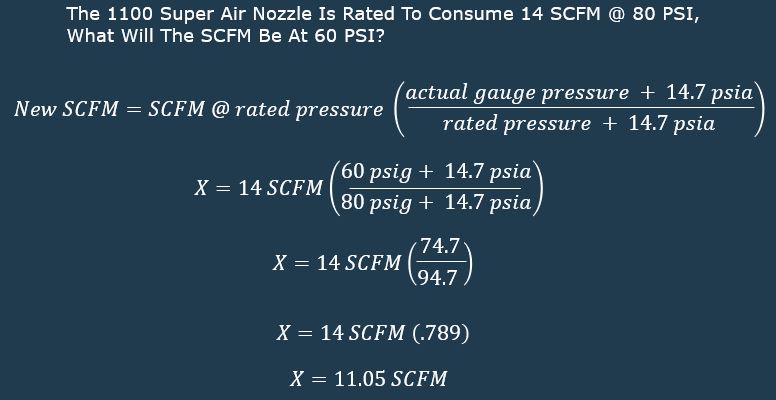
To convert SCFM (Standard Cubic Feet per Minute) to M3/hr (cubic meters per hour), you need to use the conversion factors for both units. The conversion factor for SCFM to M3/hr is approximately 0.472. This means that 1 SCFM is equivalent to 0.472 M3/hr. To perform the conversion, you can multiply the SCFM value by the conversion factor.
Understanding SCFM and M3/hr Units
The conversion from SCFM to M3/hr involves understanding the units of measurement for both. SCFM measures the volume of gas flowing through a system at a standard temperature and pressure, while M3/hr measures the volume of gas flowing through a system in cubic meters per hour. The key to accurate conversion is recognizing the standard conditions under which SCFM is measured, typically at 60°F (15.5°C) and 1 atm (14.7 psi). When converting, consider the following steps:
- Identify the SCFM value to be converted.
- Apply the conversion factor (approximately 0.472) to the SCFM value to get the M3/hr equivalent.
- Adjust for any non-standard conditions if necessary, using correction factors for temperature and pressure.
Importance of Standard Conditions
The standard conditions for SCFM are crucial because they provide a reference point for comparing gas flow rates under different conditions. The conversion to M3/hr assumes these standard conditions unless otherwise specified. Variations in temperature and pressure can significantly affect gas volume, necessitating corrections to ensure accurate comparisons. Understanding these conditions helps in applying the correct conversion factor and making necessary adjustments for non-standard conditions.
Conversion Factors and Calculations
The conversion from SCFM to M3/hr involves applying the conversion factor, which is based on the volume of a cubic foot versus a cubic meter. Since 1 cubic meter is approximately 35.31 cubic feet, and there are 60 minutes in an hour, the conversion factor accounts for these differences. The calculation is straightforward: SCFM conversion factor = M3/hr. However, it's essential to ensure that the units are consistent and that any necessary adjustments for non-standard conditions are made, using formulas that account for temperature and pressure variations.
Applications of SCFM to M3/hr Conversion
The conversion from SCFM to M3/hr is essential in various industrial applications, including gas processing, chemical engineering, and environmental monitoring. In these fields, understanding and comparing gas flow rates in different units is critical for designing systems, monitoring performance, and ensuring safety. The conversion helps in communicating specifications and measurements across different regions and industries, facilitating international collaboration and trade. Key applications include:
- Gas pipeline design and operation.
- Chemical plant process optimization.
- Environmental monitoring of gas emissions.
Tools and Resources for Conversion
Several tools and resources are available to facilitate the conversion from SCFM to M3/hr, including online conversion calculators, engineering software, and reference guides. These resources often provide conversion tables, formulas, and examples to help with calculations. Additionally, understanding the theoretical basis of the conversion, including the principles of fluid dynamics and thermodynamics, can enhance the ability to apply the conversion accurately in various contexts. Utilizing these tools and resources can streamline the conversion process, reduce errors, and increase productivity in engineering and scientific applications.
Frequently Asked Questions (FAQs)
What is the difference between scfm and acfm in gas flow measurements?
The main difference between scfm (standard cubic feet per minute) and acfm (actual cubic feet per minute) lies in the conditions under which the gas flow is measured. Scfm is a measure of gas flow at a standard set of conditions, typically defined as 60°F (15.6°C), 1 atm (101.325 kPa), and 0% relative humidity. This standardization allows for easier comparison of gas flow rates across different systems and locations. On the other hand, acfm measures gas flow at the actual conditions of temperature, pressure, and humidity where the measurement is taken. This means that acfm can vary significantly depending on the environment in which the measurement is made. Understanding the difference between scfm and acfm is crucial for accurately calculating and comparing gas flow rates in various industrial and scientific applications.
How do I convert scfm to acfm using equations and calculators?
Converting scfm to acfm involves adjusting for the differences in temperature, pressure, and sometimes humidity between the standard conditions and the actual conditions of the gas flow. The conversion can be done using specific equations that take into account these factors. For example, a common equation for converting scfm to acfm at different temperatures and pressures is acfm = scfm (Pstd / Pact) (Tact / Tstd), where Pstd and Tstd are the standard pressure and temperature, and Pact and Tact are the actual pressure and temperature. Additionally, calculators and software tools are available that can perform these conversions quickly and accurately, often with the capability to input various conditions and calculate the equivalent flow rates. These tools simplify the process, reducing the likelihood of human error in complex calculations.
What factors affect the conversion of scfm to acfm?
Several factors can significantly affect the conversion of scfm to acfm, including temperature, pressure, and humidity. Changes in temperature affect the density of the gas, with higher temperatures reducing density and thus increasing volume for the same mass flow rate. Similarly, changes in pressure impact the gas density, with higher pressures resulting in higher densities and lower volumes. Humidity can also play a role, particularly in applications where the gas is not fully dry, as the presence of water vapor can alter the overall gas density. Additionally, the gas composition itself can influence the conversion, as different gases have different properties that affect how they behave under varying conditions. Understanding and accurately accounting for these factors are critical for precise conversions of scfm to acfm.
Why is accurate conversion of scfm to acfm important in industrial applications?
Accurate conversion of scfm to acfm is essential in industrial applications because it directly impacts the efficiency, safety, and cost of operations. In processes such as combustion, ventilation, and gas processing, the accurate measurement and conversion of gas flow rates are crucial for maintaining optimal conditions, ensuring safety standards are met, and minimizing energy consumption. Incorrect conversions can lead to inefficiencies, equipment damage, or even hazardous conditions. Furthermore, in regulatory and compliance contexts, accurate reporting of gas flow rates, often requiring conversions between scfm and acfm, is necessary to demonstrate adherence to environmental and safety standards. Therefore, using reliable equations and calculators for converting scfm to acfm is a best practice in industrial settings.
Deja una respuesta
Entradas Relacionadas