
Internal Drum Shoe Brake Design Equations and Calculator

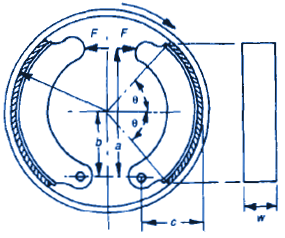
The internal drum shoe brake is a type of braking system commonly used in vehicles, where a rotating drum is enclosed by a stationary housing. The brake shoes are pushed against the drum to generate friction, slowing or stopping the vehicle. To design an effective internal drum shoe brake, engineers must consider various factors such as drum diameter, shoe width, and actuation force. This article provides a comprehensive overview of the design equations and calculator for internal drum shoe brakes, enabling engineers to optimize braking performance and safety. Key design parameters and calculation methods are also discussed.
- Internal Drum Shoe Brake Design Equations and Calculator
- What is the formula for drum brakes?
- What is the formula for calculating brakes?
- What is the construction of internal expanding shoe brake?
- What is the formula for calculating brake performance?
-
Frequently Asked Questions (FAQs)
- What are the key considerations in Internal Drum Shoe Brake Design?
- How do design equations impact the performance of Internal Drum Shoe Brakes?
- What is the purpose of a calculator in Internal Drum Shoe Brake Design?
- How can design equations and calculators be used to optimize Internal Drum Shoe Brake performance?
Internal Drum Shoe Brake Design Equations and Calculator
The internal drum shoe brake design is a type of braking system commonly used in vehicles, machinery, and other applications where a reliable and efficient braking system is required. The design of the internal drum shoe brake involves several key components, including the brake drum, brake shoes, and actuation mechanism. The brake drum is a rotating cylinder that is attached to the wheel or axle of the vehicle, while the brake shoes are designed to press against the drum to create friction and slow or stop the vehicle. The actuation mechanism is responsible for applying the necessary pressure to the brake shoes to engage the braking system.
To design an internal drum shoe brake, several key equations and calculations must be considered. These include the torque required to slow or stop the vehicle, the friction coefficient between the brake shoes and the drum, and the heat generated by the braking process. Additionally, the design must also consider the wear and tear of the brake components over time, as well as the safety and reliability of the braking system.
Introduction to Internal Drum Shoe Brake Design
The internal drum shoe brake design is a complex process that requires careful consideration of several key factors, including the vehicle weight, speed, and braking distance. The design must also consider the type of brake shoes and drum material used, as well as the actuation mechanism and control system. By understanding these factors and using the correct equations and calculations, designers can create an internal drum shoe brake system that is safe, reliable, and efficient.
Key Components of Internal Drum Shoe Brake Design
The key components of the internal drum shoe brake design include the brake drum, brake shoes, and actuation mechanism. The brake drum is a critical component that must be designed to withstand the heat and friction generated by the braking process. The brake shoes must be designed to press against the drum with the correct pressure and friction coefficient to create the necessary torque. The actuation mechanism must be designed to apply the necessary pressure to the brake shoes to engage the braking system.
Calculations and Equations for Internal Drum Shoe Brake Design
Several key calculations and equations are used in the design of internal drum shoe brakes, including the torque equation, friction equation, and heat equation. The torque equation is used to calculate the torque required to slow or stop the vehicle, while the friction equation is used to calculate the friction coefficient between the brake shoes and the drum. The heat equation is used to calculate the heat generated by the braking process and ensure that the brake components can withstand the temperature.
Materials and Manufacturing Considerations for Internal Drum Shoe Brake Design
The materials and manufacturing process used in the internal drum shoe brake design are critical to the safety and reliability of the braking system. The brake drum and brake shoes must be made from materials that can withstand the heat and friction generated by the braking process, while the actuation mechanism must be designed to apply the necessary pressure to the brake shoes. The manufacturing process must also ensure that the brake components are accurately and reliably assembled to ensure safe and efficient operation.
Testing and Validation of Internal Drum Shoe Brake Design
The testing and validation of the internal drum shoe brake design is critical to ensuring the safety and reliability of the braking system. Several key tests are used to validate the design, including the torque test, friction test, and heat test. The torque test is used to ensure that the brake system can generate the necessary torque to slow or stop the vehicle, while the friction test is used to ensure that the brake shoes can generate the necessary friction coefficient. The heat test is used to ensure that the brake components can withstand the temperature generated by the braking process.
| Component | Material | Function |
|---|---|---|
| Brake Drum | Cast Iron | Rotating cylinder that attaches to wheel or axle |
| Brake Shoes | Friction Material | Press against drum to create friction and slow or stop vehicle |
| Actuation Mechanism | Steel | Applies pressure to brake shoes to engage braking system |
What is the formula for drum brakes?
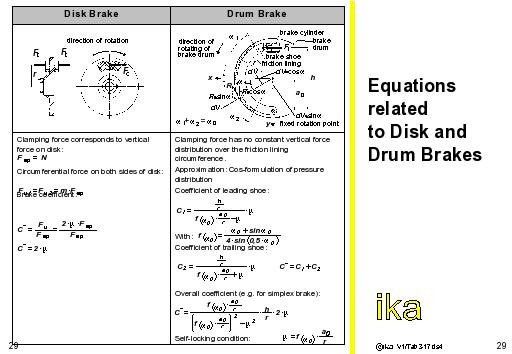
The formula for drum brakes is based on the friction generated between the brake shoes and the drum. The torque generated by the brake shoes is proportional to the force applied to the shoes and the radius of the drum. The formula can be represented as: T = (F x r) / (2 x π), where T is the torque, F is the force applied, and r is the radius of the drum.
Understanding the Components of Drum Brakes
The components of drum brakes include the brake drum, brake shoes, wheel cylinder, and return springs. These components work together to generate the friction needed to slow or stop the vehicle. The brake shoes are lined with a friction material that is designed to withstand the heat and wear generated by the braking process. The formula for drum brakes takes into account the coefficient of friction between the brake shoes and the drum, which is essential for determining the stopping power of the vehicle.
- The brake drum is the outer housing that rotates with the wheel.
- The brake shoes are the components that press against the drum to generate friction.
- The wheel cylinder is the component that applies the force to the brake shoes.
The Role of Friction in Drum Brakes
Friction plays a crucial role in the operation of drum brakes. The coefficient of friction between the brake shoes and the drum determines the stopping power of the vehicle. A higher coefficient of friction results in more stopping power, but it also generates more heat and wear on the brake shoes. The formula for drum brakes takes into account the coefficient of friction, which is essential for determining the torque generated by the brake shoes.
- The coefficient of friction is the ratio of the force of friction to the normal force.
- A higher coefficient of friction results in more stopping power.
- The coefficient of friction can be affected by the temperature and wear of the brake shoes.
Calculating the Torque of Drum Brakes
The torque generated by drum brakes is calculated using the formula: T = (F x r) / (2 x π), where T is the torque, F is the force applied, and r is the radius of the drum. This formula takes into account the force applied to the brake shoes and the radius of the drum. The torque generated by the brake shoes is essential for determining the stopping power of the vehicle.
- The force applied to the brake shoes is proportional to the pressure in the wheel cylinder.
- The radius of the drum affects the torque generated by the brake shoes.
- The torque generated by the brake shoes is essential for determining the stopping power of the vehicle.
Factors Affecting the Performance of Drum Brakes
The performance of drum brakes is affected by several factors, including the temperature, wear, and condition of the brake shoes and drum. The temperature of the brake shoes and drum can affect the coefficient of friction, which in turn affects the stopping power of the vehicle. The wear and condition of the brake shoes and drum can also affect the stopping power of the vehicle.
- The temperature of the brake shoes and drum can affect the coefficient of friction.
- The wear and condition of the brake shoes and drum can affect the stopping power of the vehicle.
- Regular maintenance is essential for ensuring the optimal performance of drum brakes.
Maintenance and Repair of Drum Brakes
Regular maintenance is essential for ensuring the optimal performance of drum brakes. The brake shoes and drum should be inspected regularly for wear and damage, and replaced as necessary. The wheel cylinder and return springs should also be inspected and replaced as necessary. Proper adjustment of the brake shoes and drum is also essential for optimal performance.
- Regular inspection of the brake shoes and drum is essential for ensuring optimal performance.
- The wheel cylinder and return springs should be inspected and replaced as necessary.
- Proper adjustment of the brake shoes and drum is essential for optimal performance.
What is the formula for calculating brakes?

The formula for calculating brakes is a complex process that involves several factors, including the vehicle's weight, speed, and friction coefficient. The most commonly used formula is the kinetic energy equation, which calculates the energy dissipated by the brakes as the vehicle slows down. The formula is: KE = 0.5 m v^2, where KE is the kinetic energy, m is the mass of the vehicle, and v is the velocity.
Understanding the Kinetic Energy Equation
The kinetic energy equation is a fundamental concept in physics that describes the energy of an object in motion. To calculate the brakes' energy dissipation, we need to understand the kinetic energy equation and its components. The equation is based on the principle that the energy of an object is proportional to its mass and the square of its velocity. The key factors to consider are:
- The mass of the vehicle, which affects the amount of energy required to slow it down.
- The velocity of the vehicle, which determines the amount of kinetic energy available to be dissipated.
- The friction coefficient, which affects the brakes' ability to slow down the vehicle.
Factors Affecting Brake Performance
Several factors can affect brake performance, including the vehicle's weight, speed, and friction coefficient. The brakes' ability to slow down the vehicle is also influenced by the tyre condition, road surface, and weather conditions. To ensure optimal brake performance, it is essential to consider the following factors:
- The weight distribution of the vehicle, which affects the brakes' ability to slow it down.
- The speed of the vehicle, which determines the amount of kinetic energy available to be dissipated.
- The friction coefficient, which affects the brakes' ability to slow down the vehicle.
Calculating Brake Energy Dissipation
To calculate the brake energy dissipation, we need to use the kinetic energy equation and consider the vehicle's weight, speed, and friction coefficient. The formula is: BE = KE / t, where BE is the brake energy dissipation, KE is the kinetic energy, and t is the time it takes to slow down the vehicle. The key factors to consider are:
- The mass of the vehicle, which affects the amount of energy required to slow it down.
- The velocity of the vehicle, which determines the amount of kinetic energy available to be dissipated.
- The time it takes to slow down the vehicle, which affects the brake energy dissipation.
Importance of Friction in Brake Performance
Friction plays a crucial role in brake performance, as it determines the brakes' ability to slow down the vehicle. The friction coefficient affects the amount of energy dissipated by the brakes and is influenced by the tyre condition, road surface, and weather conditions. To ensure optimal brake performance, it is essential to consider the following factors:
- The tyre condition, which affects the friction coefficient and brake performance.
- The road surface, which affects the friction coefficient and brake performance.
- The weather conditions, which affect the friction coefficient and brake performance.
Advanced Brake Technologies
Advanced brake technologies, such as anti-lock braking systems (ABS) and electronic stability control (ESC), can significantly improve brake performance and vehicle safety. These systems use sensors and algorithms to optimize brake performance and prevent wheel lockup. The key benefits of these systems are:
- Improved brake performance, which reduces the risk of accidents.
- Enhanced vehicle safety, which protects the driver and passengers.
- Reduced maintenance costs, which result from the optimized brake performance.
What is the construction of internal expanding shoe brake?

The construction of an internal expanding shoe brake involves a drum or rotor that rotates with the wheel or axle, and a brake shoe that expands to contact the drum and create friction. The brake shoe is typically made of a heat-resistant material and is attached to a backing plate. When the brake is applied, the brake shoe expands and contacts the drum, creating friction and slowing or stopping the vehicle.
Components of Internal Expanding Shoe Brake
The internal expanding shoe brake consists of several key components, including the brake drum, brake shoe, backing plate, and actuator. These components work together to create the friction needed to slow or stop the vehicle. The brake drum is typically made of cast iron or steel and is attached to the wheel or axle. The brake shoe is made of a heat-resistant material and is attached to the backing plate. The actuator is used to expand the brake shoe and create contact with the drum. Some of the key features of these components include:
- Durable materials to withstand the heat and friction generated by the brake
- Precise construction to ensure proper alignment and contact between the brake shoe and drum
- Efficient cooling to prevent overheating and maintain braking performance
Working Principle of Internal Expanding Shoe Brake
The working principle of an internal expanding shoe brake involves the expansion of the brake shoe to contact the drum and create friction. When the brake is applied, the actuator pushes the brake shoe outwards, causing it to contact the drum. The friction between the brake shoe and drum slows or stops the vehicle. The brake shoe is designed to expand and contract smoothly, ensuring consistent braking performance. Some of the key factors that affect the working principle of the internal expanding shoe brake include:
- Brake shoe material and its ability to withstand heat and friction
- Drum surface and its ability to provide a smooth, consistent braking surface
- Actuator force and its ability to apply the necessary pressure to the brake shoe
Advantages of Internal Expanding Shoe Brake
The internal expanding shoe brake has several advantages, including its simple construction, low maintenance, and high braking performance. The internal expanding shoe brake is also compact and lightweight, making it suitable for use in a variety of applications. Some of the key advantages of the internal expanding shoe brake include:
- High friction coefficient to provide excellent braking performance
- Low wear rate to minimize maintenance and extend the life of the brake
- Compact design to save space and reduce weight
Applications of Internal Expanding Shoe Brake
The internal expanding shoe brake is used in a variety of applications, including automotive, industrial, and aerospace. The internal expanding shoe brake is particularly suitable for use in high-performance applications where high braking performance is required. Some of the key applications of the internal expanding shoe brake include:
- High-performance vehicles where high braking performance is critical
- Industrial machinery where high braking performance and reliability are required
- Aerospace applications where high braking performance and low weight are critical
Maintenance and Repair of Internal Expanding Shoe Brake
The internal expanding shoe brake requires regular maintenance to ensure proper functioning and to prevent wear and tear. The brake shoe and drum should be inspected regularly for signs of wear, and the brake fluid should be checked and replaced as necessary. Some of the key maintenance and repair tasks for the internal expanding shoe brake include:
- Brake shoe replacement to maintain braking performance and prevent wear
- Drum resurfacing to maintain a smooth, consistent braking surface
- Actuator maintenance to ensure proper function and prevent failure
What is the formula for calculating brake performance?

The formula for calculating brake performance is a complex equation that takes into account several factors, including the vehicle's weight, brake pad friction, rotor diameter, and braking distance. The most common formula used is the brake mean effective pressure (BMEP) formula, which calculates the average pressure applied to the brake pads during a braking event. This formula is essential for engineers and manufacturers to design and optimize brake systems for various vehicles.
Understanding Brake Performance Calculations
To calculate brake performance, you need to understand the various factors that affect it. The BMEP formula is a widely used method for calculating brake performance. The factors that affect brake performance include:
- Vehicle weight: The heavier the vehicle, the more braking force is required to stop it.
- Brake pad friction: The type and quality of brake pads used can significantly impact brake performance.
- Rotor diameter: The size of the rotor can affect the braking distance and brake performance.
Factors Affecting Brake Performance
Several factors can affect brake performance, including road conditions, vehicle speed, and brake pad wear. The BMEP formula takes into account these factors to provide an accurate calculation of brake performance. The factors that affect brake performance include:
- Road conditions: Wet or slippery roads can reduce brake performance.
- Vehicle speed: The faster the vehicle is moving, the more braking force is required to stop it.
- Brake pad wear: Worn-out brake pads can significantly reduce brake performance.
Importance of Brake Performance in Vehicle Safety
Brake performance is a critical aspect of vehicle safety, as it can significantly impact the stopping distance and avoidance of accidents. Good brake performance can help drivers avoid accidents and reduce the risk of injuries and fatalities. The importance of brake performance in vehicle safety includes:
- Reduced stopping distance: Good brake performance can reduce the stopping distance, giving drivers more time to react to hazards.
- Improved vehicle control: Good brake performance can improve vehicle control, making it easier for drivers to steer and maneuver the vehicle.
- Enhanced safety features: Good brake performance can enhance safety features such as anti-lock braking systems (ABS) and electronic stability control (ESC).
Methods for Improving Brake Performance
There are several methods for improving brake performance, including upgrading brake pads, installing high-performance brake rotors, and using brake fluid with a high boiling point. The methods for improving brake performance include:
- Upgrading brake pads: High-performance brake pads can improve brake performance by providing more friction and heat resistance.
- Installing high-performance brake rotors: High-performance brake rotors can improve brake performance by providing more heat dissipation and friction.
- Using brake fluid with a high boiling point: Brake fluid with a high boiling point can improve brake performance by reducing brake fade and fluid degradation.
Brake Performance Testing and Evaluation
Brake performance testing and evaluation are crucial for ensuring that vehicles meet safety standards and regulations. The testing and evaluation process involves:
- Dynamic testing: Dynamic testing involves testing the brake performance of a vehicle under various driving conditions.
- Static testing: Static testing involves testing the brake performance of a vehicle under stationary conditions.
- Data analysis: Data analysis involves analyzing the data collected from testing and evaluation to identify areas for improvement.
Frequently Asked Questions (FAQs)
What are the key considerations in Internal Drum Shoe Brake Design?
When designing an internal drum shoe brake, there are several key considerations that must be taken into account. The first consideration is the brake's stopping distance, which is the distance it takes for the vehicle to come to a complete stop after the brake is applied. This is determined by factors such as the coefficients of friction between the brake shoes and the drum, as well as the vehicle's speed and weight. Another important consideration is the brake's heat dissipation, as excessive heat can cause the brake to fail or degrade over time. This can be addressed through the use of ventilation systems or heat sinks. Additionally, the brake's durability and reliability must also be considered, as well as its maintainability and cost.
How do design equations impact the performance of Internal Drum Shoe Brakes?
The design equations used in internal drum shoe brake design play a crucial role in determining the brake's performance and efficiency. These equations, which are often based on mathematical models of the brake's behavior, take into account factors such as the brake's geometry, material properties, and operating conditions. By solving these equations, designers can determine the optimal design parameters for the brake, such as the shoe shape, spring force, and actuation mechanism. For example, the equations of motion can be used to determine the brake's stopping distance and deceleration rate, while the heat transfer equations can be used to determine the brake's temperature and heat dissipation. By using these equations, designers can optimize the brake's design and improve its performance, reliability, and safety.
What is the purpose of a calculator in Internal Drum Shoe Brake Design?
A calculator is a useful tool in internal drum shoe brake design, as it allows designers to quickly and accurately calculate the design parameters and performance characteristics of the brake. The calculator can be used to solve the design equations, taking into account the input parameters such as the vehicle's weight, speed, and brake's geometry. The calculator can also be used to iterate on the design, allowing designers to optimize the brake's performance and meet the required specifications. Additionally, the calculator can be used to analyze the brake's behavior under different operating conditions, such as high temperatures or high speeds. By using a calculator, designers can streamline the design process, reduce the risk of errors, and improve the overall quality of the brake design.
How can design equations and calculators be used to optimize Internal Drum Shoe Brake performance?
By combining design equations and calculators, designers can optimize the performance of internal drum shoe brakes and improve their efficiency, reliability, and safety. The design equations can be used to model the brake's behavior and predict its performance under different operating conditions. The calculator can then be used to solve these equations and determine the optimal design parameters. For example, the calculator can be used to determine the optimal shoe shape and spring force to achieve the desired stopping distance and deceleration rate. Additionally, the calculator can be used to analyze the brake's heat transfer and determine the optimal cooling system to prevent overheating. By using design equations and calculators, designers can iterate on the design and optimize the brake's performance, reducing the risk of failures and improving the overall quality of the brake.
Deja una respuesta
Entradas Relacionadas