
Steady-State Indoor Air Quality Formulae and Calculator

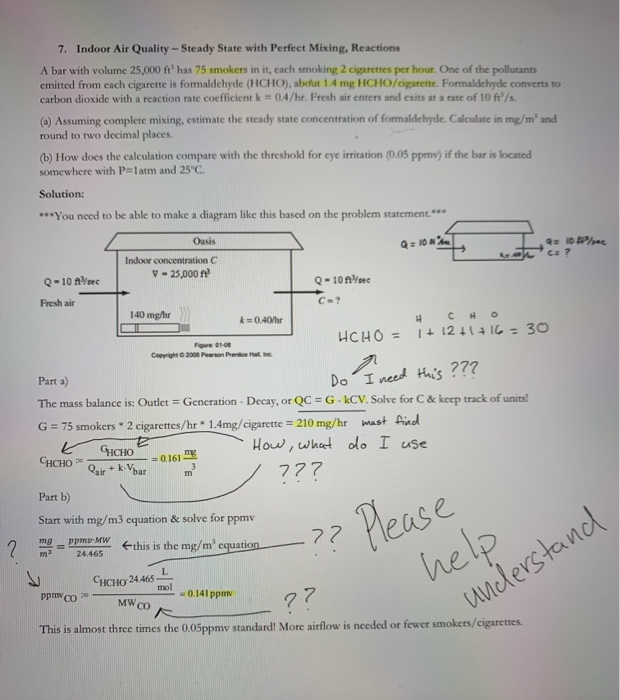
Maintaining good indoor air quality is crucial for occupant health and comfort. Steady-state indoor air quality formulae and calculators are essential tools for predicting and managing indoor air pollution. These formulae take into account various factors such as ventilation rates, pollutant sources, and removal mechanisms to estimate indoor air concentrations. By using a steady-state indoor air quality calculator, building designers, operators, and occupants can make informed decisions to minimize indoor air pollution and create a healthier indoor environment. This article provides an overview of steady-state indoor air quality formulae and calculators, their applications, and limitations.
- Steady-State Indoor Air Quality Formulae and Calculator
- How do you calculate indoor air quality?
- What is the formula to calculate AQI?
- How to convert PM 2.5 to AQI?
- How do you measure the quality of indoor air?
-
Frequently Asked Questions (FAQs)
- What is the Steady-State Indoor Air Quality Formula and how does it work?
- How does the Steady-State Indoor Air Quality Calculator help in assessing indoor air quality?
- What are the limitations of the Steady-State Indoor Air Quality Formula and Calculator?
- How can the Steady-State Indoor Air Quality Formula and Calculator be used to improve indoor air quality?
Steady-State Indoor Air Quality Formulae and Calculator
The Steady-State Indoor Air Quality Formulae and Calculator is a tool used to determine the indoor air quality in a given space. It takes into account various factors such as the ventilation rate, pollutant concentration, and occupant density to calculate the indoor air quality index. This index is a measure of the air quality in a space, with higher values indicating poorer air quality.
Introduction to Steady-State Indoor Air Quality Formulae
The steady-state indoor air quality formulae are based on the principle of mass balance, which states that the rate of pollutant generation equals the rate of pollutant removal. This principle is used to derive equations that describe the indoor air quality in a given space. The formulae take into account factors such as ventilation rate, pollutant concentration, and occupant density to calculate the indoor air quality index.
Calculation of Ventilation Rate
The ventilation rate is a critical parameter in determining the indoor air quality. It is calculated using the ASHRAE 62.1 standard, which provides a method for calculating the ventilation rate based on the occupant density and space type. The formula for calculating the ventilation rate is as follows:
| Parameter | Value |
|---|---|
| Ventilation Rate | 0.06 cfm/ft² + (0.12 cfm/occupant x number of occupants) |
Pollutant Concentration and Occupant Density
The pollutant concentration and occupant density are also important factors in determining the indoor air quality. The pollutant concentration is measured in parts per million (ppm) or micrograms per cubic meter (μg/m³), while the occupant density is measured in occupants per square foot (occ/ft²). The formula for calculating the indoor air quality index based on the pollutant concentration and occupant density is as follows:
| Parameter | Value |
|---|---|
| Pollutant Concentration | 100 ppm (CO₂) or 100 μg/m³ (PM₂.₅) |
| Occupant Density | 1 occ/10 ft² |
Indoor Air Quality Index Calculation
The indoor air quality index is a measure of the air quality in a space, with higher values indicating poorer air quality. The index is calculated using a logarithmic scale, with values ranging from 0 (good air quality) to 500 (poor air quality). The formula for calculating the indoor air quality index is as follows:
| Parameter | Value |
|---|---|
| Indoor Air Quality Index | 100 x (1 - (1 / (1 + (pollutant concentration / (ventilation rate x occupant density))))) |
Steady-State Indoor Air Quality Calculator
The steady-state indoor air quality calculator is a tool used to calculate the indoor air quality index based on the ventilation rate, pollutant concentration, and occupant density. The calculator uses the formulae described above to calculate the indoor air quality index and provides a graphical interface for users to input data and view results. The calculator is a useful tool for building owners, facilities managers, and indoor air quality professionals to assess and improve the indoor air quality in a given space.
How do you calculate indoor air quality?

To calculate indoor air quality, it is essential to consider various factors that can impact the air quality, such as the presence of pollutants, ventilation rates, and temperature and humidity levels. Indoor air quality can be calculated using various metrics, including the concentration of particulate matter, volatile organic compounds, and carbon dioxide. These metrics can be used to determine the overall air quality index, which provides a comprehensive picture of the indoor air quality.
Measuring Indoor Air Pollutants
Measuring indoor air pollutants is a critical step in calculating indoor air quality. This can be done using various techniques, including sampling methods and analytical instruments. Some common indoor air pollutants include particulate matter, nitrogen dioxide, and volatile organic compounds. To measure these pollutants, the following steps can be taken:
- Identify the types of pollutants present in the indoor environment
- Use sampling methods, such as active or passive sampling, to collect air samples
- Analyze the air samples using analytical instruments, such as gas chromatographs or spectrometers
Assessing Ventilation Rates
Assessing ventilation rates is another important factor in calculating indoor air quality. Ventilation rates refer to the rate at which outdoor air is introduced into the indoor environment, and can be measured using various methods, including tracer gas techniques and airflow measurements. To assess ventilation rates, the following steps can be taken:
- Use tracer gas techniques to measure the ventilation rate
- Conduct airflow measurements to determine the air exchange rate
- Calculate the ventilation rate using equations or models
Evaluating Temperature and Humidity
Evaluating temperature and humidity levels is also crucial in calculating indoor air quality. Temperature and humidity can impact the growth and survival of microorganisms, and can also affect the comfort and health of occupants. To evaluate temperature and humidity, the following steps can be taken:
- Use thermometers and hygrometers to measure temperature and humidity levels
- Compare the measured temperature and humidity levels to recommended levels
- Adjust the temperature and humidity levels to optimal ranges
Using Air Quality Index
Using an air quality index is a useful way to calculate indoor air quality. An air quality index provides a comprehensive picture of the indoor air quality, taking into account various pollutants and factors. To use an air quality index, the following steps can be taken:
- Identify the pollutants and factors to be included in the air quality index
- Assign weights to each pollutant and factor based on their importance
- Calculate the air quality index using equations or models
Implementing Control Measures
Implementing control measures is a critical step in maintaining good indoor air quality. Control measures can include ventilation systems, air filtration systems, and source control measures. To implement control measures, the following steps can be taken:
- Identify the sources of pollution and implement source control measures
- Install and maintain ventilation systems and air filtration systems
- Monitor and evaluate the effectiveness of the control measures
What is the formula to calculate AQI?
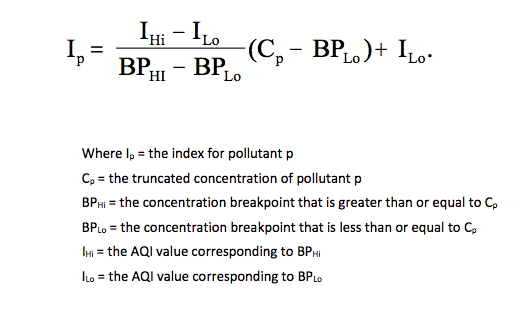
The formula to calculate the Air Quality Index (AQI) is based on the levels of five major air pollutants: particulate matter (PM2.5 and PM10), ozone (O3), nitrogen dioxide (NO2), carbon monoxide (CO), and sulfur dioxide (SO2). The AQI is calculated by determining the concentration of each pollutant in the air and then comparing it to a set of standard levels. The pollutant with the highest concentration is used to determine the overall AQI.
Air Pollutants and Their Effects
The calculation of AQI takes into account the health effects of each pollutant. For example, PM2.5 can cause respiratory problems, while O3 can irritate the lungs. The AQI formula uses the following pollutants and their corresponding health effects:
- PM2.5: Particulate matter with a diameter of 2.5 micrometers or less, which can cause respiratory problems and cardiovascular disease.
- O3: Ozone, which can irritate the lungs and cause respiratory problems.
- NO2: Nitrogen dioxide, which can cause respiratory problems and lung damage.
AQI Calculation Method
The AQI calculation method involves determining the concentration of each pollutant in the air and then comparing it to a set of standard levels. The pollutant with the highest concentration is used to determine the overall AQI. The AQI is calculated using the following formula:
- Determine the concentration of each pollutant in the air.
- Compare the concentration to a set of standard levels.
- Use the pollutant with the highest concentration to determine the overall AQI.
AQI Categories and Health Effects
The AQI is divided into six categories, each with its own set of health effects. The categories are:
- Good: AQI value of 0-50, which indicates little to no health risk.
- Moderate: AQI value of 51-100, which indicates some health risk.
- Unhealthy for sensitive groups: AQI value of 101-150, which indicates increased health risk for sensitive groups.
AQI Monitoring and Reporting
AQI monitoring and reporting involve collecting data on the concentrations of air pollutants and then using that data to calculate the AQI. The data is typically collected using air quality monitors and is reported to the public in a variety of ways, including:
- Online platforms: Websites and mobile apps that provide real-time AQI data.
- Social media: Social media platforms that provide AQI updates and alerts.
- News media: News outlets that report on AQI and air quality issues.
Importance of AQI in Public Health
The AQI is an important tool for protecting public health. By providing accurate and timely information on air quality, the AQI helps individuals make informed decisions about their daily activities and reduce their exposure to air pollutants. The AQI is also used by health professionals and policy makers to:
- Develop health advisories: Providing guidance on how to reduce exposure to air pollutants.
- Inform policy decisions: Using AQI data to inform policies and regulations related to air quality.
- Track trends and patterns: Analyzing AQI data to identify trends and patterns in air quality.
How to convert PM 2.5 to AQI?

To convert PM 2.5 to AQI (Air Quality Index), it is essential to understand the relationship between these two metrics. PM 2.5 refers to particulate matter with a diameter of 2.5 micrometers or less, which is a common indicator of air quality. The AQI, on the other hand, is a composite index that takes into account multiple pollutants, including PM 2.5, to provide a comprehensive picture of air quality. The conversion process involves using a formula or a lookup table that maps PM 2.5 concentrations to corresponding AQI values.
Understanding the Relationship Between PM 2.5 and AQI
The relationship between PM 2.5 and AQI is based on the US Environmental Protection Agency (EPA) standards. The EPA has established breakpoints for PM 2.5 concentrations that correspond to different AQI categories, ranging from good to hazardous. To convert PM 2.5 to AQI, one can use the following steps:
- Determine the PM 2.5 concentration in micrograms per cubic meter (μg/m³).
- Use the EPA's breakpoint table to find the corresponding AQI category.
- Calculate the AQI value based on the PM 2.5 concentration and the breakpoint table.
Using a Formula to Convert PM 2.5 to AQI
A formula can be used to convert PM 2.5 to AQI. The formula takes into account the non-linear relationship between PM 2.5 concentrations and AQI values. The formula is as follows: AQI = (PM 2.5 / breakpoint) x (AQI category - 1). For example, if the PM 2.5 concentration is 35 μg/m³, the corresponding AQI value would be 100, which falls into the moderate category.
- Identify the PM 2.5 concentration in μg/m³.
- Determine the breakpoint for the corresponding AQI category.
- Apply the formula to calculate the AQI value.
Converting PM 2.5 to AQI Using a Lookup Table
A lookup table can be used to convert PM 2.5 to AQI. The table lists PM 2.5 concentrations and corresponding AQI values. To use the table, simply find the PM 2.5 concentration and read the corresponding AQI value.
- Find the PM 2.5 concentration in the lookup table.
- Read the corresponding AQI value.
- Determine the AQI category based on the AQI value.
Important Considerations When Converting PM 2.5 to AQI
When converting PM 2.5 to AQI, it is essential to consider the limitations and uncertainties associated with the conversion process. For example, the EPA's breakpoint table may not be applicable in all regions or countries. Additionally, the conversion formula or lookup table may not account for other pollutants that can affect air quality.
- Understand the limitations of the conversion process.
- Consider the regional or country-specific differences in air quality standards.
- Account for other pollutants that can affect air quality.
Implications of Converting PM 2.5 to AQI for Air Quality Management
Converting PM 2.5 to AQI has significant implications for air quality management. The AQI value can be used to inform the public about air quality conditions and to develop strategies for improving air quality. For example, policymakers can use the AQI value to set standards for emission reductions or to implement control measures to reduce PM 2.5 concentrations.
- Use the AQI value to inform the public about air quality conditions.
- Develop strategies for improving air quality based on the AQI value.
- Implement control measures to reduce PM 2.5 concentrations and improve air quality.
How do you measure the quality of indoor air?
Measuring the quality of indoor air is crucial for maintaining a healthy and comfortable environment. The quality of indoor air can be affected by various factors, including pollutants, ventilation, and humidity. To measure the quality of indoor air, one can use various instruments and techniques. For example, air sampling can be done using sensors and monitors that detect particulate matter, gases, and volatile organic compounds. Additionally, indoor air quality indexes can be used to assess the overall quality of the air.
What are the Common Indoor Air Pollutants?
The common indoor air pollutants include particulate matter, nitrogen dioxide, ozone, carbon monoxide, and volatile organic compounds. These pollutants can come from various sources, such as cooking, heating, and cooling systems, as well as building materials and furniture. To reduce the levels of these pollutants, one can use air purifiers and ventilation systems. For example:
- Particulate matter can be reduced using HEPA filters
- Nitrogen dioxide can be reduced by using ventilation systems that exchange indoor air with outdoor air
- Volatile organic compounds can be reduced by using air purifiers that have activated carbon filters
How to Use Indoor Air Quality Monitors?
Indoor air quality monitors are instruments that can detect various pollutants and parameters in the air. These monitors can be used to track the levels of particulate matter, gases, and humidity in the air. To use these monitors effectively, one should:
- Place the monitor in a central location to get an accurate reading of the indoor air quality
- Calibrate the monitor regularly to ensure accurate readings
- Use the monitor to track the trends and patterns of indoor air quality over time
What are the Benefits of Good Indoor Air Quality?
Good indoor air quality has numerous benefits, including improved health, comfort, and productivity. When the indoor air quality is good, it can reduce the risk of respiratory problems, allergies, and infections. Additionally, good indoor air quality can improve the mood and cognition of occupants. For example:
- Improved health can be achieved by reducing the levels of particulate matter and gases in the air
- Increased comfort can be achieved by maintaining a comfortable temperature and humidity level
- Improved productivity can be achieved by reducing the distractions and discomforts caused by poor indoor air quality
How to Improve Indoor Air Quality?
Improving indoor air quality requires a comprehensive approach that involves reducing pollutants, improving ventilation, and maintaining a healthy environment. One can improve indoor air quality by:
- Using air purifiers and ventilation systems to reduce pollutants and improve ventilation
- Reducing moisture to prevent the growth of mold and mildew
- Maintaining a clean environment by regularly cleaning and disinfecting surfaces
What are the Standards for Indoor Air Quality?
The standards for indoor air quality vary depending on the country and organization. For example, the American Society of Heating, Refrigerating, and Air-Conditioning Engineers (ASHRAE) has established standards for indoor air quality that include limits for particulate matter, gases, and volatile organic compounds. Additionally, the Occupational Safety and Health Administration (OSHA) has established standards for indoor air quality in workplaces. For example:
- ASHRAE standards require that indoor air quality meet certain limits for particulate matter and gases
- OSHA standards require that employers provide a safe and healthy work environment
- International standards require that indoor air quality meet certain limits for pollutants and parameters
Frequently Asked Questions (FAQs)
What is the Steady-State Indoor Air Quality Formula and how does it work?
The Steady-State Indoor Air Quality Formula is a mathematical model used to calculate the concentration of pollutants in indoor air. It takes into account various factors such as the emission rate of pollutants, the ventilation rate, and the volume of the indoor space. The formula is based on the principle of mass balance, which states that the rate of change of pollutant concentration is equal to the difference between the rate of emission and the rate of removal. The Steady-State Indoor Air Quality Formula is a useful tool for indoor air quality professionals to assess the air quality in buildings and identify potential health risks. By using this formula, professionals can determine the effectiveness of ventilation systems and air purification systems in reducing pollutant concentrations.
How does the Steady-State Indoor Air Quality Calculator help in assessing indoor air quality?
The Steady-State Indoor Air Quality Calculator is a software tool that uses the Steady-State Indoor Air Quality Formula to calculate the concentration of pollutants in indoor air. The calculator takes into account various input parameters such as the emission rate of pollutants, the ventilation rate, the volume of the indoor space, and the air exchange rate. The calculator provides a user-friendly interface for inputting these parameters and calculates the pollutant concentration in a matter of seconds. The Steady-State Indoor Air Quality Calculator is a valuable tool for indoor air quality professionals to quickly and accurately assess the air quality in buildings. It helps to identify potential health risks associated with poor air quality and provides a basis for recommendations to improve ventilation and air purification systems.
What are the limitations of the Steady-State Indoor Air Quality Formula and Calculator?
While the Steady-State Indoor Air Quality Formula and Calculator are useful tools for assessing indoor air quality, they have several limitations. One of the main limitations is that they assume a steady-state condition, which means that the pollutant concentration is constant over time. In reality, pollutant concentrations can vary significantly over time due to changes in emission rates, ventilation rates, and occupancy patterns. Another limitation is that the formula and calculator do not account for non-uniform mixing of pollutants in the indoor space, which can lead to hot spots of high pollutant concentration. Additionally, the formula and calculator require accurate input parameters, which can be difficult to obtain in practice. Therefore, the Steady-State Indoor Air Quality Formula and Calculator should be used in conjunction with other indoor air quality assessment methods to provide a more comprehensive understanding of indoor air quality.
How can the Steady-State Indoor Air Quality Formula and Calculator be used to improve indoor air quality?
The Steady-State Indoor Air Quality Formula and Calculator can be used to improve indoor air quality by providing a quantitative assessment of pollutant concentrations and identifying areas for improvement. By using the formula and calculator, indoor air quality professionals can evaluate the effectiveness of ventilation systems and air purification systems in reducing pollutant concentrations. The formula and calculator can also be used to design and optimize ventilation systems and air purification systems to achieve better air quality. Furthermore, the formula and calculator can be used to develop and implement indoor air quality management plans that prioritize occupant health and well-being. By using the Steady-State Indoor Air Quality Formula and Calculator, building owners and managers can take a proactive approach to improving indoor air quality and reducing the risks associated with poor air quality.
Deja una respuesta
Entradas Relacionadas