
Shaft Torsional Deflection and Rigidity Formulae and Calculator

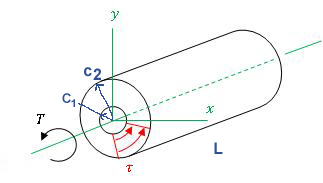
The shaft torsional deflection and rigidity are critical parameters in mechanical engineering, particularly in the design of rotary systems such as gears, axles, and driveshafts. Torsional deflection refers to the twist or rotation of a shaft under an applied torque, while rigidity is a measure of the shaft's resistance to this deformation. Accurate calculation of these parameters is essential to ensure the safe and efficient operation of mechanical systems. This article provides formulae and a calculator for determining shaft torsional deflection and rigidity, enabling engineers to optimize their designs and predict performance with confidence.
- Shaft Torsional Deflection and Rigidity Formulae and Calculator
- Understanding the Fundamentals of Shaft Torsional Deflection and Rigidity
-
Frequently Asked Questions (FAQs)
- What is the significance of Shaft Torsional Deflection and Rigidity in engineering applications?
- How are the Shaft Torsional Deflection and Rigidity Formulae used in engineering design?
- What are the key factors that affect the Shaft Torsional Deflection and Rigidity of a shaft?
- How can the Shaft Torsional Deflection and Rigidity Calculator be used to simplify the design process?
Shaft Torsional Deflection and Rigidity Formulae and Calculator
The Shaft Torsional Deflection and Rigidity Formulae and Calculator is a tool used to calculate the torsional deflection and rigidity of a shaft under various loads and conditions. This calculator is essential in mechanical engineering and design, as it helps engineers to determine the stress and strain on a shaft, ensuring that it can withstand the torque and twisting forces applied to it. The calculator takes into account the shaft's material properties, such as its modulus of elasticity and Poisson's ratio, as well as its geometric dimensions, including its length, diameter, and wall thickness.
Introduction to Torsional Deflection
Torsional deflection refers to the twisting or rotational displacement of a shaft under a torque or twisting force. This type of deflection is critical in rotating machinery, such as gearboxes, motors, and pumps, as excessive torsional deflection can lead to vibration, noise, and premature failure. The torsional deflection of a shaft can be calculated using the formula: θ = (T L) / (G J), where θ is the angle of twist, T is the torque, L is the length of the shaft, and G is the shear modulus of the material.
Shaft Rigidity and Stiffness
Shaft rigidity and stiffness refer to the ability of a shaft to resist torsional deflection. A shaft with high rigidity and stiffness will experience less torsional deflection under a given torque or twisting force. The rigidity and stiffness of a shaft can be calculated using the formula: K = (G J) / L, where K is the torsional stiffness, G is the shear modulus, J is the polar moment of inertia, and L is the length of the shaft. Higher values of K indicate a more rigid and stiff shaft.
Torsional Deflection Formulae
The torsional deflection of a shaft can be calculated using various formulae, depending on the shaft's geometry and material properties. Some common formulae include:
| Formula | Description |
|---|---|
| θ = (T L) / (G J) | Angle of twist formula |
| K = (G J) / L | Torsional stiffness formula |
| T = (G J θ) / L | Torque formula |
These formulae can be used to calculate the torsional deflection, rigidity, and stiffness of a shaft under various loads and conditions.
Calculator for Shaft Torsional Deflection and Rigidity
A calculator for shaft torsional deflection and rigidity can be used to simplify the calculation process and reduce errors. The calculator can take into account various input parameters, such as the shaft's material properties, geometric dimensions, and loads, and provide output values for the torsional deflection, rigidity, and stiffness of the shaft. The calculator can also be used to optimize the design of a shaft, by iterating on the input parameters and analyzing the output values.
Applications of Shaft Torsional Deflection and Rigidity Formulae and Calculator
The Shaft Torsional Deflection and Rigidity Formulae and Calculator have various applications in mechanical engineering and design, including:
Rotating machinery, such as gearboxes, motors, and pumps
Power transmission systems, such as shafts, gears, and bearings
Mechanical components, such as couplings, universal joints, and flywheels
Automotive, aerospace, and industrial applications, where torsional deflection and rigidity are critical design parameters. The calculator can be used to optimize the design of these systems and components, ensuring that they can withstand the torque and twisting forces applied to them.
Understanding the Fundamentals of Shaft Torsional Deflection and Rigidity
The calculation of shaft torsional deflection and rigidity is crucial in the design and analysis of mechanical systems, particularly in the field of mechanical engineering. This involves understanding the torque and twist that a shaft undergoes when subjected to external loads, and how these factors affect its performance and lifespan. The formulae used to calculate these parameters are based on the principles of mechanics of materials and solid mechanics, taking into account the material properties, geometric dimensions, and boundary conditions of the shaft. By using these formulae and calculators, engineers can predict the behavior of shafts under various loading conditions, identify potential failure modes, and optimize their design for improved performance and reliability.
Introduction to Shaft Torsional Deflection
Shaft torsional deflection refers to the angular displacement of a shaft when it is subjected to a torque or twisting moment. This deflection can cause the shaft to twist or rotate about its longitudinal axis, leading to a change in its alignment and orientation. The magnitude of the deflection depends on the applied torque, shaft material, diameter, length, and end conditions. Understanding the torsional deflection of a shaft is essential in designing power transmission systems, gearboxes, and Axles, where the shaft plays a critical role in transmitting rotational motion and torque. By calculating the torsional deflection, engineers can ensure that the shaft is sized and designed to withstand the applied loads and stresses, and that it operates within a safe and acceptable range of deflection and stress.
Calculating Shaft Torsional Rigidity
Shaft torsional rigidity is a measure of a shaft's Resistance to torsion or twisting, and is typically calculated using the formula: K = (G * J) / L, where K is the torsional rigidity, G is the shear modulus of the shaft material, J is the polar moment of inertia of the shaft cross-section, and L is the length of the shaft. The torsional rigidity is an important parameter in determining the shaft's ability to resist twisting and deflection, and is used in the design of shafts, gears, and bearings. By calculating the torsional rigidity, engineers can predict the behavior of the shaft under various loading conditions, and optimize its design for improved performance and reliability. The formula for calculating torsional rigidity is based on the principles of solid mechanics and materials science, and takes into account the material properties, geometric dimensions, and boundary conditions of the shaft.
Factors Affecting Shaft Torsional Deflection and Rigidity
Several factors can affect the torsional deflection and rigidity of a shaft, including the shaft material, diameter, length, end conditions, and applied loads. The shaft material can significantly impact the torsional rigidity, with materials having a higher shear modulus generally exhibiting higher rigidity. The diameter and length of the shaft also play a crucial role, with larger diameters and shorter lengths resulting in higher rigidity and lower deflection. The end conditions of the shaft, such as fixed or free ends, can also influence the torsional deflection and rigidity. Additionally, the applied loads, including torque, bending moment, and axial force, can cause stress and strain in the shaft, affecting its torsional deflection and rigidity. By understanding the factors that affect the torsional deflection and rigidity of a shaft, engineers can design and optimize the shaft for improved performance and reliability.
Applications of Shaft Torsional Deflection and Rigidity Formulae
The formulae for calculating shaft torsional deflection and rigidity have numerous applications in the field of mechanical engineering, particularly in the design and analysis of power transmission systems, gearboxes, axles, and shafts. These formulae are used to predict the behavior of shafts under various loading conditions, and to optimize their design for improved performance and reliability. The applications of these formulae include the design of helical gears, spur gears, bevel gears, and worm gears, as well as the analysis of shaft vibration, stress, and fatigue. By using these formulae, engineers can ensure that the shaft is sized and designed to withstand the applied loads and stresses, and that it operates within a safe and acceptable range of deflection and stress.
Using Calculators for Shaft Torsional Deflection and Rigidity
Calculators are widely used to calculate shaft torsional deflection and rigidity, providing a quick and accurate way to predict the behavior of shafts under various loading conditions. These calculators are based on the formulae mentioned earlier, and take into account the material properties, geometric dimensions, and boundary conditions of the shaft. By using calculators, engineers can save time and reduce errors associated with manual calculations, and optimize the design of shafts for improved performance and reliability. The calculators can also be used to analyze the sensitivity of the shaft's torsional deflection and rigidity to various parameters, such as shaft material, diameter, length, and applied loads. This allows engineers to identify the most critical parameters affecting the shaft's performance, and to optimize the design accordingly.
Frequently Asked Questions (FAQs)
What is the significance of Shaft Torsional Deflection and Rigidity in engineering applications?
The Shaft Torsional Deflection and Rigidity is a crucial aspect of engineering, particularly in the design and development of rotating machinery such as engines, turbines, and gearboxes. The torsional deflection of a shaft refers to the twisting or rotation of the shaft when it is subjected to a torque or rotational force. This deflection can have a significant impact on the performance and efficiency of the machine, as well as its reliability and durability. The rigidity of a shaft, on the other hand, refers to its ability to resist deformation or twisting when subjected to a load or force. A shaft with high rigidity is able to maintain its shape and position even when subjected to high torques or loads, which is essential for ensuring the accuracy and precision of the machine.
How are the Shaft Torsional Deflection and Rigidity Formulae used in engineering design?
The Shaft Torsional Deflection and Rigidity Formulae are used extensively in engineering design to predict the behavior of a shaft under various loads and conditions. These formulae take into account the geometric and material properties of the shaft, such as its length, diameter, and material composition. By using these formulae, engineers can calculate the expected torsional deflection and rigidity of a shaft, which enables them to design and optimize the shaft for specific applications. For example, in the design of a gearbox, the Shaft Torsional Deflection and Rigidity Formulae can be used to determine the required shaft diameter and material properties to ensure that the shaft can withstand the torques and loads imposed by the gears and other components.
What are the key factors that affect the Shaft Torsional Deflection and Rigidity of a shaft?
The Shaft Torsional Deflection and Rigidity of a shaft are affected by several key factors, including the geometric properties of the shaft, such as its length, diameter, and cross-sectional shape. The material properties of the shaft, such as its elastic modulus, Poisson's ratio, and yield strength, also play a significant role in determining the shaft's torsional deflection and rigidity. Additionally, the boundary conditions of the shaft, such as the support conditions and loads applied to the shaft, can also affect its torsional deflection and rigidity. Other factors that can influence the Shaft Torsional Deflection and Rigidity include the temperature and environmental conditions in which the shaft operates, as well as any defects or imperfections in the shaft's material or manufacturing process.
How can the Shaft Torsional Deflection and Rigidity Calculator be used to simplify the design process?
The Shaft Torsional Deflection and Rigidity Calculator is a useful tool that can be used to simplify the design process by providing quick and accurate calculations of a shaft's torsional deflection and rigidity. This calculator can be used to input the geometric and material properties of the shaft, as well as the boundary conditions and loads applied to the shaft, and then calculate the resulting torsional deflection and rigidity. The calculator can also be used to perform sensitivity analyses and optimize the design of the shaft by iterating on different design parameters and evaluating their impact on the shaft's performance. By using the Shaft Torsional Deflection and Rigidity Calculator, engineers can save time and reduce errors in the design process, and ensure that their designs meet the required specifications and performance criteria.
Deja una respuesta
Entradas Relacionadas