
Flow of Water in Pipes Equations and Calculator

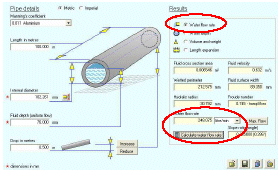
The flow of water in pipes is a complex phenomenon governed by various factors, including pipe diameter, length, and material, as well as water pressure and velocity. Understanding these factors is crucial for designing and optimizing pipe systems in various industries, such as municipal water supply, industrial processes, and wastewater management. This article provides an overview of the key equations and calculations involved in determining the flow of water in pipes, along with a calculator to simplify the process and ensure accurate results. The equations and calculator will help engineers and technicians design and troubleshoot pipe systems efficiently.
- Understanding the Flow of Water in Pipes: Equations and Calculator
- What is the formula for water flow in a pipe?
- How to calculate pipe size for water flow?
- How do you estimate the flow through a pipe?
- How do you calculate the volume of water flow in a pipe?
-
Frequently Asked Questions (FAQs)
- What is the Darcy-Weisbach equation and how is it used to calculate the flow of water in pipes?
- How does the Hazen-Williams equation differ from the Darcy-Weisbach equation, and when is it used?
- What is the significance of the Reynolds number in calculating the flow of water in pipes, and how is it used in the Darcy-Weisbach equation?
- How can the flow of water in pipes be calculated using the Bernoulli's equation, and what are the limitations of this approach?
Understanding the Flow of Water in Pipes: Equations and Calculator
The flow of water in pipes is a complex phenomenon that involves the interaction of several factors, including the velocity of the water, the pressure of the water, and the friction between the water and the pipe. To understand and calculate the flow of water in pipes, engineers and scientists use a variety of equations and calculators.
Introduction to Pipe Flow Equations
The most common equation used to calculate the flow of water in pipes is the Darcy-Weisbach equation, which relates the head loss in a pipe to the flow rate, pipe diameter, and pipe length. This equation is widely used in the design and analysis of water distribution systems, irrigation systems, and industrial piping systems. The equation is as follows: h = (f L v^2) / (2 g D), where h is the head loss, f is the friction factor, L is the pipe length, v is the flow velocity, g is the acceleration due to gravity, and D is the pipe diameter.
Types of Pipe Flow Calculators
There are several types of pipe flow calculators available, including online calculators, spreadsheet calculators, and desktop applications. These calculators can be used to calculate a variety of parameters, including the flow rate, pressure drop, and head loss in a pipe. Some calculators also allow users to input pipe material, pipe size, and fluid properties to calculate the friction factor and other parameters.
Pipe Flow Calculator Inputs and Outputs
A typical pipe flow calculator requires several inputs, including the pipe diameter, pipe length, flow rate, and fluid properties. The calculator then uses these inputs to calculate the pressure drop, head loss, and flow velocity in the pipe. The outputs of the calculator can be used to design and analyze water distribution systems, irrigation systems, and industrial piping systems.
| Input Parameter | Output Parameter |
|---|---|
| Pipe Diameter | Pressure Drop |
| Pipe Length | Head Loss |
| Flow Rate | Flow Velocity |
Applications of Pipe Flow Calculators
Pipe flow calculators have a wide range of applications in civil engineering, mechanical engineering, and chemical engineering. They are used to design and analyze water distribution systems, irrigation systems, and industrial piping systems. They are also used to calculate the energy losses in a pipe and to determine the pumping requirements for a system.
Limitations and Assumptions of Pipe Flow Calculators
Pipe flow calculators are based on several assumptions and limitations, including the assumption of laminar flow or turbulent flow, and the limitation of pipe material and fluid properties. The calculators also assume that the pipe is straight and that there are no bends or valves in the pipe. These assumptions and limitations can affect the accuracy of the calculator and should be carefully considered when using the calculator to design or analyze a piping system. The accuracy of the calculator can be improved by using more complex equations and by considering multiple variables.
What is the formula for water flow in a pipe?
The formula for water flow in a pipe is given by the Darcy-Weisbach equation, which is a widely used equation in hydraulics to calculate the pressure drop and flow rate of a fluid flowing through a pipe. The equation is given by: ΔP = (f L v^2) / (2 g D), where ΔP is the pressure drop, f is the friction factor, L is the length of the pipe, v is the velocity of the fluid, g is the acceleration due to gravity, and D is the diameter of the pipe.
Understanding the Darcy-Weisbach Equation
The Darcy-Weisbach equation is a fundamental equation in fluid dynamics that helps to calculate the pressure drop and flow rate of a fluid flowing through a pipe. To understand this equation, it is essential to know the friction factor, which depends on the Reynolds number and the roughness of the pipe. The Reynolds number is a dimensionless quantity that characterizes the nature of the flow. Some key points to consider when using the Darcy-Weisbach equation are:
- The friction factor is a critical component of the equation, and its value depends on the Reynolds number and the roughness of the pipe.
- The pressure drop is directly proportional to the length of the pipe and the velocity of the fluid.
- The diameter of the pipe also plays a crucial role in determining the pressure drop and flow rate.
Factors Affecting Water Flow in a Pipe
Several factors can affect the water flow in a pipe, including the diameter of the pipe, the length of the pipe, the roughness of the pipe, and the velocity of the fluid. The diameter of the pipe is a critical factor, as it determines the cross-sectional area of the pipe, which in turn affects the flow rate. Other factors, such as the elevation of the pipe and the temperature of the fluid, can also impact the water flow. Some key factors to consider are:
- The diameter of the pipe is a critical factor in determining the flow rate and pressure drop.
- The roughness of the pipe can significantly affect the friction factor and the pressure drop.
- The velocity of the fluid is directly proportional to the flow rate and the pressure drop.
Calculating Flow Rate using the Darcy-Weisbach Equation
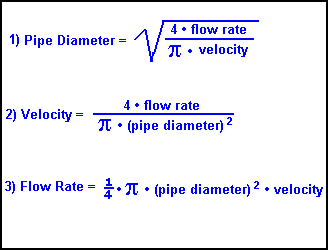
To calculate the flow rate using the Darcy-Weisbach equation, it is essential to know the pressure drop, the length of the pipe, the diameter of the pipe, and the friction factor. The flow rate can be calculated using the equation: Q = (π D^2 v) / 4, where Q is the flow rate, D is the diameter of the pipe, and v is the velocity of the fluid. Some key points to consider when calculating the flow rate are:
- The pressure drop is a critical component of the equation, and its value depends on the friction factor and the length of the pipe.
- The diameter of the pipe is a crucial factor in determining the flow rate and the pressure drop.
- The velocity of the fluid is directly proportional to the flow rate and the pressure drop.
Applications of the Darcy-Weisbach Equation
The Darcy-Weisbach equation has numerous applications in civil engineering, mechanical engineering, and chemical engineering. It is widely used to design and optimize pipelines, water distribution systems, and industrial processes. The equation is also used to calculate the pressure drop and flow rate in heat exchangers, pumps, and turbines. Some key applications of the Darcy-Weisbach equation are:
- Pipeline design: The equation is used to design and optimize pipelines for water transmission and gas transportation.
- Water distribution systems: The equation is used to calculate the pressure drop and flow rate in water distribution systems.
- Industrial processes: The equation is used to design and optimize industrial processes, such as heat exchangers and pumps.
Limitations of the Darcy-Weisbach Equation
The Darcy-Weisbach equation has some limitations, including its complexity and the difficulty in determining the friction factor. The equation is also sensitive to the roughness of the pipe and the Reynolds number. Additionally, the equation is not applicable to non-Newtonian fluids and compressible fluids. Some key limitations of the Darcy-Weisbach equation are:
- The friction factor is a critical component of the equation, and its value depends on the Reynolds number and the roughness of the pipe.
- The equation is sensitive to the roughness of the pipe and the Reynolds number.
- The equation is not applicable to non-Newtonian fluids and compressible fluids.
How to calculate pipe size for water flow?
To calculate pipe size for water flow, you need to consider several factors, including the flow rate, pressure drop, and pipe material. The flow rate is the volume of water that flows through the pipe per unit time, typically measured in gallons per minute (gpm) or liters per second (L/s). The pressure drop is the loss of pressure due to friction and other factors as the water flows through the pipe. The pipe material affects the roughness of the pipe, which in turn affects the pressure drop.
Understanding the Basics of Pipe Sizing
To calculate pipe size, you need to understand the basics of fluid dynamics and hydraulics. This includes the concept of laminar flow and turbulent flow, as well as the Darcy-Weisbach equation and the Hazen-Williams equation. The Darcy-Weisbach equation is used to calculate the pressure drop in a pipe, while the Hazen-Williams equation is used to calculate the flow rate. Key considerations include:
- Flow rate: The volume of water that flows through the pipe per unit time.
- Pressure drop: The loss of pressure due to friction and other factors.
- Pipe material: The material of the pipe, which affects the roughness and pressure drop.
Calculating Pipe Size Using the Hazen-Williams Equation
The Hazen-Williams equation is a widely used method for calculating pipe size. The equation takes into account the flow rate, pressure drop, and pipe length, as well as the roughness of the pipe. The equation is as follows: Q = 1.318 C d^2.64 (h/L)^0.54, where Q is the flow rate, C is the Hazen-Williams coefficient, d is the pipe diameter, h is the pressure drop, and L is the pipe length. Key considerations include:
- Hazen-Williams coefficient: A value that depends on the pipe material and condition.
- Pipe diameter: The diameter of the pipe, which affects the flow rate and pressure drop.
- Pipe length: The length of the pipe, which affects the pressure drop.
Using Charts and Tables to Determine Pipe Size
Another way to determine pipe size is to use charts and tables. These charts and tables provide a quick and easy way to determine the required pipe size based on the flow rate and pressure drop. The charts and tables are typically based on the Darcy-Weisbach equation and take into account the roughness of the pipe. Key considerations include:
- Flow rate: The volume of water that flows through the pipe per unit time.
- Pressure drop: The loss of pressure due to friction and other factors.
- Pipe material: The material of the pipe, which affects the roughness and pressure drop.
Considering Factors that Affect Pipe Size
There are several factors that can affect the required pipe size, including elevation changes, valves and fittings, and pipe condition. Elevation changes can affect the pressure drop, while valves and fittings can affect the flow rate and pressure drop. The condition of the pipe can also affect the required pipe size, as corrugated pipes or damaged pipes may require a larger size to accommodate the same flow rate. Key considerations include:
- Elevation changes: Changes in elevation that affect the pressure drop.
- Valves and fittings: Valves and fittings that affect the flow rate and pressure drop.
- Pipe condition: The condition of the pipe, which affects the required pipe size.
Using Software to Calculate Pipe Size
There are many software programs available that can be used to calculate pipe size. These programs use algorithms and equations to determine the required pipe size based on the input parameters. The programs can also take into account complex pipe systems and variable flow rates. Key considerations include:
- Input parameters: The parameters that are input into the software program, such as flow rate and pressure drop.
- Algorithms: The methods used by the software program to calculate the required pipe size.
- Complex pipe systems: Pipe systems with multiple branches and fittings.
How do you estimate the flow through a pipe?
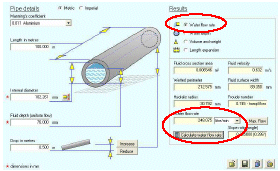
To estimate the flow through a pipe, you need to consider several factors, including the diameter of the pipe, the length of the pipe, the material of the pipe, and the pressure difference between the two ends of the pipe. The flow rate can be calculated using the Hazen-Williams equation or the Darcy-Weisbach equation, which take into account the friction losses and head losses in the pipe.
Introduction to Pipe Flow
The flow through a pipe is a complex phenomenon that involves the interaction of several variables, including the velocity of the fluid, the density of the fluid, and the viscosity of the fluid. To estimate the flow rate, you need to have a good understanding of the physics of fluid dynamics and the mathematics of pipe flow. Some of the key concepts involved in pipe flow include:
- Laminar flow: a type of flow where the fluid flows in parallel layers, with no turbulence or mixing.
- Turbulent flow: a type of flow where the fluid flows in a chaotic, turbulent manner, with eddies and vortices.
- Reynolds number: a dimensionless number that characterizes the nature of the flow, with laminar flow occurring at low Reynolds numbers and turbulent flow occurring at high Reynolds numbers.
Factors Affecting Pipe Flow
The flow through a pipe is affected by several factors, including the diameter of the pipe, the length of the pipe, the material of the pipe, and the pressure difference between the two ends of the pipe. The flow rate can also be affected by the temperature of the fluid, the viscosity of the fluid, and the surface roughness of the pipe. Some of the key factors that affect pipe flow include:
- Pipe diameter: the diameter of the pipe affects the flow rate, with larger diameters resulting in higher flow rates.
- Pipe length: the length of the pipe affects the flow rate, with longer lengths resulting in lower flow rates.
- Pipe material: the material of the pipe affects the flow rate, with smooth pipes resulting in higher flow rates than rough pipes.
Equations for Pipe Flow
There are several equations that can be used to estimate the flow through a pipe, including the Hazen-Williams equation and the Darcy-Weisbach equation. These equations take into account the friction losses and head losses in the pipe, and can be used to calculate the flow rate and pressure drop in the pipe. Some of the key equations for pipe flow include:
- Hazen-Williams equation: an empirical equation that relates the flow rate to the pressure drop and pipe diameter.
- Darcy-Weisbach equation: a theoretical equation that relates the flow rate to the pressure drop, pipe diameter, and friction factor.
- Manning equation: an empirical equation that relates the flow rate to the slope of the pipe and the roughness of the pipe.
Applications of Pipe Flow
The flow through a pipe has several practical applications, including water supply systems, sewage systems, and petroleum pipelines. The flow rate and pressure drop in these systems can be critical factors in determining the efficiency and safety of the system. Some of the key applications of pipe flow include:
- Water supply: pipe flow is used to distribute water from treatment plants to consumers.
- Sewage: pipe flow is used to transport wastewater from houses and buildings to treatment plants.
- Petroleum: pipe flow is used to transport oil and gas from wells to refiners and consumers.
Challenges in Pipe Flow
The flow through a pipe can be affected by several challenges, including corrosion, erosion, and clogging. These challenges can result in reduced flow rates, increased pressure drops, and decreased efficiency of the system. Some of the key challenges in pipe flow include:
- Corrosion: the reaction of the pipe material with the fluid can result in corrosion and leaks.
- Erosion: the flow of the fluid can result in erosion of the pipe material, particularly in bends and elbows.
- Clogging: the accumulation of debris and sediment in the pipe can result in clogging and reduced flow rates.
How do you calculate the volume of water flow in a pipe?
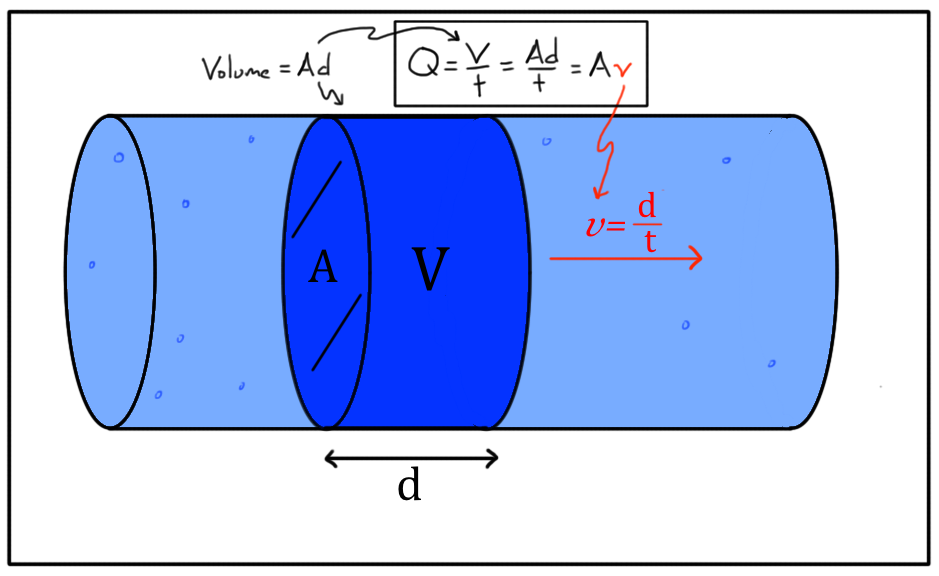
To calculate the volume of water flow in a pipe, you need to consider several factors, including the flow rate, pipe diameter, and velocity of the water. The flow rate is typically measured in cubic feet per second (cfs) or gallons per minute (gpm), and can be calculated using the continuity equation, which states that the flow rate is equal to the product of the cross-sectional area of the pipe and the velocity of the water. The cross-sectional area can be calculated using the pipe diameter and the formula for the area of a circle.
Understanding the Continuity Equation
The continuity equation is a fundamental concept in fluid dynamics that states that the flow rate of a fluid remains constant throughout a pipe, unless there are sources or sinks along the way. To calculate the volume of water flow in a pipe, you need to understand the continuity equation and how it relates to the flow rate, pipe diameter, and velocity of the water.
- The continuity equation is expressed mathematically as Q = A v, where Q is the flow rate, A is the cross-sectional area, and v is the velocity.
- The cross-sectional area can be calculated using the pipe diameter and the formula for the area of a circle, which is A = π (d/2)^2, where d is the diameter.
- The velocity of the water can be calculated using the flow rate and the cross-sectional area, or it can be measured directly using a flow meter or other device.
Measuring Flow Rate
Measuring the flow rate is a critical step in calculating the volume of water flow in a pipe. There are several methods for measuring flow rate, including using a flow meter, which is a device that measures the flow rate directly.
- A flow meter can be installed in the pipe to measure the flow rate directly, and there are many different types of flow meters available, including turbine meters, ultrasonic meters, and magnetic meters.
- The flow rate can also be calculated using the continuity equation, if the cross-sectional area and velocity of the water are known.
- In some cases, the flow rate may be specified by the manufacturer of the pipe or pump, or it may be determined by regulatory requirements or industry standards.
Calculating Cross-Sectional Area
The cross-sectional area of the pipe is another important factor in calculating the volume of water flow. The cross-sectional area can be calculated using the pipe diameter and the formula for the area of a circle.
- The pipe diameter is typically measured in inches or centimeters, and it can be used to calculate the cross-sectional area using the formula A = π (d/2)^2.
- The cross-sectional area can also be calculated using tables or charts that provide the area of a circle for a given diameter.
- In some cases, the cross-sectional area may be specified by the manufacturer of the pipe, or it may be determined by regulatory requirements or industry standards.
Velocity of Water
The velocity of the water is also an important factor in calculating the volume of water flow in a pipe. The velocity can be calculated using the flow rate and the cross-sectional area, or it can be measured directly using a flow meter or other device.
- The velocity of the water can be calculated using the continuity equation, if the flow rate and cross-sectional area are known.
- The velocity can also be measured directly using a flow meter or other device, such as a Doppler meter or a pilot tube.
- In some cases, the velocity may be specified by the manufacturer of the pipe or pump, or it may be determined by regulatory requirements or industry standards.
Applications of Volume Calculation
Calculating the volume of water flow in a pipe has many important applications in fields such as civil engineering, mechanical engineering, and environmental science.
- Calculating the volume of water flow is crucial in designing and operating water supply systems, wastewater treatment plants, and irrigation systems.
- It is also used in hydroelectric power plants to calculate the energy generated by the water flow.
- In environmental science, calculating the volume of water flow is used to study water pollution, water quality, and ecosystems.
Frequently Asked Questions (FAQs)
What is the Darcy-Weisbach equation and how is it used to calculate the flow of water in pipes?
The Darcy-Weisbach equation is a fundamental equation used to calculate the head loss due to friction in a pipe. It is a dimensionless equation that takes into account the velocity of the fluid, the length and diameter of the pipe, and the roughness of the pipe surface. The equation is commonly used to design and optimize pipeline systems, including water distribution networks and irrigation systems. By using the Darcy-Weisbach equation, engineers can calculate the pressure drop and flow rate of water in a pipe, which is essential for ensuring that the system operates efficiently and safely. The equation is also used to determine the required pump power and pipe size for a given flow rate and pressure.
How does the Hazen-Williams equation differ from the Darcy-Weisbach equation, and when is it used?
The Hazen-Williams equation is another empirical equation used to calculate the head loss due to friction in a pipe. While the Darcy-Weisbach equation is more general and can be applied to a wide range of fluids and pipe materials, the Hazen-Williams equation is specifically designed for water flowing in pipes with a smooth or moderately rough surface. The Hazen-Williams equation is often used for water distribution systems and sewer systems, where the flow rates are relatively low and the pipe sizes are relatively small. The equation is also used for design and optimization of pipeline systems, but it is not as accurate as the Darcy-Weisbach equation for high-velocity flows or rough pipes. The Hazen-Williams equation is a simplified equation that is easier to use than the Darcy-Weisbach equation, but it requires experimental data to determine the coefficients.
What is the significance of the Reynolds number in calculating the flow of water in pipes, and how is it used in the Darcy-Weisbach equation?
The Reynolds number is a dimensionless parameter that characterizes the nature of the fluid flow in a pipe. It is defined as the ratio of the inertial forces to the viscous forces in the fluid, and it is used to determine whether the flow is laminar or turbulent. In the Darcy-Weisbach equation, the Reynolds number is used to calculate the friction factor, which is a critical component of the equation. The friction factor is a function of the Reynolds number, and it is used to account for the energy losses due to friction in the pipe. The Reynolds number is also used to determine the transition from laminar to turbulent flow, which is important for designing and optimizing pipeline systems. By using the Reynolds number, engineers can predict the flow regime and pressure drop in a pipe, which is essential for ensuring that the system operates efficiently and safely.
How can the flow of water in pipes be calculated using the Bernoulli's equation, and what are the limitations of this approach?
The Bernoulli's equation is a conservation equation that relates the total energy of a fluid to its kinetic energy, potential energy, and pressure energy. It can be used to calculate the flow rate and pressure of water in a pipe, but it is limited to inviscid and irrotational flows. The Bernoulli's equation is often used for simple pipeline systems, where the flow is steady and one-dimensional. However, it is not suitable for complex systems with turbulent flows, bends, or obstacles. The Bernoulli's equation also assumes that the fluid is incompressible, which is not always the case for gases or high-velocity flows. Furthermore, the equation does not account for energy losses due to friction, which can be significant in long pipes or pipes with rough surfaces. Therefore, the Bernoulli's equation should be used with caution and only for simple pipeline systems, where its limitations are well understood. For more complex systems, the Darcy-Weisbach or Hazen-Williams equations are generally more accurate and reliable.
Deja una respuesta
Entradas Relacionadas