
Strain Gage Rosette Equations and Calculator


The Strain Gage Rosette is a crucial tool in experimental mechanics, allowing engineers to measure principal strains and stresses in complex structures. By combining multiple strain gages in a specific pattern, rosettes provide a comprehensive understanding of the stress state at a point of interest. The equations governing strain gage rosettes are fundamental to interpreting the data, enabling accurate calculation of principal strains, principal directions, and maximum shear strains. This article delves into the underlying equations and provides a calculator to simplify the process, facilitating accurate stress analysis in various engineering applications. Practical examples illustrate its utility.
Understanding Strain Gage Rosette Equations and Calculator
The strain gage rosette equations and calculator are essential tools in the field of mechanical engineering and materials science. A strain gage rosette is a set of three or more strain gages arranged in a specific pattern to measure the strain and stress in a material. The equations used to calculate the strain and stress from the rosette measurements are based on the principle of superposition and the elasticity theory.
Introduction to Strain Gage Rosette Equations
The strain gage rosette equations are used to calculate the principal strains and principal stresses in a material. The equations take into account the gauge lengths, gauge angles, and strain measurements from the rosette. The strains are calculated using the formula: ε = (ΔL/L), where ε is the strain, ΔL is the change in length, and L is the original length. The stresses are calculated using the Hooke's law: σ = E ε, where σ is the stress, E is the modulus of elasticity, and ε is the strain.
Types of Strain Gage Rosettes
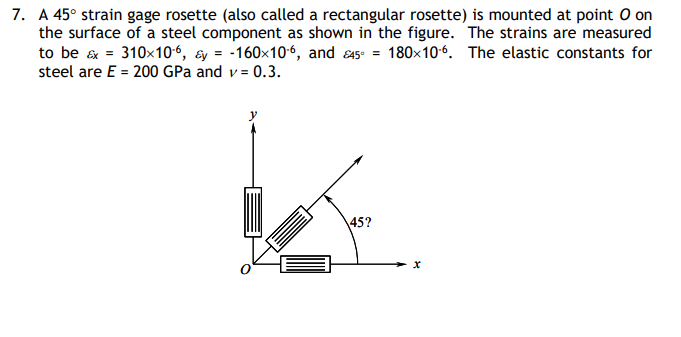
There are several types of strain gage rosettes, including the 0/45/90 rosette, 0/60/120 rosette, and rectangular rosette. Each type of rosette has its own set of equations and advantages. The 0/45/90 rosette is the most common type and is used to measure the principal strains and principal stresses in a material.
Strain Gage Rosette Calculator
A strain gage rosette calculator is a tool used to calculate the strain and stress from the rosette measurements. The calculator takes into account the gauge lengths, gauge angles, and strain measurements from the rosette. The calculator can be used to calculate the principal strains, principal stresses, and maximum shear stress.
Applications of Strain Gage Rosette Equations and Calculator
The strain gage rosette equations and calculator have a wide range of applications in mechanical engineering and materials science. Some of the applications include stress analysis, structural analysis, and materials testing. The equations and calculator can be used to analyze the stress and strain in a material under different types of loading, such as tension, compression, and torsion.
Limitations of Strain Gage Rosette Equations and Calculator
The strain gage rosette equations and calculator have some limitations. The equations assume that the material is linear elastic and isotropic, which may not be true for all materials. The calculator also assumes that the gauge lengths and gauge angles are accurate, which may not be true in all cases. The accuracy of the calculations can be affected by the quality of the strain gages, gauge placement, and data acquisition system.
| Strain Gage Type | Gauge Length | Gauge Angle | Strain Measurement |
|---|---|---|---|
| 0/45/90 Rosette | 5 mm | 0°, 45°, 90° | 1000 με |
| 0/60/120 Rosette | 10 mm | 0°, 60°, 120° | 500 με |
| Rectangular Rosette | 20 mm | 0°, 90° | 2000 με |
What is the configuration of strain gauge rosette?

The configuration of a strain gauge rosette is a specific arrangement of multiple strain gauges that are used to measure the strain and stress in a material. This configuration allows for the determination of the principal stresses and principal strains in a material, as well as the stress state and strain state. The most common configuration of a strain gauge rosette is a three-gauge rosette, which consists of three strain gauges arranged at specific angles to each other.
Types of Strain Gauge Rosettes
There are several types of strain gauge rosettes, each with its own specific configuration and application. Some of the most common types include:
- Rectangular rosette: This type of rosette consists of three strain gauges arranged at 0°, 45°, and 90° to each other.
- Delta rosette: This type of rosette consists of three strain gauges arranged at 0°, 60°, and 120° to each other.
- Tee rosette: This type of rosette consists of two strain gauges arranged at 0° and 90° to each other, with a third gauge arranged at 45° to the other two.
Applications of Strain Gauge Rosettes
Strain gauge rosettes have a wide range of applications in various fields, including aerospace engineering, civil engineering, and mechanical engineering. Some of the most common applications include:
- Stress analysis: Strain gauge rosettes are used to measure the stress state in a material, which is essential for designing and analyzing structures and machines.
- Material testing: Strain gauge rosettes are used to measure the mechanical properties of materials, such as Young's modulus and Poisson's ratio.
- Vibration analysis: Strain gauge rosettes are used to measure the vibration and dynamic stress in a material, which is essential for designing and analyzing dynamic systems.
Advantages of Strain Gauge Rosettes
Strain gauge rosettes have several advantages over other types of strain measurement techniques. Some of the most significant advantages include:
- High accuracy: Strain gauge rosettes can provide highly accurate measurements of strain and stress.
- High sensitivity: Strain gauge rosettes can detect very small changes in strain and stress.
- Multiaxial measurement: Strain gauge rosettes can measure strain and stress in multiple directions simultaneously.
Limitations of Strain Gauge Rosettes
Despite their advantages, strain gauge rosettes also have some limitations. Some of the most significant limitations include:
- Complexity: Strain gauge rosettes can be complex and difficult to install and calibrate.
- Cost: Strain gauge rosettes can be expensive, especially for high-precision applications.
- Sensitivity to temperature: Strain gauge rosettes can be sensitive to temperature changes, which can affect their accuracy.
Installation and Calibration of Strain Gauge Rosettes
The installation and calibration of strain gauge rosettes require careful attention to detail to ensure accurate measurements. Some of the key considerations include:
- Surface preparation: The surface of the material must be carefully prepared to ensure a strong bond between the strain gauge and the material.
- Alignment: The strain gauge rosette must be carefully aligned to ensure that the gauges are measuring the correct strain and stress components.
- Calibration: The strain gauge rosette must be calibrated to ensure that the measurements are accurate and reliable.
What else is a 45 rosette called?
A 45 rosette is also called a repeating pattern of crystals or a decoration made up of inverted and repeated motifs. It is known for its symmetry and aesthetically pleasing design.
Types of 45 Rosettes
The 45 rosette is often found in architecture and design, where it is used to create visually appealing patterns. Some common types of 45 rosettes include:
- Geometric patterns, which feature repeated shapes and angles.
- Floral patterns, which feature stylized flowers and leaves.
- Abstract patterns, which feature non-representational shapes and colors.
History of 45 Rosettes
The 45 rosette has a long history, dating back to ancient civilizations. It was often used in art and architecture to create ornate and intricate designs. Some notable examples of 45 rosettes can be found in:
- Egyptian art, where it was used to decorate temples and tomb walls.
- Greek art, where it was used to adorn pottery and sculptures.
- Islamic art, where it was used to create intricate patterns and geometric designs.
Symbolism of 45 Rosettes
The 45 rosette is often imbued with symbolic meaning, representing unity, harmony, and balance. In different cultures, the 45 rosette has been used to symbolize:
- Spiritual growth, where it represents the connection between heaven and earth.
- Cycles of nature, where it represents the passing of time and the changing seasons.
- Cultural heritage, where it represents the traditions and values of a community.
Modern Uses of 45 Rosettes
Today, the 45 rosette is used in a variety of modern applications, including:
- Graphic design, where it is used to create eye-catching logos and brand identities.
- Interior design, where it is used to create visually appealing patterns and textiles.
- Fashion, where it is used to create stylish clothing and accessories.
Mathematical Properties of 45 Rosettes
The 45 rosette has several mathematical properties that make it a fascinating and complex shape. Some of its key properties include:
- Symmetry, where it has rotational symmetry and reflection symmetry.
- Geometry, where it is composed of angles and shapes that fit together in a specific pattern.
- Tessellations, where it can be used to create infinite patterns and repeating designs.
What is the strain gauge rosette experiment?
The strain gauge rosette experiment is a method used to measure the strain and stress on a material or structure. This experiment involves attaching a rosette of strain gauges to the surface of the material or structure, which allows for the measurement of the strain in multiple directions. The strain gauges are typically arranged in a delta or rectangular pattern, and the measurements are taken simultaneously to provide a complete picture of the strain state.
Introduction to Strain Gauge Rosette Experiment
The strain gauge rosette experiment is a fundamental technique in mechanics of materials and experimental mechanics. It is used to determine the principal strains and principal stresses on a material or structure. The experiment involves:
- Attaching a rosette of strain gauges to the surface of the material or structure
- Applying a load to the material or structure
- Measuring the strain in multiple directions using the strain gauges
The strain gauge rosette experiment provides valuable information about the mechanical behavior of materials and structures, and is widely used in engineering and research applications.
Strain Gauge Rosette Types
There are several types of strain gauge rosettes available, each with its own unique characteristics and advantages. Some common types of strain gauge rosettes include:
- Delta rosette: a triangular arrangement of strain gauges
- Rectangular rosette: a rectangular arrangement of strain gauges
- Circular rosette: a circular arrangement of strain gauges
The choice of strain gauge rosette depends on the specific application and the type of measurement required.
Strain Gauge Rosette Applications
The strain gauge rosette experiment has a wide range of applications in engineering and research. Some examples of applications include:
- Structural analysis: measuring the strain and stress on buildings, bridges, and other structures
- Material testing: determining the mechanical properties of materials, such as young's modulus and poisson's ratio
- Aerospace engineering: measuring the strain and stress on aircraft and spacecraft components
The strain gauge rosette experiment is a valuable tool for engineers and researchers who need to understand the mechanical behavior of materials and structures.
Strain Gauge Rosette Calibration
The strain gauge rosette must be calibrated before use to ensure accurate measurements. The calibration process involves:
- Zeroing the strain gauges: setting the output of the strain gauges to zero
- Sensitivity calibration: determining the sensitivity of the strain gauges
- Linearity calibration: checking the linearity of the strain gauges
Proper calibration of the strain gauge rosette is essential for accurate measurements and reliable results.
Strain Gauge Rosette Data Analysis
The data from the strain gauge rosette experiment must be analyzed to extract the strain and stress information. The analysis involves:
- Strain calculation: calculating the strain values from the strain gauge outputs
- Principal strain calculation: determining the principal strains and principal stresses
- Stress calculation: calculating the stress values from the strain values and material properties
The data analysis provides valuable information about the mechanical behavior of materials and structures, and is essential for engineering and research applications.
Frequently Asked Questions (FAQs)
What is a Strain Gage Rosette and How Does it Work?
A strain gage rosette is a group of three or more strain gages mounted in a specific pattern to measure the principal strains and their directions at a point on a surface. The strain gages are usually mounted in a rosette pattern, which allows for the measurement of strains in multiple directions. The strain gage rosette is widely used in experimental stress analysis to determine the state of stress at a point on a structure. The rosette equations are used to calculate the principal strains and their directions from the measured strains. The strain gage rosette is a powerful tool for stress analysis and is commonly used in various fields, including aerospace, automotive, and civil engineering. The strain gage rosette can be used to measure strains in various types of materials, including metals, composites, and concrete.
How Are the Strain Gage Rosette Equations Derived?
The strain gage rosette equations are derived from the theory of elasticity and the principles of strain measurement. The equations are developed by considering the relationship between the measured strains and the principal strains. The strain gage rosette is assumed to be mounted on a flat surface, and the strains are measured in multiple directions. The measured strains are then used to calculate the principal strains and their directions using the rosette equations. The equations take into account the orientation of the strain gages and the measured strains to determine the principal strains. The strain gage rosette equations are mathematical expressions that relate the measured strains to the principal strains and are used to analyze the state of stress at a point on a structure. The equations are fundamental to the analysis of strain measurements and are widely used in experimental stress analysis.
What Are the Different Types of Strain Gage Rosettes and Their Applications?
There are several types of strain gage rosettes, including the rectangular rosette, delta rosette, and tee rosette. Each type of rosette has its own unique characteristics and applications. The rectangular rosette is the most commonly used and is suitable for most applications. The delta rosette is used for measuring strains in circular or curved surfaces, while the tee rosette is used for measuring strains in tubular or hollow structures. The strain gage rosette can be used to measure strains in various environments, including high-temperature, high-pressure, and corrosive environments. The strain gage rosette is widely used in aerospace, automotive, civil engineering, and biomedical engineering to measure strains in complex structures. The strain gage rosette is a versatile tool that can be used to measure strains in various types of materials and structures.
How Can I Use a Strain Gage Rosette Calculator to Analyze My Strain Measurements?
A strain gage rosette calculator is a software tool that can be used to analyze strain measurements from a strain gage rosette. The calculator can be used to calculate the principal strains and their directions from the measured strains. The calculator takes into account the orientation of the strain gages and the measured strains to determine the principal strains. The strain gage rosette calculator can be used to analyze strain measurements from various types of strain gages and rosette patterns. The calculator can also be used to compare the measured strains with the theoretical strains calculated using finite element analysis or other numerical methods. The strain gage rosette calculator is a powerful tool that can be used to rapidly analyze large amounts of strain data and calculate the principal strains and their directions. The calculator can be used in experimental stress analysis to validate the results of finite element analysis or other numerical methods.
Deja una respuesta
Entradas Relacionadas