
Plastic Helical Gears Design Hp, Operating Stress Equations and Calculator

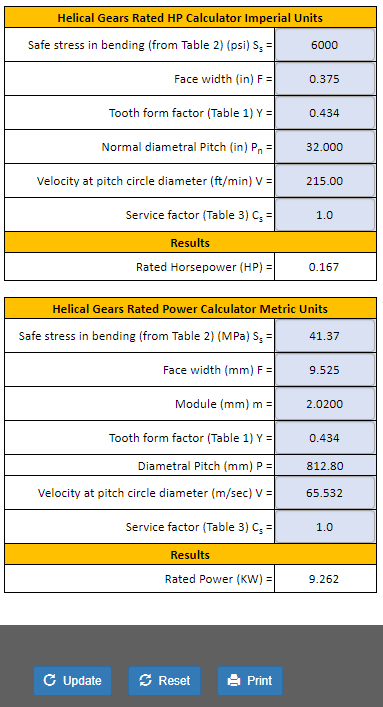
The design of plastic helical gears requires careful consideration of various factors to ensure efficient and reliable operation. Horsepower (Hp) and operating stress are crucial parameters that influence the performance and lifespan of these gears. This article aims to provide a comprehensive overview of the design process, including the key equations and calculators used to determine the optimal Hp and operating stress for plastic helical gears, enabling engineers to create robust and efficient gear systems for a wide range of applications. The goal is to enhance gear design and performance in various industries.
- Design and Calculation of Plastic Helical Gears for Optimal Performance
-
Understanding the Fundamentals of Plastic Helical Gears Design and Operation
- Introduction to Plastic Helical Gears Design and Materials
- Understanding Operating Stress Equations for Plastic Helical Gears
- Calculator for Plastic Helical Gears Design and Operating Stress Analysis
- Importance of Material Selection in Plastic Helical Gears Design
- Applications and Benefits of Plastic Helical Gears in Various Industries
-
Frequently Asked Questions (FAQs)
- What are Plastic Helical Gears and their advantages in design?
- How are Operating Stress Equations used in the design of Plastic Helical Gears?
- What is the purpose of a Plastic Helical Gears Calculator, and how does it aid in design?
- How do designers ensure the reliability and performance of Plastic Helical Gears in high-stress applications?
Design and Calculation of Plastic Helical Gears for Optimal Performance
The design and calculation of plastic helical gears is a complex process that requires careful consideration of various factors, including the gear's material, tooth profile, and operating conditions. Plastic helical gears are widely used in various industries, including automotive, aerospace, and consumer products, due to their lightweight, corrosion resistance, and low noise characteristics. To ensure optimal performance and reliability, it is essential to use accurate calculations and reliable design methods.
Introduction to Plastic Helical Gears Design
Plastic helical gears are designed using computer-aided design (CAD) software and finite element analysis (FEA) tools to simulate the gear's behavior under various loading conditions. The design process involves selecting the gear material, tooth profile, and gear ratio based on the application's requirements and constraints. The gear's torque capacity, speed, and efficiency are also critical factors to consider in the design process.
Operating Stress Equations for Plastic Helical Gears
The operating stress equations for plastic helical gears are used to calculate the stress and strain on the gear's teeth and shaft. These equations take into account the gear's material properties, tooth profile, and operating conditions, such as temperature and humidity. The stress equations are used to determine the gear's fatigue life and reliability.
Calculator for Plastic Helical Gears Design
A calculator for plastic helical gears design is a software tool that uses algorithms and formulas to calculate the gear's dimensions, tooth profile, and operating conditions. The calculator takes into account the gear material, gear ratio, and operating conditions to determine the gear's performance and reliability. The calculator can also be used to optimize the gear's design for maximum efficiency and minimum cost.
Material Selection for Plastic Helical Gears
The material selection for plastic helical gears is a critical factor in determining the gear's performance and reliability. The most common plastic materials used for helical gears are polyamide (PA), polyacetal (POM), and polyetherimide (PEI). Each material has its own strengths and weaknesses, and the selection of the optimal material depends on the application's requirements and constraints.
Applications of Plastic Helical Gears
Plastic helical gears have a wide range of applications in various industries, including automotive, aerospace, and consumer products. They are used in transmissions, gearboxes, and power trains due to their lightweight, corrosion resistance, and low noise characteristics. Plastic helical gears are also used in medical devices, robotics, and industrial automation due to their high precision and reliability.
| Material | Tooth Profile | Operating Conditions | Torque Capacity | Speed |
|---|---|---|---|---|
| Polyamide (PA) | Involute | High temperature | 100 Nm | 1000 rpm |
| Polyacetal (POM) | Cycloidal | High humidity | 50 Nm | 500 rpm |
| Polyetherimide (PEI) | Helical | High stress | 200 Nm | 2000 rpm |
Understanding the Fundamentals of Plastic Helical Gears Design and Operation
The design and operation of plastic helical gears are crucial in various industrial applications, including robotics, automotive, and aerospace. These gears are designed to transmit torque and rotation between two or more shafts, and their helical shape allows for a smoother and more efficient transfer of power. The design HP (horsepower) of plastic helical gears is a critical factor in determining their performance and lifespan. In this context, the operating stress equations play a vital role in ensuring that the gears can withstand the mechanical stresses and thermal loads imposed upon them.
Introduction to Plastic Helical Gears Design and Materials
The design of plastic helical gears involves a thorough understanding of the material properties and manufacturing processes involved. Thermoplastic materials, such as polyamide and polyacetate, are commonly used for plastic gears due to their high strength-to-weight ratio, low friction, and corrosion resistance. The design process typically involves the selection of a suitable gear tooth profile, pitch diameter, and face width, as well as the determination of the gear ratio and speed. The design HP of the gear is then calculated based on the torque and speed requirements of the application.
Understanding Operating Stress Equations for Plastic Helical Gears
The operating stress equations for plastic helical gears are used to determine the maximum allowable stress that the gear can withstand without failing. These equations take into account the gear tooth geometry, material properties, and operating conditions, such as temperature and humidity. The stress equations are typically based on the Hertzian contact theory, which describes the contact stress between the gear teeth. The calculator for plastic helical gears can be used to simplify the design process and ensure that the gear is designed to meet the required performance and safety standards.
Calculator for Plastic Helical Gears Design and Operating Stress Analysis
A calculator for plastic helical gears is a useful tool for designers and engineers to quickly and accurately determine the design HP and operating stress of the gear. The calculator typically requires input parameters such as the gear tooth profile, pitch diameter, face width, gear ratio, and speed, as well as the material properties and operating conditions. The calculator then uses the operating stress equations to determine the maximum allowable stress and design HP of the gear. This allows designers to optimize the gear design and ensure that it meets the required performance and safety standards.
Importance of Material Selection in Plastic Helical Gears Design
The material selection for plastic helical gears is a critical factor in determining their performance and lifespan. Thermoplastic materials are commonly used for plastic gears due to their high strength-to-weight ratio, low friction, and corrosion resistance. However, the material properties can vary significantly depending on the manufacturing process and operating conditions. For example, polyamide gears may be more susceptible to moisture absorption and thermal degradation than polyacetate gears. Therefore, the material selection should be based on a thorough understanding of the application requirements and operating conditions.
Applications and Benefits of Plastic Helical Gears in Various Industries
Plastic helical gears are used in a wide range of industrial applications, including robotics, automotive, and aerospace. The benefits of plastic helical gears include their high strength-to-weight ratio, low friction, and corrosion resistance, as well as their ability to operate in harsh environments and high-temperature conditions. Additionally, plastic helical gears can be designed to provide smooth and quiet operation, making them ideal for applications where noise reduction is critical. The design HP and operating stress equations can be used to optimize the gear design and ensure that it meets the required performance and safety standards in various industrial applications.
Frequently Asked Questions (FAQs)
What are Plastic Helical Gears and their advantages in design?
Plastic helical gears are a type of gear made from plastic materials that offer several advantages over traditional metal gears. One of the main benefits of plastic helical gears is their low weight, which makes them ideal for applications where reduced inertia is required. Additionally, plastic gears are often less expensive to produce than metal gears, and they can be injection molded to create complex shapes and designs. Furthermore, plastic helical gears are often quieter and smoother in operation than metal gears, which makes them suitable for applications where noise reduction is important. The design flexibility of plastic helical gears also allows for the creation of customized gear designs that can be tailored to specific applications.
How are Operating Stress Equations used in the design of Plastic Helical Gears?
Operating stress equations play a crucial role in the design of plastic helical gears, as they help to predict the stress that the gear will experience during operation. These equations take into account various design parameters, such as the gear tooth profile, pitch diameter, and face width, to calculate the maximum stress that the gear will experience. By using these equations, designers can optimize the design of the plastic helical gear to ensure that it can withstand the stresses imposed by the application. The stress equations also help to identify potential failure modes, such as tooth breakage or wear, and allow designers to mitigate these risks through the use of reinforcing materials or design modifications. The use of operating stress equations in the design of plastic helical gears is essential for ensuring the reliability and performance of the gear.
What is the purpose of a Plastic Helical Gears Calculator, and how does it aid in design?
A plastic helical gears calculator is a design tool that helps engineers and designers to calculate the specifications of a plastic helical gear. The calculator takes into account various input parameters, such as the gear ratio, power transmission, and operating speed, to calculate the optimal design parameters for the gear. The calculator can help designers to determine the best gear design for a specific application, and to optimize the gear's performance. The calculator can also help to reduce the design time and improve the accuracy of the design, by automating the calculation of complex design equations. Additionally, the calculator can be used to compare different design options and to evaluate the trade-offs between different design parameters, such as cost, weight, and performance. The use of a plastic helical gears calculator is an essential part of the design process, as it helps to ensure that the gear is designed correctly and will perform as intended.
How do designers ensure the reliability and performance of Plastic Helical Gears in high-stress applications?
To ensure the reliability and performance of plastic helical gears in high-stress applications, designers must use a combination of design techniques and material selection. One of the key considerations is the selection of the right plastic material, which must be able to withstand the stresses imposed by the application. Designers must also use advanced design techniques, such as finite element analysis, to simulate the behavior of the gear under various loading conditions. Additionally, designers must optimize the gear design to minimize stress concentrations and to maximize the strength of the gear. The use of reinforcing materials, such as fibers or fillers, can also help to improve the performance of the gear. Furthermore, designers must test and validate the gear design to ensure that it meets the required performance specifications. By using a combination of these techniques, designers can ensure that plastic helical gears are reliable and perform well in high-stress applications, and can withstand the demands of rigorous use.
Deja una respuesta
Entradas Relacionadas