
Electric Motor Time to Start Calculator Tool


The Electric Motor Time to Start Calculator Tool is an innovative solution for determining the time it takes for an electric motor to reach its full operating speed. This tool is essential for engineers, technicians, and maintenance personnel who need to calculate the startup time of electric motors in various applications. By inputting key parameters such as motor type, power rating, and load characteristics, users can accurately estimate the time to start, enabling them to optimize system performance, reduce energy consumption, and ensure safe operation. This calculator saves time and minimizes errors. It is user-friendly and efficient.
-
Understanding the Electric Motor Time to Start Calculator Tool
- How the Electric Motor Time to Start Calculator Tool Works
- Benefits of Using the Electric Motor Time to Start Calculator Tool
- Applications of the Electric Motor Time to Start Calculator Tool
- Common Challenges and Limitations of the Electric Motor Time to Start Calculator Tool
- Future Developments and Improvements of the Electric Motor Time to Start Calculator Tool
- How to calculate motor starting time?
- How do you calculate motor run time?
- How to calculate the starting power of a motor?
- How to calculate motor inrush?
-
Frequently Asked Questions (FAQs)
- What is the Electric Motor Time to Start Calculator Tool and how does it work?
- What are the benefits of using the Electric Motor Time to Start Calculator Tool in industrial applications?
- How does the Electric Motor Time to Start Calculator Tool account for different types of electric motors and loads?
- Can the Electric Motor Time to Start Calculator Tool be used for troubleshooting and maintenance of electric motor systems?
Understanding the Electric Motor Time to Start Calculator Tool
The Electric Motor Time to Start Calculator Tool is a valuable resource for engineers and electricians working with electric motors. This tool helps calculate the time it takes for an electric motor to start, which is crucial in designing and optimizing motor systems. The calculator takes into account various factors such as the motor's inertia, torque, and voltage, as well as the load's inertia and friction. By using this tool, users can determine the starting time of an electric motor, which is essential in applications where synchronization and timing are critical.
How the Electric Motor Time to Start Calculator Tool Works
The Electric Motor Time to Start Calculator Tool uses a complex algorithm to calculate the starting time of an electric motor. The tool takes into account the motor's parameters, such as its power rating, efficiency, and torque characteristics. The user inputs the necessary data, and the tool calculates the starting time based on the equations of motion. The tool also considers the load characteristics, such as its inertia and friction, to provide a more accurate calculation.
Benefits of Using the Electric Motor Time to Start Calculator Tool
Using the Electric Motor Time to Start Calculator Tool offers several benefits, including:
- Improved accuracy in calculating the starting time of electric motors
- Increased efficiency in designing and optimizing motor systems
- Reduced costs by minimizing the need for trial and error methods
- Enhanced reliability by ensuring that the motor system operates within safe and stable parameters
- Streamlined design process by providing a quick and easy way to calculate the starting time
Applications of the Electric Motor Time to Start Calculator Tool
The Electric Motor Time to Start Calculator Tool has a wide range of applications in various industries, including:
| Industry | Application |
|---|---|
| Automotive | Designing electric vehicles and hybrid vehicles |
| Aerospace | Designing electric aircraft and spacecraft |
| Industrial | Designing motor control systems and power transmission systems |
| Renewable Energy | Designing wind turbines and solar power systems |
| Consumer Electronics | Designing electric appliances and gadgets |
Common Challenges and Limitations of the Electric Motor Time to Start Calculator Tool
Despite its many benefits, the Electric Motor Time to Start Calculator Tool has some common challenges and limitations, including:
- Complexity of the calculations involved
- Limited accuracy due to simplifying assumptions
- Difficulty in obtaining accurate and reliable input data
- Limited applicability to non-standard or custom motor designs
- Need for expertise in electric motor design and control systems
Future Developments and Improvements of the Electric Motor Time to Start Calculator Tool
Future developments and improvements of the Electric Motor Time to Start Calculator Tool may include:
- Advanced algorithms and machine learning techniques to improve accuracy and efficiency
- Integration with computer-aided design (CAD) software and simulation tools
- Expansion to include additional motor types and applications
- Development of mobile and web-based versions for greater accessibility
- Enhanced user interface and user experience to make the tool more intuitive and user-friendly
How to calculate motor starting time?

To calculate the motor starting time, we need to consider several factors, including the motor's rated power, voltage, and current. The starting time is the time it takes for the motor to reach its full speed from a standstill. This time is critical in many applications, as it can affect the overall efficiency and performance of the system. The calculation involves using the motor's moment of inertia, friction, and torque to determine the acceleration of the motor.
Understanding Motor Dynamics
To calculate the motor starting time, we need to understand the dynamics of the motor. This includes the motor's rotational inertia, friction, and torque. The motor's rotational inertia depends on the mass and radius of the rotor, as well as the gear ratio. The friction in the system can be static or dynamic, and it affects the acceleration of the motor. The torque produced by the motor is a function of the current and voltage applied.
- The motor's moment of inertia is calculated using the formula: J = (1/2) m r^2, where m is the mass of the rotor and r is the radius of the rotor.
- The friction in the system can be calculated using the formula: F = μ N, where μ is the coefficient of friction and N is the normal force.
- The torque produced by the motor is calculated using the formula: T = (P 60) / (2 π n), where P is the power rating of the motor and n is the speed of the motor.
Motor Starting Time Calculation
The motor starting time can be calculated using the formula: t = (J ω) / T, where J is the motor's moment of inertia, ω is the angular velocity, and T is the torque produced by the motor. The angular velocity is calculated using the formula: ω = (2 π N) / 60, where N is the speed of the motor.
- The motor's rated power is used to calculate the torque produced by the motor.
- The voltage and current applied to the motor affect the torque and speed of the motor.
- The gear ratio of the system affects the torque and speed of the motor.
Factors Affecting Motor Starting Time
There are several factors that can affect the motor starting time, including the motor's rated power, voltage, and current. The inertia of the load, friction, and torque also play a critical role in determining the starting time.
- The motor's rated power affects the torque produced by the motor, which in turn affects the starting time.
- The voltage and current applied to the motor affect the torque and speed of the motor, which in turn affects the starting time.
- The gear ratio of the system affects the torque and speed of the motor, which in turn affects the starting time.
Importance of Motor Starting Time
The motor starting time is critical in many applications, as it can affect the overall efficiency and performance of the system. A longer starting time can result in increased energy consumption and reduced productivity.
- A shorter starting time can result in increased productivity and reduced energy consumption.
- The motor starting time can affect the lifetime of the motor, as frequent starting can result in reduced motor life.
- The motor starting time can also affect the overall cost of the system, as increased energy consumption can result in higher operating costs.
Design Considerations for Motor Starting Time
When designing a motor system, it is important to consider the starting time. This can be achieved by selecting a motor with a high torque-to-inertia ratio, which can result in a shorter starting time.
- The motor's rated power and voltage should be selected based on the required torque and speed of the application.
- The gear ratio of the system should be selected based on the required torque and speed of the application.
- The motor's control system should be designed to optimize the starting time, by minimizing the starting current and maximizing the torque produced by the motor.
How do you calculate motor run time?
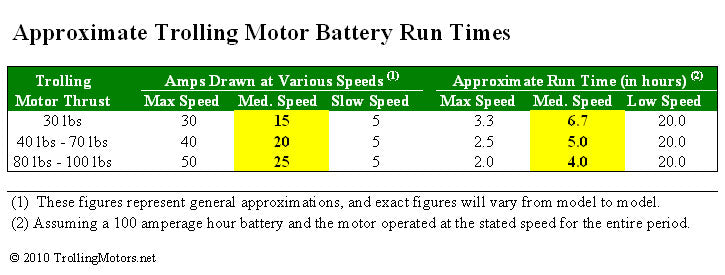
To calculate motor run time, you need to consider several factors, including the motor's power rating, voltage, and current. The run time of a motor is the amount of time it can operate before it needs to be recharged or replaced. This calculation is crucial in determining the efficiency and performance of the motor in various applications. The run time can be affected by factors such as temperature, load, and duty cycle. Understanding these factors is essential in calculating the motor run time accurately.
Understanding Motor Specifications
To calculate motor run time, it's essential to understand the motor specifications, including its power rating, voltage, and current. These specifications are usually provided by the manufacturer and can be found in the motor's datasheet. The power rating is typically measured in watts (W) or horsepower (hp), while the voltage and current are measured in volts (V) and amperes (A), respectively. Here are some key points to consider when understanding motor specifications:
- The power rating of the motor is a critical factor in determining its run time.
- The voltage and current ratings of the motor must be considered to ensure safe and efficient operation.
- The motor's efficiency is also an essential factor, as it affects the overall run time and performance.
Calculating Motor Run Time
Calculating motor run time involves using the motor's power rating, voltage, and current to determine the amount of time it can operate. The run time can be calculated using the following formula: run time (hours) = battery capacity (Ah) / motor current (A). However, this calculation assumes a constant load and duty cycle, which may not always be the case. Here are some key points to consider when calculating motor run time:
- The motor's power rating must be considered to ensure accurate calculation of run time.
- The voltage and current ratings of the motor must be taken into account to avoid overheating or overloading.
- The battery capacity and motor efficiency are critical factors in determining the overall run time.
Factors Affecting Motor Run Time
Several factors can affect the motor run time, including temperature, load, and duty cycle. High temperatures can reduce the motor's efficiency and performance, while excessive loads can cause overheating or overloading. The duty cycle, which refers to the amount of time the motor is in operation, can also impact the run time. Here are some key points to consider when evaluating factors that affect motor run time:
- High temperatures can reduce the motor's efficiency and performance.
- Excessive loads can cause overheating or overloading, reducing the motor's run time.
- The duty cycle must be considered to ensure accurate calculation of motor run time.
The motor run time can vary significantly depending on the application. For example, electric vehicles require motors with high efficiency and performance to achieve optimal range and run time. In industrial applications, motors are often subjected to high loads and duty cycles, which can reduce their run time. Here are some key points to consider when evaluating motor run time in different applications:
- Electric vehicles require motors with high efficiency and performance to achieve optimal range and run time.
- Industrial applications often involve high loads and duty cycles, which can reduce the motor's run time.
- Aerospace applications require motors with high reliability and efficiency to ensure optimal performance and run time.
Improving Motor Run Time
To improve motor run time, it's essential to consider factors such as motor efficiency, cooling systems, and battery management. High-efficiency motors can operate at lower temperatures, reducing the risk of overheating and increasing the run time. Cooling systems can also help to reduce the motor's temperature, improving its efficiency and performance. Here are some key points to consider when improving motor run time:
- High-efficiency motors can operate at lower temperatures, reducing the risk of overheating and increasing the run time.
- Cooling systems can help to reduce the motor's temperature, improving its efficiency and performance.
- Battery management systems can help to optimize the motor's run time by regulating the voltage and current.
How to calculate the starting power of a motor?

To calculate the starting power of a motor, it is essential to understand the Torque and Speed requirements of the motor. The starting power of a motor is typically calculated using the motor's efficiency, power factor, and voltage. The starting current of the motor is also a critical factor in determining the starting power. The starting power can be calculated using the formula: Starting Power = (Starting Current x Voltage) / (Power Factor). This calculation provides an estimate of the power required to start the motor.
Understanding Motor Efficiency
To calculate the starting power of a motor, it is crucial to understand the motor's efficiency. The efficiency of a motor is a measure of its ability to convert electrical energy into mechanical energy. A motor with high efficiency will require less power to produce the same amount of torque. The efficiency of a motor can be calculated using the following formula: Efficiency! = (Output Power / Input Power) x 100. The factors that affect the efficiency of a motor include:
- Motor design: The design of the motor, including the type of winding and the number of poles, can affect its efficiency.
- Material quality: The quality of the materials used in the motor, such as the copper and steel, can affect its efficiency.
- Operating conditions: The operating conditions, including the temperature and voltage, can affect the efficiency of the motor.
Calculating Starting Current
The starting current of a motor is the current drawn by the motor when it is started. The starting current is typically higher than the running current due to the inertia of the motor and the load. The starting current can be calculated using the following formula: Starting Current = (Motor Power / (Voltage x Power Factor)). The factors that affect the starting current include:
- Motor size: The size of the motor, including the horsepower and voltage, can affect the starting current.
- Load type: The type of load, including the inertia and friction, can affect the starting current.
- Starting method: The method of starting the motor, including direct-on-line and soft-start, can affect the starting current.
Determining Voltage and Power Factor
The voltage and power factor are essential parameters in calculating the starting power of a motor. The voltage is the supply voltage of the motor, and the power factor is the ratio of the real power to the apparent power. The power factor can be calculated using the following formula: Power Factor = (Real Power / Apparent Power). The factors that affect the power factor include:
- Motor design: The design of the motor, including the type of winding and the number of poles, can affect the power factor.
- Operating conditions: The operating conditions, including the temperature and voltage, can affect the power factor.
- Load type: The type of load, including the inertia and friction, can affect the power factor.
Considering Inertia and Friction
The inertia and friction of the motor and the load can significantly affect the starting power of the motor. The inertia of the motor and the load can cause the motor to draw more current during starting, while the friction can cause the motor to draw more power to overcome the frictional losses. The factors that affect the inertia and friction include:
- Motor size: The size of the motor, including the horsepower and voltage, can affect the inertia and friction.
- Load type: The type of load, including the inertia and friction, can affect the inertia and friction.
- Operating conditions: The operating conditions, including the temperature and voltage, can affect the inertia and friction.
Applying Safety Factors
When calculating the starting power of a motor, it is essential to apply safety factors to ensure that the motor can handle the starting current and voltage. The safety factors can include a service factor, which takes into account the overload and underload conditions, and a temperature factor, which takes into account the temperature rise during operation. The factors that affect the safety factors include:
- Motor design: The design of the motor, including the type of winding and the number of poles, can affect the safety factors.
- Operating conditions: The operating conditions, including the temperature and voltage, can affect the safety factors.
- Load type: The type of load, including the inertia and friction, can affect the safety factors.
How to calculate motor inrush?
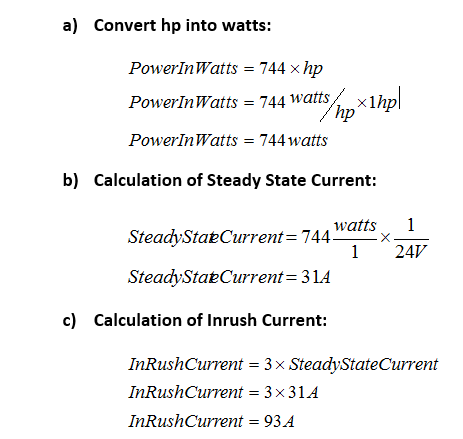
To calculate motor inrush, it's essential to understand the concept of inrush current, which is the high current drawn by a motor when it starts. This current is typically several times higher than the motor's rated current. The calculation involves determining the motor's power factor, efficiency, and rated power. The inrush current can be calculated using the formula: Inrush Current = (Motor Rated Power x Power Factor) / (Efficiency x Supply Voltage). This calculation provides the maximum inrush current that the motor can draw during startup.
Understanding Motor Inrush Current
The motor inrush current is a critical parameter in the design of motor control systems. It's essential to understand the factors that affect the inrush current, such as the motor design, supply voltage, and load characteristics. The inrush current can be calculated using the following steps:
- Determine the motor's rated power and power factor from the motor's nameplate or datasheet.
- Calculate the inrush current using the formula: Inrush Current = (Motor Rated Power x Power Factor) / (Efficiency x Supply Voltage).
- Consider the motor's efficiency and power factor when calculating the inrush current, as these values can affect the accuracy of the calculation.
Factors Affecting Motor Inrush Current
Several factors can affect the motor inrush current, including the motor design, supply voltage, and load characteristics. The motor design can affect the inrush current, as different motor designs have varying magnetic circuits and winding configurations. The supply voltage can also impact the inrush current, as a higher supply voltage can result in a higher inrush current. The load characteristics, such as the load torque and load inertia, can also influence the inrush current.
- The motor's magnetic circuit can affect the inrush current, as a more efficient magnetic circuit can reduce the inrush current.
- The winding configuration can also impact the inrush current, as a wye-wye or delta-delta configuration can result in a higher inrush current than a wye-delta configuration.
- The supply voltage can affect the inrush current, as a higher supply voltage can result in a higher inrush current.
Calculating Motor Inrush Current Using the National Electric Code (NEC)
The National Electric Code (NEC) provides guidelines for calculating the motor inrush current. The NEC requires that the inrush current be calculated using the motor's rated current and power factor. The inrush current can be calculated using the following formula: Inrush Current = (Motor Rated Current x Power Factor) / (Efficiency x Supply Voltage). This calculation provides the maximum inrush current that the motor can draw during startup.
- Determine the motor's rated current and power factor from the motor's nameplate or datasheet.
- Calculate the inrush current using the formula: Inrush Current = (Motor Rated Current x Power Factor) / (Efficiency x Supply Voltage).
- Consider the motor's efficiency and power factor when calculating the inrush current, as these values can affect the accuracy of the calculation.
Importance of Motor Inrush Current in System Design
The motor inrush current is a critical parameter in the design of motor control systems. The inrush current can affect the system's performance and reliability, as high inrush currents can cause voltage drops, overheating, and equipment damage. The system designer must consider the motor's inrush current when selecting circuit breakers, fuses, and wire sizing.
- The motor's inrush current can affect the system's performance, as high inrush currents can cause voltage drops and overheating.
- The system designer must consider the motor's inrush current when selecting circuit breakers and fuses.
- The wire sizing must also be considered, as undersized wires can cause overheating and equipment damage.
Methods for Reducing Motor Inrush Current
There are several methods for reducing the motor inrush current, including soft starting, reduced voltage starting, and reactor starting. The soft starting method uses a variable frequency drive (VFD) to gradually increase the motor speed and reduce the inrush current. The reduced voltage starting method uses a reduced voltage to reduce the inrush current, while the reactor starting method uses a reactor to limit the inrush current.
- The soft starting method can reduce the inrush current by gradually increasing the motor speed.
- The reduced voltage starting method can reduce the inrush current by using a reduced voltage.
- The reactor starting method can limit the inrush current using a reactor.
Frequently Asked Questions (FAQs)
What is the Electric Motor Time to Start Calculator Tool and how does it work?
The Electric Motor Time to Start Calculator Tool is a software application designed to calculate the time it takes for an electric motor to start and reach its full speed. This tool is particularly useful for engineers and technicians who work with electric motors and need to determine the start-up time of a motor in various applications. The calculator tool takes into account several parameters such as the motor's rated power, rated voltage, rated current, and inertia of the load. By inputting these values, the tool can accurately calculate the time to start of the motor, which is essential for designing and optimizing electric motor systems. The Electric Motor Time to Start Calculator Tool uses complex algorithms and mathematical models to simulate the motor's behavior and provide a detailed analysis of its start-up characteristics.
What are the benefits of using the Electric Motor Time to Start Calculator Tool in industrial applications?
The Electric Motor Time to Start Calculator Tool offers several benefits in industrial applications, including improved design and optimization of electric motor systems. By accurately calculating the time to start of a motor, engineers and technicians can reduce the risk of motor failure and increase the overall efficiency of the system. The tool also enables the selection of the most suitable motor for a specific application, taking into account parameters such as power, voltage, and current. Additionally, the Electric Motor Time to Start Calculator Tool can help reduce energy consumption and minimize the impact of motor starting on the electrical network. This is particularly important in industrial processes where reliability and efficiency are crucial, and downtime can result in significant financial losses. By using the Electric Motor Time to Start Calculator Tool, industries can optimize their motor systems, improve productivity, and reduce maintenance costs.
How does the Electric Motor Time to Start Calculator Tool account for different types of electric motors and loads?
The Electric Motor Time to Start Calculator Tool is designed to accommodate different types of electric motors and loads, including induction motors, synchronous motors, and DC motors. The tool takes into account the unique characteristics of each motor type, such as torque, speed, and power factor, to provide an accurate calculation of the time to start. Additionally, the tool allows users to input the inertia of the load, which is essential for calculating the start-up time of the motor. The Electric Motor Time to Start Calculator Tool also accounts for various load types, such as constant torque, constant power, and variable torque loads. By considering these factors, the tool can provide a detailed analysis of the motor's behavior under different operating conditions. This enables engineers and technicians to optimize the motor system for specific applications and ensure reliable operation.
Can the Electric Motor Time to Start Calculator Tool be used for troubleshooting and maintenance of electric motor systems?
Yes, the Electric Motor Time to Start Calculator Tool can be used for troubleshooting and maintenance of electric motor systems. By analyzing the start-up characteristics of a motor, technicians can identify potential issues and diagnose problems. The tool can help detect abnormalities in the motor's behavior, such as overheating, vibration, or unbalanced currents, which can indicate maintenance or repair needs. The Electric Motor Time to Start Calculator Tool can also be used to verify the performance of a motor after maintenance or repairs have been carried out. By comparing the calculated start-up time with the actual start-up time, technicians can validate the effectiveness of the maintenance or repair work. This enables industries to extend the lifespan of their motor systems, reduce downtime, and minimize the risk of unexpected failures. The Electric Motor Time to Start Calculator Tool is a valuable resource for troubleshooting and maintenance of electric motor systems, enabling industries to optimize their operations and improve overall efficiency.
Deja una respuesta
Entradas Relacionadas