
Disk Brake Design Equations and Calculator

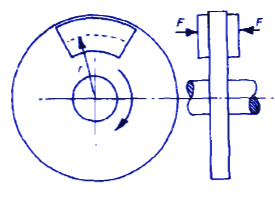
The design of disk brakes is a complex process that requires careful consideration of various factors, including friction, heat, and durability. To simplify this process, engineers often rely on mathematical equations and calculators to optimize brake performance. This article will provide an overview of the key equations and calculations involved in disk brake design, including the calculation of braking torque, heat dissipation, and wear rates. By understanding these fundamental principles, engineers can design more efficient and effective disk brake systems for a wide range of applications. The equations and calculator will be discussed in detail.
- Disk Brake Design Equations and Calculator: A Comprehensive Guide
- What is the formula for the disc brake?
- What is the formula for calculating brakes?
- How to calculate brake disc size?
- What is the formula for calculating brake performance?
-
Frequently Asked Questions (FAQs)
- What are the key factors to consider when designing a disk brake system using Disk Brake Design Equations and Calculator?
- How do the Disk Brake Design Equations and Calculator account for thermal considerations in brake system design?
- What role do friction materials play in the design of a disk brake system, and how does the Disk Brake Design Equations and Calculator account for their properties?
- How can the Disk Brake Design Equations and Calculator be used to optimize the design of a disk brake system for a specific application, such as automotive or aerospace?
Disk Brake Design Equations and Calculator: A Comprehensive Guide
The design of disk brakes is a critical aspect of vehicle engineering, as it directly affects the safety and performance of the vehicle. The disk brake design equations and calculator are essential tools used to determine the optimal design parameters for a disk brake system. These equations take into account various factors such as the friction coefficient, rotational speed, and torque to calculate the clamping force, brake temperature, and wear rate.
Introduction to Disk Brake Design
The disk brake design process involves several stages, including the selection of materials, geometry, and hydraulics. The design equations are used to calculate the brake torque, clamping force, and heat dissipation. The calculator is used to simplify the calculation process and provide quick and accurate results. The design process involves several iterations to optimize the design parameters and ensure that the brake system meets the required performance and safety standards.
Disk Brake Design Equations
The disk brake design equations are based on the physics of friction and heat transfer. The equations take into account the friction coefficient, rotational speed, and torque to calculate the clamping force, brake temperature, and wear rate. The equations are as follows:
| Equation | Description |
|---|---|
| T = μ F r | Torque equation, where T is the torque, μ is the friction coefficient, F is the clamping force, and r is the radius of the disk. |
| F = (2 μ p A) / (π d) | Clamping force equation, where F is the clamping force, μ is the friction coefficient, p is the pressure, A is the area of the piston, and d is the diameter of the disk. |
Disk Brake Calculator
The disk brake calculator is a software tool used to simplify the calculation process and provide quick and accurate results. The calculator takes into account the design equations and input parameters such as the rotational speed, torque, and friction coefficient to calculate the clamping force, brake temperature, and wear rate. The calculator also provides a graphical interface to visualize the results and optimize the design parameters.
Materials Selection for Disk Brakes
The materials selection process is critical in the design of disk brakes. The materials used must have high friction coefficient, wear resistance, and thermal conductivity. The materials commonly used for disk brakes include cast iron, steel, and ceramics. The selection process involves several factors such as cost, availability, and manufacturability.
Performance and Safety Considerations
The performance and safety of the disk brake system are critical considerations in the design process. The design equations and calculator are used to optimize the design parameters and ensure that the brake system meets the required performance and safety standards. The performance considerations include braking distance, braking time, and stability, while the safety considerations include failure mode, reliability, and maintainability. The design process involves several iterations to optimize the design parameters and ensure that the brake system meets the required performance and safety standards, with strong emphasis on reliability and maintainability.
What is the formula for the disc brake?
The formula for the disc brake is based on the principle of friction between the brake pad and the rotor. The torque generated by the disc brake is calculated using the formula: T = (μ F r), where T is the torque, μ is the coefficient of friction, F is the force applied to the brake pad, and r is the radius of the rotor.
Understanding the Components of a Disc Brake
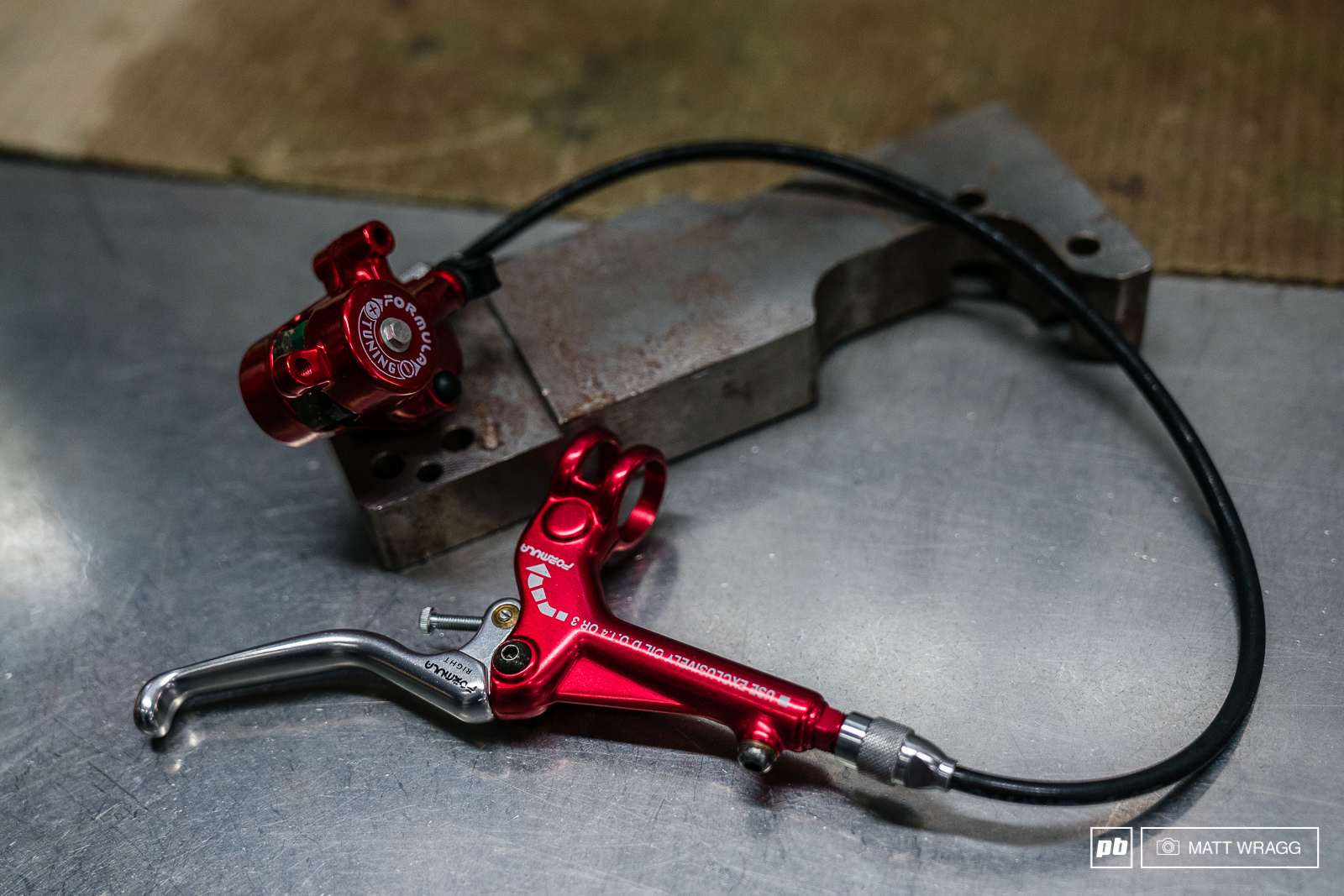
The disc brake consists of several key components, including the rotor, brake pad, caliper, and master cylinder. The rotor is the metal disc that rotates with the wheel, while the brake pad is the friction material that presses against the rotor to slow it down. The caliper is the housing that holds the brake pad and applies the force to the rotor. The master cylinder is the component that generates the hydraulic pressure to apply the brake pads to the rotor.
- The rotor is typically made of cast iron or stainless steel to provide high heat dissipation and wear resistance.
- The brake pad is made of a friction material that provides high coefficient of friction and wear resistance.
- The caliper is designed to provide a consistent and precise application of the brake pad to the rotor.
Calculating the Torque of a Disc Brake
The torque generated by the disc brake can be calculated using the formula: T = (μ F r), where T is the torque, μ is the coefficient of friction, F is the force applied to the brake pad, and r is the radius of the rotor. The coefficient of friction is a measure of the friction between the brake pad and the rotor, and is typically in the range of 0.3 to 0.5. The force applied to the brake pad is typically generated by the master cylinder and is proportional to the hydraulic pressure.
- The coefficient of friction is affected by the temperature and wear of the brake pad and rotor.
- The force applied to the brake pad is limited by the maximum pressure of the master cylinder.
- The radius of the rotor affects the torque generated by the disc brake, with larger rotors generating more torque.
Factors Affecting the Performance of a Disc Brake
The performance of a disc brake is affected by several factors, including the coefficient of friction, temperature, wear, and hydraulic pressure. The coefficient of friction is affected by the type of brake pad and rotor material, as well as the temperature and humidity. The temperature of the disc brake can affect the coefficient of friction and the wear of the brake pad and rotor.
- The coefficient of friction is higher at higher temperatures.
- The wear of the brake pad and rotor is higher at higher temperatures.
- The hydraulic pressure affects the force applied to the brake pad and the torque generated by the disc brake.
Design Considerations for a Disc Brake
The design of a disc brake involves several considerations, including the size and material of the rotor, the type and material of the brake pad, and the hydraulic pressure and force applied to the brake pad. The size of the rotor affects the torque generated by the disc brake, with larger rotors generating more torque. The type and material of the brake pad affect the coefficient of friction and the wear of the brake pad and rotor.
- The size of the rotor is determined by the weight and speed of the vehicle.
- The type and material of the brake pad are determined by the coefficient of friction and wear requirements.
- The hydraulic pressure and force applied to the brake pad are determined by the master cylinder and brake system.
Applications of Disc Brakes
Disc brakes are widely used in automotive and aerospace applications, where high performance and reliability are required. The high torque and fast response of disc brakes make them ideal for high-speed applications, such as racing and aerobatics. The low maintenance and long life of disc brakes make them suitable for commercial and military applications, where reliability and durability are critical.
- Automotive applications include passenger cars, trucks, and buses.
- Aerospace applications include aircraft and spacecraft.
- Industrial applications include machine tools and manufacturing equipment.
What is the formula for calculating brakes?

The formula for calculating brakes is a complex one, involving several variables and constants. The most common formula used to calculate the stopping distance of a vehicle is:
d = (v^2) / (2 μ g),
where d is the stopping distance, v is the initial velocity, μ is the coefficient of friction, and g is the acceleration due to gravity.
Understanding the Variables
To calculate the stopping distance, it's essential to understand the variables involved. The initial velocity (v) is the speed at which the vehicle is traveling when the brakes are applied. The coefficient of friction (μ) depends on the type of tires and the surface they're on. The acceleration due to gravity (g) is a constant, approximately 9.8 meters per second squared.
- The coefficient of friction can range from 0.1 to 1.0, depending on the tire and surface combination.
- A higher coefficient of friction results in a shorter stopping distance.
- The acceleration due to gravity is a constant that affects the stopping distance.
Types of Brakes
There are several types of brakes, including disc brakes, drum brakes, and regenerative brakes. Each type has its own unique characteristics and variables that affect the stopping distance.
- Disc brakes are the most common type and use a rotor and caliper to slow the vehicle.
- Drum brakes use a drum and shoes to slow the vehicle.
- Regenerative brakes use electric motors to slow the vehicle and capture kinetic energy.
Factors Affecting Braking Performance
Several factors can affect braking performance, including tire condition, surface type, and vehicle weight.
- Worn tires can significantly increase the stopping distance.
- Wet or slippery surfaces can reduce the coefficient of friction and increase the stopping distance.
- Vehicle weight can affect the stopping distance, with heavier vehicles requiring more braking force.
Braking Technologies
Advanced braking technologies, such as Anti-lock Braking Systems (ABS) and Electronic Stability Control (ESC), can improve braking performance and reduce the stopping distance.
- ABS prevents the wheels from locking up during hard braking.
- ESC helps to stabilize the vehicle during braking and cornering.
- Autonomous emergency braking systems can automatically apply the brakes in emergency situations.
Calculating Braking Force
The braking force required to stop a vehicle can be calculated using the formula: F = (m v^2) / (2 d), where F is the braking force, m is the vehicle mass, v is the initial velocity, and d is the stopping distance.
- The vehicle mass affects the braking force required to stop the vehicle.
- A higher initial velocity requires a greater braking force.
- A shorter stopping distance requires a greater braking force.
How to calculate brake disc size?

To calculate brake disc size, you need to consider several factors, including the vehicle's weight, speed, and braking performance requirements. The brake disc size is typically determined by the manufacturer based on the vehicle's specifications and braking system design. However, if you need to calculate the brake disc size for a custom or aftermarket braking system, you can use the following formula: brake disc diameter = (2 vehicle weight braking force) / (coefficient of friction brake pad area).
Understanding Brake Disc Dimensions
The brake disc dimensions are critical in determining the brake disc size. The dimensions include the diameter, thickness, and ventilation. To calculate the brake disc size, you need to understand the following:
- The diameter of the brake disc affects the braking torque and heat dissipation.
- The thickness of the brake disc affects the thermal capacity and structural integrity.
- The ventilation of the brake disc affects the heat dissipation and braking performance.
Calculating Brake Disc Thickness
The brake disc thickness is critical in determining the thermal capacity and structural integrity of the brake disc. To calculate the brake disc thickness, you need to consider the following factors:
- The vehicle weight and braking force requirements.
- The coefficient of friction and brake pad area.
- The thermal load and heat dissipation requirements.
Determining Brake Disc Ventilation
The brake disc ventilation is critical in determining the heat dissipation and braking performance. To determine the brake disc ventilation, you need to consider the following:
- The brake disc design and ventilation pattern.
- The air flow and heat transfer requirements.
- The braking performance and thermal capacity requirements.
Considering Brake Disc Materials
The brake disc materials are critical in determining the brake disc size and braking performance. To consider the brake disc materials, you need to understand the following:
- The thermal conductivity and specific heat capacity of the material.
- The strength and stiffness of the material.
- The corrosion resistance and wear resistance of the material.
Brake Disc Sizing for High-Performance Applications
The brake disc sizing for high-performance applications requires careful consideration of the braking performance and thermal capacity requirements. To size the brake disc for high-performance applications, you need to consider the following:
- The vehicle weight and braking force requirements.
- The coefficient of friction and brake pad area.
- The thermal load and heat dissipation requirements.
What is the formula for calculating brake performance?

The formula for calculating brake performance is a complex equation that takes into account various factors, including the brake force, vehicle speed, and brake distance. The most commonly used formula is the brake performance equation, which is: μ = F / N, where μ is the coefficient of friction, F is the brake force, and N is the normal force.
Understanding the Brake Performance Equation
The brake performance equation is a fundamental concept in understanding how brakes work. To calculate brake performance, you need to know the coefficient of friction between the brake pads and the rotor, as well as the normal force exerted on the brake pads. The equation is as follows:
- The coefficient of friction is a measure of the friction between two surfaces, and it is typically denoted by the Greek letter μ.
- The brake force is the force applied to the brake pads to slow down or stop the vehicle, and it is typically denoted by the letter F.
- The normal force is the force exerted on the brake pads in a direction perpendicular to the surface of the rotor, and it is typically denoted by the letter N.
Factors Affecting Brake Performance
There are several factors that can affect brake performance, including the brake pad material, rotor condition, and vehicle speed. The brake pad material can affect the coefficient of friction, while the rotor condition can affect the normal force. Additionally, the vehicle speed can affect the brake force required to slow down or stop the vehicle.
- The brake pad material can be made of different materials, such as organic, semi-metallic, or ceramic, each with its own unique characteristics and coefficient of friction.
- The rotor condition can affect the normal force by changing the surface roughness and coefficient of friction.
- The vehicle speed can affect the brake force required to slow down or stop the vehicle, with higher speeds requiring more brake force.
Importance of Brake Performance
Brake performance is a critical aspect of vehicle safety, as it can affect the stopping distance and vehicle stability. A vehicle with good brake performance can stop quickly and safely, while a vehicle with poor brake performance can be more prone to accidents.
- Stopping distance is the distance it takes for a vehicle to come to a complete stop, and it is affected by the brake force and coefficient of friction.
- Vehicle stability is affected by the brake force and normal force, as well as the vehicle speed and road surface.
- Accidents can be caused by poor brake performance, including rear-end collisions and loss of control.
Measuring Brake Performance
Brake performance can be measured using various tests, including the stop test and fade test. The stop test measures the stopping distance and brake force, while the fade test measures the coefficient of friction over a series of repeated stops.
- The stop test is a simple test that measures the stopping distance and brake force required to stop a vehicle from a certain speed.
- The fade test is a more complex test that measures the coefficient of friction over a series of repeated stops, simulating real-world driving conditions.
- Brake performance testing is an important part of vehicle maintenance and safety inspections.
Improving Brake Performance
Brake performance can be improved by using high-performance brake pads, upgrading to a high-performance brake system, and properly maintaining the brake system.
- High-performance brake pads can provide a higher coefficient of friction and better heat dissipation, resulting in improved brake performance.
- Upgrading to a high-performance brake system can provide better brake force and normal force, resulting in improved brake performance.
- Properly maintaining the brake system is essential to ensuring good brake performance, including regular brake pad replacement and brake fluid checks.
Frequently Asked Questions (FAQs)
What are the key factors to consider when designing a disk brake system using Disk Brake Design Equations and Calculator?
When designing a disk brake system, there are several key factors to consider in order to ensure optimal performance and safety. The Disk Brake Design Equations and Calculator is a valuable tool that helps engineers and designers to calculate the torque capacity, heat dissipation, and wear rate of the brake system. The design equations take into account various parameters such as the rotor diameter, pad width, friction coefficient, and cooling system. By using the calculator, designers can optimize the brake system to meet the specific requirements of their application, whether it's for automotive, aerospace, or industrial use. The Disk Brake Design Equations and Calculator also helps to identify potential bottlenecks and failure modes, allowing designers to make informed decisions and improve the overall design.
How do the Disk Brake Design Equations and Calculator account for thermal considerations in brake system design?
The Disk Brake Design Equations and Calculator places a strong emphasis on thermal considerations, as heat dissipation is a critical factor in brake system design. The calculator takes into account the thermal properties of the rotor and pad materials, as well as the cooling system design, to predict the temperature distribution and heat flux within the brake system. This is crucial because excessive heat can lead to brake fade, warped rotors, and other performance issues. By using the calculator, designers can optimize the brake system to minimize heat-related problems and ensure consistent and reliable performance. The Disk Brake Design Equations and Calculator also allows designers to evaluate different cooling system designs, such as air-cooled or liquid-cooled systems, and select the most effective solution for their application.
What role do friction materials play in the design of a disk brake system, and how does the Disk Brake Design Equations and Calculator account for their properties?
Friction materials play a critical role in the design of a disk brake system, as they directly affect the braking performance and wear rate of the system. The Disk Brake Design Equations and Calculator accounts for the friction properties of the pad materials, including the coefficient of friction, wear rate, and thermal conductivity. By using the calculator, designers can evaluate different friction materials and select the most suitable one for their application, based on factors such as braking performance, wear rate, and cost. The calculator also allows designers to optimize the pad design, including the pad shape, size, and material composition, to achieve the best possible braking performance and wear life. Furthermore, the Disk Brake Design Equations and Calculator can help designers to predict the effect of friction material degradation on the brake system's performance, allowing them to develop strategies to mitigate these effects.
How can the Disk Brake Design Equations and Calculator be used to optimize the design of a disk brake system for a specific application, such as automotive or aerospace?
The Disk Brake Design Equations and Calculator is a powerful tool that can be used to optimize the design of a disk brake system for a specific application, such as automotive or aerospace. By using the calculator, designers can input the specific requirements of their application, including the vehicle weight, speed, and braking distance, and calculate the optimal brake system design. The calculator can help designers to evaluate different design options, such as rotor size, pad material, and cooling system, and select the most effective solution for their application. Additionally, the Disk Brake Design Equations and Calculator can help designers to predict the performance of the brake system under various operating conditions, such as high-speed braking or repeated braking, and identify potential bottlenecks and areas for improvement. By using the calculator, designers can develop a customized brake system design that meets the specific needs of their application, ensuring optimal performance, safety, and reliability.
Deja una respuesta
Entradas Relacionadas