
Convert Flat Oval Duct to Round Sizes Calculator

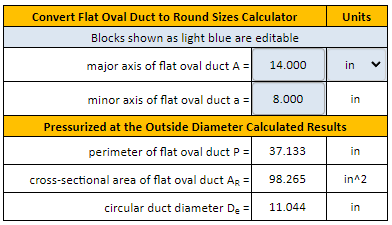
The Convert Flat Oval Duct to Round Sizes Calculator is a valuable tool for HVAC engineers and contractors. It simplifies the process of converting flat oval ducts to round sizes, ensuring accurate calculations and efficient system design. By entering the flat oval duct's dimensions, users can quickly determine the equivalent round duct size, taking into account factors such as airflow and pressure drop. This calculator is essential for optimizing ductwork systems, reducing energy consumption, and improving overall system performance. It provides a straightforward and reliable solution for duct conversion calculations. Accurate calculations are guaranteed.
- Converting Flat Oval Ducts to Round Sizes with a Calculator
- What size is flat oval ductwork?
- How do you calculate equivalent duct diameter?
- What is the rule of thumb for duct sizing?
-
Frequently Asked Questions (FAQs)
- What is the Convert Flat Oval Duct to Round Sizes Calculator and how does it work?
- What are the benefits of using the Convert Flat Oval Duct to Round Sizes Calculator?
- How do I use the Convert Flat Oval Duct to Round Sizes Calculator?
- What are the limitations and potential sources of error when using the Convert Flat Oval Duct to Round Sizes Calculator?
Converting Flat Oval Ducts to Round Sizes with a Calculator
The process of converting flat oval ducts to round sizes is a crucial step in various industries, including HVAC, construction, and engineering. This conversion is necessary to ensure that the ductwork is properly sized and installed to achieve optimal airflow and energy efficiency. A calculator specifically designed for this purpose can simplify the process and reduce errors.
Understanding the Basics of Duct Conversion
To convert a flat oval duct to a round size, it is essential to understand the equivalent diameter concept. The equivalent diameter is the diameter of a round duct that has the same cross-sectional area as the flat oval duct. This calculation is critical in ensuring that the round duct can handle the same air volume as the flat oval duct.
Duct Conversion Calculator Features
A reliable duct conversion calculator should have the following features:
- Input fields for the dimensions of the flat oval duct (length and width)
- Calculation options for different types of conversions (e.g., equivalent diameter, cross-sectional area)
- Output fields to display the results of the conversion (e.g., equivalent round duct diameter)
| Flat Oval Duct Dimensions | Equivalent Round Duct Diameter |
|---|---|
| Length: 10 inches, Width: 5 inches | Equivalent Diameter: 7.5 inches |
Benefits of Using a Duct Conversion Calculator
Using a duct conversion calculator offers several benefits, including:
- Accuracy: Reduces the likelihood of human error in calculations
- Efficiency: Saves time by performing complex calculations quickly
- Consistency: Ensures that conversions are made using standardized formulas and methods
Common Applications of Duct Conversion Calculators
Duct conversion calculators are commonly used in various applications, including:
- HVAC system design: To ensure proper sizing of ductwork for heating, ventilation, and air conditioning systems
- Industrial ventilation: To design and install ventilation systems that meet specific air quality and safety standards
- Construction projects: To plan and execute ductwork installation for new buildings or renovations
Best Practices for Choosing a Duct Conversion Calculator
When selecting a duct conversion calculator, consider the following best practices:
- Verify the calculator's accuracy by checking its formulas and methods against industry standards
- Evaluate the calculator's ease of use to ensure it is user-friendly and intuitive
- Check for updates and maintenance to ensure the calculator stays current with changes in industry standards and regulations
What size is flat oval ductwork?

The size of flat oval ductwork can vary depending on the specific application and the HVAC system it is being used in. Typically, flat oval ducts are used in residential and commercial buildings to distribute heated or cooled air throughout the space. The size of the ductwork will depend on the airflow requirements of the system, as well as the space constraints of the building.
Standard Sizes of Flat Oval Ductwork
The standard sizes of flat oval ductwork are typically measured in inches and can range from 4 inches by 6 inches to 24 inches by 36 inches. The size of the ductwork will depend on the ventilation requirements of the space, as well as the type of insulation used. Some common sizes of flat oval ductwork include:
- 4 inches x 6 inches
- 6 inches x 8 inches
- 8 inches x 10 inches
Benefits of Flat Oval Ductwork
The use of flat oval ductwork offers several benefits, including increased airflow and reduced noise. The flat oval shape of the ductwork allows for a larger surface area, which can improve airflow efficiency. Additionally, the flat oval shape can help to reduce turbulence, which can decrease noise levels. Some key benefits of flat oval ductwork include:
- Improved airflow efficiency
- Reduced noise levels
- Increased durability
Installation of Flat Oval Ductwork
The installation of flat oval ductwork requires careful planning and execution to ensure a proper seal and efficient airflow. The ductwork should be installed in a way that minimizes bends and kinks, which can restrict airflow. Additionally, the ductwork should be properly insulated to prevent heat loss and moisture buildup. Some key considerations for installing flat oval ductwork include:
- Proper sizing of the ductwork
- Careful planning of the ductwork layout
- Use of proper insulation
Materials Used for Flat Oval Ductwork
The materials used for flat oval ductwork can vary depending on the specific application and the desired durability. Some common materials used for flat oval ductwork include galvanized steel, aluminum, and fiberglass. The choice of material will depend on factors such as cost, durability, and resistance to corrosion. Some key considerations for selecting materials for flat oval ductwork include:
- Durability and resistance to corrosion
- Cost and availability of the material
- Ease of installation and maintenance
Applications of Flat Oval Ductwork
The applications of flat oval ductwork are diverse and can include residential, commercial, and industrial settings. Flat oval ductwork is often used in HVAC systems to distribute heated or cooled air throughout a building. Additionally, flat oval ductwork can be used in ventilation systems to provide fresh air and remove stale air. Some key applications of flat oval ductwork include:
- Residential HVAC systems
- Commercial HVAC systems
- Industrial ventilation systems
How do you calculate equivalent duct diameter?
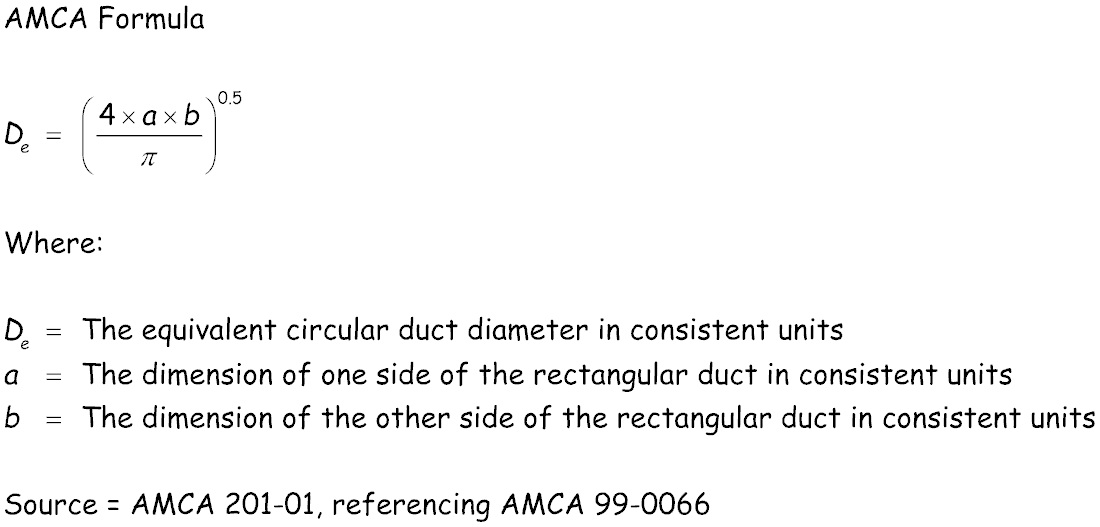
To calculate the equivalent duct diameter, you need to consider the duct geometry and the airflow rate. The equivalent duct diameter is a measure of the duct's ability to convey air, taking into account its shape, size, and orientation. It is an important factor in HVAC system design, as it affects the system's performance and energy efficiency. The calculation involves converting the duct's cross-sectional area into a circular equivalent diameter, which can be used to determine the friction loss and pressure drop in the duct.
Understanding Duct Geometry
The calculation of equivalent duct diameter requires a good understanding of the duct's geometry, including its length, width, and height. The duct's cross-sectional area can be calculated using the formula: area = length x width. To calculate the equivalent duct diameter, you need to use the equivalent diameter formula, which is: diameter = (4 x area / π) ^ 0.5. Some key factors to consider when calculating the equivalent duct diameter include:
- Duct shape: The shape of the duct, whether it is rectangular, circular, or oval, affects the calculation of the equivalent duct diameter.
- Duct size: The size of the duct, including its length, width, and height, is crucial in determining the equivalent duct diameter.
- Duct orientation: The orientation of the duct, whether it is horizontal or vertical, can also impact the calculation of the equivalent duct diameter.
Calculating Equivalent Duct Diameter
To calculate the equivalent duct diameter, you can use the following steps:
- Determine the duct's cross-sectional area: Calculate the area of the duct using the formula: area = length x width.
- Apply the equivalent diameter formula: Use the formula: diameter = (4 x area / π) ^ 0.5 to calculate the equivalent duct diameter.
- Consider the duct's shape and orientation: Take into account the duct's shape and orientation when calculating the equivalent duct diameter.
The equivalent duct diameter is a critical factor in HVAC system design, as it affects the system's performance and energy efficiency.
Importance of Equivalent Duct Diameter in HVAC System Design
The equivalent duct diameter plays a crucial role in HVAC system design, as it affects the system's performance and energy efficiency. A well-designed duct system with the correct equivalent duct diameter can help to:
- Reduce energy consumption: By minimizing friction loss and pressure drop, the equivalent duct diameter can help to reduce energy consumption.
- Improve system performance: The equivalent duct diameter can help to improve system performance by ensuring that the airflow rate is adequate for the space being conditioned.
- Increase system reliability: A well-designed duct system with the correct equivalent duct diameter can help to increase system reliability by reducing the risk of duct failure.
Factors Affecting Equivalent Duct Diameter
Several factors can affect the equivalent duct diameter, including:
- Duct material: The duct material, such as galvanized steel or flexible duct, can affect the equivalent duct diameter.
- Duct insulation: The duct insulation, such as fiberglass or foam, can also impact the equivalent duct diameter.
- Duct fittings: The duct fittings, such as elbows and tees, can affect the equivalent duct diameter by introducing friction loss and pressure drop.
These factors must be carefully considered when calculating the equivalent duct diameter to ensure that the duct system is designed correctly.
Best Practices for Calculating Equivalent Duct Diameter
To ensure accurate calculation of the equivalent duct diameter, follow these best practices:
- Use the correct formula: Use the equivalent diameter formula: diameter = (4 x area / π) ^ 0.5 to calculate the equivalent duct diameter.
- Consider the duct's shape and orientation: Take into account the duct's shape and orientation when calculating the equivalent duct diameter.
- Use duct sizing charts: Use duct sizing charts to determine the equivalent duct diameter for common duct sizes and configurations.
By following these best practices, you can ensure that the equivalent duct diameter is calculated accurately and that the duct system is designed correctly.
What is the rule of thumb for duct sizing?
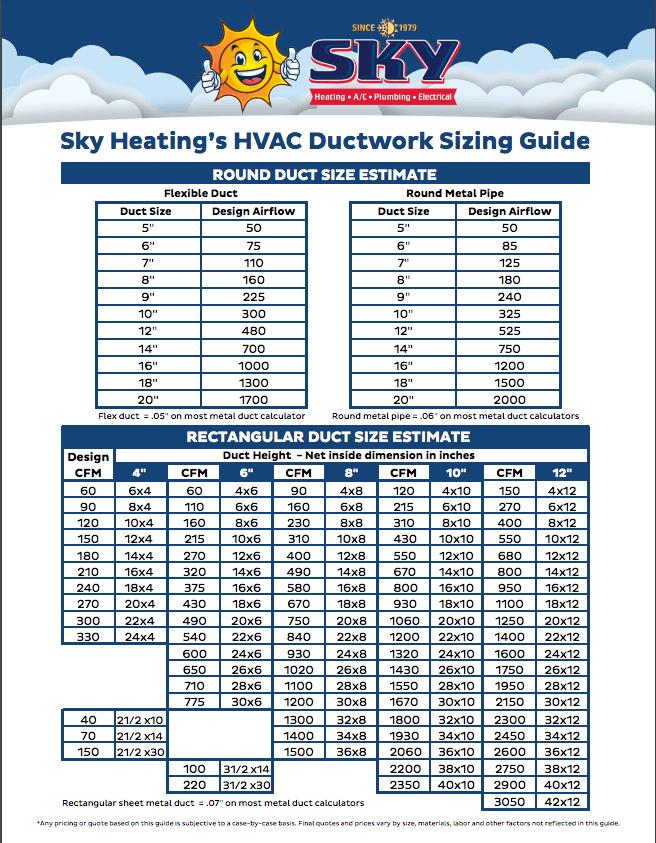
The rule of thumb for duct sizing is to ensure that the ducts are large enough to handle the airflow required for the system, while also being small enough to fit in the available space. This is crucial in heating, ventilation, and air conditioning (HVAC) systems, as it directly affects the overall efficiency and performance of the system. A general guideline is to use a duct sizing chart or a calculator to determine the minimum required duct size based on the airflow rate, pressure drop, and velocity of the air.
Duct Sizing Considerations
When sizing ducts, it's essential to consider several factors, including the type of duct, insulation, and obstructions. The duct material and construction can affect the friction loss and heat gain, which in turn impact the overall system performance. Some key considerations include:
- Duct material: The type of material used for the duct can impact the airflow and pressure drop, with materials like fiberglass and flexible ducts having higher friction losses than metal ducts.
- Duct shape: The shape of the duct can also impact the airflow, with round ducts generally being more efficient than rectangular ducts.
- Insulation: Proper insulation is critical to minimize heat gain and loss, ensuring that the air is delivered at the desired temperature.
Airflow Rate and Velocity
The airflow rate and velocity are critical factors in duct sizing, as they directly impact the system performance and comfort. The airflow rate is typically measured in cubic feet per minute (CFM), and the velocity is measured in feet per minute (FPM). Some key considerations include:
- Airflow rate: The airflow rate should be sufficient to meet the cooling and heating demands of the space, taking into account factors like occupancy and equipment loads.
- Velocity: The velocity of the air should be within a range that ensures comfort and quiet operation, typically between 500-1000 FPM.
- Pressure drop: The pressure drop across the duct should be minimized to reduce energy losses and ensure efficient operation.
Pressure Drop and Friction Loss
The pressure drop and friction loss are critical factors in duct sizing, as they directly impact the system performance and energy efficiency. The pressure drop is typically measured in inches of water gauge (IWG), and the friction loss is measured in feet of water gauge (FWG). Some key considerations include:
- Pressure drop: The pressure drop across the duct should be minimized to reduce energy losses and ensure efficient operation.
- Friction loss: The friction loss should be minimized to reduce energy losses and ensure quiet operation.
- Duct layout: The duct layout should be designed to minimize bends, elbows, and obstructions, which can increase friction loss and pressure drop.
Duct Sizing Calculations
The duct sizing calculations involve determining the minimum required duct size based on the airflow rate, pressure drop, and velocity of the air. Some key considerations include:
- Duct sizing charts: The use of duct sizing charts can simplify the calculation process and ensure accurate results.
- Calculator software: The use of calculator software can also simplify the calculation process and provide more accurate results.
- Manual calculations: Manual calculations can be used, but they require a thorough understanding of the physics and mathematics involved in duct sizing.
Best Practices for Duct Sizing
The best practices for duct sizing involve considering several factors, including the system design, duct material, and installation. Some key considerations include:
- Proper sizing: The ducts should be properly sized to ensure efficient operation and performance.
- Insulation: The ducts should be properly insulated to minimize heat gain and loss.
- Sealing: The ducts should be properly sealed to prevent air leaks and ensure efficient operation.
Frequently Asked Questions (FAQs)
What is the Convert Flat Oval Duct to Round Sizes Calculator and how does it work?
The Convert Flat Oval Duct to Round Sizes Calculator is a tool designed to help users convert flat oval ducts to round sizes, which is a common requirement in various industries such as heating, ventilation, and air conditioning (HVAC). This calculator uses mathematical formulas to calculate the equivalent round size of a flat oval duct, taking into account the duct's width, height, and thickness. The calculator provides a simple and efficient way to perform these calculations, saving users time and reducing the risk of errors. By using this calculator, users can quickly and accurately determine the equivalent round size of a flat oval duct, which is essential for designing and installing ductwork systems.
What are the benefits of using the Convert Flat Oval Duct to Round Sizes Calculator?
The Convert Flat Oval Duct to Round Sizes Calculator offers several benefits to users, including increased accuracy and reduced calculation time. By using this calculator, users can avoid the complexities and inaccuracies associated with manual calculations, which can lead to costly mistakes and delays in project completion. Additionally, the calculator provides a user-friendly interface that makes it easy to input values and obtain results, even for users who are not familiar with mathematical calculations. The calculator also eliminates the need for manual lookup tables or charts, which can be time-consuming and prone to errors. Overall, the Convert Flat Oval Duct to Round Sizes Calculator is a valuable tool for anyone involved in ductwork design and installation.
How do I use the Convert Flat Oval Duct to Round Sizes Calculator?
Using the Convert Flat Oval Duct to Round Sizes Calculator is a straightforward process that requires users to input the dimensions of the flat oval duct. The calculator typically requires users to enter the width, height, and thickness of the duct, as well as the units of measurement being used. Once the values are entered, the calculator performs the necessary calculations and provides the equivalent round size of the duct. The calculator may also provide additional information, such as the area and perimeter of the duct, which can be useful for design and installation purposes. Users can then use the calculated values to select the correct size of round duct or to design and install the ductwork system. The calculator is typically available online or as a mobile app, making it easily accessible to users.
What are the limitations and potential sources of error when using the Convert Flat Oval Duct to Round Sizes Calculator?
While the Convert Flat Oval Duct to Round Sizes Calculator is a useful tool, it is not without its limitations and potential sources of error. One of the main limitations is that the calculator assumes a perfectly oval shape, which may not always be the case in real-world applications. Additionally, the calculator relies on mathematical formulas that may not account for all the variables and complexities involved in ductwork design and installation. Users should also be aware of potential sources of error, such as input errors or inaccurate measurements, which can affect the accuracy of the calculated results. Furthermore, the calculator may not account for other factors that can affect the performance of the ductwork system, such as airflow rates, pressure drops, and insulation. Therefore, users should always verify the results and consult with qualified professionals if they are unsure about any aspect of the ductwork design or installation.
Deja una respuesta
Entradas Relacionadas