
Concrete Anchor Tension Pullout Force Design Calculator for Single Fastener per ACI 318-02

The design of concrete anchor systems is crucial for ensuring the structural integrity of buildings and other infrastructure. The American Concrete Institute (ACI) 318-02 provides guidelines for the design of anchor systems, including the calculation of tension pullout force. This calculator is designed to determine the tension pullout force for a single fastener in concrete, following the provisions of ACI 318-02. By using this calculator, engineers and designers can ensure that their anchor systems are designed to withstand the expected loads and stresses, providing a safe and reliable structure. Accurate calculations are essential for safety.
- Concrete Anchor Tension Pullout Force Design Calculator for Single Fastener per ACI 318-02
- How do you calculate the pull out force of a concrete anchor?
- What is the pull out strength of 5.8 epoxy anchors?
- What is the pull out strength of an anchor?
- How much weight can a 1/2 concrete anchor hold?
-
Frequently Asked Questions (FAQs)
- What is the purpose of the Concrete Anchor Tension Pullout Force Design Calculator for Single Fastener per ACI 318-02?
- How does the Concrete Anchor Tension Pullout Force Design Calculator for Single Fastener per ACI 318-02 account for different anchor types and concrete strengths?
- What are the key input parameters required for the Concrete Anchor Tension Pullout Force Design Calculator for Single Fastener per ACI 318-02?
- How can the results from the Concrete Anchor Tension Pullout Force Design Calculator for Single Fastener per ACI 318-02 be used in practical design applications?
Concrete Anchor Tension Pullout Force Design Calculator for Single Fastener per ACI 318-02
The Concrete Anchor Tension Pullout Force Design Calculator for Single Fastener per ACI 318-02 is a tool used to determine the tension pullout force of a single fastener embedded in concrete. This calculator is based on the American Concrete Institute (ACI) 318-02 code, which provides guidelines for the design of concrete structures. The calculator takes into account various factors such as the anchor diameter, embedment depth, concrete compressive strength, and anchor type to calculate the tension pullout force.
Introduction to ACI 318-02 Code
The ACI 318-02 code is a widely used standard for the design of concrete structures. It provides guidelines for the design of reinforced concrete structures, including the design of anchorages. The code requires that anchorages be designed to resist tension, shear, and moment forces. The Concrete Anchor Tension Pullout Force Design Calculator for Single Fastener per ACI 318-02 is based on the provisions of this code.
Factors Affecting Tension Pullout Force
Several factors affect the tension pullout force of a single fastener embedded in concrete. These factors include:
| Factor | Description |
|---|---|
| Anchor Diameter | The diameter of the anchor affects the tension pullout force. A larger anchor diameter results in a higher tension pullout force. |
| Embedment Depth | The embedment depth of the anchor affects the tension pullout force. A deeper embedment depth results in a higher tension pullout force. |
| Concrete Compressive Strength | The concrete compressive strength affects the tension pullout force. A higher concrete compressive strength results in a higher tension pullout force. |
These factors are taken into account by the Concrete Anchor Tension Pullout Force Design Calculator for Single Fastener per ACI 318-02 to calculate the tension pullout force.
Types of Anchors
There are several types of anchors that can be used in concrete structures. These include expansion anchors, adhesive anchors, and mechanical anchors. Each type of anchor has its own tension pullout force characteristics. The Concrete Anchor Tension Pullout Force Design Calculator for Single Fastener per ACI 318-02 can be used to calculate the tension pullout force for each type of anchor.
Design Considerations
When designing a concrete anchor system, several design considerations must be taken into account. These include the load that the anchor will be subjected to, the concrete compressive strength, and the embedment depth. The Concrete Anchor Tension Pullout Force Design Calculator for Single Fastener per ACI 318-02 can be used to calculate the tension pullout force and ensure that the anchor system is designed to withstand the expected loads.
Limitations of the Calculator
The Concrete Anchor Tension Pullout Force Design Calculator for Single Fastener per ACI 318-02 has several limitations. These include the assumption that the anchor is embedded in a uniform concrete with a consistent compressive strength. The calculator also assumes that the anchor is subjected to a static load. In reality, anchors may be subjected to dynamic loads, which can affect the tension pullout force. Additionally, the calculator does not take into account other factors that can affect the tension pullout force, such as creep and shrinkage. Therefore, the results of the calculator should be used with caution and consultation with a qualified engineer is recommended. The calculator uses advanced calculations to determine the tension pullout force, but it is still a simplified tool that should not be used as a replacement for a detailed design analysis.
How do you calculate the pull out force of a concrete anchor?

The calculation of the pull-out force of a concrete anchor involves several factors, including the type of anchor, the depth of embedment, and the strength of the concrete. To calculate the pull-out force, one must first determine the anchor's capacity to resist tension forces. This can be done by using the manufacturer's specifications or by performing laboratory tests to determine the anchor's ultimate strength.
Types of Concrete Anchors
The type of concrete anchor used can significantly impact the pull-out force calculation. For example, expansion anchors work by expanding the anchor's diameter to create a tight fit in the concrete, while adhesive anchors use a strong adhesive to bond the anchor to the concrete. When calculating the pull-out force, one must consider the mechanical properties of the anchor and the concrete's compressive strength. Some key factors to consider when selecting a concrete anchor include:
- Anchor diameter: The larger the diameter, the greater the pull-out force résistance.
- Embedment depth: The deeper the anchor is embedded, the greater the pull-out force résistance.
- Concrete strength: The stronger the concrete, the greater the pull-out force résistance.
Concrete Strength and Properties
The concrete strength and properties play a crucial role in determining the pull-out force of a concrete anchor. The compressive strength of the concrete, in particular, is a key factor, as it affects the anchor's capacity to resist tension forces. Other important concrete properties include the tensile strength, flexural strength, and modulus of elasticity. When calculating the pull-out force, one must consider the following:
- Concrete compressive strength: The stronger the concrete, the greater the pull-out force résistance.
- Concrete tensile strength: The higher the tensile strength, the greater the pull-out force résistance.
- Concrete density: The denser the concrete, the greater the pull-out force résistance.
Anchor Installation and Quality Control
The installation of the concrete anchor and quality control measures can significantly impact the pull-out force calculation. For example, poor installation techniques, such as over-tightening or under-tightening, can reduce the anchor's capacity to resist tension forces. To ensure accurate pull-out force calculations, one must consider the following:
- Installation techniques: Proper installation techniques are essential to ensure the anchor's capacity to resist tension forces.
- Quality control measures: Regular inspections and testing can help ensure that the concrete anchor is installed correctly and functioning as intended.
- Material selection: The selection of high-quality materials, including the anchor and concrete, is critical to ensuring the pull-out force résistance.
Pull-Out Force Calculation Methods
There are several methods for calculating the pull-out force of a concrete anchor, including the ACI 318 method and the Eurocode 2 method. These methods take into account various factors, including the anchor type, embedment depth, and concrete strength. When calculating the pull-out force, one must consider the following:
- ACI 318 method: This method uses a simplified approach to calculate the pull-out force based on the anchor type and embedment depth.
- Eurocode 2 method: This method uses a more detailed approach to calculate the pull-out force, taking into account the concrete strength and anchor properties.
- Finite element analysis: This method uses advanced computer simulations to model the behavior of the concrete anchor under various loading conditions.
Applications and Limitations of Pull-Out Force Calculations
The pull-out force calculation has several applications, including the design of building foundations, bridges, and high-rise structures. However, there are also limitations to the calculation, including the assumption of a perfect bond between the anchor and concrete. When applying the pull-out force calculation, one must consider the following:
- Design requirements: The pull-out force calculation must be used in conjunction with other design requirements, such as the structural analysis and materials selection.
- Safety factors: Safety factors must be applied to the pull-out force calculation to account for uncertainties and variabilities in the design.
- Testing and validation: The pull-out force calculation must be validated through testing and experimental methods to ensure accuracy and reliability.
What is the pull out strength of 5.8 epoxy anchors?
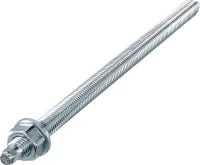
The pull-out strength of 5.8 epoxy anchors is a critical factor in determining their load-carrying capacity. The pull-out strength is the maximum force that can be applied to the anchor before it is pulled out of the concrete or substrate. The pull-out strength of 5.8 epoxy anchors can vary depending on several factors, including the type of concrete, the depth of embedment, and the surface condition of the concrete.
Factors Affecting Pull-Out Strength
The pull-out strength of 5.8 epoxy anchors is affected by several factors, including:
- The type of concrete used, with high-strength concrete typically providing higher pull-out strength than low-strength concrete.
- The depth of embedment, with deeper embedment providing higher pull-out strength than shallower embedment.
- The surface condition of the concrete, with rough surfaces providing higher pull-out strength than smooth surfaces.
These factors can significantly impact the pull-out strength of 5.8 epoxy anchors, and it is essential to consider them when designing and installing anchor systems.
Types of Epoxy Anchors
There are several types of 5.8 epoxy anchors available, each with its own unique characteristics and pull-out strength. Some common types of 5.8 epoxy anchors include:
- Threaded anchors, which provide high pull-out strength and are suitable for use in a variety of concrete types.
- Sleeve anchors, which provide moderate pull-out strength and are suitable for use in hollow or thin concrete.
- Adhesive anchors, which provide high pull-out strength and are suitable for use in high-strength concrete.
The type of epoxy anchor used can significantly impact the pull-out strength, and it is essential to select the correct type of anchor for the specific application.
Design Considerations
When designing anchor systems using 5.8 epoxy anchors, there are several design considerations that must be taken into account. These include:
- The load-carrying capacity required, which will determine the size and type of anchor needed!.
- The type of concrete and its condition, which will affect the pull-out strength of the anchor.
- The depth of embedment, which will affect the pull-out strength of the anchor.
These design considerations can have a significant impact on the pull-out strength of 5.8 epoxy anchors, and it is essential to carefully evaluate them when designing anchor systems.
Testing and Evaluation
The pull-out strength of 5.8 epoxy anchors can be evaluated using various testing methods, including:
- Tensile testing, which involves applying a tensile load to the anchor until failure occurs.
- Shear testing, which involves applying a shear load to the anchor until failure occurs.
- Pull-out testing, which involves applying a pull-out load to the anchor until failure occurs.
These testing methods can provide valuable information on the pull-out strength of 5.8 epoxy anchors, and can help to ensure that anchor systems are designed and installed to provide the required load-carrying capacity.
Applications and Uses
5.8 epoxy anchors have a wide range of applications and uses, including:
- Structural connections, where high load-carrying capacity is required.
- Concrete repairs, where epoxy anchors can be used to reinforce or restore damaged concrete.
- Seismic retrofitting, where epoxy anchors can be used to upgrade the seismic resistance of existing structures.
The applications and uses of 5.8 epoxy anchors are diverse and varied, and they can provide a strong and reliable means of anchoring structures to concrete.
What is the pull out strength of an anchor?
The pull-out strength of an anchor refers to the maximum amount of force that can be applied to the anchor before it is pulled out of the substratum. This is an important consideration in the design and installation of anchors, as it determines the load-carrying capacity of the anchor. The pull-out strength of an anchor depends on various factors, including the type of anchor, the substratum material, and the installation conditions.
Factors Affecting Anchor Pull-Out Strength
The pull-out strength of an anchor is affected by several factors, including the anchor type, substratum material, and installation conditions. Some of the key factors that influence the pull-out strength of an anchor are:
- Anchor design: The design of the anchor, including its shape, size, and material, can significantly affect its pull-out strength.
- Substratum properties: The properties of the substratum, such as its density, compressive strength, and friction angle, can affect the pull-out strength of the anchor.
- Installation conditions: The conditions under which the anchor is installed, including the installation depth and orientation, can also impact its pull-out strength.
Types of Anchors and Their Pull-Out Strength
Different types of anchors have varying pull-out strengths, depending on their design and intended application. Some common types of anchors and their pull-out strengths are:
- Cast-in-place anchors: These anchors are cast into the concrete during the pouring process and have a high pull-out strength due to the bond between the anchor and the concrete.
- Post-installed anchors: These anchors are installed into pre-drilled holes in the concrete and have a lower pull-out strength compared to cast-in-place anchors.
- Mechanical anchors: These anchors use a mechanical mechanism to expand and engage with the concrete, providing a moderate pull-out strength.
Testing Methods for Anchor Pull-Out Strength
The pull-out strength of an anchor can be determined using various testing methods, including:
- Tensile testing: This involves applying a tensile force to the anchor until it fails, providing a direct measurement of the pull-out strength.
- : This involves applying a shear force to the anchor until it fails, providing an indirect measurement of the pull-out strength.
- Load-displacement testing: This involves applying a load to the anchor and measuring the resulting displacement, providing a more detailed understanding of the anchor's behavior under load.
Design Considerations for Anchor Pull-Out Strength
When designing an anchor system, it is essential to consider the load-carrying capacity and pull-out strength of the anchor. Some key design considerations include:
- Anchor spacing: The spacing between anchors can affect the overall pull-out strength of the system.
- Anchor orientation: The orientation of the anchor can impact its pull-out strength, with anchors installed perpendicular to the load direction typically having a higher pull-out strength.
- Substratum condition: The condition of the substratum, including any defects or weaknesses, can affect the pull-out strength of the anchor.
Applications of Anchor Pull-Out Strength
The pull-out strength of an anchor has numerous applications in various fields, including:
- Construction: Anchors are used in construction to secure structures, such as buildings and bridges, to the ground or to other structures.
- Industrial: Anchors are used in industrial applications, such as securing equipment and machinery to the floor or wall.
- Marine: Anchors are used in marine applications, such as securing ships and boats to the seafloor or to docks.
How much weight can a 1/2 concrete anchor hold?
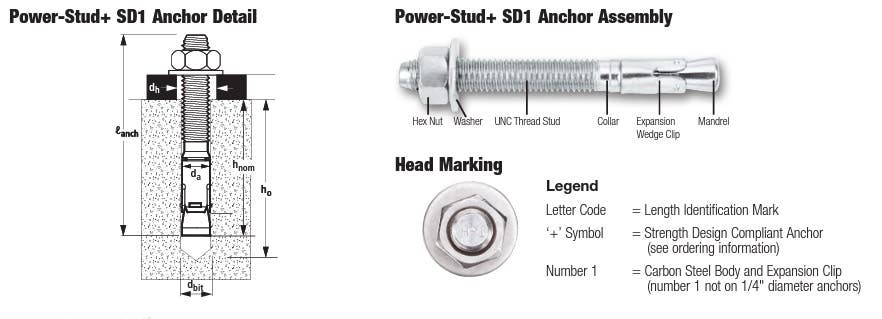
The weight that a 1/2 concrete anchor can hold depends on several factors, including the type of concrete, the anchor type, and the embedment depth. Generally, a 1/2 concrete anchor can hold anywhere from a few hundred to several thousand pounds, depending on the specific application. It's essential to consult the manufacturer's specifications and follow the recommended installation procedures to ensure the anchor can support the intended load.
Types of Concrete Anchors
There are several types of concrete anchors, including expansion anchors, screw anchors, and adhesive anchors. Each type has its own unique characteristics and load-bearing capacities. For example:
- Expansion anchors, such as anchor bolts, can hold up to 2,000 pounds in concrete with a compressive strength of 2,000 psi.
- Screw anchors, such as concrete screws, can hold up to 1,000 pounds in concrete with a compressive strength of 1,500 psi.
- Adhesive anchors, such as epoxy anchors, can hold up to 5,000 pounds in concrete with a compressive strength of 3,000 psi.
Factors Affecting Anchor Capacity
Several factors can affect the load-bearing capacity of a 1/2 concrete anchor, including the concrete compressive strength, anchor embedment depth, and edge distance. For example:
- A higher concrete compressive strength can increase the load-bearing capacity of the anchor.
- A deeper anchor embedment can also increase the load-bearing capacity.
- A greater edge distance can reduce the load-bearing capacity of the anchor.
Anchor Installation Procedures
Proper installation procedures are crucial to ensure the 1/2 concrete anchor can support the intended load. This includes:
- Drilling a pilot hole of the correct size and depth.
- Cleaning the hole to remove any debris or dust.
- Installing the anchor according to the manufacturer's specifications.
Load Calculation and Testing
To determine the load-bearing capacity of a 1/2 concrete anchor, it's essential to perform load calculations and testing. This can include:
- Calculating the load based on the concrete compressive strength and anchor type.
- Testing the anchor to ensure it can support the intended load.
- Verifying the anchor installation to ensure it meets the manufacturer's specifications.
Anchor Selection and Specification
Selecting the correct 1/2 concrete anchor for a specific application is critical to ensure safety and reliability. This includes:
- Specifying the correct anchor type and size based on the intended load and concrete compressive strength.
- Selecting an anchor with the required corrosion resistance and durability.
- Verifying the anchor specifications to ensure they meet the project requirements.
Frequently Asked Questions (FAQs)
What is the purpose of the Concrete Anchor Tension Pullout Force Design Calculator for Single Fastener per ACI 318-02?
The Concrete Anchor Tension Pullout Force Design Calculator for Single Fastener per ACI 318-02 is a tool used to determine the tensile capacity of a single anchor embedded in concrete. The calculator is based on the guidelines set forth in the ACI 318-02 building code, which provides the design and installation requirements for anchoring systems in concrete structures. The primary purpose of this calculator is to help engineers and designers determine the maximum tensile force that a single fastener can withstand without failing, taking into account various factors such as the anchor type, concrete strength, and embedment depth. By using this calculator, designers can ensure that their anchoring systems meet the required safety and performance standards.
How does the Concrete Anchor Tension Pullout Force Design Calculator for Single Fastener per ACI 318-02 account for different anchor types and concrete strengths?
The Concrete Anchor Tension Pullout Force Design Calculator for Single Fastener per ACI 318-02 takes into account various anchor types, including cast-in-place anchors, post-installed anchors, and expansion anchors. Each anchor type has its own unique characteristics and behaviors, and the calculator uses empirical equations and theoretical models to predict the tensile capacity of each anchor type. Additionally, the calculator considers the concrete strength, which is a critical factor in determining the tensile capacity of the anchor. The calculator uses the specified compressive strength of the concrete, which is typically measured in terms of the 28-day cylinder strength. By accounting for the interaction between the anchor and the concrete, the calculator provides a more accurate and reliable estimate of the tensile capacity of the anchoring system.
What are the key input parameters required for the Concrete Anchor Tension Pullout Force Design Calculator for Single Fastener per ACI 318-02?
The Concrete Anchor Tension Pullout Force Design Calculator for Single Fastener per ACI 318-02 requires several key input parameters to calculate the tensile capacity of a single fastener. These parameters include the anchor type, anchor diameter, embedment depth, concrete strength, and condition of use. The anchor type and diameter are used to determine the nominal tensile capacity of the anchor, while the embedment depth is used to calculate the effective embedment depth. The concrete strength is used to determine the characteristic concrete strength, which is then used to calculate the design tensile capacity of the anchor. Additionally, the calculator requires information about the condition of use, including the temperature and exposure conditions, which can affect the performance of the anchoring system.
How can the results from the Concrete Anchor Tension Pullout Force Design Calculator for Single Fastener per ACI 318-02 be used in practical design applications?
The results from the Concrete Anchor Tension Pullout Force Design Calculator for Single Fastener per ACI 318-02 can be used in a variety of practical design applications, including the design of! anchoring systems for buildings, bridges, and other structures. The calculator provides a reliable estimate of the tensile capacity of a single fastener, which can be used to determine the required anchor size and spacing. The results can also be used to evaluate the safety and performance of existing anchoring systems, and to identify potential weaknesses or deficiencies. Additionally, the calculator can be used to optimize the design of anchoring systems, by minimizing the number of anchors required while still meeting the required safety and performance standards. By using the results from this calculator, engineers and designers can create more efficient, cost-effective, and reliable anchoring systems.
Deja una respuesta
Entradas Relacionadas