
Ball and Roller Bearing Analysis Loading and Selection Formulas and Calculator


The selection of ball and roller bearings is a critical process in mechanical design, requiring careful consideration of loading conditions and operating parameters. Bearing loading and selection involves calculating various factors such as radial and axial loads, bearing life, and equivalent load. This article provides an overview of the key formulas and calculations used in bearing analysis, along with a calculator tool to simplify the selection process. By understanding these principles, engineers can optimize bearing selection for improved performance, efficiency, and reliability in a wide range of applications. Accurate calculations are essential for bearing longevity.
- Ball and Roller Bearing Analysis, Loading and Selection Formulas and Calculator
- How to calculate ball bearing load capacity?
- How do you calculate roller load?
-
How to calculate bearing selection?
- Understanding Bearing Types
- Bearing Size Calculation
- When calculating bearing selection, it is essential to consider the load and speed conditions that the bearing will be subjected to. The load includes radial, axial, and moment loads, while the speed includes rotational and linear speeds. The bearing must be able to withstand the expected loads and operate at the required speed. Key factors to consider when evaluating load and speed include: Load calculation: The load that the bearing will be subjected to, including static and dynamic loads. Speed calculation: The speed at which the bearing will operate, including rotational and linear speeds. Service factor: The service factor that affects the bearing life, including temperature, vibration, and contamination.
- When calculating bearing selection, it is essential to consider the lubrication and maintenance requirements of the bearing. The lubrication system must be able to provide the required lubrication to the bearing, while the maintenance schedule must be able to ensure the bearing life. Key factors to consider when evaluating lubrication and maintenance include: Lubrication type: The type of lubrication that is required, including oil, grease, and solid lubricants. Lubrication system: The lubrication system that is used, including circulating oil, splash lubrication, and grease packs. Maintenance schedule: The maintenance schedule that is required to ensure the bearing life, including inspection, cleaning, and replacement. How do you calculate L10 life of a ball bearing?
- Understanding the Basic Dynamic Load Rating
- Calculating the Equivalent Dynamic Load
- Determining the Exponent and Rotational Speed
- Material Properties and Their Effect on L10 Life
- Applications and Limitations of the L10 Life Calculation
-
Frequently Asked Questions (FAQs)
- What is the purpose of the Ball and Roller Bearing Analysis Loading and Selection Formulas and Calculator?
- How do I use the Ball and Roller Bearing Analysis Loading and Selection Formulas and Calculator to select the right bearing for my application?
- What are the key factors that affect the loading and selection of ball and roller bearings?
- How can I use the Ball and Roller Bearing Analysis Loading and Selection Formulas and Calculator to optimize the performance of my bearings?
Ball and Roller Bearing Analysis, Loading and Selection Formulas and Calculator
The analysis, loading, and selection of ball and roller bearings are critical components in the design and maintenance of mechanical systems. Bearing performance is influenced by various factors, including load, speed, temperature, and lubrication. To ensure optimal bearing performance, engineers and technicians must carefully evaluate these factors and apply relevant formulas and calculations.
Introduction to Ball and Roller Bearings
Ball and roller bearings are mechanical components that support rotating shafts and reduce friction between moving parts. Ball bearings consist of balls that rotate between an inner ring and an outer ring, while roller bearings use rollers instead of balls. The selection of the appropriate bearing type depends on the specific application, including load capacity, speed, and environmental conditions.
Bearing Loading and Calculation Formulas
Bearing loading is a critical factor in determining bearing life and performance. The load on a bearing can be calculated using various formulas, including the radial load and axial load calculations. These calculations take into account the mass of the rotating components, speed, and acceleration. The following table summarizes some common bearing loading formulas:
| Formula | Description |
|---|---|
| F = (m v^2) / r | Radial load calculation, where F is the load, m is the mass, v is the velocity, and r is the radius |
| F = (m a) / r | Axial load calculation, where F is the load, m is the mass, a is the acceleration, and r is the radius |
Bearing Selection Criteria
The selection of a bearing depends on various criteria, including load capacity, speed, temperature, and lubrication. Bearing manufacturers provide catalogs and selection guides to help engineers and technicians choose the appropriate bearing for their application. The selection process involves evaluating bearing characteristics, such as diameter, width, and material, to ensure compatibility with the application requirements.
Bearing Analysis and Simulation Tools
Bearing analysis and simulation tools are used to evaluate bearing performance and predict bearing life. These tools use finite element methods and computer-aided design (CAD) software to model bearing behavior under various loading conditions. The results of these analyses can be used to optimize bearing design and improve system performance. Some common bearing analysis tools include ANSYS and ABAQUS.
Calculator for Ball and Roller Bearing Selection
A calculator for ball and roller bearing selection can be a useful tool for engineers and technicians. This calculator can be used to input application parameters, such as load, speed, and temperature, and output bearing selection recommendations. The calculator can also be used to evaluate bearing life and predict bearing failure. Some common bearing selection calculators include SKF and Timken. The calculator can help users to select the right bearing for their application, taking into account load capacity, speed, and environmental conditions.
How to calculate ball bearing load capacity?
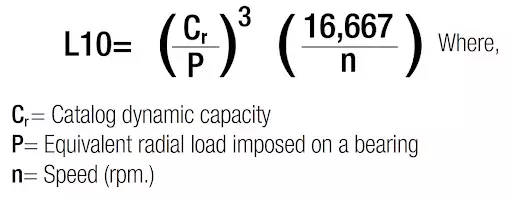
To calculate the load capacity of a ball bearing, you need to consider several factors, including the bearing type, size, and material, as well as the operating conditions and expected lifespan. The load capacity of a ball bearing is typically expressed in terms of its dynamic load rating, which is the maximum load that the bearing can withstand under normal operating conditions. This rating is usually provided by the bearing manufacturer and is based on a standardized testing procedure.
Understanding Dynamic Load Rating
The dynamic load rating is a critical factor in determining the load capacity of a ball bearing. It takes into account the bearing's internal geometry, material properties, and operating conditions. To calculate the dynamic load rating, you need to consider the following factors:
- The bearing's diameter and width, which affect its load-carrying capacity
- The ball diameter and number of balls, which influence the bearing's contact stress and load distribution
- The material properties, such as hardness, toughness, and yield strength, which impact the bearing's resistance to deformation and fatigue
Calculating Static Load Rating
In addition to the dynamic load rating, you also need to consider the static load rating, which is the maximum load that the bearing can withstand when it is not rotating. The static load rating is typically higher than the dynamic load rating, as it does not take into account the dynamic stresses and vibrations that occur during operation. To calculate the static load rating, you need to consider the following factors:
- The bearing's internal geometry, including the ball diameter and number of balls
- The material properties, such as hardness, toughness, and yield strength
- The operating conditions, including the temperature, humidity, and contamination levels
Accounting for Operating Conditions
The operating conditions of the ball bearing can significantly impact its load capacity. Factors such as temperature, humidity, contamination, and vibration can all affect the bearing's performance and lifespan. To calculate the load capacity, you need to consider the following operating conditions:
- The temperature range, which affects the bearing's material properties and lubrication requirements
- The humidity levels, which can impact the bearing's corrosion resistance and lubrication requirements
- The contamination levels, which can affect the bearing's surface finish and contact stress
Considering Bearing Life and Reliability
The load capacity of a ball bearing is also influenced by its expected lifespan and reliability requirements. The bearing life is typically expressed in terms of its L10 life, which is the predicted lifespan of the bearing under normal operating conditions. To calculate the load capacity, you need to consider the following factors:
- The bearing's L10 life, which is affected by the dynamic load rating, operating conditions, and material properties
- The reliability requirements, which impact the bearing's design and selection
- The maintenance schedule, which affects the bearing's condition and lifespan
Selecting the Right Bearing Type
Finally, the load capacity of a ball bearing is also influenced by its type and design. Different types of ball bearings, such as deep groove, angular contact, and thrust bearings, have different load-carrying capacities and operating characteristics. To calculate the load capacity, you need to consider the following factors:
- The bearing type, which affects its internal geometry and load distribution
- The bearing size, which impacts its load-carrying capacity and operating conditions
- The bearing material, which influences its resistance to deformation and fatigue
How do you calculate roller load?
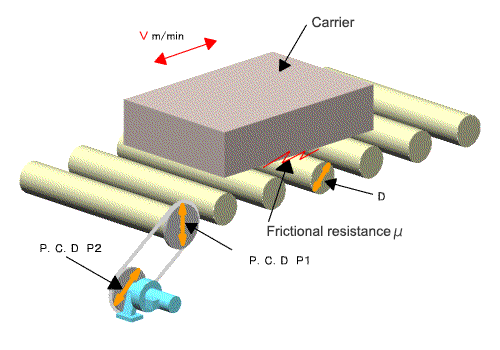
To calculate roller load, you need to consider several factors, including the weight of the material being transported, the diameter of the roller, and the friction coefficient between the roller and the material. The calculation typically involves using the formula for roller load, which takes into account the torque required to rotate the roller and the speed at which it operates.
Understanding Roller Load Calculation
The calculation of roller load is crucial in determining the performance and efficiency of the roller system. To calculate the roller load, you need to understand the physics behind the system, including the forces acting on the roller and the material being transported. This involves considering the weight of the material, the diameter of the roller, and the friction coefficient between the roller and the material.
- Identify the weight of the material being transported
- Determine the diameter of the roller
- Calculate the friction coefficient between the roller and the material
Factors Affecting Roller Load
The roller load is affected by several factors, including the weight of the material, the diameter of the roller, and the friction coefficient between the roller and the material. Other factors that can affect the roller load include the speed of the roller, the torque required to rotate the roller, and the temperature of the environment.
- The weight of the material being transported
- The diameter of the roller
- The friction coefficient between the roller and the material
Importance of Accurate Roller Load Calculation
Accurate roller load calculation is essential in ensuring the safe and efficient operation of the roller system. An inaccurate calculation can result in overloading or underloading of the roller, leading to reduced performance, increased wear and tear, and premature failure of the system.
- Ensures safe operation of the roller system
- Optimizes the performance of the roller system
- Reduces the risk of overloading or underloading the roller
Methods for Calculating Roller Load
There are several methods for calculating roller load, including the use of formulas, charts, and computer simulations. The choice of method depends on the complexity of the system and the accuracy required.
- Using formulas to calculate the roller load
- Consulting charts and tables to determine the roller load
- Utilizing computer simulations to model the roller system
Applications of Roller Load Calculation
The calculation of roller load has practical applications in various industries, including manufacturing, transportation, and construction. The calculation is used to design and optimize roller systems, predict their performance, and troubleshoot problems.
- Designing and optimizing roller systems
- Predicting the performance of roller systems
- Troubleshooting problems with roller systems
How to calculate bearing selection?
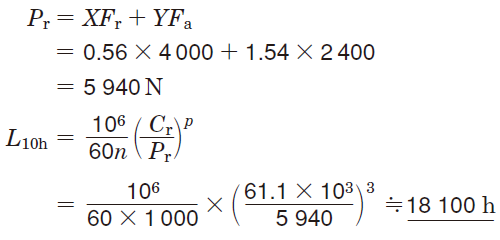
To calculate bearing selection, it is essential to consider several factors that affect the performance and life of the bearing. The selection process involves evaluating the application requirements, including the load, speed, and environmental conditions. The bearing type and size must be chosen based on the specific needs of the application. The calculation involves determining the basic dynamic load rating and the equivalent dynamic load to ensure the bearing can withstand the expected loads. The service life of the bearing can be estimated using the L10 life formula, which takes into account the load, speed, and lubrication conditions.
Understanding Bearing Types
When calculating bearing selection, it is crucial to understand the different types of bearings available, including ball bearings, roller bearings, and needle bearings. Each type has its advantages and disadvantages, and the selection depends on the specific application. The bearing type affects the load-carrying capacity, speed, and lubrication requirements. Key factors to consider when selecting a bearing type include:
- Load-carrying capacity: The bearing must be able to withstand the expected loads.
- Speed: The bearing must be able to operate at the required speed.
- Lubrication: The bearing must be compatible with the lubrication system used in the application`.
Bearing Size Calculation
The bearing size calculation involves determining the bearing bore diameter and the outside diameter. The bearing size affects the load-carrying capacity and the speed at which the bearing can operate. The calculation involves using formulas and tables to determine the required bearing size. Key factors to consider when calculating the bearing size include:
- Load: The load that the bearing will be subjected to, including radial and axial loads.
- Speed: The speed at which the bearing will operate, including rotational speed and linear speed.
- Service life: The expected service life of the bearing, including the L10 life and the B10 life.
When calculating bearing selection, it is essential to consider the load and speed conditions that the bearing will be subjected to. The load includes radial, axial, and moment loads, while the speed includes rotational and linear speeds. The bearing must be able to withstand the expected loads and operate at the required speed. Key factors to consider when evaluating load and speed include:
- Load calculation: The load that the bearing will be subjected to, including static and dynamic loads.
- Speed calculation: The speed at which the bearing will operate, including rotational and linear speeds.
- Service factor: The service factor that affects the bearing life, including temperature, vibration, and contamination.
The material selection and surface finish of the bearing are critical factors in calculating bearing selection. The material must be able to withstand the expected loads and environmental conditions, while the surface finish affects the friction and wear of the bearing. Key factors to consider when selecting the material and surface finish include:
- Material properties: The material properties that affect the bearing life, including hardness, toughness, and corrosion resistance.
- Surface finish: The surface finish that affects the friction and wear of the bearing, including roughness and texture.
- Coatings and treatments: The coatings and treatments that can be applied to the bearing to enhance its performance and life.
When calculating bearing selection, it is essential to consider the lubrication and maintenance requirements of the bearing. The lubrication system must be able to provide the required lubrication to the bearing, while the maintenance schedule must be able to ensure the bearing life. Key factors to consider when evaluating lubrication and maintenance include:
- Lubrication type: The type of lubrication that is required, including oil, grease, and solid lubricants.
- Lubrication system: The lubrication system that is used, including circulating oil, splash lubrication, and grease packs.
- Maintenance schedule: The maintenance schedule that is required to ensure the bearing life, including inspection, cleaning, and replacement.
How do you calculate L10 life of a ball bearing?

The L10 life of a ball bearing is the lifespan at which 90% of a group of bearings will still be operational, and it is typically measured in hours or miles. To calculate the L10 life, you need to use a formula that takes into account the bearing load, speed, and material properties. The formula is: L10 = (C/P)^p (1/(n^0.3)), where C is the basic dynamic load rating, P is the equivalent dynamic load, p is the exponent (usually 3 for ball bearings), and n is the rotational speed.
Understanding the Basic Dynamic Load Rating
The basic dynamic load rating (C) is a critical parameter in calculating the L10 life. It is a value that represents the maximum load that a bearing can withstand without failing. To determine the C value, you need to consider the following factors:
- The bearing type and size
- The material properties of the bearing
- The operating conditions, such as temperature and humidity
The C value is usually provided by the bearing manufacturer and can be found in the bearing catalog or datasheet.
Calculating the Equivalent Dynamic Load
The equivalent dynamic load (P) is another important parameter in the L10 life calculation. It represents the total load that the bearing is subjected to, including radial, axial, and moments. To calculate P, you need to consider the following factors:
- The radial load (Fr) and axial load (Fa) on the bearing
- The moments (M) acting on the bearing
- The bearing configuration, such as single-row or double-row
The P value can be calculated using a formula that combines the radial, axial, and moment loads.
Determining the Exponent and Rotational Speed
The exponent (p) and rotational speed (n) are also critical parameters in the L10 life calculation. The exponent (p) is usually a constant value, typically 3 for ball bearings. The rotational speed (n) is the speed at which the bearing is operating, usually measured in revolutions per minute (RPM) or revolutions per second (RPS). To determine the n value, you need to consider the following factors:
- The operating speed of the application
- The gear ratio (if applicable)
- The belt or chain drive ratio (if applicable)
The n value can be calculated using a formula that takes into account the operating speed and any gear or drive ratios.
Material Properties and Their Effect on L10 Life
The material properties of the bearing can have a significant impact on the L10 life. Steel bearings, for example, have a higher strength and durstress than ceramic bearings, but may be more prone to corrosion. To consider the material properties, you need to evaluate the following factors:
- The bearing material and its properties
- The operating conditions, such as temperature and humidity
- The lubrication system and its effectiveness
The material properties can affect the basic dynamic load rating (C) and the equivalent dynamic load (P) values.
Applications and Limitations of the L10 Life Calculation
The L10 life calculation has several applications and limitations. It can be used to predict the lifespan of a bearing, optimize bearing selection, and improve bearing design. However, it has limitations, such as:
- Assuming a constant load and speed
- Not accounting for variable loads or transient loads
- Not considering external factors, such as vibrations or contaminants
The L10 life calculation should be used in conjunction with other analysis tools and testing methods to ensure accurate and reliable results.
Frequently Asked Questions (FAQs)
What is the purpose of the Ball and Roller Bearing Analysis Loading and Selection Formulas and Calculator?
The Ball and Roller Bearing Analysis Loading and Selection Formulas and Calculator is a tool designed to help engineers and technicians select the most suitable bearings for their specific applications. The calculator takes into account various parameters such as the load type, speed, and temperature to determine the optimal bearing selection. By using this calculator, users can ensure that their bearings are properly sized and configured to handle the expected loads and stresses, which can help to prevent premature failure and extend the life of the bearing. The calculator also provides formulas and equations for calculating bearing life, load capacity, and other important parameters, making it a valuable resource for anyone involved in the design and selection of bearings.
How do I use the Ball and Roller Bearing Analysis Loading and Selection Formulas and Calculator to select the right bearing for my application?
To use the Ball and Roller Bearing Analysis Loading and Selection Formulas and Calculator, users need to input various parameters related to their application, such as the load type, speed, temperature, and desired bearing life. The calculator will then use these inputs to calculate the required bearing size and type, as well as other important parameters such as the load capacity and bearing life. Users can also use the calculator to compare different bearing options and select the one that best meets their needs. The calculator provides detailed reports and plots to help users understand the results and make informed decisions. Additionally, the calculator includes built-in databases of standard bearing sizes and types, making it easy to select the right bearing for the application. By following the step-by-step process and using the calculator's built-in tools and features, users can ensure that they select the most suitable bearing for their application.
What are the key factors that affect the loading and selection of ball and roller bearings?
The loading and selection of ball and roller bearings is affected by several key factors, including the load type, speed, temperature, and desired bearing life. The load type, for example, can be radial, thrust, or combined, and each type of load requires a different bearing configuration. The speed of the application also plays a critical role, as high-speed applications require bearings with specialized designs and materials. Temperature is another important factor, as high temperatures can affect the life and performance of the bearing. Additionally, the desired bearing life is a critical factor, as it determines the required load capacity and bearing size. Other factors that can affect the loading and selection of ball and roller bearings include the shaft and housing designs, the sealing and lubrication systems, and the environmental conditions. By considering these factors, users can ensure that they select the most suitable bearing for their application and achieve optimal performance and life.
How can I use the Ball and Roller Bearing Analysis Loading and Selection Formulas and Calculator to optimize the performance of my bearings?
The Ball and Roller Bearing Analysis Loading and Selection Formulas and Calculator can be used to optimize the performance of bearings by providing detailed analysis and recommendations for bearing selection and sizing. By using the calculator, users can identify the optimal bearing configuration for their application, taking into account parameters such as load, speed, and temperature. The calculator also provides tools and features for analyzing and optimizing bearing performance, such as plots and reports that show the bearing's load capacity, life, and other important parameters. Additionally, the calculator includes built-in databases of standard bearing sizes and types, making it easy to select the right bearing for the application. By following the recommendations and guidelines provided by the calculator, users can optimize the performance of their bearings, achieve longer life, and reduce maintenance and downtime. The calculator can also be used to evaluate and compare different bearing options, allowing users to make informed decisions and select the best bearing for their application.
Deja una respuesta
Entradas Relacionadas