
Rebar Angled and Perpendicular Leg Center Line Length Equation and Calculator

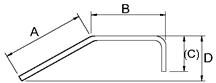
The calculation of rebar angled and perpendicular leg center line length is crucial in construction and engineering projects. Rebar, or reinforcing steel, is used to add strength and stability to concrete structures. To ensure accurate placement and efficient use of rebar, it is essential to calculate the length of the rebar legs that are angled or perpendicular to the center line. This article provides a comprehensive guide to the equation and calculator for determining rebar angled and perpendicular leg center line length, facilitating precise planning and execution of construction projects. Accurate calculations are vital for safety and structural integrity.
-
Rebar Angled and Perpendicular Leg Center Line Length Equation and Calculator
- Understanding the Rebar Angled and Perpendicular Leg Center Line Length Equation
- Importance of Accurate Calculations in Rebar Placement
- Using the Rebar Angled and Perpendicular Leg Center Line Length Calculator
- Benefits of Using the Rebar Angled and Perpendicular Leg Center Line Length Calculator
- Common Applications of the Rebar Angled and Perpendicular Leg Center Line Length Equation and Calculator
- What is the formula for rebar length?
-
Frequently Asked Questions (FAQs)
- What is the Rebar Angled and Perpendicular Leg Center Line Length Equation and Calculator?
- How does the Rebar Angled and Perpendicular Leg Center Line Length Equation and Calculator work?
- What are the benefits of using the Rebar Angled and Perpendicular Leg Center Line Length Equation and Calculator?
- What types of projects can the Rebar Angled and Perpendicular Leg Center Line Length Equation and Calculator be used for?
Rebar Angled and Perpendicular Leg Center Line Length Equation and Calculator
The Rebar Angled and Perpendicular Leg Center Line Length Equation and Calculator is a tool used to calculate the length of the center line of a rebar (reinforcing bar) that is angled or perpendicular to a surface. This calculation is crucial in the construction industry, particularly in the fabrication and placement of reinforcing steel in concrete structures. The equation takes into account the angle and length of the rebar, as well as the distance between the rebar and the surface. The calculator provides a quick and accurate way to determine the center line length, saving time and reducing errors.
Understanding the Rebar Angled and Perpendicular Leg Center Line Length Equation
The equation for calculating the center line length of a rebar that is angled or perpendicular to a surface is based on the principles of geometry and trigonometry. The equation involves the use of sine, cosine, and tangent functions to determine the length of the center line. The equation is as follows: L = (a^2 + b^2 - 2ab cos(θ))^0.5, where L is the center line length, a and b are the lengths of the rebar, and θ is the angle between the rebar and the surface.
Importance of Accurate Calculations in Rebar Placement
Accurate calculations are essential in rebar placement to ensure that the reinforcing steel is properly positioned and secured in the concrete structure. Incorrect calculations can lead to structural problems, such as cracks and collapses. The use of a calculator or equation can help to minimize errors and ensure that the rebar is placed correctly. Additionally, accurate calculations can help to reduce costs and improve the overall quality of the structure.
Using the Rebar Angled and Perpendicular Leg Center Line Length Calculator
The Rebar Angled and Perpendicular Leg Center Line Length Calculator is a simple and easy-to-use tool that can be used to calculate the center line length of a rebar. The calculator requires the user to input the angle and length of the rebar, as well as the distance between the rebar and the surface. The calculator then uses the equation to determine the center line length and provides the result in a clear and concise format.
Benefits of Using the Rebar Angled and Perpendicular Leg Center Line Length Calculator
The use of the Rebar Angled and Perpendicular Leg Center Line Length Calculator provides several benefits, including increased accuracy, reduced errors, and improved efficiency. The calculator can also help to save time and reduce costs by minimizing the need for manual calculations. Additionally, the calculator can be used to verify calculations and ensure that the rebar is placed correctly.
Common Applications of the Rebar Angled and Perpendicular Leg Center Line Length Equation and Calculator
The Rebar Angled and Perpendicular Leg Center Line Length Equation and Calculator has several common applications in the construction industry, including building foundations, walls, and floors. The equation and calculator can also be used in bridge construction, highway construction, and other infrastructure projects. The following table provides a summary of the common applications:
| Application | Description |
|---|---|
| Building Foundations | Calculation of rebar center line length for building foundations |
| Walls and Floors | Calculation of rebar center line length for walls and floors |
| Bridge Construction | Calculation of rebar center line length for bridge construction |
| Highway Construction | Calculation of rebar center line length for highway construction |
| Other Infrastructure Projects | Calculation of rebar center line length for other infrastructure projects |
The Rebar Angled and Perpendicular Leg Center Line Length Equation and Calculator is a valuable tool that can be used to improve the accuracy and efficiency of rebar placement in various construction projects.
What is the formula for rebar length?
The formula for rebar length is typically calculated using the following equation: L = (-development length) + (hook length) + (bend length) + (spacing length). This formula takes into account the various components that contribute to the overall length of the rebar.
Understanding Development Length
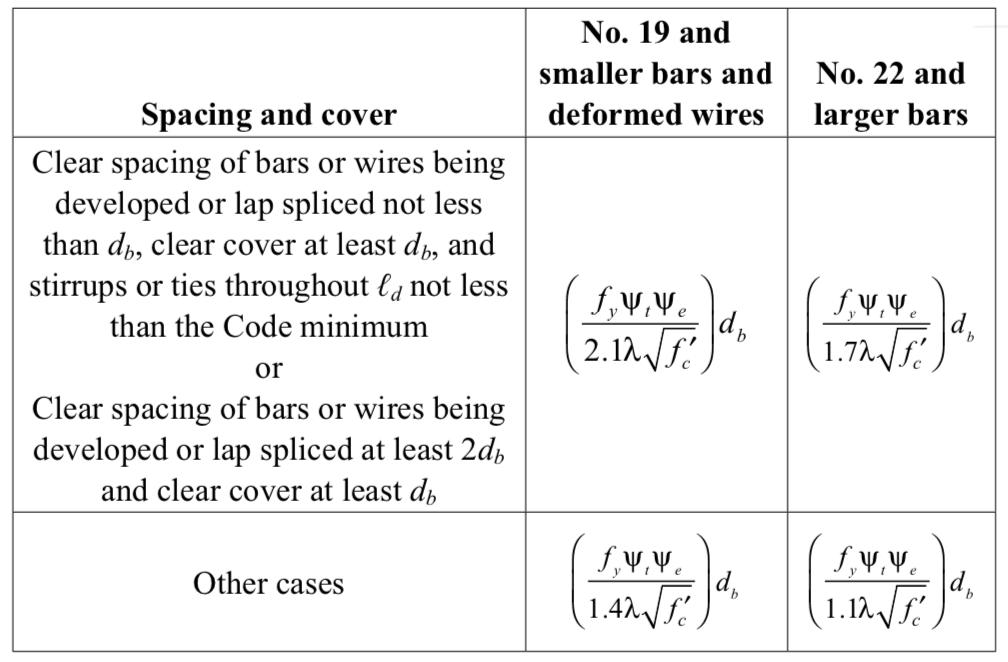
The development length is a critical component in calculating the rebar length. It refers to the length of rebar required to develop the full tensile strength of the reinforcement. The development length is influenced by factors such as the diameter of the rebar, the strength of the concrete, and the spacing of the rebar. Some key points to consider when calculating development length include:
- The development length is typically calculated using the equation: Ld = (0.02 fy db) / (sqrt(f'c)), where Ld is the development length, fy is the yield strength of the rebar, db is the diameter of the rebar, and f'c is the compressive strength of the concrete.
- The development length can be reduced by using epoxy-coated rebar or galvanized rebar, which can improve the bond between the rebar and the concrete.
- The development length is an important factor in determining the overall rebar length, as it can significantly impact the structural integrity of the concrete member.
Calculating Hook Length
The hook length is another important component in calculating the rebar length. It refers to the length of rebar that is bent at a 90-degree angle to form a hook. The hook length is typically calculated using the equation: Lh = (12 db), where Lh is the hook length and db is the diameter of the rebar. Some key points to consider when calculating hook length include:
- The hook length is influenced by the diameter of the rebar, with larger diameters requiring longer hook lengths.
- The hook length can be reduced by using rebar with a smaller diameter, but this may also impact the structural integrity of the concrete member.
- The hook length is an important factor in determining the overall rebar length, as it can significantly impact the anchorage of the rebar in the concrete.
Determining Bend Length
The bend length is a critical component in calculating the rebar length. It refers to the length of rebar that is bent to form a curve or a bend. The bend length is typically calculated using the equation: Lb = (2 db), where Lb is the bend length and db is the diameter of the rebar. Some key points to consider when calculating bend length include:
- The bend length is influenced by the diameter of the rebar, with larger diameters requiring longer bend lengths.
- The bend length can be reduced by using rebar with a smaller diameter, but this may also impact the structural integrity of the concrete member.
- The bend length is an important factor in determining the overall rebar length, as it can significantly impact the flexibility of the rebar in the concrete.
Understanding Spacing Length
The spacing length is a critical component in calculating the rebar length. It refers to the length of rebar that is required to maintain the minimum spacing between rebar. The spacing length is typically calculated using the equation: Ls = (2 db), where Ls is the spacing length and db is the diameter of the rebar. Some key points to consider when calculating spacing length include:
- The spacing length is influenced by the diameter of the rebar, with larger diameters requiring longer spacing lengths.
- The spacing length can be reduced by using rebar with a smaller diameter, but this may also impact the structural integrity of the concrete member.
- The spacing length is an important factor in determining the overall rebar length, as it can significantly impact the placement of the rebar in the concrete.
Importance of Accurate Rebar Length Calculation
The accurate calculation of rebar length is crucial in ensuring the structural integrity of concrete members. Inaccurate calculations can lead to premature failure of the concrete member, resulting in significant costs and safety risks. Some key points to consider when calculating rebar length include:
- The rebar length calculation should take into account the development length, hook length, bend length, and spacing length.
- The rebar length calculation should be based on the actual dimensions of the rebar and the concrete member.
- The rebar length calculation should be verified and validated to ensure accuracy and compliance with building codes and standards.
Frequently Asked Questions (FAQs)
What is the Rebar Angled and Perpendicular Leg Center Line Length Equation and Calculator?
The Rebar Angled and Perpendicular Leg Center Line Length Equation and Calculator is a mathematical tool used to calculate the length of the center line of a rebar (reinforcing bar) that is angled or perpendicular to a specific reference point. This tool is essential in the construction and engineering industries, where accurate measurements are crucial for ensuring the stability and safety of buildings and structures. The equation and calculator take into account the angle and perpendicular distances of the rebar from the reference point, allowing users to determine the exact length of the center line. By using this tool, engineers and contractors can optimize their designs, reduce errors, and improve the overall efficiency of their projects.
How does the Rebar Angled and Perpendicular Leg Center Line Length Equation and Calculator work?
The Rebar Angled and Perpendicular Leg Center Line Length Equation and Calculator works by using trigonometric functions to calculate the length of the center line based on the input values of the angle and perpendicular distances. The equation takes into account the geometric relationships between the rebar, the reference point, and the center line, allowing for accurate calculations. The calculator then uses this equation to provide a precise calculation of the center line length, taking into account any rounding errors or approximations. By using this tool, users can streamline their design and calculation processes, reducing the time and effort required to complete projects. Additionally, the calculator can be used to verify calculations and ensure that they are accurate and reliable.
What are the benefits of using the Rebar Angled and Perpendicular Leg Center Line Length Equation and Calculator?
The benefits of using the Rebar Angled and Perpendicular Leg Center Line Length Equation and Calculator are numerous. Firstly, it allows users to accurately calculate the length of the center line, reducing the risk of errors and miscalculations. This is particularly important in the construction and engineering industries, where safety and stability are paramount. Secondly, the calculator saves time and increases efficiency, allowing users to complete projects more quickly and with greater precision. Additionally, the tool can be used to optimize designs, reducing the amount of materials required and minimizing waste. By using the Rebar Angled and Perpendicular Leg Center Line Length Equation and Calculator, users can also improve their overall productivity and competitiveness, making it an essential tool for any construction or engineering project.
What types of projects can the Rebar Angled and Perpendicular Leg Center Line Length Equation and Calculator be used for?
The Rebar Angled and Perpendicular Leg Center Line Length Equation and Calculator can be used for a wide range of projects, including building construction, bridge design, and infrastructure development. It is particularly useful for projects that involve complex geometries or non-standard shapes, where accurate calculations are essential. The calculator can also be used for retrofitting or renovating existing structures, where the existing rebar needs to be assessed and reconfigured. Additionally, the tool can be used for research and development projects, where new materials or techniques are being tested and evaluated. By using the Rebar Angled and Perpendicular Leg Center Line Length Equation and Calculator, users can ensure accuracy, improve safety, and reduce costs, making it an essential tool for any project that involves rebar or reinforcing steel.
Deja una respuesta
Entradas Relacionadas