
Accelerating Torque and Force Calculator

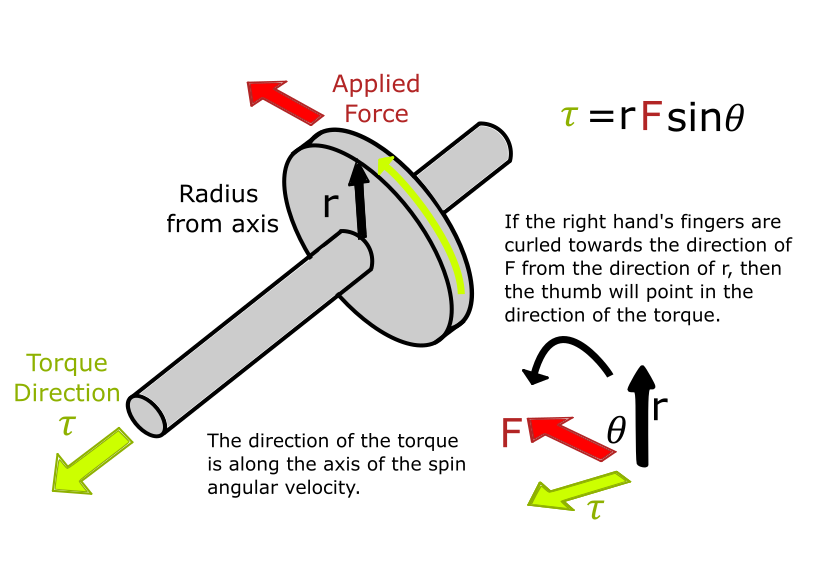
The Accelerating Torque and Force Calculator is a vital tool for engineers and physicists to calculate the torque and force required to accelerate an object. This calculator takes into account the object's mass, radius, and desired angular acceleration to provide accurate results. With its user-friendly interface, users can easily input values and obtain the necessary calculations. The calculator is essential in various fields, including robotics, mechanical engineering, and aerospace engineering, where understanding torque and force is crucial for designing and optimizing systems. It simplifies complex calculations, saving time and reducing errors.
- Accelerating Torque and Force Calculator: Understanding the Concepts
-
How much torque is in 1 HP?
- Understanding the Relationship Between Torque and Horsepower
- Factors That Affect the Conversion Between Torque and Horsepower
- Calculating Torque from Horsepower at Different Rotational Speeds
- Applications of Torque and Horsepower in Real-World Systems
- Importance of Understanding Torque and Horsepower in Mechanical Systems
- What is the formula for torque F R?
- What is 9.5488 in torque calculation?
-
Frequently Asked Questions (FAQs)
- What is the Accelerating Torque and Force Calculator and how does it work?
- How do I use the Accelerating Torque and Force Calculator to calculate torque and force?
- What are the applications of the Accelerating Torque and Force Calculator in real-world scenarios?
- What are the limitations and assumptions of the Accelerating Torque and Force Calculator?
Accelerating Torque and Force Calculator: Understanding the Concepts
The Accelerating Torque and Force Calculator is a tool used to calculate the torque and force required to accelerate an object. This calculator takes into account the mass of the object, the radius of rotation, and the angular acceleration. Torque and force are two fundamental concepts in physics that are closely related. Torque is a measure of the rotational force that causes an object to rotate, while force is a measure of the push or pull that causes an object to accelerate.
What is Torque and How is it Calculated?
Torque is calculated using the formula: torque = force x radius. The unit of torque is typically measured in newton-meters (Nm). The calculator uses this formula to determine the torque required to accelerate an object. For example, if a force of 10 N is applied to an object with a radius of 2 m, the torque would be 20 Nm.
Understanding the Concept of Angular Acceleration
Angular acceleration is the rate of change of angular velocity. It is a measure of how quickly an object's rotational speed changes. The calculator uses the formula: torque = moment of inertia x angular acceleration. The moment of inertia is a measure of an object's resistance to changes in its rotation.
How to Use the Accelerating Torque and Force Calculator
To use the calculator, simply enter the mass of the object, the radius of rotation, and the angular acceleration. The calculator will then display the torque and force required to accelerate the object. For example, if the mass of the object is 5 kg, the radius of rotation is 1 m, and the angular acceleration is 2 rad/s^2, the calculator will display the torque and force required to accelerate the object.
Applications of the Accelerating Torque and Force Calculator
The calculator has a wide range of applications, including engineering, physics, and mechanics. It can be used to design and optimize systems, such as gearboxes, motors, and engines. It can also be used to calculate the efficiency of a system and to determine the power required to accelerate an object.
Limitations and Assumptions of the Calculator
The calculator assumes that the object is rigid and that the force is applied at a constant rate. It also assumes that the moment of inertia is constant. In reality, the moment of inertia can vary depending on the distribution of mass within the object. The calculator also does not take into account friction or other external forces that can affect the acceleration of the object.
| Property | Unit | Description |
|---|---|---|
| Torque | Nm | A measure of the rotational force that causes an object to rotate |
| Force | N | A measure of the push or pull that causes an object to accelerate |
| Radius | m | The distance from the axis of rotation to the point where the force is applied |
| Angular Acceleration | rad/s^2 | A measure of the rate of change of angular velocity |
| Moment of Inertia | kg m^2 | A measure of an object's resistance to changes in its rotation |
How much torque is in 1 HP?
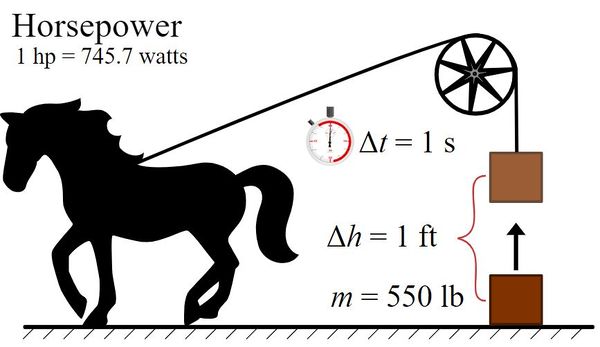
To determine the amount of torque in 1 horsepower (HP), we need to understand the relationship between these two mechanical properties. Torque is a measure of the rotational force that causes an object to turn or rotate, while horsepower is a unit of measurement for power, which is the rate at which work is done. The conversion between torque and horsepower depends on the rotational speed of the system.
Understanding the Relationship Between Torque and Horsepower
The relationship between torque and horsepower is governed by the formula: 1 HP = 550 foot-pounds per second. To find the torque equivalent of 1 HP, we need to consider the rotational speed at which the power is being delivered. For example, if we assume a rotational speed of 5,000 revolutions per minute (RPM), we can calculate the torque as follows:
- Convert the rotational speed from RPM to radians per second: 5,000 RPM x (2π radians/revolution) / 60 seconds/minute = 523.6 radians per second
- Use the formula: torque = power / (2π x rotational speed) to calculate the torque: torque = 1 HP x 550 foot-pounds/second / (2π x 523.6 radians per second) = 166.4 foot-pounds
- Convert the torque from foot-pounds to pound-feet: 166.4 foot-pounds / 12 inches/foot = 13.9 pound-feet
Factors That Affect the Conversion Between Torque and Horsepower
Several factors can affect the conversion between torque and horsepower, including the efficiency of the system, the type of power being delivered (e.g., mechanical, electrical, or hydraulic), and the units of measurement being used. For example, if we are working with metric units, we may need to use the formula: 1 HP = 745.7 watts, where watt is the SI unit of power.
- Understand the efficiency of the system: the efficiency of the system can affect the conversion between torque and horsepower, as energy losses can occur due to friction, heat, or other dissipative processes
- Consider the type of power being delivered: different types of power may have different conversion factors, such as electrical power or hydraulic power
- Use the correct units of measurement: ensure that the units of measurement being used are consistent and SI-compliant, such as watts for power and newton-meters for torque
Calculating Torque from Horsepower at Different Rotational Speeds
To calculate the torque from horsepower at different rotational speeds, we can use the formula: torque = power / (2π x rotational speed). For example, if we want to calculate the torque at a rotational speed of 2,000 RPM, we can plug in the values as follows:
- Convert the rotational speed from RPM to radians per second: 2,000 RPM x (2π radians/revolution) / 60 seconds/minute = 209.4 radians per second
- Use the formula: torque = power / (2π x rotational speed) to calculate the torque: torque = 1 HP x 550 foot-pounds/second / (2π x 209.4 radians per second) = 416.8 foot-pounds
- Convert the torque from foot-pounds to pound-feet: 416.8 foot-pounds / 12 inches/foot = 34.7 pound-feet
Applications of Torque and Horsepower in Real-World Systems
Torque and horsepower are important mechanical properties that have numerous applications in real-world systems, such as automotive, aerospace, and industrial systems. For example, in automotive systems, torque is used to accelerate the vehicle, while horsepower is used to measure the power output of the engine.
- Automotive systems: torque is used to accelerate the vehicle, while horsepower is used to measure the power output of the engine
- Aerospace systems: torque is used to propel the aircraft, while horsepower is used to measure the power output of the engines
- Industrial systems: torque is used to drive machinery, while horsepower is used to measure the power output of the motors
Importance of Understanding Torque and Horsepower in Mechanical Systems
Understanding torque and horsepower is crucial in mechanical systems, as it allows engineers and technicians to design, analyze, and optimize systems for maximum efficiency and performance. For example, by understanding the relationship between torque and horsepower, engineers can design more efficient transmissions and gearing systems.
- Design efficient transmissions and gearing systems: by understanding the relationship between torque and horsepower, engineers can design more efficient transmissions and gearing systems
- Analyze system performance: understanding torque and horsepower allows engineers and technicians to analyze system performance and identify areas for improvement
- Optimize system design: by understanding torque and horsepower, engineers can optimize system design for maximum efficiency and
What is the formula for torque F R?

The formula for torque is indeed F R, where F represents the force applied and R represents the radius or distance from the axis of rotation to the point where the force is applied. This formula is a fundamental concept in physics and engineering, and it's essential for understanding how objects rotate and respond to forces.
Understanding the Formula
The formula F R is a simple yet powerful equation that helps us calculate the torque exerted on an object. To understand this formula, we need to break down its components. The force (F) is measured in units of Newtons (N), while the radius (R) is measured in units of meters (m). When we multiply these two values, we get a torque value measured in units of Newton-meters (Nm). Here are some key points to consider:
- The force applied to an object can be in any direction, but the torque is only significant when the force is applied at an angle to the axis of rotation.
- The radius is crucial in determining the torque, as a larger radius results in a greater torque for the same applied force.
- The unit of torque is Newton-meters, which represents the amount of rotational force applied to an object.
Applications of Torque
The concept of torque has numerous practical applications in various fields, including engineering, physics, and mechanics. By understanding the formula F R, we can design and optimize systems that rely on rotational motion. Here are some examples:
- Automotive engineering: Torque is essential in designing engines, transmissions, and drivetrains, as it affects the overall performance and efficiency of a vehicle.
- Robotics: Torque is critical in designing robotic arms and actuators, as it determines the rotational force and stability of the system.
- Aerospace engineering: Torque plays a vital role in designing aircraft and spacecraft, as it affects the stability and control of the vehicle.
Torque in Everyday Life
Torque is not just a theoretical concept; it's an essential aspect of our daily lives. We encounter torque in various forms, from tightening screws to opening doors. Here are some examples:
- Tightening screws: When we use a screwdriver to tighten a screw, we're applying a torque to the screw head.
- Opening doors: When we push or pull a door, we're applying a torque to the door hinges.
- Using power tools: Power tools like drills and sanders rely on torque to perform their intended functions.
Calculating Torque
To calculate torque, we need to know the force applied and the radius from the axis of rotation. Here are some steps to follow:
- Determine the force: Measure the force applied to the object in units of Newtons (N).
- Determine the radius: Measure the radius from the axis of rotation to the point where the force is applied in units of meters (m).
- Calculate the torque: Multiply the force and radius values to get the torque in units of Newton-meters (Nm).
Real-World Examples of Torque
Torque is a fundamental concept that has numerous real-world applications. Here are some examples:
- Bicycle gears: Torque is essential in designing bicycle gears, as it affects the efficiency and performance of the bike.
- Car engines: Torque is critical in designing car engines, as it affects the power and efficiency of the vehicle.
- Wind turbines: Torque is vital in designing wind turbines, as it affects the energy output and efficiency of the system.
What is 9.5488 in torque calculation?

The value 9.5488 in torque calculation is a conversion factor used to express torque in different units. Specifically, it is used to convert torque from foot-pounds (ft-lb) to Newton-meters (Nm). This conversion factor is essential in various engineering and physics applications, particularly in the design and analysis of mechanical systems and machinery.
Understanding Torque Conversion
Torque conversion involves changing the units of torque from one system to another, such as from foot-pounds to Newton-meters. The conversion factor 9.5488 is used to perform this calculation. For example, to convert 100 foot-pounds to Newton-meters, you would multiply 100 by 9.5488, resulting in approximately 954.88 Newton-meters. The key steps in this process are:
- Identify the given torque value in foot-pounds
- Multiply the given value by the conversion factor 9.5488
- Express the result in Newton-meters
Importance of Accurate Torque Calculation
Accurate torque calculation is crucial in various engineering applications, including the design of mechanical systems, machinery, and vehicles. Torque is a measure of the rotational force that causes an object to rotate or twist, and its accurate calculation is essential to ensure the safe and efficient operation of machines and mechanisms. The use of conversion factors like 9.5488 helps to ensure that torque values are accurately expressed in the desired units, which is critical for design optimization and performance analysis. Key considerations in accurate torque calculation include:
- Using the correct conversion factors and units
- Considering the friction and inefficiencies in mechanical systems
- Validating calculations through experiments and simulations
Applications of Torque Conversion
Torque conversion has numerous applications in engineering and physics, including the design and analysis of internal combustion engines, electric motors, and gearboxes. The conversion factor 9.5488 is used to express torque in Newton-meters, which is a standard unit in SI systems. This conversion is essential in performance optimization, efficiency analysis, and safety evaluation of mechanical systems. Some key applications of torque conversion include:
- Automotive engineering: design and optimization of engines and transmissions
- Aerospace engineering: design and analysis of aircraft and spacecraft propulsion systems
- Industrial automation: design and optimization of machinery and mechanical systems
Torque Calculation Methods
There are various methods for calculating torque, including theoretical calculations, experimental measurements, and numerical simulations. The conversion factor 9.5488 is used in theoretical calculations to express torque in Newton-meters. Experimental measurements involve using torque sensors and data acquisition systems to measure torque directly. Numerical simulations use computer models and algorithms to simulate torque and other mechanical properties. Key considerations in torque calculation methods include:
- Accuracy and precision of the calculation method
- Complexity and nonlinearity of the mechanical system
- Validation and verification of the calculation results
Common Challenges in Torque Calculation
There are several challenges associated with torque calculation, including unit conversions, dimensional analysis, and numerical accuracy. The conversion factor 9.5488 can help to address some of these challenges by providing a standard way to express torque in Newton-meters. However, other challenges, such as nonlinear effects and system complexities, require more sophisticated analytical and numerical methods. Key challenges in torque calculation include:
- Unit conversions and dimensional analysis
- Nonlinear effects and system complexities
- Numerical accuracy and rounding errors
Frequently Asked Questions (FAQs)
What is the Accelerating Torque and Force Calculator and how does it work?
The Accelerating Torque and Force Calculator is a mathematical tool designed to calculate the torque and force required to accelerate an object. This calculator is based on the principles of physics and mechanics, and it takes into account the mass of the object, the radius of rotation, and the angular acceleration. By inputting these values, the calculator can determine the torque and force needed to achieve a specific angular velocity. The Accelerating Torque and Force Calculator is a valuable resource for engineers, physicists, and researchers who need to calculate the torque and force required for various mechanical systems. The calculator uses complex algorithms and mathematical formulas to provide accurate and reliable results, making it an essential tool for anyone working with rotational motion.
How do I use the Accelerating Torque and Force Calculator to calculate torque and force?
To use the Accelerating Torque and Force Calculator, you need to input the mass of the object, the radius of rotation, and the angular acceleration. These values can be entered in units such as kilograms, meters, and radians per second squared. Once you have entered the values, the calculator will use mathematical formulas to calculate the torque and force required. The calculator will then display the results in units such as newton-meters and newtons. You can also select the units of measurement and the level of precision for the results. The Accelerating Torque and Force Calculator also provides detailed explanations and formulas used in the calculations, making it a useful educational tool for students and professionals alike. By using the Accelerating Torque and Force Calculator, you can quickly and easily calculate the torque and force required for various mechanical systems, saving you time and effort.
What are the applications of the Accelerating Torque and Force Calculator in real-world scenarios?
The Accelerating Torque and Force Calculator has a wide range of applications in real-world scenarios. One of the main applications is in the design and development of mechanical systems, such as engines, gearboxes, and transmissions. The calculator can be used to determine the torque and force required to achieve a specific angular velocity, which is critical in the design of high-performance mechanical systems. The calculator is also used in the aerospace industry to calculate the torque and force required for aircraft and spacecraft propulsion systems. Additionally, the Accelerating Torque and Force Calculator is used in the automotive industry to design and optimize vehicle transmissions and drivetrain systems. The calculator is also used in research and development to study the dynamics of rotational motion and to develop new technologies and materials. The Accelerating Torque and Force Calculator is a valuable tool for anyone working with mechanical systems, and its applications continue to grow as technology advances.
What are the limitations and assumptions of the Accelerating Torque and Force Calculator?
The Accelerating Torque and Force Calculator is based on simplified models and assumptions, and it has several limitations. One of the main limitations is that the calculator assumes a constant angular acceleration, which may not be the case in real-world scenarios. The calculator also assumes that the mass of the object is uniformly distributed, which may not be true for complex systems. Additionally, the calculator does not take into account friction and other external forces that can affect the torque and force calculations. The calculator also assumes that the radius of rotation is constant, which may not be the case for systems with variable radii. Despite these limitations, the Accelerating Torque and Force Calculator is a useful tool for estimating the torque and force required for various mechanical systems. However, it is essential to validate the results using experimental data and more advanced models to ensure accuracy and reliability. By understanding the limitations and assumptions of the Accelerating Torque and Force Calculator, you can use it effectively and make informed decisions in your engineering and research applications.
Deja una respuesta
Entradas Relacionadas