
Convergent Divergent Nozzle Flow Velocity and Area Equation and Calculator

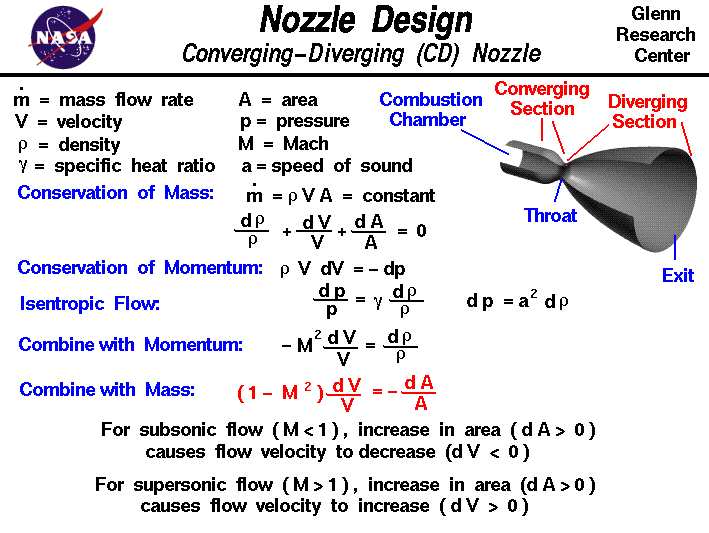
The convergent divergent nozzle is a crucial component in various engineering applications, including rocket propulsion and jet engines. Its operation is based on the principle of accelerating a fluid, typically a gas, to high velocities while maximizing efficiency. A key aspect of designing such nozzles involves calculating the flow velocity and area, which is achieved through specific equations that take into account the nozzle's geometry and the properties of the working fluid. These calculations are essential for optimizing nozzle performance and ensuring reliable operation under various conditions. Accurate computation of flow parameters is thus of paramount importance.
- Convergent Divergent Nozzle Flow Velocity and Area Equation and Calculator
- What is the formula for convergent divergent nozzle?
- What is the formula for flow velocity and area?
- What is the velocity of a convergent nozzle?
- What is the formula for nozzle velocity?
-
Frequently Asked Questions (FAQs)
- What is the Convergent Divergent Nozzle Flow Velocity and Area Equation and Calculator?
- How does the Convergent Divergent Nozzle Flow Velocity and Area Equation and Calculator work?
- What are the advantages of using the Convergent Divergent Nozzle Flow Velocity and Area Equation and Calculator?
- What are the limitations and assumptions of the Convergent Divergent Nozzle Flow Velocity and Area Equation and Calculator?
Convergent Divergent Nozzle Flow Velocity and Area Equation and Calculator
The Convergent Divergent Nozzle Flow Velocity and Area Equation and Calculator is a tool used to calculate the flow velocity and area of a convergent-divergent nozzle. This type of nozzle is commonly used in rocket engines and jet engines to accelerate the exhaust gases to high speeds, resulting in a high thrust-to-weight ratio. The equation used to calculate the flow velocity and area is based on the conservation of mass and energy principles.
Introduction to Convergent Divergent Nozzles
Convergent-divergent nozzles are designed to accelerate the fluid flow from a high pressure and temperature to a low pressure and temperature, resulting in a high velocity. The nozzle is divided into two sections: the convergent section and the divergent section. The convergent section accelerates the flow to a high velocity, while the divergent section further accelerates the flow to an even higher velocity. The flow velocity and area of the nozzle are critical parameters in determining the performance of the nozzle.
Equation for Flow Velocity and Area
The equation for flow velocity and area is based on the conservation of mass and energy principles. The equation is given by:
[ frac{A_2}{A_1} = frac{v_1}{v_2} ]
where A1 and A2 are the areas of the nozzle at the inlet and outlet, respectively, and v1 and v2 are the velocities at the inlet and outlet, respectively.
Calculator for Convergent Divergent Nozzle
The calculator for convergent-divergent nozzles is used to calculate the flow velocity and area of the nozzle. The calculator takes into account the inlet pressure, inlet temperature, outlet pressure, and outlet temperature. The calculator uses the equation of state and the conservation of energy principle to calculate the flow velocity and area.
Applications of Convergent Divergent Nozzles
Convergent-divergent nozzles have a wide range of applications, including rocket engines, jet engines, and gas turbines. They are used to accelerate the exhaust gases to high speeds, resulting in a high thrust-to-weight ratio. The nozzles are also used in chemical processing and power generation.
Advantages and Limitations of Convergent Divergent Nozzles
The advantages of convergent-divergent nozzles include high thrust-to-weight ratio, high efficiency, and compact design. However, the nozzles also have some limitations, including high pressure and temperature requirements, complex design, and high maintenance costs.
| Parameter | Unit | Description |
|---|---|---|
| Flow Velocity | m/s | The velocity of the fluid flow |
| Area | m^2 | The cross-sectional area of the nozzle |
| Pressure | Pa | The pressure of the fluid flow |
| Temperature | K | The temperature of the fluid flow |
What is the formula for convergent divergent nozzle?
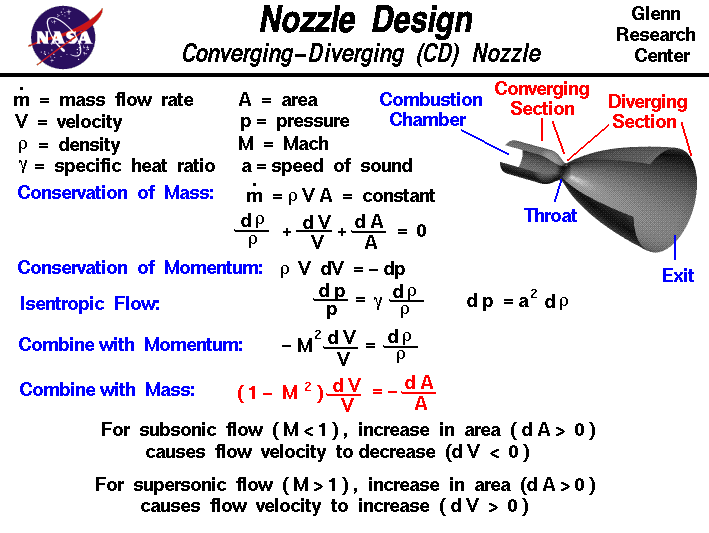
The formula for a convergent-divergent nozzle, also known as a de Laval nozzle, is based on the principles of fluid dynamics and thermodynamics. The nozzle is designed to accelerate a fluid, such as a gas or liquid, to high speeds by converting the pressure energy into kinetic energy. The formula for the nozzle is given by the equation of continuity and the equation of energy conservation.
Design Parameters
The design of a convergent-divergent nozzle involves several key parameters, including the throat diameter, exit diameter, and nozzle length. These parameters are critical in determining the performance of the nozzle. Some of the key considerations in designing a convergent-divergent nozzle include:
- Mass flow rate: The amount of fluid that flows through the nozzle per unit time.
- Pressure ratio: The ratio of the stagnation pressure to the exit pressure.
- Temperature ratio: The ratio of the stagnation temperature to the exit temperature.
Flow Characteristics
The flow characteristics of a convergent-divergent nozzle are complex and involve subsonic and supersonic regions. The flow is subsonic in the convergent section and supersonic in the divergent section. The Mach number, which is the ratio of the fluid velocity to the speed of sound, is used to characterize the flow. Some of the key flow characteristics include:
- Choked flow: The flow becomes choked when the Mach number reaches 1 at the throat.
- Shock waves: Shock waves can occur in the nozzle when the flow is supersonic.
- Boundary layers: Boundary layers can form in the nozzle and affect the flow characteristics.
Thermodynamic Considerations
The thermodynamic considerations of a convergent-divergent nozzle are critical in determining the performance of the nozzle. The first law of thermodynamics and the second law of thermodynamics are used to analyze the energy transfer and entropy changes in the nozzle. Some of the key thermodynamic considerations include:
- Energy conservation: The energy conservation equation is used to relate the stagnation energy to the exit energy.
- Entropy changes: The entropy changes in the nozzle are related to the irreversibilities in the flow.
- Temperature changes: The temperature changes in the nozzle are related to the energy transfer and heat transfer.
Applications
Convergent-divergent nozzles have several aerospace and industrial applications, including rocket engines, jet engines, and turbines. The nozzle is used to accelerate the exhaust gases to high speeds, resulting in a high thrust-to-weight ratio. Some of the key applications include:
- Rocket propulsion: Convergent-divergent nozzles are used in rocket engines to produce a high thrust.
- Jet propulsion: Convergent-divergent nozzles are used in jet engines to produce a high thrust.
- Power generation: Convergent-divergent nozzles are used in turbines to produce electric power.
Design Challenges
The design of a convergent-divergent nozzle poses several challenges, including optimizing the nozzle geometry and materials. The design process involves iterative calculations and experimental testing to ensure that the nozzle meets the performance requirements. Some of the key design challenges include:
- Optimizing nozzle geometry: The nozzle geometry must be optimized to achieve the desired performance.
- Selecting materials: The materials used in the nozzle must be able to withstand the high temperatures and stresses.
- Experimental testing: Experimental testing is necessary to validate the design and ensure that the nozzle meets the performance requirements.
What is the formula for flow velocity and area?
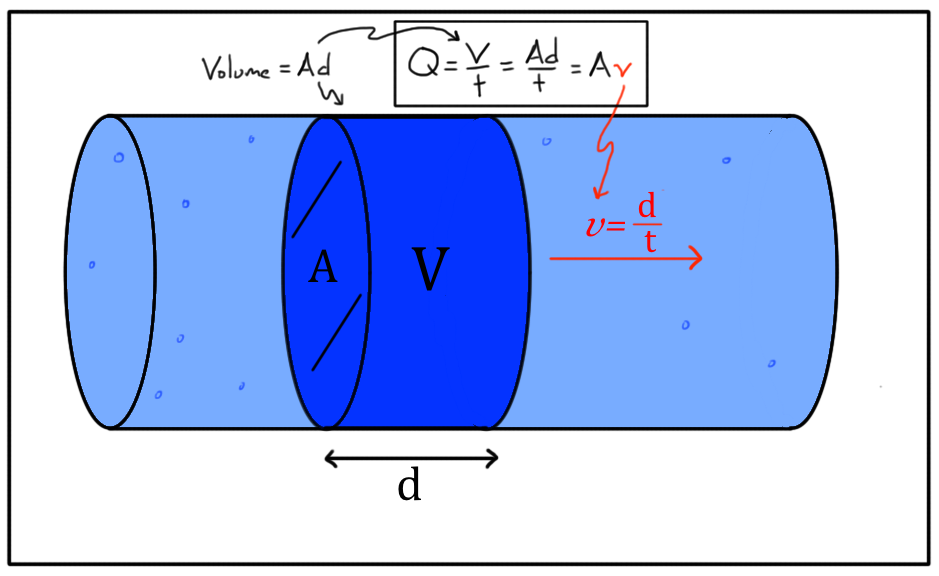
The formula for flow velocity and area is given by the equation Q = A v, where Q is the flow rate, A is the cross-sectional area, and v is the flow velocity. This equation is a fundamental concept in fluid dynamics and is used to calculate the volume flow rate of a fluid.
Understanding Flow Velocity
Flow velocity is the speed at which a fluid flows through a given area. It is an important parameter in fluid dynamics as it helps to determine the flow rate of a fluid. To calculate flow velocity, the following factors need to be considered:
- Pressure difference between two points in the fluid
- Viscosity of the fluid, which affects its resistance to flow
- Cross-sectional area of the pipe or channel through which the! fluid is flowing
Calculating Cross-Sectional Area
The cross-sectional area of a pipe or channel is the area perpendicular to the direction of flow. To calculate the cross-sectional area, the following steps can be followed:
- Measure the diameter or width of the pipe or channel
- Use the formula A = π r^2 for circular pipes or A = w h for rectangular channels
- Plug in the values to calculate the cross-sectional area
Factors Affecting Flow Rate
The flow rate of a fluid is affected by several factors, including:
- Pressure difference between two points in the fluid, with higher pressure resulting in a higher flow rate
- Viscosity of the fluid, with lower viscosity resulting in a higher flow rate
- Cross-sectional area of the pipe or channel, with a larger area resulting in a higher flow rate
Applications of Flow Velocity and Area
The formula for flow velocity and area has numerous applications in engineering and science, including:
- Design of pipelines and channels for efficient fluid transport
- Calculation of flow rates in rivers and streams for hydroelectric power generation
- Modeling of fluid flow in biological systems, such as blood flow in veins and arteries
Common Errors in Calculating Flow Velocity and Area
When calculating flow velocity and area, common errors to avoid include:
- Incorrect measurement of diameter or width of the pipe or channel
- Failure to account for viscosity and pressure differences in the fluid
- Miscalculation of the cross-sectional area, resulting in an incorrect flow rate
What is the velocity of a convergent nozzle?
The velocity of a convergent nozzle is a critical aspect of fluid dynamics and aerodynamics. A convergent nozzle is a type of nozzle that decreases in diameter as the fluid flows through it, resulting in an increase in velocity and pressure. The velocity of the fluid at the exit of the nozzle can be calculated using the equation of continuity and the Bernoulli's principle. The velocity of the fluid at the exit of the nozzle is directly proportional to the pressure ratio and the temperature ratio.
Basic Principle of Convergent Nozzle
The basic principle of a convergent nozzle is to accelerate the fluid to high velocities by converting the pressure energy into kinetic energy. This is achieved by decreasing the cross-sectional area of the nozzle, which results in an increase in velocity and mass flow rate. The nozzle is designed to optimize the flow and pressure characteristics, and the velocity at the exit is critical in determining the performance of the nozzle.
- The geometry of the nozzle is critical in determining the velocity at the exit.
- The pressure ratio and temperature ratio are important factors in determining the velocity at the exit.
- The mass flow rate is directly proportional to the velocity at the exit and the cross-sectional area of the nozzle.
Factors Affecting Velocity of Convergent Nozzle
The velocity of a convergent nozzle is affected by several factors, including the pressure ratio, temperature ratio, and nozzle geometry. The pressure ratio is the ratio of the stagnation pressure to the exit pressure, and it has a significant impact on the velocity at the exit. The temperature ratio is also important, as it affects the density of the fluid and the velocity at the exit.
- The pressure ratio is a critical factor in determining the velocity at the exit.
- The temperature ratio affects the density of the fluid and the velocity at the exit.
- The nozzle geometry is important in optimizing the flow and pressure characteristics.
Application of Convergent Nozzle
Convergent nozzles are widely used in aerospace and industrial applications, where high velocities and mass flow rates are required. The velocity at the exit of the nozzle is critical in determining the performance of the engine or system. Convergent nozzles are used in rocket engines, turbines, and pumps, where they play a critical role in thrust generation and efficiency.
- Convergent nozzles are used in rocket engines to generate high thrust and efficiency.
- Convergent nozzles are used in turbines to generate high power and efficiency.
- Convergent nozzles are used in pumps to generate high pressure and flow rates.
Design Considerations for Convergent Nozzle
The design of a convergent nozzle is critical in determining the velocity at the exit and the performance of the nozzle. The nozzle geometry, pressure ratio, and temperature ratio must be carefully optimized to achieve the desired velocity and mass flow rate. The design must also take into account the material properties and the operating conditions of the nozzle.
- The nozzle geometry must be carefully optimized to achieve the desired velocity and mass flow rate.
- The pressure ratio and temperature ratio must be carefully selected to achieve the desired velocity at the exit.
- The material properties and operating conditions must be carefully considered in the design of the nozzle.
Challenges and Limitations of Convergent Nozzle
Convergent nozzles are subject to several challenges and limitations, including shock waves, turbulence, and heat transfer. The velocity at the exit of the nozzle can be affected by these challenges, and the design must take into account these limitations to achieve the desired performance. The operation of the nozzle must also be carefully monitored to avoid damage or failure.
- The shock waves can occur in the nozzle and affect the velocity at the exit.
- The turbulence can occur in the nozzle and affect the velocity at the exit.
- The heat transfer can occur in the nozzle and affect the velocity at the exit.
What is the formula for nozzle velocity?

The formula for nozzle velocity is given by the equation: V = √(2 g h), where V is the velocity of the fluid exiting the nozzle, g is the acceleration due to gravity, and h is the head or pressure of the fluid. This formula is based on the principle of conservation of energy, which states that the sum of the kinetic energy and potential energy of a fluid remains constant.
Introduction to Nozzle Velocity
The concept of nozzle velocity is crucial in understanding the behavior of fluids in various engineering applications, such as hydraulic systems, pumps, and turbines. The nozzle velocity formula is used to calculate the velocity of a fluid as it exits a nozzle or a constricted section of a pipe. This velocity is critical in determining the flow rate, pressure, and efficiency of the system.
- The nozzle velocity is directly proportional to the square root of the head or pressure of the fluid.
- The acceleration due to gravity affects the nozzle velocity, as it influences the potential energy of the fluid.
- The kinetic energy of the fluid is converted from the potential energy as it exits the nozzle, resulting in a increase in velocity.
Derivation of the Nozzle Velocity Formula
The nozzle velocity formula can be derived from the Bernoulli's principle, which states that the sum of the kinetic energy and potential energy of a fluid remains constant along a streamline. By applying this principle to a fluid flowing through a nozzle, we can derive the equation: V = √(2 g h). This formula is widely used in engineering applications to calculate the velocity of a fluid exiting a nozzle.
- The Bernoulli's principle is a fundamental concept in fluid dynamics that relates the kinetic energy and potential energy of a fluid.
- The streamline is an imaginary line that follows the direction of the fluid flow, and it is used to derive the nozzle velocity formula.
- The nozzle velocity is a critical parameter in determining the efficiency and performance of various engineering systems.
Factors Affecting Nozzle Velocity
Several factors can affect the nozzle velocity, including the head or pressure of the fluid, the diameter of the nozzle, and the viscosity of the fluid. The nozzle velocity formula takes into account the head and acceleration due to gravity, but it does not consider the effects of viscosity and friction. In practice, these factors can significantly affect the nozzle velocity and must be considered in the design and operation of engineering systems.
- The head or pressure of the fluid is a critical factor in determining the nozzle velocity, as it directly affects the potential energy of the fluid.
- The diameter of the nozzle can affect the nozzle velocity, as it influences the flow rate and pressure of the fluid.
- The viscosity of the fluid can significantly affect the nozzle velocity, as it determines the frictional losses and energy dissipation in the system.
Applications of Nozzle Velocity
The nozzle velocity formula has numerous applications in various fields of engineering, including hydraulic systems, pumps, and turbines. It is used to calculate the velocity of a fluid exiting a nozzle or a constricted section of a pipe, which is critical in determining the flow rate, pressure, and efficiency of the system.
- The nozzle velocity is used to design and operate hydraulic systems, such as pumps and turbines.
- The nozzle velocity is critical in determining the efficiency and performance of pumps and turbines.
- The nozzle velocity is used to calculate the flow rate and pressure of a fluid in various engineering applications.
Limitations of the Nozzle Velocity Formula
The nozzle velocity formula has several limitations, including its assumption of ideal flow and its neglect of frictional losses and energy dissipation. In practice, these factors can significantly affect the nozzle velocity and must be considered in the design and operation of engineering systems.
- The nozzle velocity formula assumes ideal flow, which neglects the effects of friction and viscosity.
- The nozzle velocity formula does not consider the effects of frictional losses and energy dissipation, which can significantly affect the nozzle velocity.
- The nozzle velocity formula is sensitive to the head or pressure of the fluid, and small changes can result in significant errors in the calculated nozzle velocity.
Frequently Asked Questions (FAQs)
What is the Convergent Divergent Nozzle Flow Velocity and Area Equation and Calculator?
The Convergent Divergent Nozzle Flow Velocity and Area Equation and Calculator is a mathematical tool used to calculate the flow velocity and area of a convergent-divergent nozzle, which is a crucial component in various aerospace and industrial applications. This equation is derived from the principles of fluid dynamics and is used to determine the optimal design of nozzles for efficient flow of gases or liquids. The calculator is a numerical implementation of this equation, allowing users to input parameters such as inlet pressure, outlet pressure, temperature, and gas properties to obtain the flow velocity and area of the nozzle. The accuracy of the calculator depends on the validity of the input parameters and the assumptions made in the mathematical model.
How does the Convergent Divergent Nozzle Flow Velocity and Area Equation and Calculator work?
The Convergent Divergent Nozzle Flow Velocity and Area Equation and Calculator works by solving the governing equations of fluid flow, which are based on the conservation laws of mass, momentum, and energy. The equation takes into account the geometric parameters of the nozzle, such as the convergent and divergent angles, as well as the thermodynamic properties of the working fluid. The calculator uses numerical methods to solve the equation, which involves iterative calculations to converge to a solution. The user inputs the required parameters, and the calculator outputs the flow velocity and area of the nozzle, as well as other relevant quantities such as pressure and temperature. The results can be used to optimize the design of the nozzle for specific applications, such as rocket propulsion or industrial processes.
What are the advantages of using the Convergent Divergent Nozzle Flow Velocity and Area Equation and Calculator?
The Convergent Divergent Nozzle Flow Velocity and Area Equation and Calculator offers several advantages over traditional methods of designing nozzles. One of the main advantages is the ability to quickly and accurately calculate the flow velocity and area of the nozzle, which can save time and resources in the design process. The calculator also allows users to easily explore different design options and optimize the nozzle design for specific performance criteria, such as maximum thrust or minimum pressure drop. Additionally, the calculator can be used to analyze the sensitivity of the nozzle performance to variations in the input parameters, which can help to identify the most critical design parameters. Overall, the Convergent Divergent Nozzle Flow Velocity and Area Equation and Calculator is a powerful tool for designers and engineers working on aerospace and industrial applications.
What are the limitations and assumptions of the Convergent Divergent Nozzle Flow Velocity and Area Equation and Calculator?
The Convergent Divergent Nozzle Flow Velocity and Area Equation and Calculator is based on several assumptions and limitations, which can affect its accuracy and applicability. One of the main assumptions is that the flow is one-dimensional and steady, which may not be valid for all applications. Additionally, the calculator assumes that the working fluid is a perfect gas, which may not be accurate for real gases or mixtures. The calculator also uses simplified models for the turbulence and viscosity of the fluid, which can limit its accuracy for complex flows. Furthermore, the calculator is limited to subsonic and supersonic flows, and is not applicable to hypersonic flows or flows with strong shocks. Overall, the Convergent Divergent Nozzle Flow Velocity and Area Equation and Calculator is a useful tool for designers and engineers, but its limitations and assumptions must be carefully considered when interpreting the results.
Deja una respuesta
Entradas Relacionadas