
Binary to Decimal Conversion Calculator


The Binary to Decimal Conversion Calculator is a convenient tool for converting binary numbers to their decimal equivalents. Binary numbers, composed of only 0s and 1s, are the fundamental language of computers, while decimal numbers are more intuitive for humans. This calculator simplifies the process of converting between these two number systems, making it easier to understand and work with binary data in various fields, including computer programming, engineering, and mathematics, by providing accurate and instant conversions. Its simplicity and efficiency make it an essential resource for professionals and students alike. It offers a straightforward solution.
Understanding the Binary to Decimal Conversion Calculator
The Binary to Decimal Conversion Calculator is a tool designed to convert binary numbers into decimal numbers. This calculator is essential in computer science and programming, as it helps to understand the relationship between binary and decimal number systems. Binary numbers are made up of only two digits: 0 and 1, while decimal numbers are made up of ten digits: 0 through 9. The Binary to Decimal Conversion Calculator simplifies the process of converting binary numbers to decimal numbers, making it easier to work with binary data.
How the Binary to Decimal Conversion Calculator Works
The Binary to Decimal Conversion Calculator works by taking a binary number as input and converting it into a decimal number. This is done by assigning a weight to each digit in the binary number, based on its position. The weight of each digit is a power of 2, with the rightmost digit having a weight of 2^0, the next digit to the left having a weight of 2^1, and so on. The calculator then multiplies each digit by its corresponding weight and adds up the results to produce the decimal equivalent.
Benefits of Using the Binary to Decimal Conversion Calculator
There are several benefits to using the Binary to Decimal Conversion Calculator. One of the main benefits is that it saves time and effort, as it can perform conversions quickly and accurately. Additionally, the calculator helps to reduce errors, as it eliminates the need for manual calculations. The Binary to Decimal Conversion Calculator is also a useful tool for students and programmers who need to work with binary data.
Features of the Binary to Decimal Conversion Calculator
The Binary to Decimal Conversion Calculator has several features that make it a useful tool. One of the main features is its ability to handle large binary numbers. The calculator can also perform reverse conversions, converting decimal numbers to binary numbers. Additionally, the calculator provides a step-by-step guide to the conversion process, making it easier to understand how the conversion is performed.
Common Applications of the Binary to Decimal Conversion Calculator
The Binary to Decimal Conversion Calculator has several common applications. One of the main applications is in computer programming, where it is used to convert binary data to decimal data. The calculator is also used in networking, where it is used to convert binary IP addresses to decimal IP addresses. Additionally, the calculator is used in data analysis, where it is used to convert binary data to decimal data for analysis.
Comparison of Binary and Decimal Number Systems
The following table compares the binary and decimal number systems:
| Number System | Base | Digits |
|---|---|---|
| Binary | 2 | 0, 1 |
| Decimal | 10 | 0, 1, 2, 3, 4, 5, 6, 7, 8, 9 |
The binary number system is a base-2 system, while the decimal number system is a base-10 system. The binary number system is used in computer science and programming, while the decimal number system is used in everyday life.
How do I convert binary to decimal?
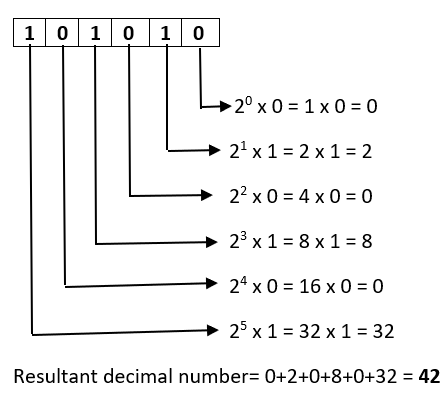
To convert binary to decimal, you need to understand the basic principles of number systems. The binary system is a base-2 system, meaning it uses only two digits: 0 and 1. The decimal system, on the other hand, is a base-10 system, using digits from 0 to 9. To convert binary to decimal, you need to multiply each binary digit by the corresponding power of 2 and then sum the results.
Understanding Binary Numbers
The binary system is a fundamental concept in computer science and mathematics. To convert binary to decimal, you need to understand how binary numbers work. A binary number is composed of bits, which can be either 0 or 1. The value of a binary number is determined by the position of each bit, with the rightmost bit being the least significant. The process of converting binary to decimal involves multiplying each bit by the corresponding power of 2, starting from the right. For example:
- Start from the rightmost bit and assign it a value of 2^0
- Move to the left and assign the next bit a value of 2^1
- Continue this process until you reach the leftmost bit
Conversion Process
The conversion process from binary to decimal involves multiplying each binary digit by the corresponding power of 2 and then summing the results. This process can be done manually or using a calculator. To convert a binary number to decimal, you need to follow these steps:
- Write down the binary number and identify the position of each bit
- Multiply each bit by the corresponding power of 2
- Sum the results to get the decimal equivalent
The conversion process is straightforward and requires a basic understanding of arithmetic operations.
Using a Calculator
Converting binary to decimal using a calculator is a simple process. Most calculators have a built-in function to convert binary to decimal. To use a calculator, you need to:
- Enter the binary number into the calculator
- Press the binary-to-decimal conversion button
- The calculator will display the decimal equivalent of the binary number
Using a calculator saves time and reduces the chance of errors.
Manual Conversion
Manual conversion from binary to decimal requires a basic understanding of mathematics. To convert a binary number to decimal manually, you need to:
- Write down the binary number and identify the position of each bit
- Multiply each bit by the corresponding power of 2
- Sum the results to get the decimal equivalent
Manual conversion is a useful skill to have, especially when working with computer programming.
Common Mistakes
When converting binary to decimal, there are common mistakes to avoid. One of the most common mistakes is misaligning the bits, which can result in an incorrect decimal equivalent. To avoid this mistake, you need to:
- Double-check the position of each bit
- Make sure to multiply each bit by the correct power of 2
- Verify the results to ensure accuracy
Avoiding common mistakes requires attention to detail and a basic understanding of binary arithmetic.
How to convert 11111111 binary to decimal?

To convert the binary number 11111111 to decimal, we need to understand the positional notation of the binary system. In the binary system, each digit or bit has a place value that is a power of 2. The rightmost bit has a place value of 2^0, the next bit to the left has a place value of 2^1, and so on. To convert 11111111 to decimal, we calculate the value of each bit and add them up.
Understanding Binary to Decimal Conversion
The process of converting binary to decimal involves multiplying each bit by its corresponding power of 2 and summing the results. This can be done by hand or using a calculator. For the binary number 11111111, we start from the rightmost bit, which is the 2^0 place, and move left, with each position representing a higher power of 2. The calculation for 11111111 is as follows:
- 2^7 1 = 128
- 2^6 1 = 64
- 2^5 1 = 32
- 2^4 1 = 16
- 2^3 1 = 8
- 2^2 1 = 4
- 2^1 1 = 2
- 2^0 1 = 1
Adding these values together gives us the decimal equivalent.
Step-by-Step Conversion Process
The step-by-step process for converting binary numbers like 11111111 to decimal is straightforward and involves the following steps:
- Write down the binary number: 11111111
- Identify the place value of each bit starting from the right (2^0, 2^1, 2^2, etc.)
- Multiply each bit by its corresponding place value
- Add up the results of the multiplications
- The sum is the decimal equivalent of the binary number
This process can be applied to any binary number to find its decimal equivalent.
Using Calculators for Conversion
For binary numbers like 11111111, using a calculator can greatly simplify the conversion process to decimal. Most calculators have a built-in function to convert binary to decimal and vice versa. To use a calculator for this conversion:
- Enter the binary number into the calculator
- Choose the binary to decimal conversion function
- The calculator will display the decimal equivalent
- Verify the result matches the manual calculation
- Use the result as needed in your work or calculations
This method is especially useful for binary numbers that are very long.
Common Errors in Binary to Decimal Conversion
When converting binary numbers like 11111111 to decimal, there are common errors to watch out for to ensure accuracy. These include:
- Mistaking the place value of bits
- Incorrectly multiplying bits by their place values
- Failing to add up all the multiplied values correctly
- Using the wrong method for conversion
Avoiding these errors requires careful attention to detail and understanding of the binary system.
Applications of Binary to Decimal Conversion
The conversion of binary numbers like 11111111 to decimal has numerous applications in computer science and electronics. Understanding how to convert between these number systems is crucial for:
- Programming and software development
- Computer hardware design and troubleshooting
- Networking and data transmission
- Cryptography and cybersecurity
- Data analysis and interpretation
In these fields, binary and decimal conversions are fundamental skills that professionals must master to work effectively with digital systems and data.
Frequently Asked Questions (FAQs)
What is a Binary to Decimal Conversion Calculator and how does it work?
A Binary to Decimal Conversion Calculator is a tool used to convert binary numbers to their equivalent decimal numbers. This process involves taking a binary number, which is a number expressed in base 2 using only 0s and 1s, and converting it into a decimal number, which is a number expressed in base 10 using digits 0-9. The calculator works by using a simple algorithm that assigns a weight to each digit in the binary number based on its position, with the rightmost digit having a weight of 2^0, the next digit to the left having a weight of 2^1, and so on. The weights are then multiplied by the corresponding binary digits and added together to produce the decimal equivalent.
What are the benefits of using a Binary to Decimal Conversion Calculator?
Using a Binary to Decimal Conversion Calculator has several benefits, including increased accuracy and reduced calculation time. Manual conversion of binary numbers to decimal numbers can be a tedious and error-prone process, especially for large binary numbers. A calculator eliminates the need for manual calculation and reduces the likelihood of errors. Additionally, a Binary to Decimal Conversion Calculator can be used to learn about binary and decimal number systems, making it a valuable tool for students and programmers. The calculator can also be used to verify the results of manual calculations, providing an extra layer of confidence in the accuracy of the conversion.
How do I use a Binary to Decimal Conversion Calculator?
Using a Binary to Decimal Conversion Calculator is a straightforward process that involves entering the binary number to be converted and clicking a convert button. The calculator will then display the equivalent decimal number. Some calculators may also provide additional features, such as the ability to copy and paste binary numbers, or to convert decimal numbers back to binary. To use a Binary to Decimal Conversion Calculator, simply enter the binary number in the input field, making sure to only use 0s and 1s, and then click the convert button. The calculator will then display the decimal equivalent, which can be copied and used as needed.
Are there any limitations to using a Binary to Decimal Conversion Calculator?
While a Binary to Decimal Conversion Calculator is a powerful tool, there are some limitations to its use. One limitation is that the calculator can only handle binary numbers of a certain length, which can be a problem when working with very large binary numbers. Additionally, some calculators may not be able to handle invalid binary numbers, such as numbers that contain digits other than 0s and 1s. Another limitation is that the calculator may not provide any explanations or justifications for the conversion, which can make it difficult to understand the underlying mathematics. Despite these limitations, a Binary to Decimal Conversion Calculator remains a valuable tool for anyone working with binary and decimal number systems.
Deja una respuesta
Entradas Relacionadas