
Heat Loss Through Wall Equation and Calculator

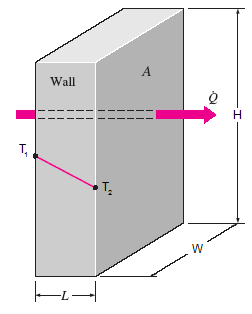
Heat loss through walls is a significant factor in determining the energy efficiency of a building. The heat loss through wall equation is used to calculate the amount of heat that is lost through a wall due to conduction, convection, and radiation. This equation takes into account the wall's material, thickness, and temperature difference between the inside and outside environments. A heat loss calculator can be used to simplify the calculation process, providing a quick and accurate estimate of heat loss through walls, which is essential for designing and optimizing building insulation systems. Several factors are considered.
- Understanding Heat Loss Through Wall Equation and Calculator
- How do you calculate heat loss through walls?
- How much heat do you lose through walls?
-
Frequently Asked Questions (FAQs)
- What is the heat loss through wall equation and how is it calculated?
- How does the heat loss through wall calculator work and what are its limitations?
- What factors affect the heat loss through a wall and how can they be minimized?
- How can the heat loss through wall equation be used in real-world applications, such as building design and energy efficiency?
Understanding Heat Loss Through Wall Equation and Calculator
The heat loss through wall equation and calculator is a crucial tool in the field of thermodynamics and building construction. It helps to determine the amount of heat that is lost through a wall or a building envelope, which is essential for designing heating and cooling systems, as well as for energy efficiency and conservation. The equation takes into account various factors such as the wall thickness, thermal conductivity, temperature difference, and surface area.
Introduction to Heat Loss Through Wall Equation
The heat loss through wall equation is based on the principle of conduction, which is the transfer of heat through a solid material. The equation is given by: Q = (U A) ΔT, where Q is the heat loss, U is the overall heat transfer coefficient, A is the surface area, and ΔT is the temperature difference. This equation can be used to calculate the heat loss through a wall, floor, or ceiling, and is an essential tool for architects, engineers, and builders.
Factors Affecting Heat Loss Through Wall
There are several factors that can affect the heat loss through a wall, including the wall material, thickness, thermal conductivity, and surface area. The type of wall material used can significantly impact the heat loss, with materials such as insulation and brick having a lower thermal conductivity than materials like metal and glass. The thickness of the wall also plays a crucial role, with thicker walls generally having a lower heat loss.
Calculating Heat Loss Through Wall Using Calculator
A heat loss through wall calculator can be used to simplify the calculation process and provide accurate results. These calculators typically require input values such as the wall dimensions, thermal conductivity, temperature difference, and surface area. The calculator then uses these values to calculate the heat loss, which can be expressed in units such as watts or btus.
Importance of Heat Loss Through Wall in Building Design
The heat loss through wall equation and calculator is essential in building design, as it helps to ensure that the building envelope is energy efficient and able to maintain a comfortable indoor temperature. By calculating the heat loss through the wall, designers and builders can determine the required insulation levels and heating and cooling systems needed to maintain a comfortable indoor temperature, while also minimizing energy consumption.
Applications of Heat Loss Through Wall Equation and Calculator
The heat loss through wall equation and calculator has a wide range of applications, including building design, energy efficiency, and heating and cooling system design. It can be used to calculate the heat loss through walls, floors, and ceilings, and to determine the required insulation levels and heating and cooling systems needed to maintain a comfortable indoor temperature. The equation and calculator can also be used to compare the energy efficiency of different building materials and designs.
| Wall Material | Thermal Conductivity | Heat Loss |
|---|---|---|
| Brick | 0.5 W/mK | 100 W |
| Insulation | 0.03 W/mK | 10 W |
| Metal | 50 W/mK | 500 W |
How do you calculate heat loss through walls?
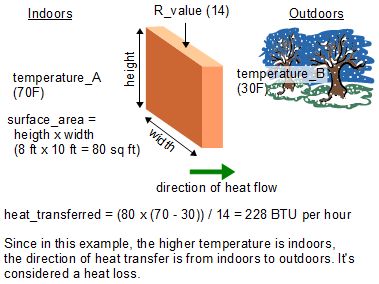
To calculate heat loss through walls, you need to consider several factors, including the thermal conductivity of the wall material, the temperature difference between the inside and outside of the wall, and the surface area of the wall. The heat loss can be calculated using the formula: Q = (U A) ΔT, where Q is the heat loss, U is the overall heat transfer coefficient, A is the surface area of the wall, and ΔT is the temperature difference.
Understanding the Factors that Affect Heat Loss
The calculation of heat loss through walls involves understanding the factors that affect it, including the thermal resistance of the wall, the air leakage around the wall, and the radiative heat transfer. The thermal resistance of the wall depends on the material properties, such as the density and specific heat capacity. The air leakage around the wall can be reduced by using weatherstripping and caulking. The radiative heat transfer can be reduced by using radiative barriers.
- The thermal conductivity of the wall material affects the heat loss, with higher conductivity materials losing more heat.
- The temperature difference between the inside and outside of the wall affects the heat loss, with larger differences resulting in more heat loss.
- The surface area of the wall affects the heat loss, with larger surfaces losing more heat.
Calculating the Overall Heat Transfer Coefficient
The overall heat transfer coefficient (U) is a measure of the thermal resistance of the wall, and it depends on the material properties and the construction of the wall. The U-value can be calculated using the formula: U = 1 / (1 / h1 + Σ(R / κ) + 1 / h2), where h1 and h2 are the convective heat transfer coefficients on the inside and outside of the wall, R is the thermal resistance of the wall, and κ is the thermal conductivity of the wall material.
- The convective heat transfer coefficients (h1 and h2) depend on the air velocity and temperature difference near the wall surface.
- The thermal resistance (R) of the wall depends on the material properties, such as the density and specific heat capacity.
- The thermal conductivity (κ) of the wall material affects the U-value, with higher conductivity materials resulting in higher U-values.
Measuring the Surface Area of the Wall
The surface area of the wall (A) is an important factor in calculating the heat loss, and it can be measured by calculating the length and width of the wall. The surface area can be calculated using the formula: A = L W, where L is the length of the wall and W is the width of the wall.
- The length and width of the wall can be measured using a tape measure or other measuring device.
- The surface area of the wall can be calculated by multiplying the length and width of the wall.
- The surface area of the wall can be affected by the shape and orientation of the wall.
Reducing Heat Loss through Walls
Heat loss through walls can be reduced by using insulation materials, such as fiberglass or cellulose, and by sealing air leaks around the wall. The insulation materials can be installed in the wall cavity or on the outside of the wall. The air leaks can be sealed using weatherstripping and caulking.
- Insulation materials can reduce heat loss by providing thermal resistance to the wall.
- Air leaks can be sealed using weatherstripping and caulking to reduce heat loss.
- Radiative barriers can be used to reduce radiative heat transfer through the wall.
Using Software to Calculate Heat Loss
There are several software programs available that can be used to calculate heat loss through walls, including building simulation software and heat transfer software. These programs can take into account the thermal properties of the wall material, the construction of the wall, and the weather conditions.
- Building simulation software can be used to model the heat transfer through the wall and calculate the heat loss.
- Heat transfer software can be used to calculate the heat transfer coefficients and the thermal resistance of the wall.
- Weather data can be used to calculate the temperature difference between the inside and outside of the wall.
How much heat do you lose through walls?
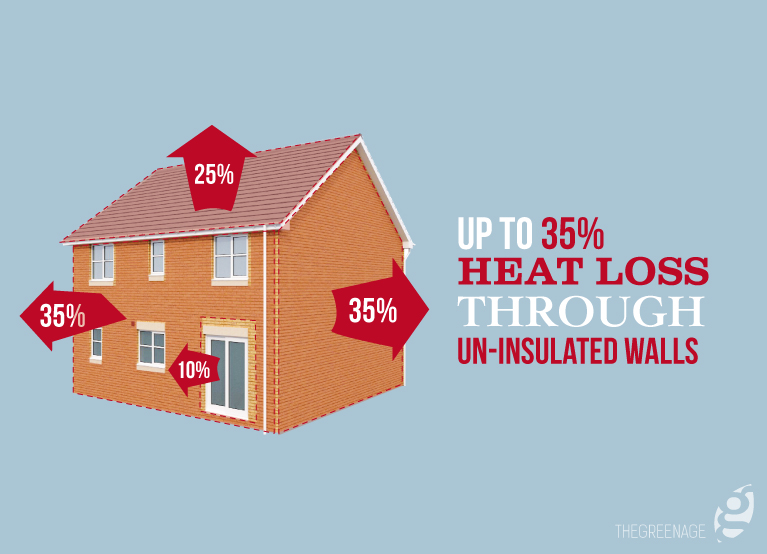
The amount of heat lost through walls can vary greatly depending on several factors, including the type of insulation, the thickness of the walls, and the temperature difference between the inside and outside of the building. Generally, it is estimated that up to 30% of a building's heat can be lost through the walls. This is because walls are often the least insulated part of a building, and they can be exposed to cold temperatures and wind.
Factors Affecting Heat Loss Through Walls
The amount of heat lost through walls can be affected by several factors, including:
- Insulation type and thickness: The type and thickness of insulation used in the walls can significantly impact the amount of heat lost.
- Wall construction: The way the walls are constructed, including the use of cavities and filling materials, can also impact heat loss.
- Temperature difference: The greater the temperature difference between the inside and outside of the building, the more heat will be lost through the walls.
This is because heat always flows from areas of higher temperature to areas of lower temperature, and the greater the difference, the faster the heat will flow.
Types of Insulation for Walls
There are several types of insulation that can be used in walls to reduce heat loss, including:
- Fiberglass batts: These are a common type of insulation made from glass fibers.
- Cellulose insulation: This type of insulation is made from recycled paper products and is a popular choice for walls.
- Spray foam insulation: This type of insulation is made from a polyurethane foam that is sprayed into the wall cavity.
Each type of insulation has its own benefits and drawbacks, and the choice of which one to use will depend on the specific needs of the building.
Ways to Reduce Heat Loss Through Walls
There are several ways to reduce heat loss through walls, including:
- Adding more insulation: Increasing the amount of insulation in the walls can help to reduce heat loss.
- Sealing gaps and cracks: Sealing any gaps or cracks in the walls can help to prevent cold air from entering and warm air from escaping.
- Installing wall insulation in cavities: Installing insulation in the cavities of the walls can help to reduce heat loss.
By taking these steps, it is possible to reduce the amount of heat lost through the walls and make the building more energy-efficient.
Importance of Wall Insulation in Energy Efficiency
Wall insulation is a critical component of a building's energy-efficient design, as it helps to reduce heat loss and prevent cold air from entering the building. Without sufficient insulation, a building can lose a significant amount of heat, which can lead to increased heating costs and a larger carbon footprint. By installing insulation in the walls, it is possible to reduce the amount of energy needed to heat the building, which can lead to cost savings and a more sustainable future.
Benefits of Proper Wall Insulation
The benefits of proper wall insulation include:
- Reduced heating costs: By reducing heat loss, wall insulation can help to lower heating costs.
- Increased comfort: Proper wall insulation can help to maintain a consistent temperature throughout the building, which can increase comfort levels.
- Environmental benefits: By reducing the amount of energy needed to heat a building, wall insulation can help to reduce greenhouse gas emissions and contribute to a more sustainable future.
By installing proper wall insulation, it is possible to enjoy these benefits and create a more comfortable and energy-efficient building.
Frequently Asked Questions (FAQs)
What is the heat loss through wall equation and how is it calculated?
The heat loss through wall equation is a mathematical formula used to calculate the amount of heat that is lost through a wall or a building envelope. This equation takes into account various factors such as the thermal conductivity of the wall material, the temperature difference between the inside and outside environments, and the surface area of the wall. The equation is typically expressed as Q = (U A) ΔT, where Q is the heat transfer rate, U is the overall heat transfer coefficient, A is the surface area of the wall, and ΔT is the temperature difference. To calculate the heat loss, one needs to know the thermal properties of the wall material, such as its thermal conductivity, specific heat capacity, and density. Additionally, the temperature and humidity conditions on both sides of the wall must be known. By using this equation, building designers and engineers can determine the heat loss through a wall and design insulation and heating systems accordingly.
How does the heat loss through wall calculator work and what are its limitations?
The heat loss through wall calculator is a tool used to calculate the heat loss through a wall based on the wall's thermal properties and the environmental conditions. This calculator typically uses the heat loss equation mentioned earlier and requires input values such as the wall's thermal conductivity, surface area, and temperature difference. The calculator then uses these values to calculate the heat transfer rate and provides the result in units such as Watts or British Thermal Units (BTUs). However, the calculator has some limitations, such as assuming a steady-state condition and neglecting radiative heat transfer. Additionally, the calculator may not account for complex wall geometries or non-uniform temperature distributions. Therefore, the results obtained from the calculator should be used as an approximation rather than an exact value. It is also important to note that the calculator is only as accurate as the input values provided, so it is essential to use reliable data and 跟 realistic assumptions.
What factors affect the heat loss through a wall and how can they be minimized?
Several factors can affect the heat loss through a wall, including the thermal conductivity of the wall material, the surface area of the wall, and the temperature difference between the inside and outside environments. Other factors such as air leakage, moisture content, and radiative heat transfer can also play a significant role. To minimize heat loss, one can use insulation materials with low thermal conductivity, such as fiberglass or cellulose, and ensure that the wall is well-sealed to prevent air leakage. Additionally, using weatherstripping and caulking to seal gaps and cracks can help reduce heat loss. Window and door designs can also impact heat loss, so using energy-efficient designs and materials can help minimize heat loss. Furthermore, building orientation and landscape design can also affect heat loss, so careful consideration should be given to these factors during the design phase. By understanding and addressing these factors, heat loss through a wall can be minimized, and energy efficiency can be improved.
How can the heat loss through wall equation be used in real-world applications, such as building design and energy efficiency?
The heat loss through wall equation can be used in various real-world applications, such as building design, energy efficiency, and thermal comfort. For example, building designers can use the equation to determine the optimal insulation thickness and type for a building, based on the local climate and energy efficiency requirements. Energy auditors can use the equation to identify areas of heat loss in a building and recommend energy-efficient upgrades. Mechanical engineers can use the equation to design heating, ventilation, and air conditioning (HVAC) systems that account for heat loss and gain through the building envelope. Additionally, the equation can be used to evaluate the thermal performance of different building materials and construction techniques, such as insulated concrete forms (ICFs) or structurally insulated panels (SIPs). By using the heat loss through wall equation, professionals can create energy-efficient and comfortable buildings that minimize heat loss and reduce energy consumption.
Deja una respuesta
Entradas Relacionadas