
Conductive Heat Transfer Pipe Equation and Calculator


Conductive heat transfer is a crucial aspect of various engineering applications, and the heat transfer pipe equation plays a vital role in calculating the rate of heat transfer. This equation takes into account the thermal conductivity of the material, the temperature difference, and the cross-sectional area of the pipe. The conductive heat transfer pipe equation and calculator provide a comprehensive solution for engineers to determine the heat transfer rate in various systems, ensuring efficient design and optimization of heating and cooling systems. Accurate calculations are essential for optimal performance and energy efficiency.
- Conductive Heat Transfer Pipe Equation and Calculator
- What is the equation for conductive heat transfer pipe?
- How do you calculate conductive heat transfer?
- What is the equation for the heat transfer of a heat pipe?
- How to calculate effective thermal conductivity of heat pipe?
-
Frequently Asked Questions (FAQs)
- What is the Conductive Heat Transfer Pipe Equation and Calculator?
- How does the Conductive Heat Transfer Pipe Equation and Calculator work?
- What are the limitations of the Conductive Heat Transfer Pipe Equation and Calculator?
- What are the applications of the Conductive Heat Transfer Pipe Equation and Calculator?
Conductive Heat Transfer Pipe Equation and Calculator
The conductive heat transfer pipe equation and calculator are essential tools in the field of thermal engineering. The equation is used to calculate the heat transfer rate through a pipe, taking into account the temperature difference between the inner and outer surfaces of the pipe, the thermal conductivity of the pipe material, and the thickness of the pipe. The calculator is a software or online tool that simplifies the calculation process and provides accurate results.
Introduction to Conductive Heat Transfer
Conductive heat transfer is the process of heat transfer through a solid material, such as a pipe. It occurs when there is a temperature difference between two points in the material, causing the heat to flow from the hotter point to the cooler point. The rate of heat transfer depends on the thermal conductivity of the material, which is a measure of its ability to conduct heat. The conductive heat transfer equation is given by Q = (k A ΔT) / L, where Q is the heat transfer rate, k is the thermal conductivity, A is the cross-sectional area of the pipe, ΔT is the temperature difference, and L is the length of the pipe.
Conductive Heat Transfer Pipe Equation
The conductive heat transfer pipe equation is a modification of the basic conductive heat transfer equation, taking into account the geometry of the pipe. The equation is given by Q = (2 π k L ΔT) / ln(r2/r1), where Q is the heat transfer rate, k is the thermal conductivity, L is the length of the pipe, ΔT is the temperature difference, r1 is the inner radius of the pipe, and r2 is the outer radius of the pipe. This equation is used to calculate the heat transfer rate through a pipe, given the temperature difference, thermal conductivity, and pipe geometry.
Conductive Heat Transfer Pipe Calculator
The conductive heat transfer pipe calculator is a software or online tool that simplifies the calculation process and provides accurate results. The calculator typically requires input of the pipe geometry, temperature difference, and thermal conductivity, and then calculates the heat transfer rate using the conductive heat transfer pipe equation. The calculator can also be used to calculate other parameters, such as the heat flux and temperature gradient.
Applications of Conductive Heat Transfer Pipe Equation and Calculator
The conductive heat transfer pipe equation and calculator have a wide range of applications in the field of thermal engineering. Some examples include:
| Application | Description |
|---|---|
| Heat Exchangers | Calculation of heat transfer rate and temperature difference in heat exchangers |
| Pipe Insulation | Calculation of heat transfer rate and temperature difference in insulated pipes |
| District Heating | Calculation of heat transfer rate and temperature difference in district heating systems |
| Oil and Gas | Calculation of heat transfer rate and temperature difference in oil and gas pipelines |
| Power Generation | Calculation of heat transfer rate and temperature difference in power generation systems |
Limitations and Assumptions of Conductive Heat Transfer Pipe Equation and Calculator
The conductive heat transfer pipe equation and calculator are based on several assumptions and limitations, including:
Steady-state conditions, meaning that the heat transfer rate is constant over time
One-dimensional heat transfer, meaning that the heat transfer occurs only in the radial direction
Constant thermal conductivity, meaning that the thermal conductivity of the pipe material is constant
No convective or radiative heat transfer, meaning that the heat transfer occurs only through conduction. These assumptions and limitations can affect the accuracy of the calculator and equation, and should be carefully considered when using them.
What is the equation for conductive heat transfer pipe?
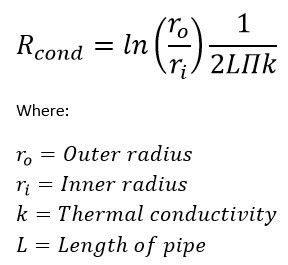
The equation for conductive heat transfer in a pipe is given by the Fourier's Law, which states that the heat flux (q) is proportional to the temperature difference (ΔT) and the thermal conductivity (k) of the material, and inversely proportional to the distance (L) over which the heat is being transferred. The equation is: q = -k A (ΔT / L), where A is the cross-sectional area of the pipe.
Key Factors Affecting Conductive Heat Transfer
The thermal conductivity of the material, the temperature difference, and the distance over which the heat is being transferred are the key factors that affect conductive heat transfer in a pipe. These factors can be summarized as follows:
- The thermal conductivity of the material, which determines how easily heat can flow through it.
- The temperature difference, which drives the heat transfer process.
- The distance over which the heat is being transferred, which affects the rate of heat transfer.
Importance of Pipe Material
The pipe material plays a crucial role in conductive heat transfer, as it determines the thermal conductivity of the pipe. Different materials have different thermal conductivity values, ranging from highly conductive materials like copper and aluminum to poorly conductive materials like steel and plastic. The choice of pipe material depends on the specific application and the desired level of heat transfer.
Effects of Pipe Diameter and Thickness
The pipe diameter and thickness also affect conductive heat transfer, as they determine the cross-sectional area and the distance over which the heat is being transferred. A larger pipe diameter and thicker pipe wall can increase the rate of heat transfer, but may also increase the cost and complexity of the system. The effects of pipe diameter and thickness can be summarized as follows:
- A larger pipe diameter increases the cross-sectional area, allowing for more heat to be transferred.
- A thicker pipe wall increases the distance over which the heat is being transferred, reducing the rate of heat transfer.
- A thicker pipe wall can also increase the thermal resistance, reducing the overall efficiency of the system.
Role of Insulation in Conductive Heat Transfer
Insulation plays a critical role in reducing heat loss and improving the efficiency of conductive heat transfer systems. Insulation materials with low thermal conductivity values, such as fiberglass and foam, can be used to reduce heat loss and minimize the effects of radiative and convective heat transfer. The role of insulation can be summarized as follows:
- Insulation reduces heat loss by minimizing the flow of heat through the pipe wall.
- Insulation improves the efficiency of the system by reducing the thermal resistance.
- Insulation can also reduce the temperature difference between the pipe and the surrounding environment.
Applications of Conductive Heat Transfer Pipes
Conductive heat transfer pipes have a wide range of industrial and commercial applications, including heating and cooling systems, heat exchangers, and piping systems. The equation for conductive heat transfer is used to design and optimize these systems, ensuring efficient and cost-effective operation. Some examples of applications include:
- Heating and cooling systems for buildings and industrial processes.
- Heat exchangers for transferring heat between fluids.
- Piping systems for transporting fluids and gases.
How do you calculate conductive heat transfer?
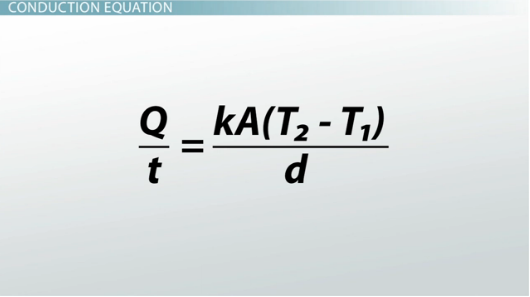
Conductive heat transfer is the process by which heat is transferred through a solid material, and it can be calculated using the Fourier's Law of heat conduction. This law states that the rate of heat transfer (Q) is proportional to the temperature difference (ΔT) between two points in the material, the thermal conductivity (k) of the material, and the cross-sectional area (A) of the material, and inversely proportional to the distance (L) between the two points. The formula for conductive heat transfer is Q = (k A ΔT) / L.
Understanding the Variables
To calculate conductive heat transfer, it is essential to understand the variables involved in the formula. The thermal conductivity (k) is a measure of a material's ability to conduct heat, and it varies depending on the material. The temperature difference (ΔT) is the difference in temperature between the two points in the material. The cross-sectional area (A) is the area through which the heat is transferred, and the distance (L) is the distance between the two points. Here are the key factors to consider when calculating conductive heat transfer:
- The thermal conductivity of the material, which can be found in tables or calculated using the Wiedemann-Franz Law.
- The temperature difference between the two points in the material, which can be measured using thermocouples or other temperature-sensing devices.
- The cross-sectional area of the material, which can be calculated using the geometric dimensions of the material.
The Role of Thermal Conductivity
The thermal conductivity (k) of a material plays a crucial role in conductive heat transfer. Materials with high thermal conductivity can transfer heat more efficiently than materials with low thermal conductivity. For example, copper has a high thermal conductivity, making it an excellent material for heat sinks and other heat transfer applications. On the other hand, materials like wood and plastic have low thermal conductivity, making them poor conductors of heat. Here are some common materials and their thermal conductivity values:
- Copper: 386 W/m-K
- Aluminum: 237 W/m-K
- Steel: 50 W/m-K
Calculating Conductive Heat Transfer in Different Materials
Conductive heat transfer can occur in various materials, including metals, non-metals, and composites. The calculation of conductive heat transfer in different materials requires an understanding of their thermal conductivity values. For example, metals tend to have high thermal conductivity values, while non-metals tend to have low thermal conductivity values. Here are the steps to calculate conductive heat transfer in different materials:
- Determine the thermal conductivity of the material.
- Measure the temperature difference between the two points in the material.
- Calculate the cross-sectional area of the material.
Factors Affecting Conductive Heat Transfer
Several factors can affect conductive heat transfer, including the temperature difference, thermal conductivity, cross-sectional area, and distance. Additionally, contact resistance and convection can also impact conductive heat transfer. Here are some factors that can affect conductive heat transfer:
- Temperature difference: A larger temperature difference results in a higher rate of heat transfer.
- Thermal conductivity: A higher thermal conductivity results in a higher rate of heat transfer.
- Cross-sectional area: A larger cross-sectional area results in a higher rate of heat transfer.
Applications of Conductive Heat Transfer
Conductive heat transfer has numerous applications in various fields, including electronics, aerospace, and construction. For example, heat sinks and heat exchangers rely on conductive heat transfer to dissipate heat. Additionally, building insulation and thermal interfaces also rely on conductive heat transfer to reduce heat transfer. Here are some applications of conductive heat transfer:
- Heat sinks: Used to dissipate heat from electronic components.
- Heat exchangers: Used to transfer heat from one fluid to another.
- Building insulation: Used to reduce heat transfer through walls and ceilings.
What is the equation for the heat transfer of a heat pipe?

The equation for the heat transfer of a heat pipe is given by the heat transfer rate (Q) which is equal to the thermal conductivity (k) of the heat pipe, multiplied by the cross-sectional area (A) of the heat pipe, multiplied by the temperature difference (ΔT) between the evaporator and condenser, divided by the length (L) of the heat pipe. This equation is represented as Q = (k A ΔT) / L.
Introduction to Heat Pipe Equation
The heat pipe equation is a fundamental concept in thermal engineering and is used to design and optimize heat pipes for various applications. The equation takes into account the thermal properties of the heat pipe, such as its thermal conductivity, cross-sectional area, and length. The equation also considers the temperature difference between the evaporator and condenser, which is the driving force for heat transfer. Some key factors that affect the heat transfer rate of a heat pipe include:
- Thermal conductivity of the heat pipe material
- Cross-sectional area of the heat pipe
- Length of the heat pipe
Factors Affecting Heat Transfer Rate
The heat transfer rate of a heat pipe is affected by several thermal properties, including the thermal conductivity of the heat pipe material, the cross-sectional area of the heat pipe, and the length of the heat pipe. The temperature difference between the evaporator and condenser is also a critical factor in determining the heat transfer rate. Additionally, the heat pipe's operating temperature and pressure can also impact the heat transfer rate. Some key factors that affect the heat transfer rate of a heat pipe include:
- Thermal conductivity of the heat pipe material
- Cross-sectional area of the heat pipe
- Length of the heat pipe
Thermal Properties of Heat Pipes
The thermal properties of a heat pipe, such as its thermal conductivity, specific heat capacity, and thermal diffusivity, play a crucial role in determining its heat transfer rate. The thermal conductivity of the heat pipe material is a measure of its ability to conduct heat, while the specific heat capacity is a measure of its ability to absorb and release heat energy. The thermal diffusivity of the heat pipe material is a measure of its ability to transfer heat energy through conduction and convection. Some key thermal properties of heat pipes include:
- Thermal conductivity of the heat pipe material
- Specific heat capacity of the heat pipe material
- Thermal diffusivity of the heat pipe material
Design Considerations for Heat Pipes
When designing a heat pipe, several thermal considerations must be taken into account, including the heat transfer rate, operating temperature, and pressure. The heat pipe's geometry, such as its length, diameter, and cross-sectional area, must also be carefully considered to ensure optimal heat transfer. Additionally, the heat pipe's material and manufacturing process can also impact its thermal performance. Some key design considerations for heat pipes include:
- Heat transfer rate requirements
- Operating temperature range
- Pressure requirements
Applications of Heat Pipes
Heat pipes have a wide range of applications, including electronic cooling, thermal management, and heat exchangers. They are commonly used in spacecraft, satellites, and computers to provide efficient heat transfer and thermal management. Heat pipes are also used in medical devices, such as MRI machines and laser equipment, to provide cooling and thermal management. Some key applications of heat pipes include:
- Electronic cooling
- Thermal management
- Heat exchangers
How to calculate effective thermal conductivity of heat pipe?

To calculate the effective thermal conductivity of a heat pipe, it is necessary to consider the various components that make up the heat pipe, including the wick structure, the working fluid, and the heat pipe material. The effective thermal conductivity is a measure of the heat pipe's ability to transfer heat from one end to the other, and it is an important parameter in the design and optimization of heat pipe systems. The calculation typically involves determining the thermal resistance of each component and then combining them to obtain the overall thermal resistance of the heat pipe.
Understanding Heat Pipe Components
The calculation of the effective thermal conductivity of a heat pipe requires a thorough understanding of the various components that make up the heat pipe. These components include the wick structure, which is responsible for transporting the working fluid from the evaporator to the condenser, and the working fluid, which is the medium that carries heat from one end of the heat pipe to the other. The key factors to consider when calculating the effective thermal conductivity are:
- The thermal conductivity of the heat pipe material, which can range from copper to aluminum or other materials.
- The thermal resistance of the wick structure, which depends on the porosity and permeability of the wick.
- The heat transfer coefficient of the working fluid, which depends on the fluid properties and the flow regime.
Determining Thermal Resistance
To calculate the effective thermal conductivity, it is necessary to determine the thermal resistance of each component. The thermal resistance is a measure of the opposition to heat flow, and it is typically expressed in units of degrees Celsius per watt. The thermal resistance of the heat pipe can be calculated using the following formula: R = L / (k A), where R is the thermal resistance, L is the length of the heat pipe, k is the thermal conductivity, and A is the cross-sectional area. The key factors to consider when determining the thermal resistance are:
- The length and diameter of the heat pipe, which affect the thermal resistance and the heat transfer rate.
- The thermal conductivity of the heat pipe material, which affects the thermal resistance and the heat transfer rate.
- The wick structure and working fluid properties, which affect the thermal resistance and the heat transfer rate.
Calculating Effective Thermal Conductivity
The effective thermal conductivity of a heat pipe can be calculated using the following formula: k_eff = L / (R A), where k_eff is the effective thermal conductivity, L is the length of the heat pipe, R is the thermal resistance, and A is the cross-sectional area. The key factors to consider when calculating the effective thermal conductivity are:
- The thermal resistance of each component, which affects the overall thermal resistance and the heat transfer rate.
- The thermal conductivity of the heat pipe material, which affects the thermal resistance and the heat transfer rate.
- The wick structure and working fluid properties, which affect the thermal resistance and the heat transfer rate.
Importance of Working Fluid Properties
The working fluid properties play a critical role in the calculation of the effective thermal conductivity of a heat pipe. The working fluid should have a high thermal conductivity, a high latent heat of vaporization, and a low viscosity to ensure efficient heat transfer. The key factors to consider when selecting a working fluid are:
- The boiling point and freezing point of the working fluid, which affect the operating temperature range of the heat pipe.
- The thermal conductivity and specific heat capacity of the working fluid, which affect the heat transfer rate and the thermal resistance.
- The surface tension and viscosity of the working fluid, which affect the wicking action and the flow regime.
Applications of Heat Pipes
Heat pipes have a wide range of applications in various fields, including electronics cooling, thermal management, and space exploration. The effective thermal conductivity of a heat pipe is an important parameter in the design and optimization of these systems. The key factors to consider when designing a heat pipe system are:
- The thermal load and heat flux, which affect the size and material of the heat pipe.
- The operating temperature range, which affects the working fluid and the wick structure.
- The reliability and maintainability of the heat pipe system, which affect the design and testing procedures.
Frequently Asked Questions (FAQs)
What is the Conductive Heat Transfer Pipe Equation and Calculator?
The Conductive Heat Transfer Pipe Equation and Calculator is a tool used to determine the heat transfer rate through a pipe due to conduction. This equation takes into account the thermal conductivity of the pipe material, the temperature difference between the inside and outside of the pipe, and the length and cross-sectional area of the pipe. The calculator is a useful resource for engineers and designers who need to calculate the heat transfer in a pipe for various applications, such as heating systems, cooling systems, and energy efficiency studies. The equation is based on Fourier's law, which states that the heat flux is proportional to the temperature gradient and the thermal conductivity of the material.
How does the Conductive Heat Transfer Pipe Equation and Calculator work?
The Conductive Heat Transfer Pipe Equation and Calculator works by using the conductive heat transfer equation, which is given by Q = (k A ΔT) / L, where Q is the heat transfer rate, k is the thermal conductivity, A is the cross-sectional area, ΔT is the temperature difference, and L is the length of the pipe. The calculator takes the input values for these parameters and calculates the heat transfer rate using the equation. The calculator can also be used to calculate the thermal conductivity of the pipe material if the heat transfer rate and other parameters are known. The conductive heat transfer equation is a steady-state equation, meaning that it assumes that the temperature and heat transfer rate are constant over time.
What are the limitations of the Conductive Heat Transfer Pipe Equation and Calculator?
The Conductive Heat Transfer Pipe Equation and Calculator has several limitations that need to be considered. One of the main limitations is that it assumes steady-state conditions, meaning that the temperature and heat transfer rate are constant over time. In reality, the temperature and heat transfer rate can vary over time due to changes in the heat source, insulation, and other factors. Another limitation is that the equation assumes that the thermal conductivity is constant, which may not be the case for all materials. Additionally, the equation does not take into account convective heat transfer, which can occur when there is a fluid flowing through the pipe. The calculator also assumes that the pipe is cylindrical in shape and that the heat transfer is one-dimensional, which may not be the case for all pipes.
What are the applications of the Conductive Heat Transfer Pipe Equation and Calculator?
The Conductive Heat Transfer Pipe Equation and Calculator has a wide range of applications in various fields, including mechanical engineering, civil engineering, and energy engineering. One of the main applications is in the design of heating systems, such as radiators and heat exchangers, where the heat transfer rate needs to be calculated to determine the required pipe size and insulation. The calculator is also used in the design of cooling systems, such as air conditioning and refrigeration systems, where the heat transfer rate needs to be calculated to determine the required pipe size and coolant flow rate. Additionally, the calculator is used in energy efficiency studies to determine the heat loss through pipes and to identify opportunities for energy savings. The calculator can also be used in research and development to study the heat transfer characteristics of different materials and to develop new heat transfer technologies.
Deja una respuesta
Entradas Relacionadas